Pecorino crusted chicken earns its place in the weeknight rotation because the top turns deeply golden and crisp while the chicken underneath stays juicy. The lemon zest keeps the cheese from tasting heavy, so every bite lands bright, salty, and savory instead of just rich. When it comes out of the oven right, the crust crackles when you cut it and clings to the chicken in one neat sheet.
The trick is keeping the coating dry enough to brown and sticky enough to stay put. Dijon mustard gives the crust something to grip, and a wire rack lets hot air circulate so the bottom doesn’t steam. Pecorino Romano is the sharper, drier choice here; it melts into the panko and browns faster than a softer cheese would.
Below, I’ve included the small details that matter most: how to press the crust on so it doesn’t fall off, what to watch for as the chicken finishes, and a few smart swaps if you need to adjust for what’s in your kitchen.
The crust stayed on perfectly and the lemon zest made the Pecorino taste so fresh. I used the wire rack like you said and the bottom stayed crisp instead of getting soggy.
Love that crackly lemon-Pecorino crust? Save this chicken for the nights when you want something crisp, bright, and oven-baked without extra fuss.
The Crust Stays Crisp Because the Chicken Bakes on a Rack
A lot of crusted chicken recipes fail for one simple reason: the bottom side steams before it has a chance to brown. That’s why the wire rack matters here. It keeps hot air moving around the chicken, which helps the Pecorino-panko coating turn crisp all over instead of soft where it touches the pan.
The other thing working in your favor is the order of the coating. Dijon and olive oil create just enough tackiness for the crust to stick, but not so much moisture that it turns pasty. Press the cheese mixture on firmly with your hands so it actually bonds to the chicken; a light sprinkle won’t survive the oven.
What Each Ingredient Is Actually Doing in This Dish
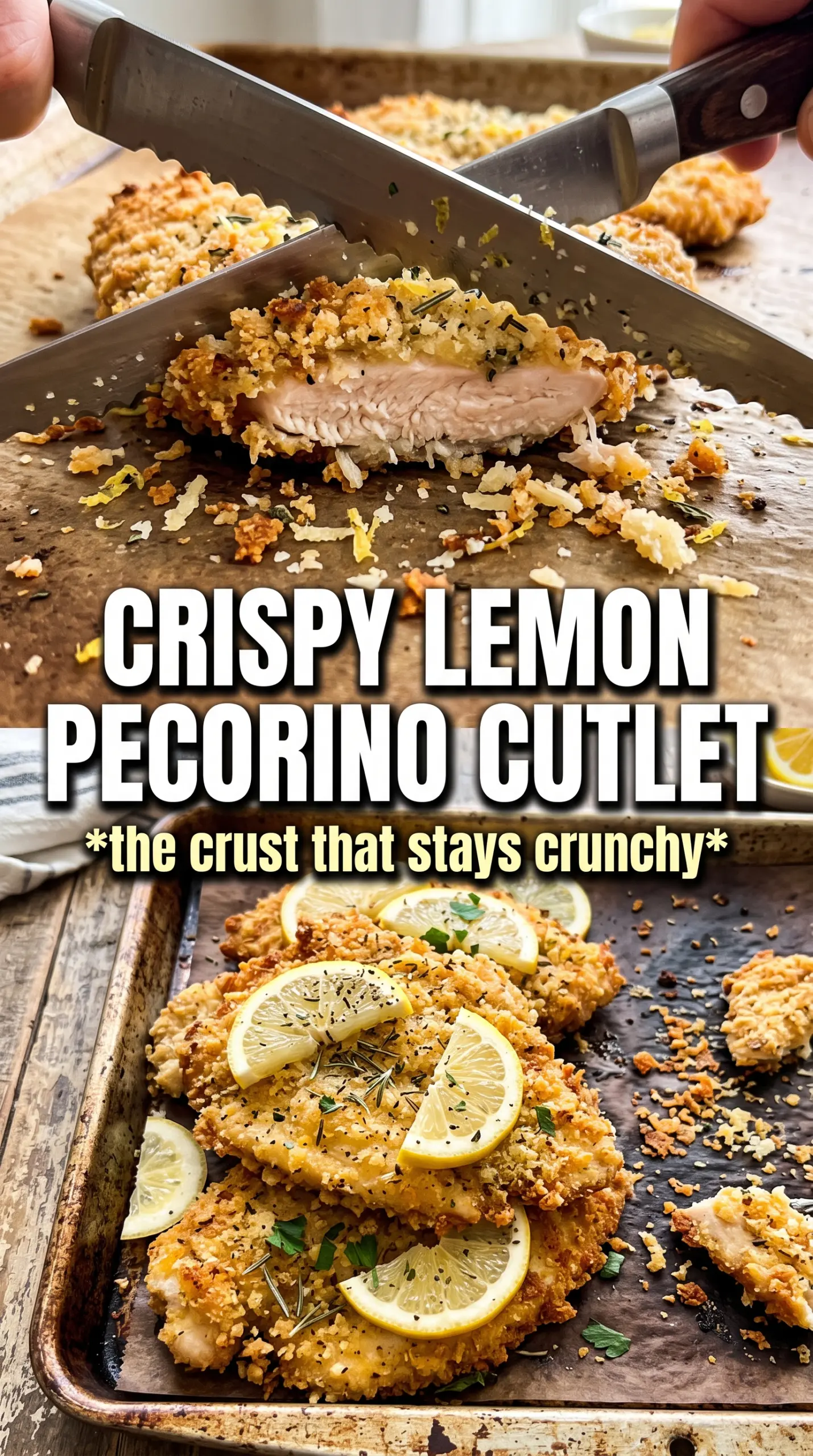
- Chicken breasts — Pounding them to an even thickness is what keeps the thicker end from drying out before the thinner end cooks through. If your breasts are large, slice them horizontally after pounding for faster, more even baking.
- Pecorino Romano — This is the backbone of the crust. It’s saltier, sharper, and drier than Parmesan, which means it browns fast and gives you that crackly edge. Pre-grated cheese works in a pinch, but finely grating it yourself melts and clings better.
- Panko breadcrumbs — Panko lightens the crust and keeps the cheese from turning into a dense blanket. Standard breadcrumbs will work, but they make the topping tighter and less shattery.
- Lemon zest — Zest is what makes the cheese taste fresh instead of heavy. Use just the yellow part; the white pith brings bitterness that shows up once it bakes.
- Dijon mustard — This is the glue and the flavor base. It doesn’t make the chicken taste like mustard; it adds tang and helps the crust adhere evenly from edge to edge.
- Olive oil — A small amount loosens the mustard enough to brush on thinly. Too much oil softens the coating, so keep the layer light.
Press, Bake, and Rest: The Three Moments That Matter Most
Season and Coat the Chicken
Start by seasoning the chicken on both sides, then brush on the Dijon and olive oil mixture in a thin layer. You want the surface tacky, not wet, because too much moisture turns the crust gummy. If the coating looks slick or puddled, use less on the next breast. The goal is an even base that grips the cheese mixture without sliding off.
Build the Crust by Hand
Mix the Pecorino, panko, lemon zest, parsley, garlic powder, and pepper, then press it onto the chicken with firm, even pressure. Don’t just sprinkle it over the top; the crust needs to be compacted so it stays in one piece after baking. Any bare spots will brown faster and can dry out, so cover the chicken from edge to edge. If a few crumbs fall off, press them back into any thin areas before the pan goes into the oven.
Bake Until the Top Is Deep Gold
Set the chicken on the rack and bake until the crust is deeply golden and the center reaches 165°F. The cheese should smell nutty and toasty, not burnt or acrid. If the top is browning too fast before the chicken is done, move the pan one level lower in the oven and give it a few more minutes. Pull it at temperature, not when the crust looks “done enough,” because overbaking dries out chicken fast.
Let It Sit Before Serving
Give the chicken a short rest after it comes out of the oven. That pause keeps the juices from running all over the plate when you cut into it. Three minutes is enough. Finish with basil and lemon wedges right before serving so the herbs stay bright and the citrus stays fresh.
How to Adjust the Crust for Different Kitchens and Diets
Make it gluten-free with a crispier crumb
Swap the panko for gluten-free panko or crushed gluten-free crackers. GF panko keeps the light, crunchy texture closest to the original, while crackers give a slightly denser crust with a more savory finish.
Use Parmesan when Pecorino is too sharp
Parmesan will make a milder crust with less salt and bite. It still browns well, but the finished chicken tastes a little rounder and less tangy, so add a touch more lemon zest if you want the same brightness.
Turn it into chicken cutlets for a faster bake
If you pound the chicken thinner and cut it into cutlets, the bake time drops by several minutes. The crust gets extra crisp because there’s more surface area, but you’ll need to watch closely so the thinner pieces don’t dry out.
Storage and Reheating
- Refrigerator: Store leftovers in an airtight container for up to 3 days. The crust softens a bit, but the flavor holds up well.
- Freezer: It freezes best after baking and cooling completely. Wrap each piece tightly and freeze for up to 2 months, then thaw in the fridge before reheating.
- Reheating: Reheat on a rack in a 375°F oven for 10 to 15 minutes, or until hot through. Skip the microwave if you want the crust to stay crisp; it steams the topping and makes the cheese greasy.
Answers to the Questions Worth Asking
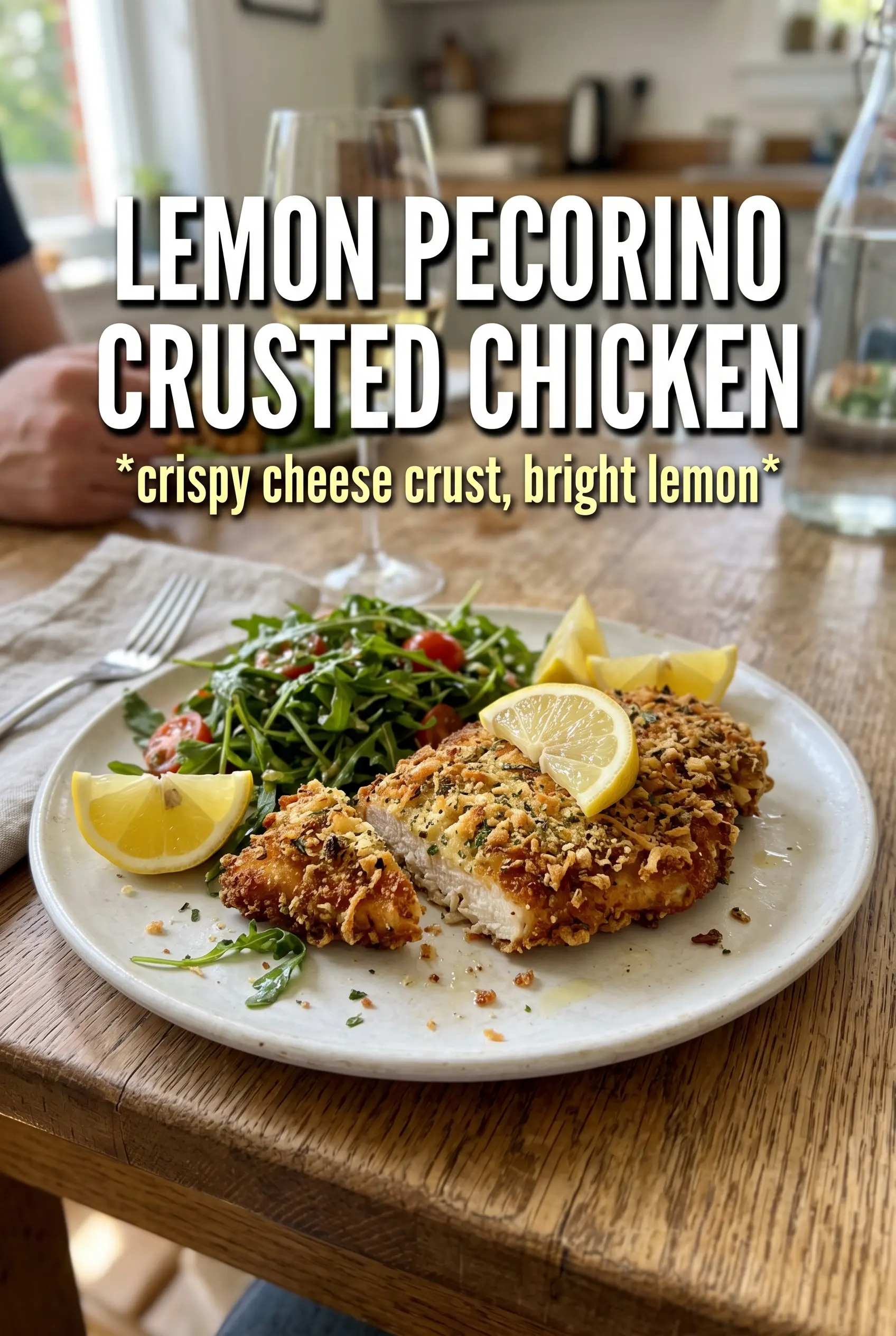
Lemon Pecorino Crusted Chicken
Ingredients
Equipment
Method
- Preheat oven to 425°F and line a baking sheet with a wire rack. Set up the rack so airflow helps the cheese crust crackle.
- Season chicken breasts with salt, pepper, and garlic powder to taste. Pound them to even thickness first so they bake uniformly.
- Mix Dijon mustard with olive oil. Brush the mixture over both sides of each chicken breast so the crust adheres.
- Combine Pecorino Romano cheese, panko breadcrumbs, lemon zest, parsley, garlic powder, and black pepper. Mix until evenly distributed for a consistent golden crust.
- Press the Pecorino crust mixture firmly onto the mustard-coated chicken. Press with your hands to help the cheese caramelize and set.
- Place chicken on the prepared rack and bake for 20-22 minutes at 425°F. Bake until the crust is golden and the internal temperature reaches 165°F.
- Rest chicken for 3 minutes before serving. This helps juices reabsorb and keeps the crust from sliding.
- Garnish with fresh basil and serve with lemon wedges. Finish with citrus at the table for extra brightness.