Lemon meringue ice cream hits all the best parts of lemon pie and turns them into a cold, creamy scoop that still has texture. The base stays bright and tangy from lemon curd and zest, while little shards of meringue soften just enough in the freezer to taste like toasted clouds tucked through every bite. It’s the kind of dessert that gets people talking after the first spoonful.
What makes this version work is balance. Sweetened condensed milk keeps the ice cream smooth without an egg-custard base, so the lemon flavor stays sharp instead of getting buried under richness. The meringue is baked low and slow until crisp, which matters more than it sounds like it should; if it’s underbaked, it turns sticky in the freezer instead of staying crunchy at the edges and pleasantly chewy in the middle.
Below, I’ll walk you through the part that matters most: how to fold everything together without knocking the air out of the cream, how to layer in the lemon curd so you get swirls instead of streaks, and what to do if you want a more pie-like finish on top.
The lemon curd stayed bright after freezing, and the meringue pieces kept a little crunch around the edges instead of disappearing into the ice cream. I served it after dinner and everyone went back for seconds.
Save this lemon meringue ice cream for the nights when you want lemon pie flavor, toasted meringue pieces, and a no-churn freezer dessert that still feels special.
Why the Meringue Stays Crisp Instead of Turning Chewy
The difference between good lemon meringue ice cream and a frozen mash-up is the meringue itself. It needs to be baked all the way through before it ever touches the ice cream base, because any moisture left behind gets drawn out in the freezer and softens the pieces too much. A proper meringue should feel dry, light, and almost hollow when you break it.
The other thing people miss is size. Big chunks can go oddly hard; tiny crumbs disappear. Aim for irregular pieces about the size of a pea to a marble. They’ll give you little pockets of texture without taking over the whole scoop, and they soften just enough to feel like part of the dessert instead of a separate garnish.
What Each Ingredient Is Actually Doing in This Frozen Dessert

- Heavy cream — This is what gives the ice cream its body and that soft, scoopable texture without an ice cream machine. Whipping it to stiff peaks first traps air, which keeps the final dessert light instead of dense.
- Sweetened condensed milk — This replaces the custard base and keeps the mixture smooth in the freezer. You can’t fully swap it for regular milk or cream without changing the texture, because the sugar and solids here help prevent ice crystals.
- Lemon curd — This is the flavor engine. Store-bought lemon curd works well if it’s thick and tart; homemade gives you more control, but either way it should be spoonable, not runny, so it swirls instead of blending into the base.
- Lemon zest — Zest brings the bright citrus oils that lemon curd alone can’t quite deliver after freezing. Use fresh zest and add it right to the base so the oils spread through every bite.
- Vanilla extract — This rounds out the sharp lemon edge and makes the dessert taste more like pie filling than candy. Don’t skip it; the ice cream tastes flatter without that background note.
- Meringue pieces — These are the texture contrast. The low oven temperature matters here because high heat browns them too fast and can leave the centers sticky.
Layering the Base So Every Scoop Gets Curds, Cream, and Meringue
Making the meringue first
Beat the egg whites with cream of tartar until they look foamy, then add the sugar slowly and keep beating until the peaks are glossy and hold their shape. If the sugar goes in too fast, the meringue can feel grainy instead of smooth. Spread it on the baking sheet in a thin, even layer so it dries evenly in the oven. When it’s done, it should release cleanly and break into dry, crisp pieces.
Whipping the cream to the right point
Whip the heavy cream until stiff peaks stand straight up when you lift the beater. Stop there. If you push past that point, the cream starts to look clumpy and can grain later when you fold it with the condensed milk. Cold cream whips faster and holds better, so keep the bowl chilled if you can.
Folding in the lemon base without losing the air
Whisk the condensed milk, lemon curd, zest, vanilla, and salt together until the mixture is completely smooth, then fold it into the whipped cream in two or three additions. Use a spatula and sweep from the bottom up so you keep the mixture fluffy. If you stir hard, the cream deflates and the finished ice cream gets heavier and icier. Once the base is combined, stop as soon as there are no large streaks left.
Building the layers in the loaf pan
Spoon a layer of the ice cream mixture into the pan, scatter over broken meringue pieces, then drizzle or dollop in a little extra lemon curd. Repeat the layers and finish with a few meringue pieces on top so there’s something pretty visible after freezing. Don’t overmix the swirls; you want ribbons, not a uniform yellow base. Freeze the pan until firm, at least 6 hours, and overnight is even better if you want cleaner scoops.
How to Change This Without Losing the Lemon-Pie Feel
Make it dairy-free with coconut cream
Use full-fat coconut cream in place of the heavy cream and a dairy-free sweetened condensed milk alternative. The texture will still be scoopable, but you’ll pick up a light coconut note, so this works best if you like that flavor alongside lemon.
Skip the meringue and turn it into lemon curd ice cream
Leave out the baked meringue pieces and swirl in only the lemon curd. You lose the toasted crunch, but the flavor gets even cleaner and a little sharper, which is a good trade if you want a smoother frozen dessert.
Use homemade lemon curd for a brighter finish
Homemade curd gives you a fresher, more vivid lemon taste and lets you control the sweetness. Keep it thick and fully chilled before folding it in, or it can streak through the cream too loosely and freeze in a softer ribbon.
Make it ahead and store it properly
Storage and Reheating
- Refrigerator: Not recommended once mixed, since the texture will collapse instead of holding like ice cream.
- Freezer: Store covered for up to 2 weeks. After that, the meringue starts to soften and the lemon flavor fades a little.
- Reheating: Let it sit at room temperature for 5 to 10 minutes before scooping. If it’s rock hard, you won’t get clean scoops and you’ll smash the meringue pieces instead of lifting them through the ice cream.
Answers to the Questions Worth Asking
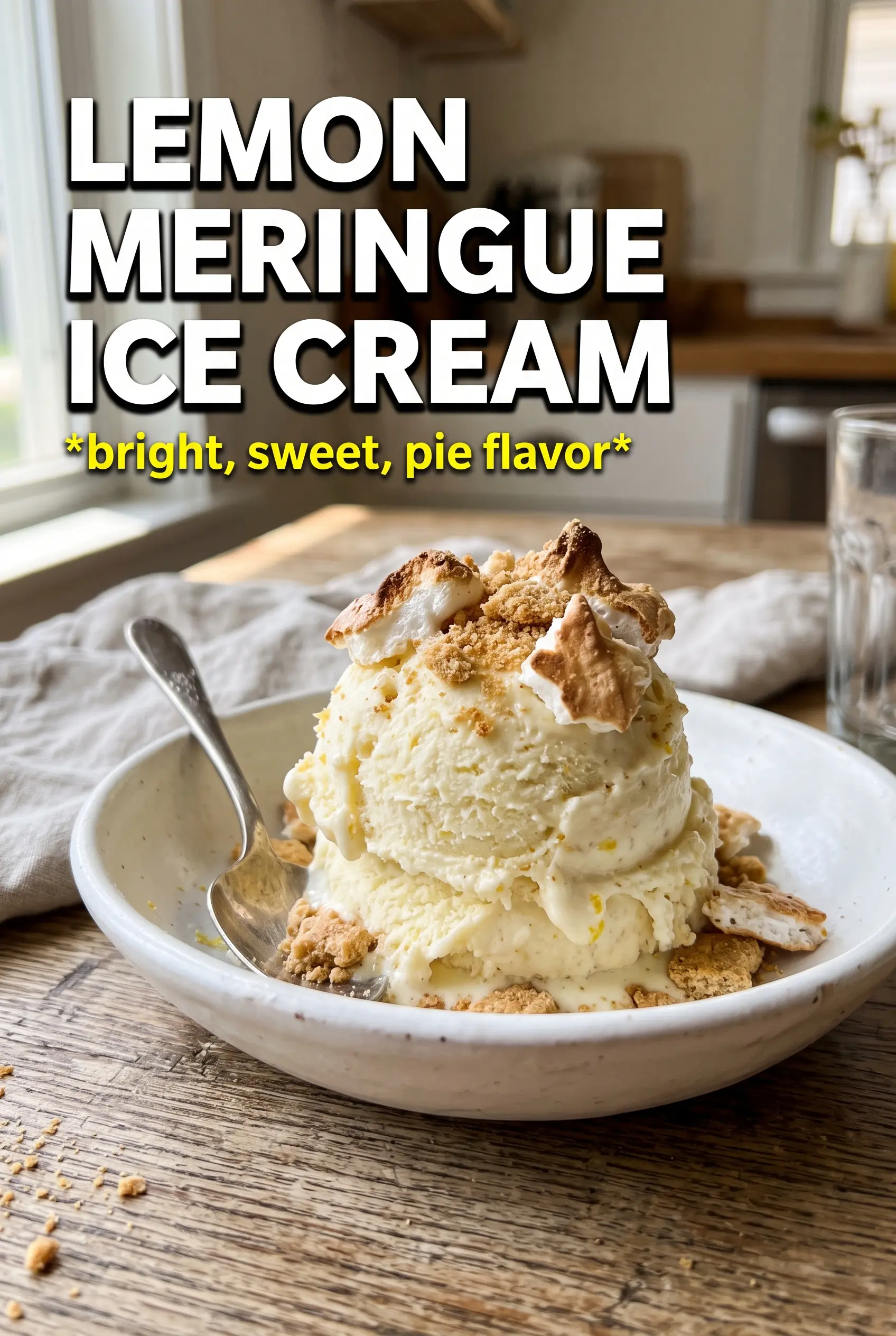
Lemon Meringue Ice Cream
Ingredients
Equipment
Method
- Beat egg whites with cream of tartar until they reach soft peaks, then pause to scrape down the sides for even texture. Look for gentle peaks that fall slowly back into the bowl.
- Gradually add sugar while continuing to beat until the meringue forms stiff, glossy peaks. You should see ridges that hold their shape and shine.
- Spread the meringue on a sheet pan into an even layer using a spatula, aiming for a thin bake. Let it cover the surface so it can crisp uniformly.
- Bake at 225F for 90 minutes until crisp and dry throughout. The surface should look set and lightly golden with no soft centers.
- Cool completely, then break the meringue into bite-size pieces for swirls and crunch. Keep pieces varied so you get both larger bites and finer bits.
- Whip heavy cream to stiff peaks. It should hold firmly and look thick, like soft cloud foam that doesn’t slump.
- Whisk sweetened condensed milk, prepared lemon curd, lemon zest, vanilla extract, and salt until smooth. The mixture should look pale and glossy with no streaks.
- Fold the lemon mixture into the whipped cream until just combined. Stop as soon as no white streaks remain to preserve airiness.
- Layer the mixture into a 9x5 loaf pan, adding broken meringue pieces and extra lemon curd swirled between layers. You should see pale yellow streaks and golden meringue bits throughout.
- Freeze at least 6 hours until firm. The top should feel solid and the loaf should scoop cleanly.