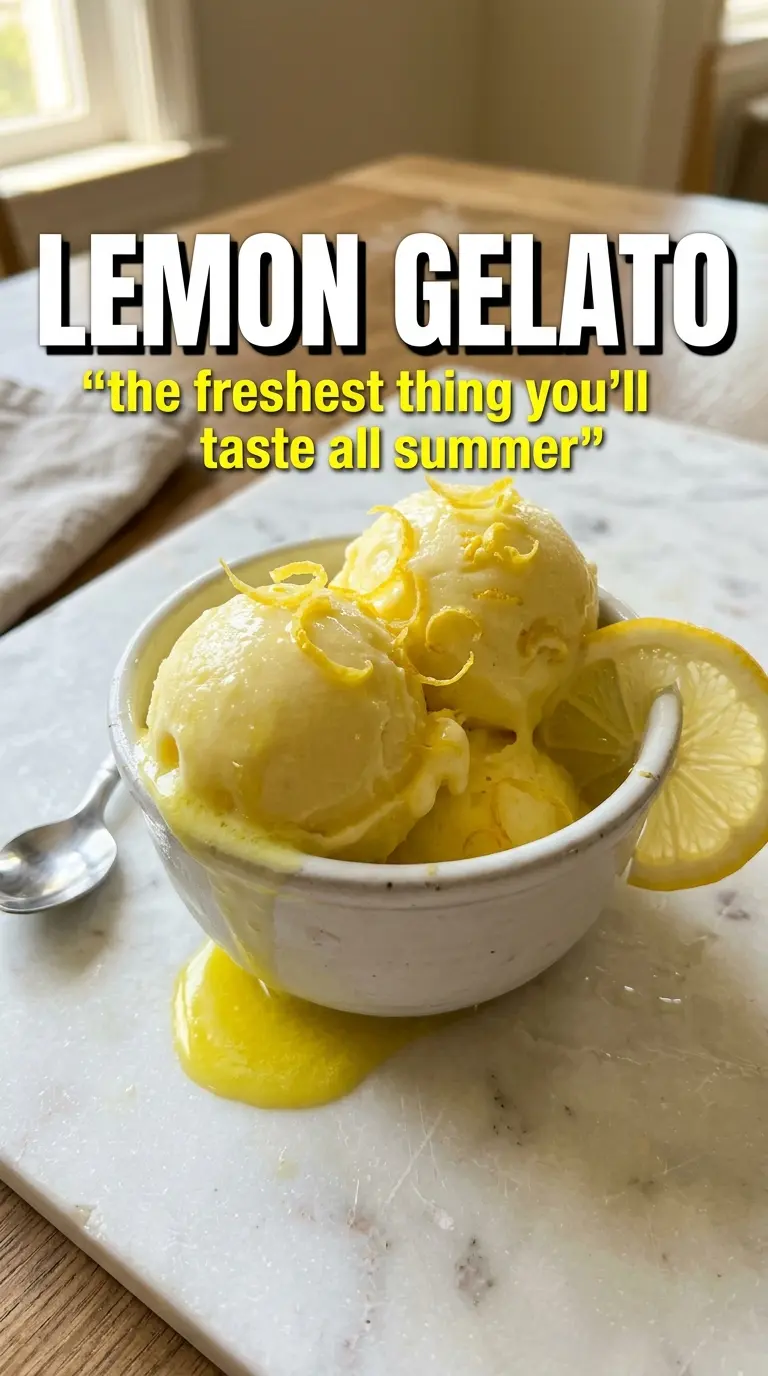
Lemon gelato lands somewhere between custard and sorbet: dense, silky, and bright enough to wake up the whole spoon. The citrus comes through clean and sharp, but the egg yolks and dairy keep it from eating like frozen lemon juice. That balance is what makes this version worth making at home instead of settling for something icy and flat.
The trick is building a light custard first, then adding the lemon after the base thickens and comes off the heat. If you add the juice too early, the dairy can turn grainy or even curdle. A little cornstarch helps the gelato hold a smoother, more scoopable body, which matters because gelato should feel dense and polished, not fluffy like churned ice cream.
Below, I’ve included the timing that matters, the texture cues that tell you the custard is ready, and a few swaps that still keep the lemon flavor front and center.
The custard thickened up exactly where you said it would, and after the overnight chill the gelato churned into the creamiest lemon dessert I’ve made at home. No ice crystals, just bright lemon flavor and a texture that scooped beautifully.
Creamy lemon gelato like this is worth saving for the nights when you want a bright, dense frozen dessert with no icy finish.
The Custard Needs Gentle Heat, Not a Quick Boil
Gelato depends on a base that thickens slowly and evenly. If the heat is too high, the egg yolks can scramble before the cornstarch gets a chance to do its job, and you’ll end up with little bits instead of a smooth custard. Keep stirring, keep the heat at medium, and watch for the point where the mixture coats the spoon and looks like pudding.
The other mistake is pulling it too early. Thin custard won’t churn into the dense, scoopable texture you want; it needs enough body before it chills. Once it reaches that pudding consistency, it will finish setting up as it cools, so don’t chase a stovetop thickness that looks fully firm in the pan.
What Each Ingredient Is Actually Doing in This Gelato
- Whole milk — This gives the gelato its main body without making it heavy. Don’t swap in skim milk if you want the same creamy finish; it turns the base thinner and icier.
- Heavy cream — A small amount is enough to round out the lemon and keep the texture smooth. More cream would push this away from true gelato and into standard ice cream territory.
- Egg yolks — They add richness and help the base emulsify, which is what keeps the final texture silky instead of chalky. Use fresh yolks and whisk them well with the sugar until pale.
- Cornstarch — This is the quiet insurance policy. It helps the custard thicken cleanly and gives the frozen gelato a denser scoop.
- Fresh lemon juice and zest — Bottled juice won’t give you the same bright, clean citrus edge. The zest carries the oils that make the flavor taste like lemon instead of just acid.
- Vanilla extract — Just a small amount softens the sharpness of the lemon without making the dessert taste like vanilla. Leave it out if you want the citrus to hit harder.
The Chill, Strain, and Churn Sequence That Gives You a Silky Scoop
Heating the Dairy
Warm the milk and cream until they’re steaming and just beginning to move around the edges. You don’t want a full boil here; overheating can make the dairy taste flat and gives you less control when the hot liquid hits the yolks. Steaming is enough to temper the eggs safely and smoothly.
Tempering the Yolks
Whisk the yolks, sugar, and cornstarch until the mixture looks pale and thick, then slowly stream in the hot dairy while whisking constantly. That slow pour keeps the eggs from cooking into little threads. If the bowl starts to feel too hot to hold, you’re adding too fast.
Cooking the Custard
Return everything to the saucepan and stir over medium heat until it thickens to a pudding consistency. The custard should coat a spoon and leave a clear track when you drag a finger through it. If it starts to simmer hard or bubble aggressively, pull the heat back right away so the yolks don’t curdle.
Adding the Lemon at the End
Take the pan off the heat before you stir in the lemon juice, zest, vanilla, and salt. That timing keeps the citrus bright and prevents the acid from tightening the dairy too early. The mixture may look a little looser again after the lemon goes in, and that’s normal.
Chilling Before Churning
Set the custard over an ice bath first, then refrigerate it for at least 4 hours. A cold base churns faster and freezes with smaller ice crystals, which is a big part of that smooth gelato texture. If you churn it while it’s still warm, the machine has to work too hard and the result turns softer and rougher.
Freezing for the Right Finish
Churn on the lowest setting your machine allows if you want a dense result, then serve it right away for the softest texture or freeze it briefly to firm up. Don’t leave it in the machine too long once it looks thick and cohesive; overchurning can make it airy instead of compact. A short freeze after churning gives you cleaner scoops without turning it icy.
How to Adapt Lemon Gelato Without Losing the Bright Citrus Flavor
Dairy-Free Version with Coconut Milk
Use full-fat coconut milk in place of the milk and cream, then keep the yolks and cornstarch the same. The texture will still be creamy, but the flavor picks up a subtle coconut note that softens the lemon.
More Tart, Less Sweet
If you want the lemon to come through sharper, reduce the sugar by 2 tablespoons and add an extra teaspoon of zest. The gelato will taste brighter and less rounded, but it will still churn smoothly.
No Ice Cream Maker
Freeze the chilled base in a shallow pan and stir it every 30 minutes until set, breaking up the ice crystals as you go. You won’t get the same dense, restaurant-style finish, but the flavor stays clean and the texture is much better than a straight freeze.
Storage and Reheating
- Refrigerator: The custard base can sit in the fridge for up to 2 days before churning. Once churned, the gelato should be stored in a freezer-safe container with parchment pressed on top to slow ice crystal formation.
- Freezer: It keeps for about 2 weeks, though the texture is best in the first few days. After that, it gets harder and a little icier around the edges.
- Serving: Let it sit at room temperature for 5 to 10 minutes before scooping. If you try to dig in straight from the deep freeze, the center can be rock hard and the texture loses that soft gelato feel.
Answers to the Questions Worth Asking
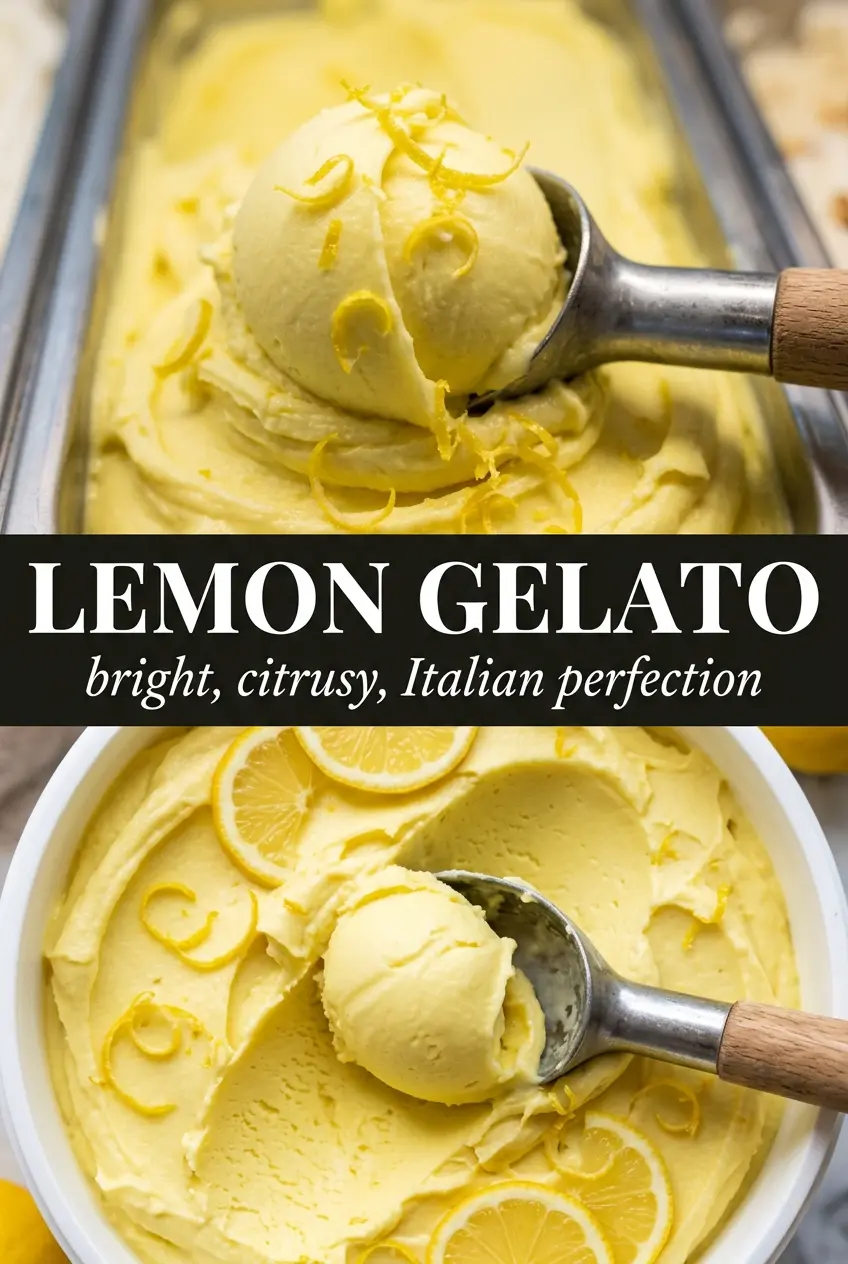
Lemon Gelato
Ingredients
Equipment
Method
- Heat the whole milk and heavy cream in a saucepan over medium heat until steaming, about 3–5 minutes, with small bubbles forming around the edges (no boiling).
- Whisk the egg yolks, granulated sugar, and cornstarch in a bowl until pale and thick, about 1 minute, so the mixture ribbons off the whisk.
- Slowly whisk the hot milk mixture into the egg yolk mixture to temper it, keeping the flow steady to avoid scrambling (about 1 minute).
- Return everything to the saucepan and cook over medium heat, stirring constantly, until thickened to a pudding consistency, about 5–8 minutes, with a glossy coat on the spoon.
- Remove the custard from the heat and stir in the fresh lemon juice, lemon zest, vanilla extract, and salt until smooth and evenly bright, 30–60 seconds.
- Cool completely over an ice bath with occasional stirring, about 10–15 minutes, until no longer warm to the touch.
- Refrigerate at least 4 hours, covered, until very cold throughout for best texture.
- Churn in an ice cream maker on the lowest setting until dense and thick, about 20–30 minutes, with a scoopable gelato texture.
- Serve immediately for soft-set gelato, or freeze 1–2 hours to firm up so it holds a quenelle shape.