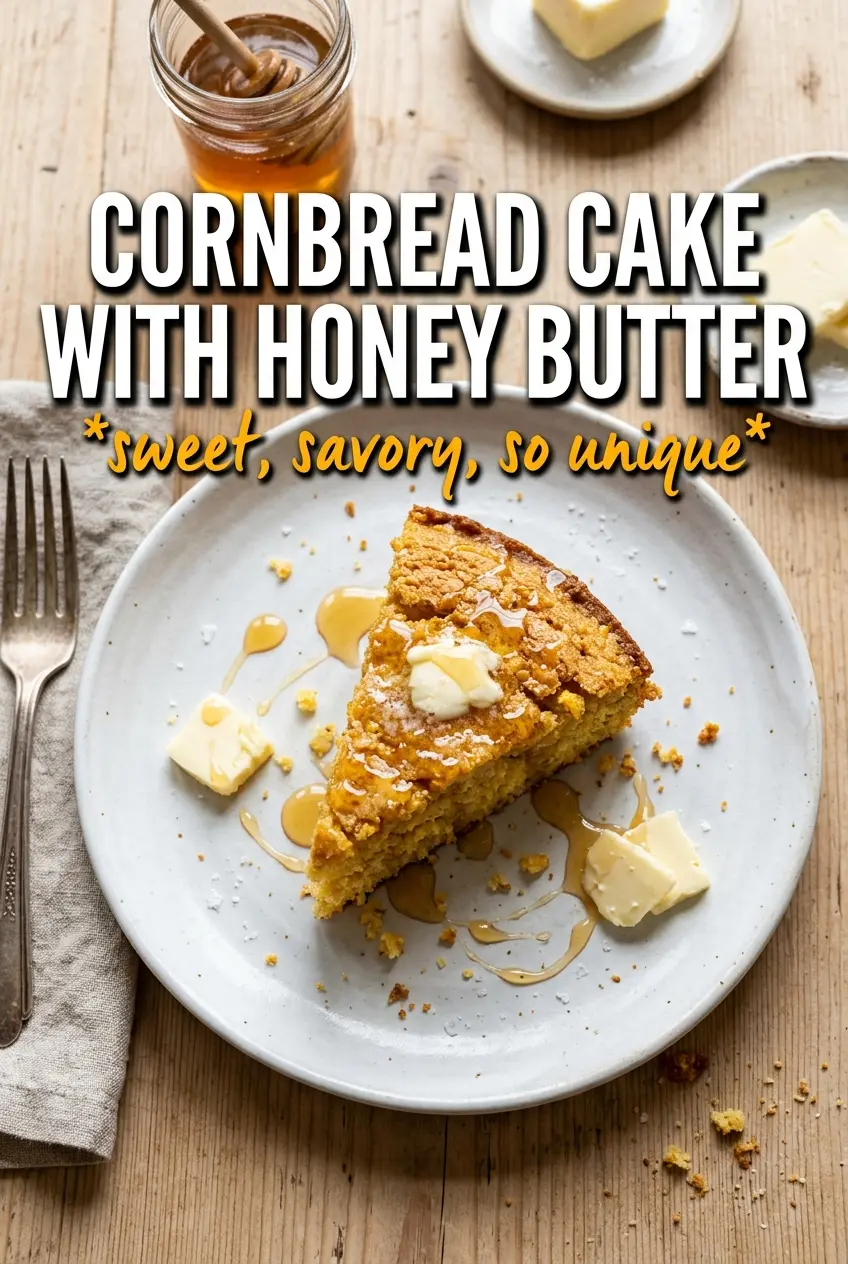
Layered cornbread cake brings a little surprise to the dessert table: it has the sunny, crumbly flavor of cornbread, but the soft, tender bite of a proper layer cake. The honey butter frosting ties it all together with a smooth, whipped finish that melts into the cake instead of sitting on top like an afterthought. A drizzle of honey and a pinch of flaky salt at the end keep every bite from leaning too sweet.
What makes this version work is the balance. Cornmeal gives the layers their signature texture, but the flour keeps them from turning sandy or heavy. Buttermilk and baking soda add a gentle tang and lift, while melted butter and honey keep the crumb moist enough to stack cleanly. The frosting follows the same idea: plenty of butter for richness, just enough honey for warmth, and powdered sugar in the right amount to stay fluffy instead of gritty.
Below, I’ll walk you through the spots where this cake can go sideways — especially how to keep the layers tender and the frosting light. There’s also a note on what to change if you want a slightly less sweet finish without losing the honey butter character.
The layers baked up tender, not dense, and the honey butter frosting held its shape beautifully between them. I added the flaky salt on top like you suggested, and it made the whole cake taste balanced instead of overly sweet.
Like this layered cornbread cake? Save it to Pinterest for the honey butter frosting and salted honey finish that make every slice stand out.
The Trick to Keeping Cornbread Layers Tender Enough to Stack
Most cornbread cakes fail in one of two ways: they bake up dry and sandy, or they turn dense because the batter was overworked. This batter needs a light hand once the wet and dry ingredients come together. Stir until the flour disappears, then stop. A few small streaks are better than a cake that bakes tough.
The other thing that matters is not overbaking the layers. Cornmeal keeps carrying heat after the pans leave the oven, so pull them as soon as a toothpick comes out clean or with a few moist crumbs attached. If the center has gone fully dry in the oven, the cake will slice neatly but eat like a muffin left out overnight.
What Each Ingredient Is Actually Doing in This Cake
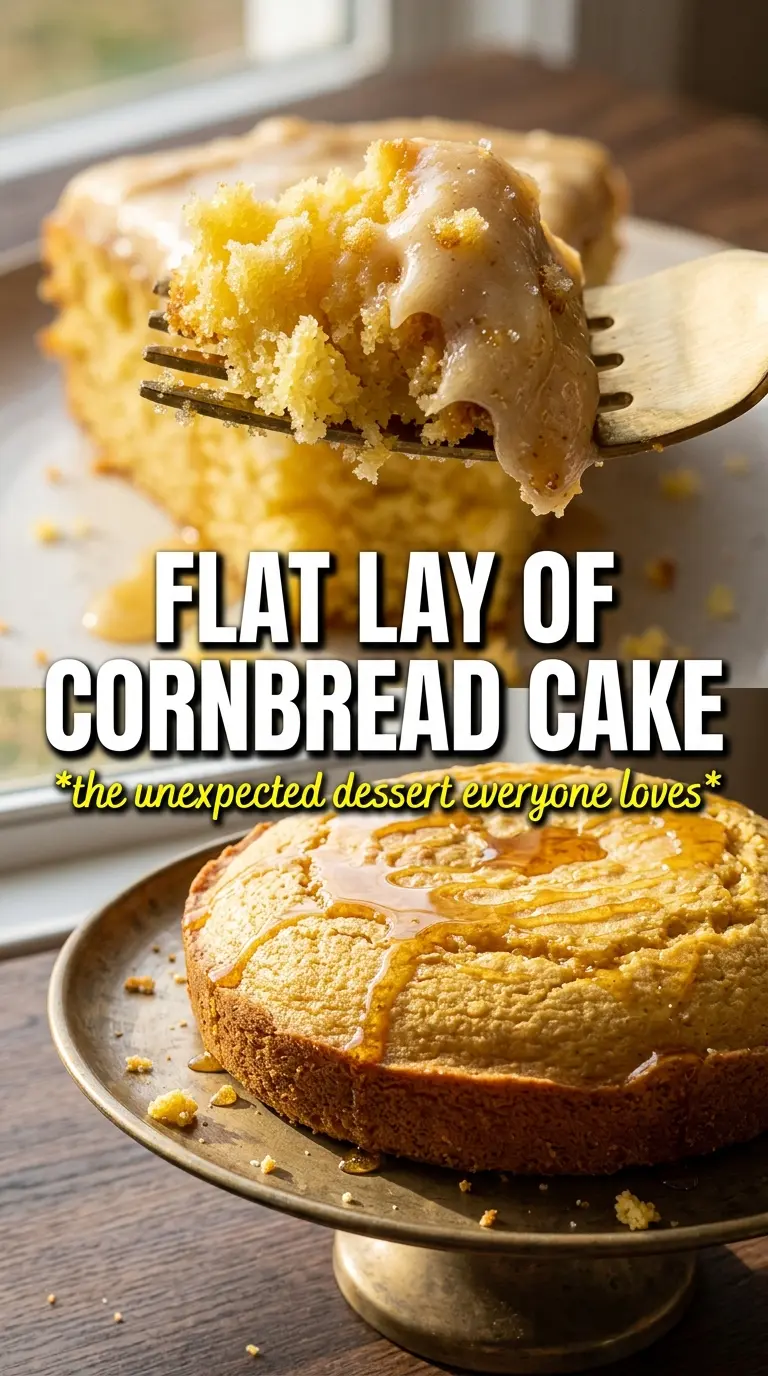
- Yellow cornmeal — This is where the cornbread character comes from. Use regular yellow cornmeal, not coarse polenta, or the crumb turns gritty instead of tender.
- Buttermilk — It gives the cake a subtle tang and reacts with the baking soda for lift. If you need a substitute, stir 1/2 tablespoon lemon juice or vinegar into 1/2 cup milk and let it sit 5 minutes.
- Honey — Honey adds moisture and a warm note that plain sugar can’t replicate. It also helps the cake stay soft for layering, which matters more here than in a loaf or skillet cake.
- Butter — Melted butter goes into the cake for richness, while softened butter in the frosting gives structure. Don’t swap in oil for the frosting; you’ll lose that light, whipped body.
- Powdered sugar — This keeps the frosting smooth and stable. If your kitchen runs warm, sift it first so the frosting doesn’t end up with little lumps that never fully disappear.
Layering and Frosting Without Crushing the Crumb
Mix the Batter Just Until It Comes Together
Whisk the dry ingredients in one bowl and the wet ingredients in another, then fold them together until the flour disappears. The batter will be thick and a little rustic, and that’s exactly what you want. If you beat it smooth, the cake loses tenderness and bakes up tighter than it should.
Watch the Edges, Not the Clock
Divide the batter evenly among the three greased pans and bake at 350°F until the tops spring back and a toothpick comes out clean. Start checking at 22 minutes. The cakes should pull slightly from the sides and smell buttery and toasted, but they shouldn’t look dark at the edges. Let them cool completely before frosting, or the honey butter frosting will slide right off.
Whip the Frosting Until It Looks Pale and Heavy
Beat the butter, honey, vanilla, salt, and powdered sugar until the frosting is light, fluffy, and a shade paler than when you started. Add the cream only as needed for spreadability. If it turns loose, you probably added too much liquid or the butter got too warm; chill it for 10 minutes and beat again.
Build the Cake in Thin, Even Layers
Spread frosting between each layer, then finish the outside with a generous coat. Use an offset spatula and work from the center outward so the cake stays level instead of leaning. The honey drizzle and flaky salt go on last, after the frosting has settled for a minute, so they sit on top instead of melting in.
How to Change the Sweetness, Salt, or Size Without Ruining the Cake
Less-sweet version
Cut the granulated sugar in the cake to 1/2 cup and leave the frosting as written, then use a lighter hand with the honey drizzle. The cake will taste more cornbread-forward and less dessert-sweet, but the honey butter flavor still comes through.
Gluten-free adaptation
Use a 1:1 gluten-free flour blend in place of the all-purpose flour. The texture will be a touch more delicate, so let the layers cool fully before moving them and frost with a gentle hand.
Cupcake-style version
Bake the batter in lined muffin tins for about 16 to 18 minutes, then pipe a little frosting on top of each one. You’ll lose the dramatic layers, but you gain easier serving and the same honey butter flavor.
Storage and Reheating
- Refrigerator: Store covered for up to 4 days. The frosting firms up in the fridge, but the cake stays moist.
- Freezer: Freeze unfrosted layers well wrapped for up to 2 months, or freeze frosted slices on a tray before wrapping. Honey butter frosting softens after thawing, but it still tastes good.
- Reheating: Let slices come to room temperature before serving, or warm them for 10 to 15 seconds in the microwave. Don’t heat them until the frosting melts completely or the cake turns oily and the layers slump.