Deeply savory broth, tender shredded chicken, and egg noodles that soak up all that flavor without turning mushy — that’s what makes a good bowl of chicken noodle soup worth repeating. The pressure cooker builds a broth with a little more body than stovetop soup usually gives you, and the short finish on sauté keeps the noodles from falling apart before they hit the bowl.
The key here is starting with raw chicken and aromatics together. The chicken gently seasons the broth as it cooks, while the carrots, celery, onion, and garlic soften into the base instead of tasting separately cooked. A few dried herbs and bay leaves are enough because the pressure cooking concentrates everything fast. You’ll find the exact timing below, plus the best way to keep the noodles tender instead of bloated.
The broth came out rich and golden, and the noodles stayed perfectly tender after the quick sauté. I used leftover rotisserie chicken once, but the raw chicken version had way more flavor.
Save this Instant Pot Chicken Noodle Soup for the nights when you want a brothy, chicken-packed bowl with almost no stovetop babysitting.
Why Pressure-Cooking the Chicken First Changes the Whole Pot
Most chicken noodle soup problems start before the noodles ever go in. If the chicken is added later or cooked separately, the broth often tastes thin and the meat tastes like an add-on instead of part of the soup. Starting with raw chicken in the pot gives you a broth that tastes fuller because the chicken and vegetables cook together under pressure.
The other mistake is overcooking the noodles under pressure. Egg noodles turn soft fast, and in a sealed pot they can go from tender to bloated in no time. That’s why they go in after pressure cooking, during sauté, where you can watch the texture and stop as soon as they’re just cooked through.
What Each Ingredient Is Actually Doing in the Pot
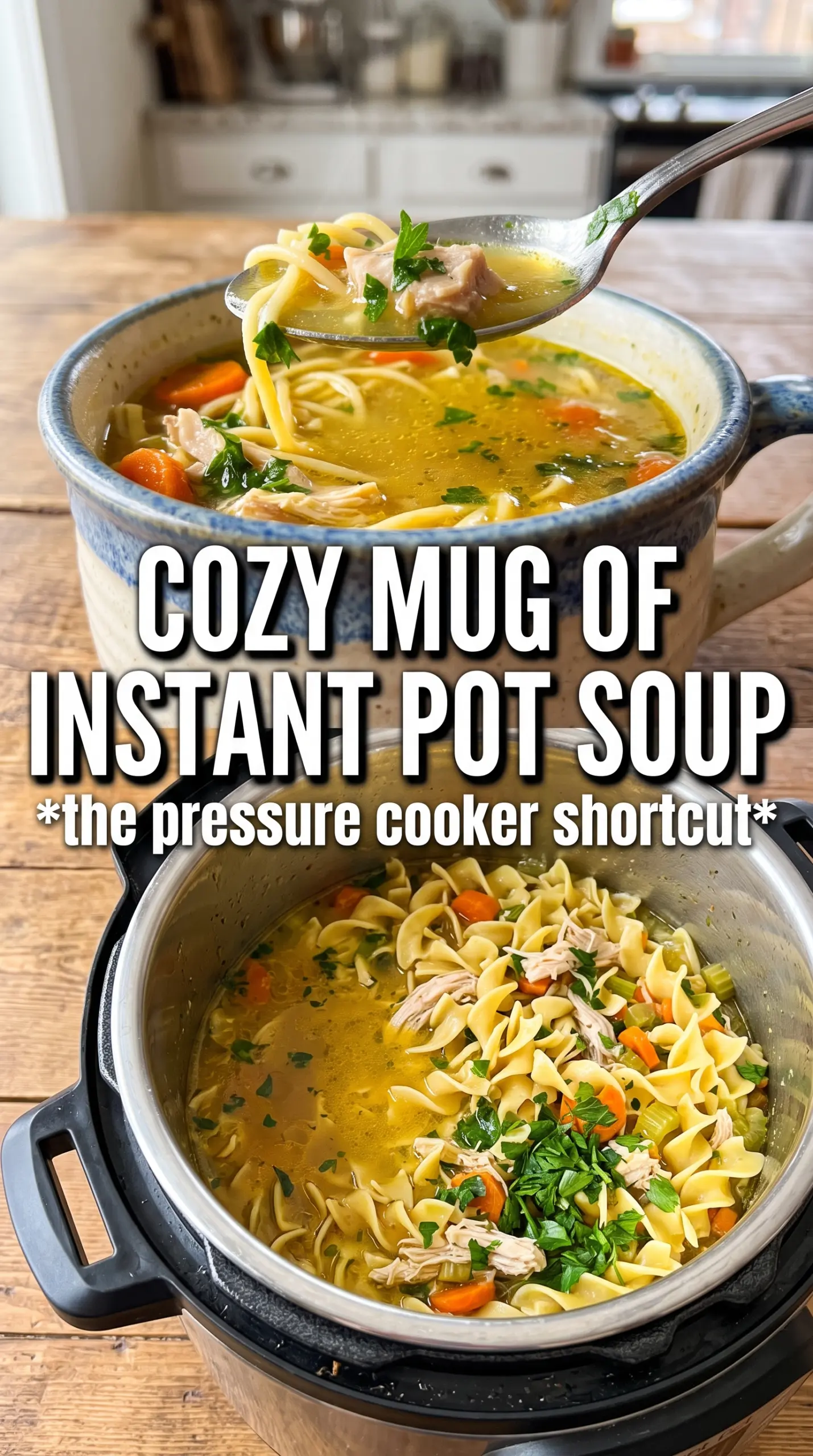
- Chicken breast — Raw chicken breast keeps this soup lean and lets the broth pick up more flavor as it cooks. Chicken thighs work too if you want a richer result, and they stay a little juicier after shredding. If you use thighs, the soup will taste more robust but slightly heavier.
- Carrots, celery, onion, and garlic — This is the backbone of the soup. Dice the onion fairly small so it melts into the broth, and slice the carrots and celery evenly so they soften at the same pace. Bigger chunks stay firmer, which can be nice if you want a more rustic bowl.
- Chicken broth — Use a broth you’d drink on its own, because pressure cooking intensifies whatever is in the pot. If yours is low-sodium, that’s fine; it gives you control at the end. A bland broth stays bland no matter how long it cooks.
- Dried thyme, dried parsley, and bay leaves — These herbs hold up well under pressure and give the soup that familiar chicken noodle taste. Fresh herbs would lose some of their brightness in the cook time, so save fresh parsley for the end. Don’t skip the bay leaves; they add a background savoriness that people notice even when they can’t name it.
- Egg noodles — Add them after pressure cooking. They absorb broth fast, so the difference between tender and mushy is only a few minutes. If you want to make the soup ahead, cook the noodles separately and add them to each bowl so the leftovers stay brothier.
Building the Soup So the Noodles Stay Tender
Loading the Pot the Right Way
Add the chicken, vegetables, broth, and herbs all at once before sealing the lid. There’s no need to sauté first because the pressure cooker handles the flavor building for you, and the long pressurized simmer is what gives the broth depth. If your carrots are cut too thick, they’ll still cook through, but they won’t soften evenly with the celery, so keep the pieces close in size.
Pressure Cooking Without Overdoing It
Cook on High pressure for 15 minutes, then let it natural release for 5 minutes before quick releasing the rest. That short natural release keeps the broth calmer and helps the chicken stay tender instead of stringy. If you quick release immediately, the liquid can spit more violently and the meat can tighten up a little.
Shredding and Finishing on Sauté
Pull out the chicken, shred it, and return it to the pot after removing the bay leaves. Then switch to sauté and add the noodles, stirring often so they don’t stick together or catch on the bottom. The moment the noodles are tender and the broth looks slightly thicker from the starch, stop the heat. If they sit in the hot broth too long, they keep soaking up liquid and the soup turns from brothy to starchy.
How to Adapt This Bowl for What You Have on Hand
Use chicken thighs for a richer broth
Chicken thighs bring more fat and deeper flavor, so the soup tastes a little fuller and less lean. They shred easily and stay juicy, especially if you like a softer bite. The cook time stays the same.
Make it gluten-free with the right noodle swap
Use gluten-free egg-style noodles or a sturdy rice noodle, but cook them separately if possible. Gluten-free noodles break down faster in hot broth, and cooking them in the soup can cloud the broth and soften the texture too much.
Turn the broth dairy-free and low-fat without changing anything else
This recipe is already naturally dairy-free, so there’s nothing special to change there. If you want it lighter, use low-sodium broth and chicken breast, then season at the end. The flavor still lands because the aromatics and herbs carry the dish.
Store the noodles separately for better leftovers
If you know you’ll have leftovers, keep the cooked noodles in a separate container and ladle the soup over them when serving. That keeps the broth clear and the noodles from absorbing all the liquid overnight. It’s the easiest way to preserve the best texture.
Storage and Reheating
- Refrigerator: Store in an airtight container for up to 4 days. The noodles will continue to soften, so expect a thicker, more absorbed broth.
- Freezer: Freeze the broth, chicken, and vegetables without the noodles for the best texture. Egg noodles get mushy after thawing, so add freshly cooked noodles when you reheat.
- Reheating: Warm gently on the stovetop or in the microwave until hot. If the soup looks too thick, add a splash of broth or water before heating; thickening happens as the noodles sit, not because the soup needs more cooking.
Answers to the Questions Worth Asking

Instant Pot Chicken Noodle Soup
Ingredients
Equipment
Method
- Add chicken breast, carrots, celery, onion, garlic, chicken broth, dried thyme, dried parsley, garlic powder, and bay leaves to the Instant Pot, arranging everything for even cooking.
- Seal the lid and pressure cook on High for 15 minutes, watching for pressure to build.
- Use natural release for 5 minutes, then quick release to stop cooking and protect the chicken texture.
- Remove the chicken to a plate and shred, then remove the bay leaves from the pot.
- Set the Instant Pot to Sauté and return the shredded chicken to the pot.
- Add egg noodles and cook on Sauté for 6-8 minutes until tender, stirring often so the noodles don’t stick.
- Season with salt and pepper to taste, then garnish with fresh parsley and serve hot.