Chunky cranberry sauce like this earns its place on the table because it tastes bright, polished, and a little bit unexpected. The cranberries cook down just enough to thicken, but they don’t turn into a smooth jam, so you still get pops of tart fruit, soft apple, and the chew of golden raisins in every spoonful. It’s the kind of side dish that cuts through rich food instead of getting lost beside it.
The balance is what makes this version work. Sugar rounds out the sharp cranberries, but the orange and lemon keep the sauce lively, and the diced Granny Smith apple gives it body without turning mushy. The nuts go in at the end so they stay distinct instead of softening into the sauce. If you’ve ever had cranberry sauce that tasted one-note or turned gluey, this method fixes both problems.
Below you’ll find the trick to getting the texture right, plus a few useful swaps and make-ahead notes so it lands exactly where you want it: glossy, chunky, and ready when you are.
I loved that the cranberries kept their shape and the apples stayed tender instead of dissolving. The orange zest made it taste fresh, and it thickened up beautifully after chilling overnight.
Save this chunky cranberry sauce for the Thanksgiving table when you want bright citrus, tender apple, and a make-ahead finish.
The Reason This Cranberry Sauce Stays Chunky Instead of Turning Jammy
The biggest mistake with cranberry sauce is cooking it until everything collapses into one soft, sugary blur. That’s not what you want here. The first boil pops the cranberry skins fast, which starts the thickening process, but the second simmer is short enough to leave the berries partially intact. That’s how you keep the sauce textured instead of paste-like.
The other detail that matters is when the apple goes in. It needs enough time to soften and release a little starch, but not enough time to disappear. The citrus juice also helps keep the fruit tasting bright, which matters because cranberry sauce can go flat if it’s only sweet. You’re aiming for a sauce that looks loose in the pan and sets up noticeably as it cools.
- Bring it to a real boil first. Cranberries won’t break down properly in a lazy simmer. You need that initial burst of heat to get the skins popping.
- Watch the apple dice. Small, even pieces cook at the same rate and hold their shape better. Big chunks can stay crunchy in the center.
- Pull it before it looks fully thick. Cranberry sauce tightens as it cools, so it should still look a little fluid when it comes off the stove.
What Each Ingredient Is Doing in This Bright, Chunky Sauce
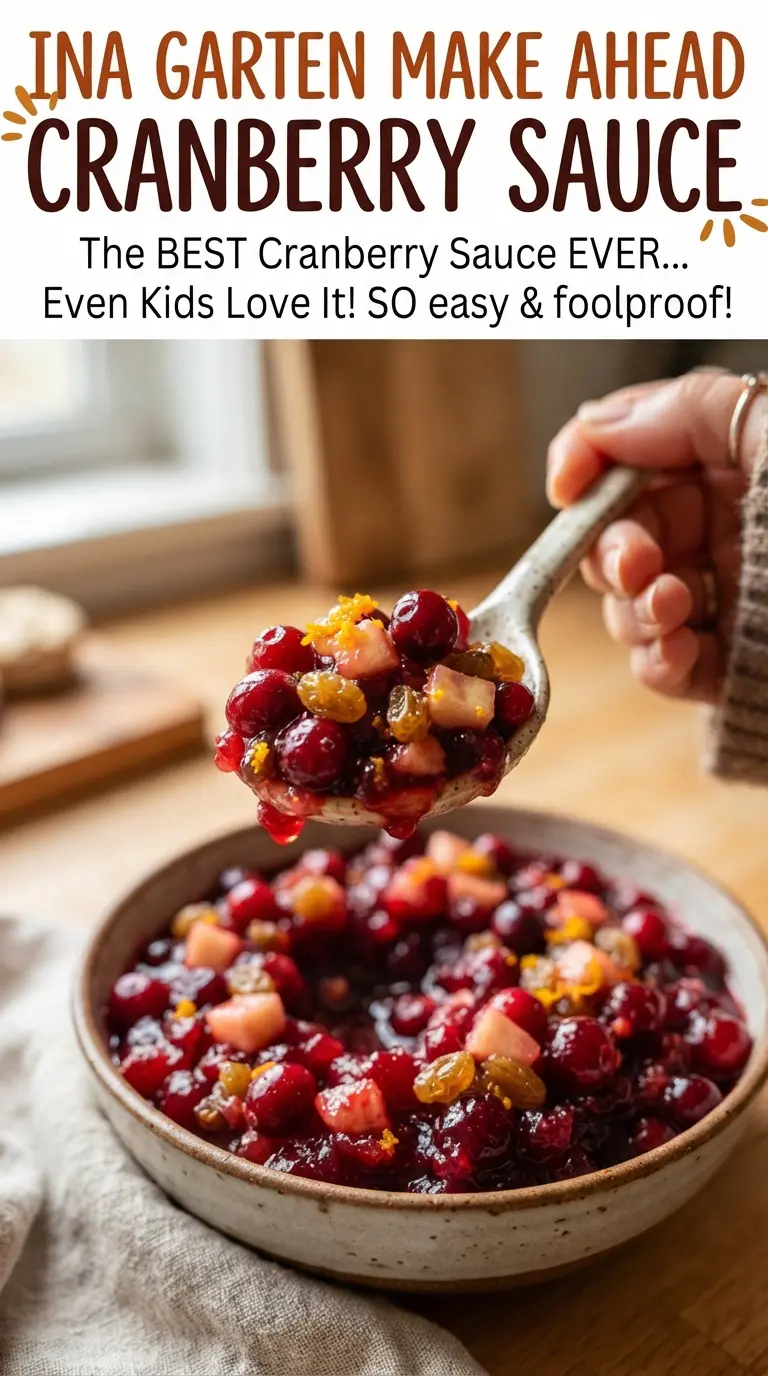
- Fresh cranberries — These give the sauce its sharp backbone and natural pectin, which is what helps it thicken without extra thickeners. Frozen cranberries also work; use them straight from the freezer.
- Sugar — This doesn’t just sweeten the sauce. It balances the tart fruit and helps the cranberries break down into a glossy, spoonable texture.
- Granny Smith apple — This is there for structure and bite. A softer apple can turn muddy, but Granny Smith stays distinct and adds a clean tart note that fits the cranberries.
- Orange and lemon — The zest gives fragrance, and the juice keeps the sauce bright. If you only use one citrus, the sauce loses some of that layered lift.
- Golden raisins — They add little bursts of sweetness and chew. Regular raisins work in a pinch, but golden raisins taste lighter and blend better with the citrus.
- Walnuts or pecans — These bring crunch at the end, which is the difference between a soft fruit compote and a sauce with real contrast. Toast them first so they taste nutty instead of raw.
Getting the Fruit, Citrus, and Nuts to Finish in the Right Order
Starting the Cranberry Base
Combine the cranberries, sugar, and water in a saucepan and bring it to a boil over medium-high heat. You’ll hear the berries start to burst and pop as the skins split. Once that happens, reduce the heat and let them simmer for about five minutes. If the heat stays too low, the berries can sit there without ever softening properly, and the sauce won’t thicken the way it should.
Softening the Apple Without Losing the Bite
Add the diced apple, orange zest, orange juice, lemon zest, and lemon juice, then simmer for about 15 minutes. The apple should become tender but still hold its shape when you stir the sauce. If the fruit starts breaking apart too fast, the heat is too high. Lower it and keep the simmer gentle so the sauce stays chunky and clean-tasting.
Finishing With Raisins and Nuts
Take the pan off the heat before stirring in the raisins and nuts. That keeps the raisins plump and the nuts crisp instead of soft and stewed. The sauce will still look loose at this point, which is exactly right. As it cools, it thickens into the spoonable texture you want.
Chilling for the Best Texture
Let the sauce cool completely before covering and refrigerating it. If you cover it while it’s hot, condensation will collect and thin out the texture you just built. After a few hours in the fridge, the sauce settles into a glossy, chunky consistency that’s easy to serve chilled or bring back to room temperature.
How to Adapt This Make-Ahead Cranberry Sauce Without Losing What Makes It Good
Dairy-Free and Naturally Vegetarian
This recipe is already dairy-free and vegetarian, which makes it easy to serve at a mixed table. Just keep an eye on the nuts if you’re cooking for allergies, and use toasted seeds instead if nuts are off the menu. The sauce still has plenty of body from the fruit alone.
No Nuts
Leave out the walnuts or pecans and you’ll get a smoother sauce with a softer finish. If you want to keep some crunch, stir in toasted pumpkin seeds after the sauce cools. Add them too early and they’ll lose their texture in the fridge.
Using Dried Cranberries in a Pinch
Fresh cranberries are the better choice because they thicken the sauce naturally, but dried cranberries can work if that’s all you have. Soak them in part of the water and a little citrus juice first, then simmer longer until they plump. The result will be softer and sweeter, less tart, and not quite as bright.
Storage and Reheating
- Refrigerator: Store covered for up to 1 week. It thickens as it chills, so it may look firmer the next day.
- Freezer: It freezes well for about 2 months. Pack it in an airtight container, leaving a little room for expansion, and thaw overnight in the fridge.
- Reheating: Serve it cold or at room temperature for the best texture. If you want it slightly warm, heat it gently over low heat just until loosened. High heat can make the fruit break down and turn the nuts soft.
Questions I Get Asked About This Recipe
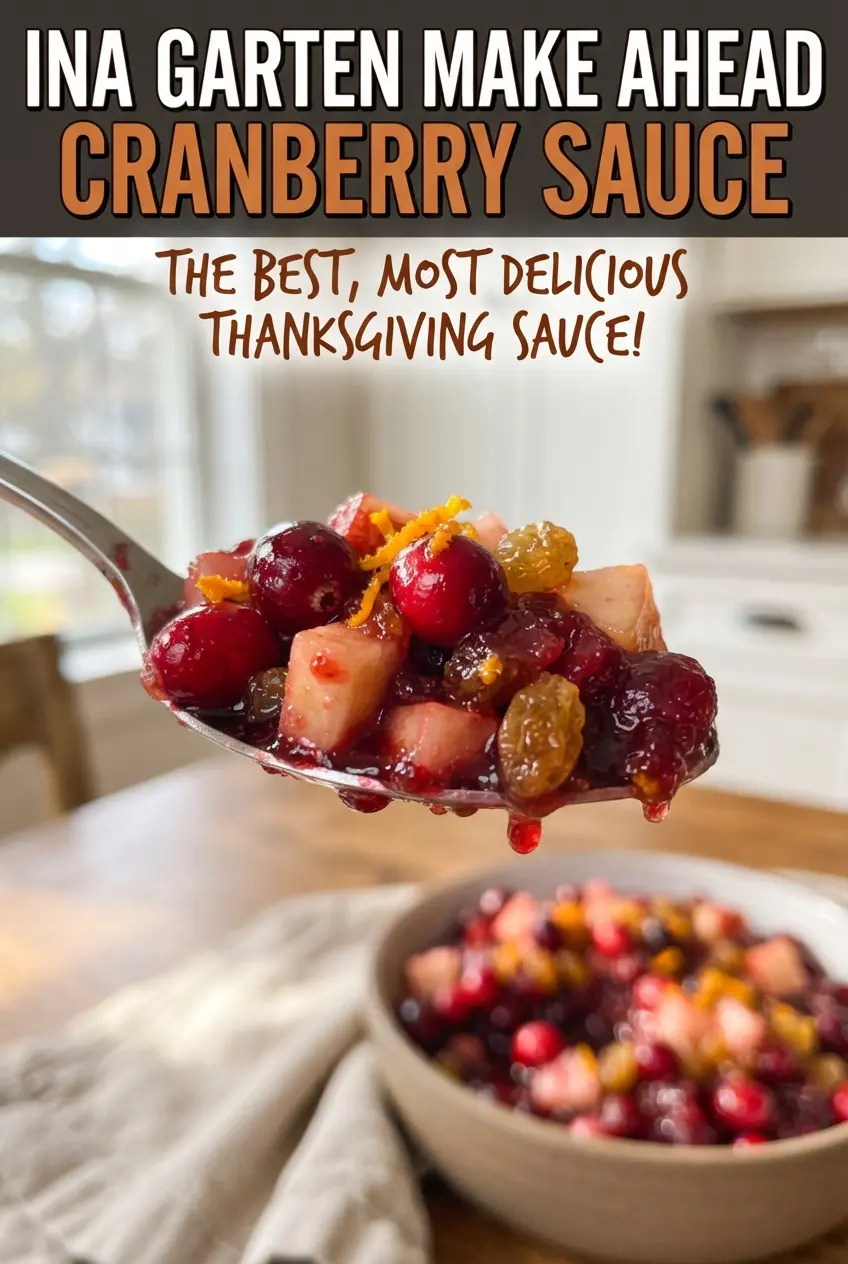
Ina Garten Make Ahead Cranberry Sauce
Ingredients
Equipment
Method
- Bring cranberries, sugar, and water to a boil in a saucepan, then reduce to a gentle simmer for 5 minutes until the skins pop and the mixture looks glossy.
- Add the apple, orange zest, orange juice, lemon zest, and lemon juice, then simmer for 15 minutes until the cranberries burst and the sauce thickens slightly, with the apple pieces turning tender.
- Remove from heat and stir in golden raisins and toasted, chopped walnuts or pecans until evenly distributed and the mixture looks studded with fruit and nuts.
- Cool completely, then cover and refrigerate up to 1 week so the flavors meld and the sauce becomes thick and spoonable.
- Serve chilled or at room temperature, with a spoonful showing chunks of cranberries, apple, and nuts.