Hot honey baked chicken breasts come out with sticky, caramelized edges and a juicy center that stays tender instead of drying out in the oven. The glaze turns glossy and dark amber as it bakes, and the heat from the hot sauce and red pepper flakes cuts through the sweetness in a way that keeps every bite interesting.
The trick here is balance and timing. Honey needs a little fat and acid to stay pourable and cling to the chicken instead of turning into a one-note sugar shell, so the butter and apple cider vinegar matter more than they look like they should. Baking at 425°F gives the glaze enough heat to caramelize before the chicken has a chance to dry out, and that halfway baste builds a thicker coating without burning the surface.
Below, I’m walking through the small details that make this weeknight chicken dinner work: how to keep the glaze smooth, when to stop basting, and which substitutions still give you that sweet heat finish.
The glaze thickened into that sticky amber coating I was hoping for, and the chicken stayed juicy even after the second helping. The little hit of vinegar kept the honey from tasting too sweet.
Like this hot honey baked chicken? Save it for the nights when you want sticky caramelized chicken breasts with almost no cleanup.
The Glaze Needs the Oven, Not Just the Pan
Hot honey can burn fast if it sits too long over direct heat, which is why this recipe works better in the oven than on the stovetop. The chicken gets time to cook through while the glaze reduces into a sticky coating, and the open oven heat lets the sugars darken without scorching in one spot.
The other common mistake is brushing on too much glaze at the beginning and expecting it to stay glossy. Honey loosens first, then thickens as it heats, so the first coat should be generous but not drowning. The halfway baste is what builds that lacquered finish you want on the outside.
- 425°F heat — Hot enough to caramelize the glaze before the breasts dry out.
- Butter — Keeps the honey mixture smooth and helps it cling to the chicken instead of sliding off.
- Apple cider vinegar — Sharpens the sweetness and keeps the glaze from tasting flat.
- Red pepper flakes — Add visible heat and a little texture in the finished coating.
What Each Ingredient Is Actually Doing in This Dish

- Chicken breasts — Boneless, skinless breasts keep this fast and weeknight-friendly. If yours are thick on one end and thin on the other, pound them lightly so they bake evenly and the thinner end doesn’t dry out before the center reaches temperature.
- Honey — This is the base of the glaze, and there isn’t a true substitute if you want that sticky finish. Maple syrup can work in a pinch, but it sets looser and tastes less rounded when baked.
- Hot sauce — Frank’s brings vinegar and heat without overwhelming the glaze. Any cayenne-style hot sauce works here, but avoid thick sauces with a lot of extra sugar because they can throw off the balance.
- Butter and vinegar — Butter gives the glaze body, while vinegar keeps it bright. Skip either one and the sauce tastes heavier and less layered.
- Smoked paprika and garlic powder — These season the chicken itself, not just the glaze, so every bite tastes complete even where the coating is thinner.
How to Get a Deep Amber Glaze Without Drying the Chicken Out
Seasoning the Chicken First
Pat the chicken dry, then season both sides generously before any glaze touches the surface. Dry chicken browns better, and the seasoning underneath keeps the meat from tasting one-dimensional once the sticky top layer is on. If the breasts are especially large, cut the thickest part open slightly or pound them to an even thickness so the center doesn’t lag behind the edges.
Building the Hot Honey Glaze
Whisk the honey, hot sauce, melted butter, vinegar, red pepper flakes, and garlic powder until the mixture looks smooth and glossy. If the butter is too hot, it can separate a little at first, so let it cool for a minute before whisking. The glaze should pour easily but still look thick enough to coat a spoon.
Basting at the Right Moment
Brush on a generous first layer, then bake until the surface starts to set before adding the rest of the glaze halfway through. That second coat sticks because the first layer has already started to caramelize. If you baste too early and too often, the honey just runs off and pools in the pan instead of forming that sticky shell.
Knowing When It’s Done
Pull the chicken when the thickest part hits 165°F and the glaze looks dark amber with a few bubbling edges. Don’t wait for the coating to look dry; it should still look glossy when it comes out. Letting it rest for five minutes keeps the juices in the meat and gives the glaze time to set.
Three Ways to Make This Hot Honey Chicken Work for Your Table
Make it dairy-free
Use olive oil instead of butter in the glaze. You’ll lose a little richness, but the chicken still gets that shiny, clingy finish and the flavor stays balanced if you keep the vinegar in place.
Turn up the heat
Add another 1/2 teaspoon of red pepper flakes or a splash more hot sauce. That gives you a sharper finish, but don’t increase the honey too much or the glaze can start tasting candy-like instead of spicy-sweet.
Use chicken thighs instead
Boneless thighs work well and stay even juicier, but they usually need a few extra minutes in the oven. The glaze gets a little deeper and richer on thighs, and the extra fat helps the edges caramelize beautifully.
Swap in maple for part of the honey
Replace up to half the honey with maple syrup if you want a deeper, woodsy sweetness. The glaze won’t set quite as sticky, but it does add a darker note that works well with smoked paprika.
Storage and Reheating
- Refrigerator: Store leftovers in an airtight container for up to 4 days. The glaze will firm up as it chills, which is normal.
- Freezer: Freeze cooked chicken for up to 2 months, wrapped well and sealed in a freezer bag. The glaze won’t stay as glossy after thawing, but the flavor still holds up.
- Reheating: Warm gently in a 325°F oven, covered loosely with foil, until heated through. High heat dries out the breasts and can make the honey coating taste burnt before the center is warm.
Answers to the Questions Worth Asking
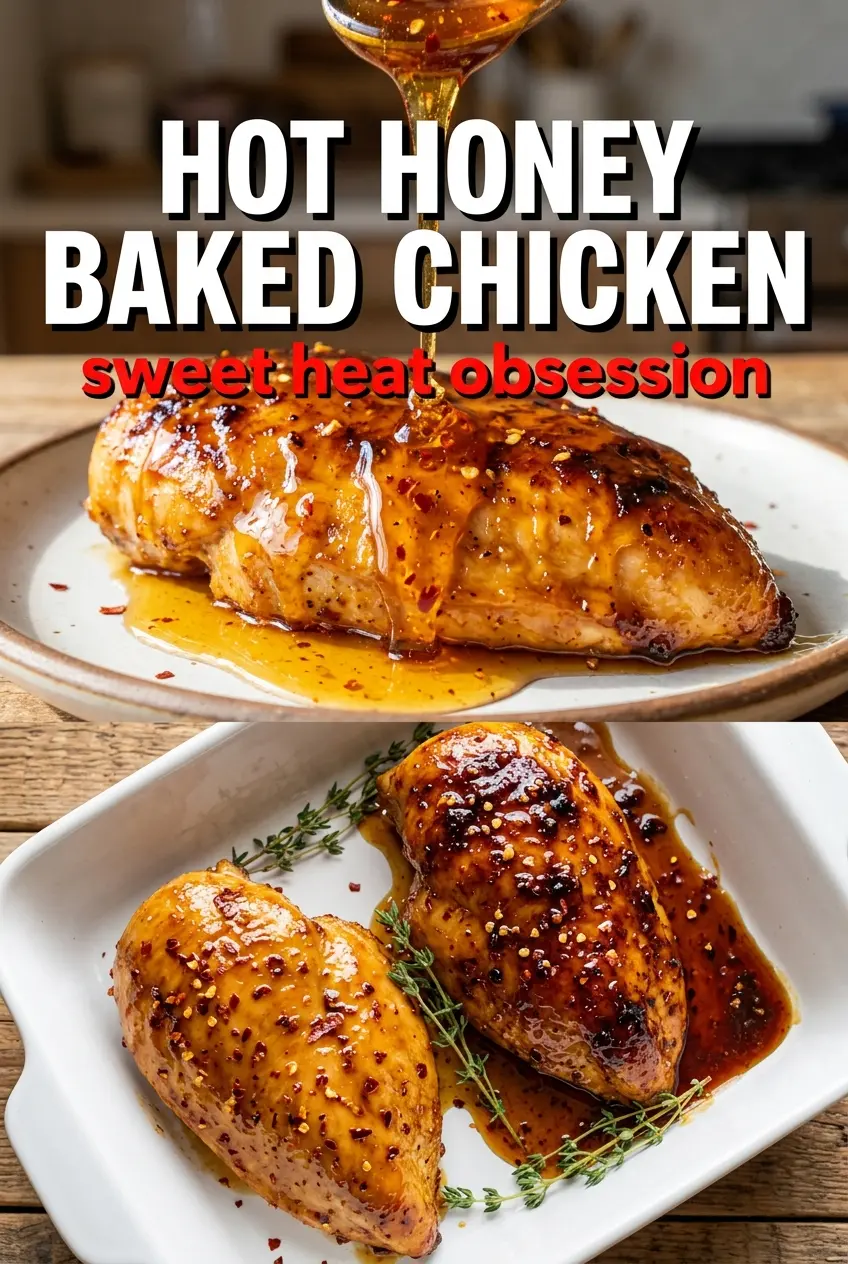
Hot Honey Baked Chicken Breasts
Ingredients
Equipment
Method
- Preheat the oven to 425°F and lightly oil a baking dish or cast iron skillet so the chicken won’t stick.
- Season the chicken breasts on both sides with salt, pepper, garlic powder, and smoked paprika for even flavor.
- Whisk together honey, hot sauce (Frank's RedHot), melted butter, apple cider vinegar, red pepper flakes, and garlic powder until smooth.
- Place the chicken in the prepared dish and brush generously with the hot honey glaze; reserve some for basting.
- Bake at 425°F for 10 minutes, then brush the chicken with the remaining glaze once at the halfway point for a dark amber caramelization.
- Continue baking for 10 to 12 minutes more, until the internal temperature reaches 165°F and the glaze looks caramelized and glistening.
- Rest the chicken for 5 minutes so the juices settle, keeping the centers juicy.
- Finish by topping with flaky sea salt, fresh thyme, and an extra drizzle of hot honey for a sticky-sweet sheen.