Honey mustard potatoes come out with crisp, caramelized edges and a glossy glaze that clings to every cut surface. The outside gets sticky and deeply golden while the centers stay soft and fluffy, which is exactly why these keep showing up beside roast chicken, grilled sausages, and simple weeknight mains.
What makes this version work is the balance in the sauce. Dijon brings sharpness, whole grain mustard adds texture and a little bite, and honey gives the potatoes that lacquered finish without turning them candy-sweet. A splash of apple cider vinegar keeps the glaze lively, and the potatoes roast best when they’re spread out in a single layer so the edges can brown instead of steam.
Below, I’m walking through the part that matters most: how to get the glaze to cling, how to keep the potatoes from softening into the pan, and a few swaps that still give you a proper caramelized finish.
The glaze coated every potato wedge and turned sticky at the edges without burning. I tossed them once halfway through and they came out with the best caramelized finish I’ve gotten from a sheet-pan side.
Love the glossy, caramelized finish on these honey mustard potatoes? Save it to Pinterest for the nights when you need an easy side that roasts up golden and bold.
The Glaze Clings Best When You Roast, Not Soak
The biggest mistake with mustard potatoes is drowning them in sauce and expecting the oven to fix everything. Too much liquid sits in the pan, the potatoes steam, and the sugars in the honey never get the chance to caramelize. A thin, well-balanced coating is what you want here. It should look glossy and clingy, not soupy.
Baby potatoes or Yukon golds both work because they hold their shape and give you a creamy middle after roasting. Cut them in halves so the flat sides can contact the sheet pan. That cut surface is where the browning happens, and browning is what turns this from a seasoned potato dish into something you’ll keep making.
What Each Ingredient Is Actually Doing In This Dish
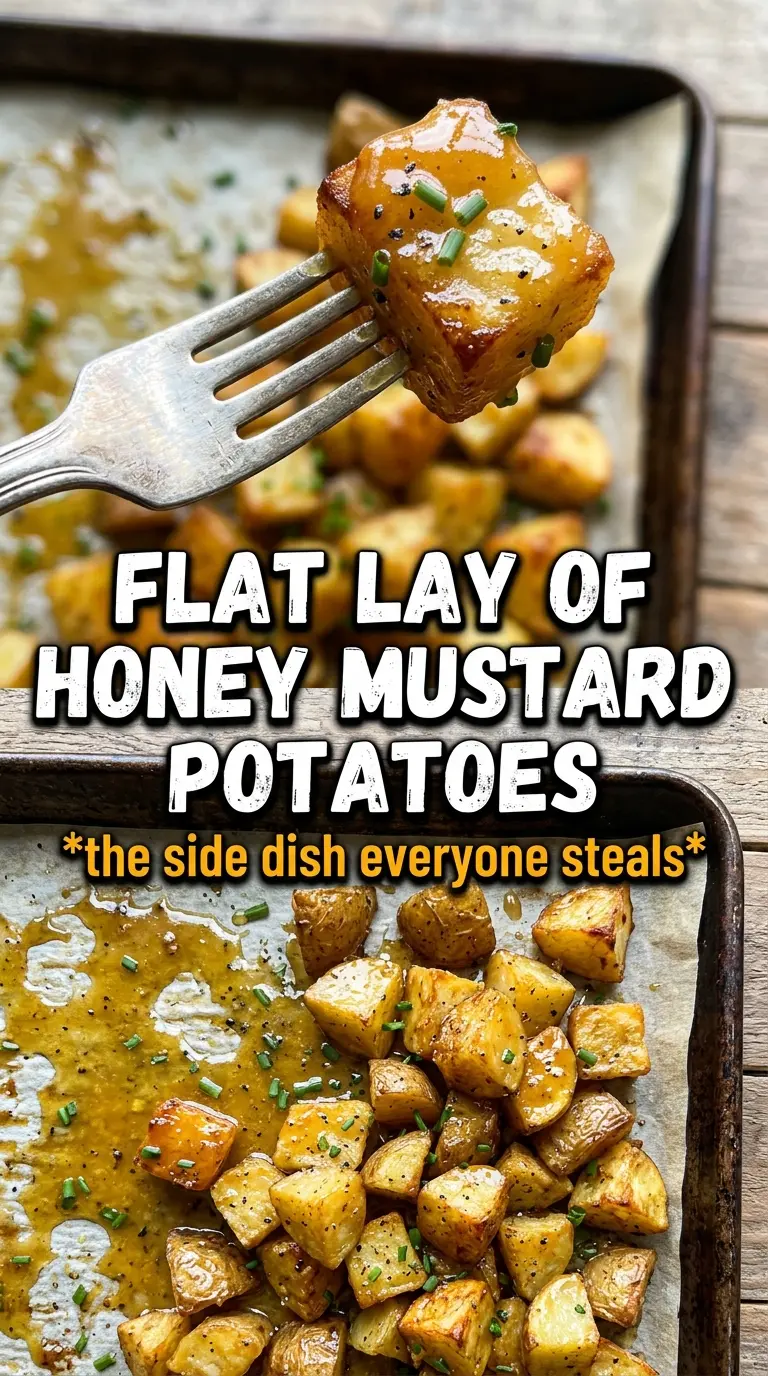
- Baby potatoes or Yukon golds — These give you a creamy interior and enough structure to roast hard without falling apart. Waxy potatoes can work, but they won’t get quite as fluffy inside. Halve them for more surface area and faster browning.
- Dijon mustard — This is the sharp backbone of the glaze. It melts into the oil and vinegar and keeps the honey from tasting flat. Generic yellow mustard won’t give the same depth or emulsion.
- Whole grain mustard — The mustard seeds add texture and little bursts of flavor across the potatoes. If you only have Dijon, the dish still works, but it loses some of that rustic, speckled look and bite.
- Honey — This is what helps the potatoes caramelize and turn sticky in the oven. Use a regular liquid honey, not a heavily crystallized one, so it mixes smoothly with the mustard.
- Apple cider vinegar — This keeps the glaze from feeling heavy. It sharpens the sweetness and helps the coating taste balanced after roasting. Lemon juice can stand in, but the flavor will be brighter and less rounded.
- Fresh rosemary — Rosemary holds up well in the oven and gives the potatoes a savory edge. Dried rosemary works in a pinch, but use less because it reads stronger once toasted.
Getting The Potatoes Brown Before The Glaze Sets
Coating Every Cut Side
Whisk the glaze until the honey disappears into the mustard and oil, then toss the potatoes until every piece is coated. The mixture should cling in a thin layer. If you see a puddle of sauce collecting at the bottom of the bowl, it’s too loose, and the potatoes will roast up dull instead of glossy.
Roasting For Edge Browning
Spread the potatoes in a single layer on a lined baking sheet, cut side down where you can manage it. Crowding the pan traps steam, which is the fastest way to lose that roasted edge. At 425°F, you want the potatoes to sizzle as they roast and pick up deep golden spots before you toss them halfway through.
Finishing With Heat And Salt
They’re done when the edges look lacquered and the centers slide easily when pierced with a fork. The honey will darken a little, and that’s good; pale potatoes taste underdone here. Pull the pan once they’re golden, then finish with parsley and flaky salt while they’re still hot so the salt sticks to the glaze.
How To Adapt These Potatoes For Different Dinners
Make It Dairy-Free And Naturally Gluten-Free
This recipe already lands in both camps as written. The texture comes from the potatoes and the glaze, not from butter or flour, so you don’t need to change anything to keep it dairy-free or gluten-free. Just check your mustard label if you’re serving someone with a sensitivity, since some brands add unexpected fillers.
Swap In Sweet Potatoes For A Softer, Sweeter Side
Sweet potatoes roast beautifully with this glaze, but they cook faster and soften more quickly than Yukon golds. Cut them into larger chunks so they don’t collapse before the edges caramelize. The result is sweeter and softer, with less of that firm roasted bite.
Turn Up The Herbiness
Rosemary is the lead herb here, but thyme works well if you want something a little softer and less piney. You can also add a small pinch of crushed red pepper for a gentle kick that plays nicely with the honey. Keep the amount modest so the glaze still tastes balanced.
Storage And Reheating
- Refrigerator: Store in an airtight container for up to 4 days. The glaze will tighten up and the potatoes will lose some crispness.
- Freezer: I don’t recommend freezing these. The potatoes turn grainy and the glaze separates after thawing.
- Reheating: Reheat on a baking sheet at 400°F until hot and the edges crisp back up. The microwave softens the potatoes and makes the glaze sticky in the wrong way.
Answers To The Questions Worth Asking
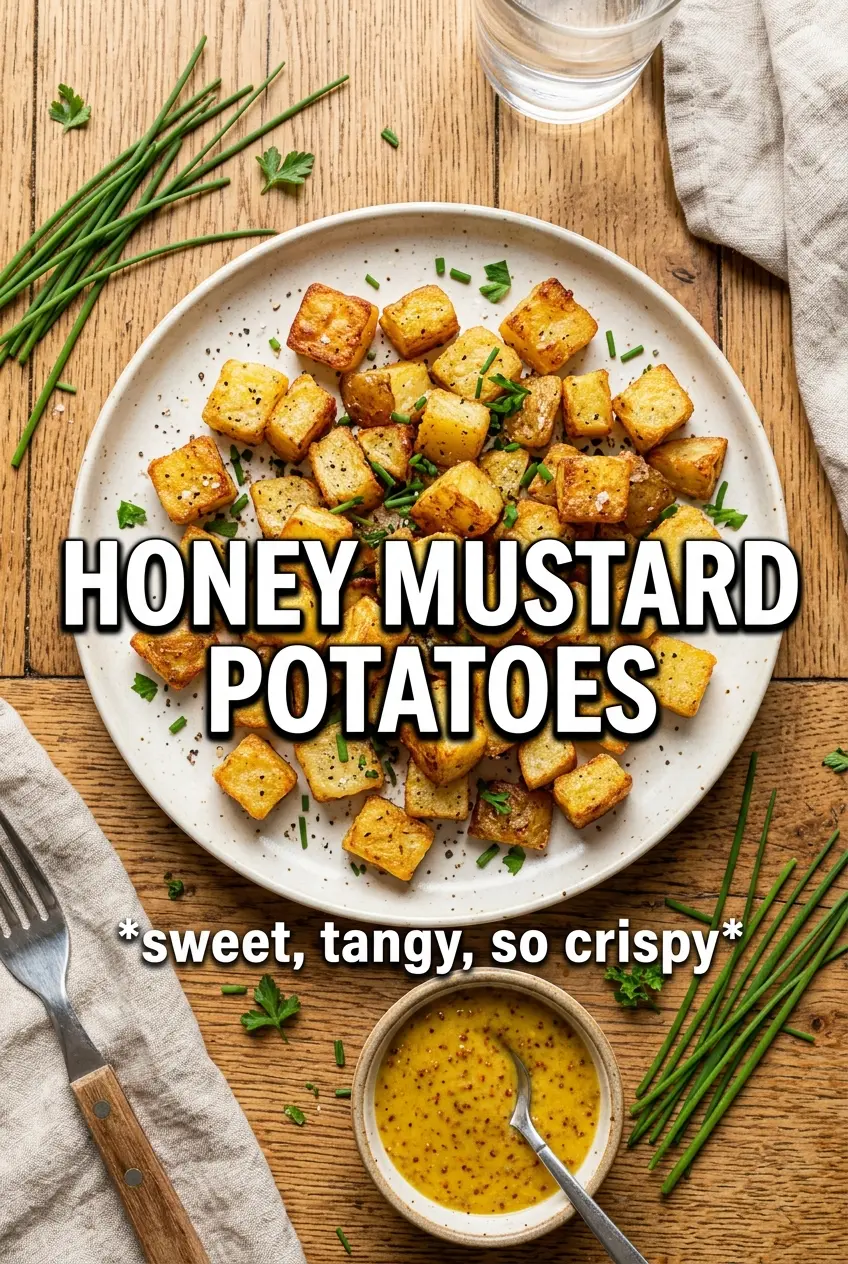
Honey Mustard Potatoes
Ingredients
Equipment
Method
- Preheat the oven to 425°F and line a baking sheet for easy roasting.
- Whisk Dijon mustard, whole grain mustard, honey, olive oil, apple cider vinegar, garlic, rosemary, smoked paprika, salt, and pepper until smooth and cohesive.
- Toss the halved baby potatoes in the honey mustard mixture until well coated, with a glossy look.
- Spread the potatoes in a single layer and roast for 30-35 minutes, tossing halfway, until caramelized and golden on the edges.
- Sprinkle with fresh parsley and flaky salt right after roasting for bright freshness and extra crunch.