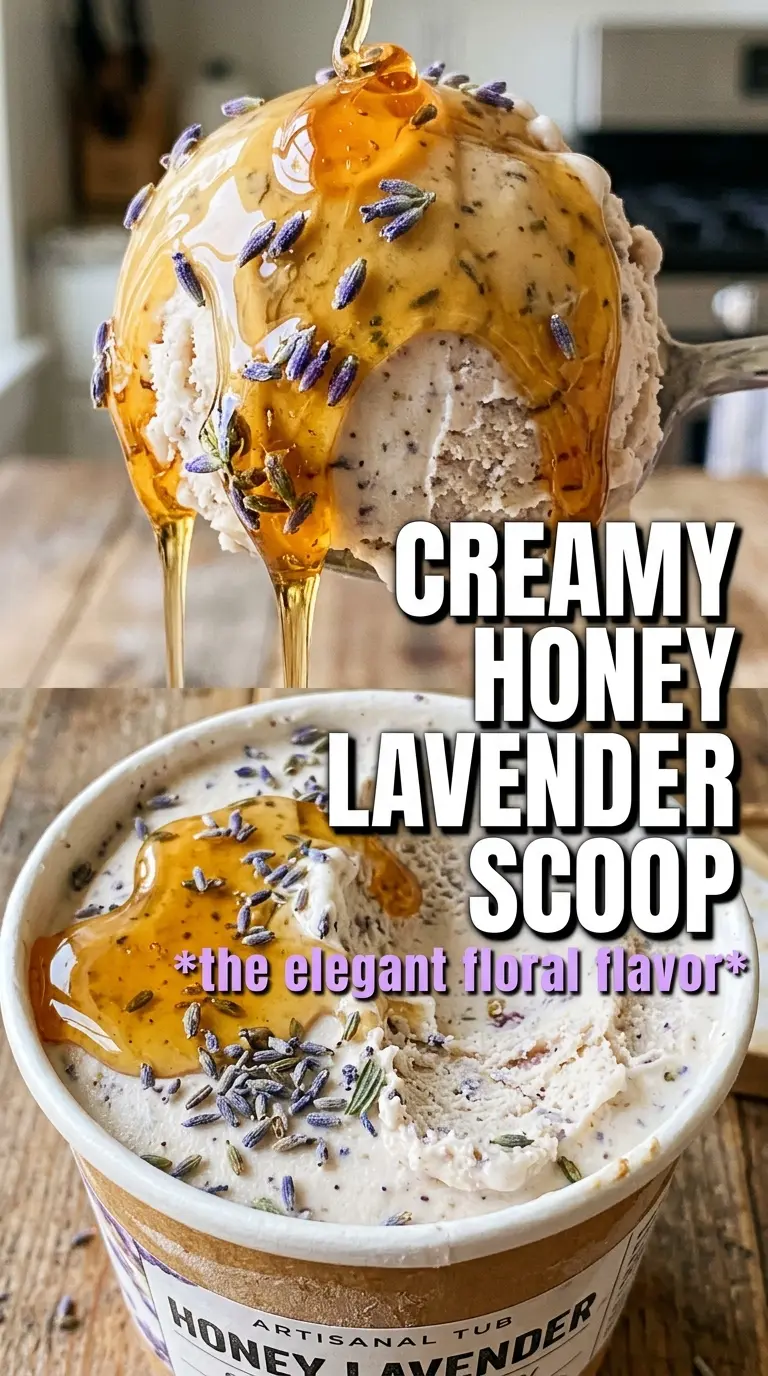
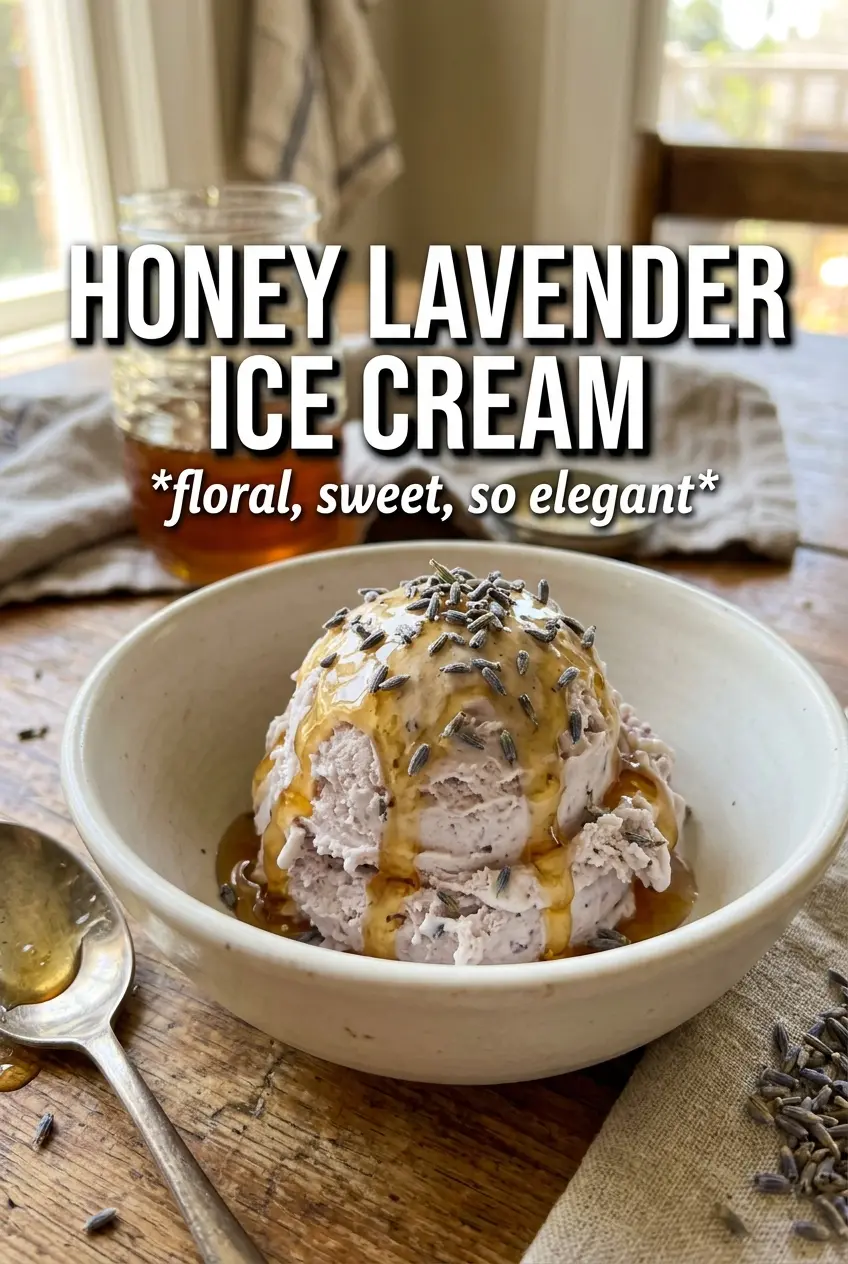
Honey lavender ice cream lands with a soft, fragrant finish that tastes calm instead of perfumey. The honey gives it a round, mellow sweetness that keeps the lavender from turning sharp, and the custard base makes every scoop creamy enough to melt slowly on the tongue. It’s the kind of dessert that feels polished without being fussy.
What makes this version work is restraint. Lavender only needs enough heat and time to perfume the cream, not enough to steep into soapiness, and honey brings its own moisture and body that plain sugar can’t match. The custard is cooked just to 175°F, which is hot enough to thicken without pushing the yolks into curdled territory.
Below, I’ve included the steeping cue that keeps the lavender balanced, plus a few notes on color, substitutions, and storage so the texture stays smooth after freezing.
The lavender came through beautifully without tasting soapy, and the custard churned up extra creamy. I let it chill overnight and it scooped like a dream the next day.
Save this honey lavender ice cream for the days when you want a floral dessert with a silky custard base and a clean honey finish.
The Mistake That Makes Lavender Ice Cream Taste Like Soap
The biggest problem with floral ice cream is over-steeping. Lavender buds go from delicate to bitter faster than people expect, especially once they’ve been heated in dairy. The cream should smell clearly floral, but it should still taste like cream and honey first. If the lavender takes over, the steep is too long or the amount was too generous.
The other place people get into trouble is with the custard base. Egg yolks thicken gradually, and if the heat jumps too high, they seize into little bits instead of turning smooth. Cooking to 175°F gives you a custard that’s thick enough to coat a spoon without tasting eggy.
- Culinary dried lavender buds — Use culinary-grade buds only; ornamental lavender can taste harsh and dusty. If yours are especially strong, start with 1 tablespoon, steep, taste, and only add more next time.
- Honey — This is the flavor that carries the whole dessert. A mild clover or orange blossom honey keeps the ice cream balanced, while darker honey will read more floral and earthy.
- Egg yolks — They give the ice cream its body and that plush scoopable texture. Don’t swap in whole eggs unless you want a lighter, less rich custard.
- Heavy cream and whole milk — The cream brings richness; the milk keeps it from becoming waxy. Using all cream will make it heavier and dull the honey a bit.
- Vanilla extract — Vanilla softens the floral edge and helps the honey taste rounder. It doesn’t make the ice cream taste like vanilla; it makes the lavender feel more integrated.
What Each Ingredient Is Actually Doing in This Ice Cream
- Base ingredient (cream, milk, or custard) — This provides the foundation and richness. Quality matters.
- Sweetener (sugar, honey, or condensed milk) — This sweetens and prevents ice crystals. The ratio is critical.
- Flavor element (vanilla, fruit, chocolate, or other) — This defines the ice cream personality. Use quality ingredients.
- Egg yolks (if making custard base) — These create richness and silky texture. Optional but elevates ice cream.
- Churning (if using ice cream maker) — This incorporates air and prevents ice crystals. Critical for smooth texture.
- Freezing temperature and time — Proper freezing prevents rock-hard texture. Store at 0°F or below.
- Mix-ins (chocolate, cookies, fruit, or swirls) — These add texture and prevent one-dimensional flavor. Add near end of churning.
- Serving temperature (slightly soft, not rock hard) — This provides creamy mouthfeel. Remove from freezer 5 minutes before serving.
How to Infuse the Cream Without Overcooking the Custard
Steeping the Lavender
Start by heating the cream, milk, honey, and lavender just until the mixture is steaming around the edges. Don’t let it boil. Boiling drives off the delicate top notes and can make the lavender taste flat. Once it’s off the heat, let it steep 15 to 20 minutes, then strain well so no tiny bits drift into the custard.
Tempering the Yolks
Reheat the infused dairy until it’s steaming again, then whisk a slow stream into the egg yolks while you keep whisking. That gradual addition warms the yolks without scrambling them. If you dump the hot liquid in all at once, you’ll get egg bits instead of a smooth base.
Cooking to the Right Thickness
Return everything to the saucepan and cook over medium-low heat, stirring constantly and scraping the bottom and corners of the pan. The custard is ready at 175°F, or when it coats a spoon and leaves a clean trail when you run your finger through it. Pull it off the heat before it looks fully thick; it will continue to tighten as it cools.
Chilling, Churning, and Freezing
Strain the custard again, stir in the vanilla, salt, and food coloring if using, then chill it completely before churning. Warm base goes into the machine with too much air resistance and never freezes as smoothly. After churning, freeze the ice cream until firm enough to scoop, and give it time to set fully before serving.
What to Change When You Want a Different Kind of Floral Ice Cream
Dairy-Free Coconut Version
Swap the cream and milk for full-fat coconut milk and coconut cream in equal measure. The texture stays rich, but the flavor shifts toward tropical instead of pure dairy, and the coconut will sit alongside the lavender rather than disappearing behind it.
Lower-Sweetness Honey Lavender Ice Cream
Cut the honey slightly if you prefer a less sweet finish, but don’t reduce it too far or the ice cream will freeze harder and taste thinner. Honey helps with softness in the freezer, so lowering it changes both sweetness and scoopability.
Stronger Lavender for a More Perfumed Dessert
Use an extra teaspoon or two of lavender, but only steep briefly and taste before straining. The goal is a clear floral note, not a potpourri effect. If it tastes strong in the warm base, it will read even stronger once frozen.
Using Purple Food Coloring
A single drop is enough to give the ice cream a pale lilac tone without making it look artificial. Skip it if you like the natural ivory color, but if you want the lavender to read visually, add the coloring after the custard cools so you can control the shade.
Storage and Reheating
- Refrigerator: Keep the churned custard base covered for up to 2 days before freezing; the flavor deepens a bit as it rests.
- Freezer: Frozen ice cream keeps well for about 2 weeks. After that, the texture can turn a little icy, especially if the container is opened often.
- Reheating: Ice cream doesn’t get reheated. Let it sit at room temperature for 5 to 10 minutes before scooping so the honey-rich base softens instead of breaking into shards.
Answers to the Questions Worth Asking
Honey Lavender Ice Cream
Ingredients
Equipment
Method
- Combine heavy cream, whole milk, honey, and culinary dried lavender buds in a saucepan and heat until steaming. Turn off the heat and steep off heat for 15-20 minutes.
- Strain out the lavender buds from the infused cream. Press firmly to extract flavor while keeping the mixture smooth.
- Reheat the infused cream until steaming. Slowly whisk the hot cream into the egg yolks to temper them.
- Return the mixture to the saucepan and cook, stirring, until it reaches 175F. Keep the heat steady enough to thicken without boiling.
- Strain the custard again for a silky texture, then stir in vanilla extract and salt. The mixture should coat the back of a spoon.
- Add a drop of purple food coloring if desired for a lavender hue. Stir until the color is evenly distributed.
- Cool the custard completely before chilling. Refrigerate for 4 hours to chill thoroughly.
- Churn the chilled custard in an ice cream maker until thick and creamy. Stop when it reaches soft-serve consistency.
- Transfer the churned ice cream to a container and freeze until firm. Let it harden fully so scoops hold their shape.