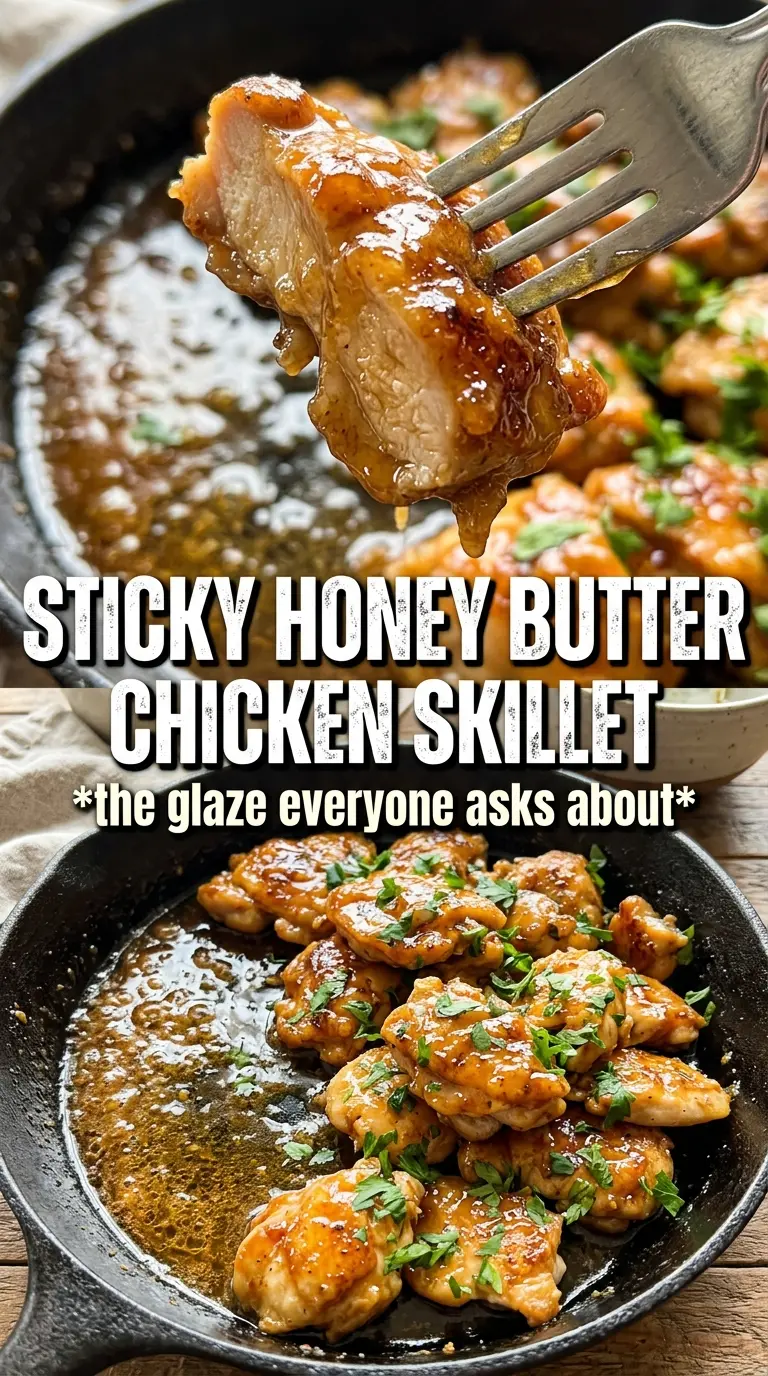
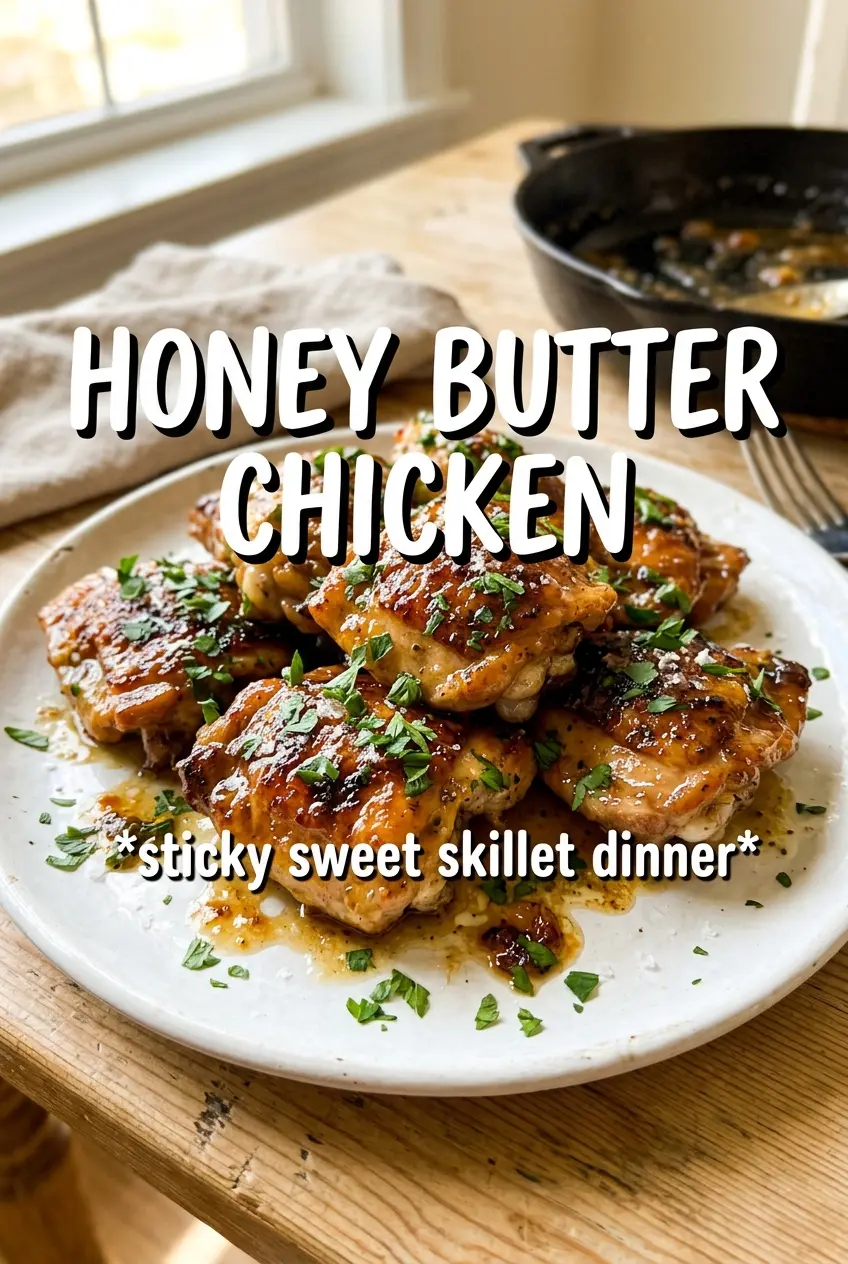
Honey butter chicken lands on the plate with that rare combination of crisp-edged, golden chicken and a glossy sauce that clings instead of running off. The glaze tastes sweet first, then buttery, then just sharp enough from the vinegar and soy sauce to keep every bite from feeling heavy. It’s the kind of skillet dinner that looks like you spent more time on it than you did.
What makes this version work is timing. The chicken gets a hard sear first, which builds color and leaves behind browned bits that season the sauce. Then the butter, honey, soy sauce, and vinegar come together in the same pan, so the glaze picks up all that flavor instead of starting from scratch. The result is a sauce that tightens into a shiny coating in just a few minutes.
You’ll find a few practical notes below on getting the sauce to thicken without burning, plus variations for turning this into a dairy-free or lower-sugar dinner when you need one.
The sauce thickened right in the skillet and coated the chicken like a glaze instead of pooling at the bottom. I added the thyme at the end and it tasted like something from a good restaurant, but faster.
Keep this honey butter chicken handy for nights when you want a glossy skillet glaze, golden chicken, and almost no cleanup.
The Part Most People Rush: Building the Glaze Without Burning the Honey
The sauce looks simple, but honey can go from glossy to scorched fast if the pan is too hot. Once the chicken comes out, the skillet needs a minute to calm down before the butter, garlic, and honey go in. That brief pause keeps the garlic from turning bitter and gives the honey time to melt into the butter instead of sticking to the pan in dark spots.
The other key is the vinegar. It doesn’t make the sauce taste sour; it keeps the glaze from reading flat. Without that little hit of acid, honey butter chicken can taste one-note and sticky. With it, the sauce tastes rounder and finishes clean instead of cloying.
- Boneless skinless chicken breasts — These stay lean and slice cleanly under the glaze. If yours are thick, pound them to an even thickness so they cook through before the outside overbrowns.
- Honey — This is the body of the sauce, so use a honey you actually like the taste of. Mild clover honey keeps it classic; darker honey brings a deeper, almost floral note.
- Butter — Real butter gives the sauce its shine and richness. A buttery spread won’t emulsify the same way and can leave the glaze thin or greasy.
- Soy sauce — It adds salt, color, and that savory edge that keeps the glaze from tasting like dessert. Tamari works well if you need a gluten-free version.
- Apple cider vinegar — A small amount brightens the whole skillet. Lemon juice can work in a pinch, but vinegar holds up better here and won’t overpower the honey.
- Garlic — Fresh minced garlic matters because it perfumes the butter as it softens. Jarred garlic tends to taste harsher once it hits the hot pan.
What Each Ingredient Is Actually Doing in This Recipe
- Primary ingredient (the star) — Quality matters most. Choose the best you can find.
- Cooking medium (oil, butter, or broth) — This carries flavors and prevents dryness.
- Seasonings (salt, pepper, spices, herbs) — Layer flavors so nothing overpowers. Build depth gradually.
- Aromatics (garlic, onion, herbs) — Cook with fat to bloom flavors. Become the foundation.
- Supporting ingredients — Complement the main ingredient without overpowering it.
- Sauce or liquid (if applicable) — Brings flavors together. Balance richness with acid.
- Acid (lemon, vinegar, wine, or other) — Brightens and prevents flat-tasting results.
- Final finish (garnish, glaze, or sauce) — Prevents one-dimensional taste and adds visual appeal.
The 20 Minutes That Turn Simple Chicken Into a Sticky Skillet Dinner
Getting the Sear First
Season the chicken well before it hits the pan, and let the skillet get hot enough that the oil shimmers. Lay the chicken down and leave it alone until it releases cleanly and the underside is deep golden. If you keep moving it too soon, you’ll lose the crust and end up with pale chicken that never builds the flavor the sauce needs.
Cook until the chicken reaches 165°F at the thickest point, then move it to a plate. The carryover heat will finish the last bit while the sauce comes together. If the breasts are especially thick, lower the heat slightly so the outside doesn’t darken before the center is done.
Melting the Butter and Softening the Garlic
Use the same pan, and don’t wipe it out. Those browned bits are part of the sauce now. Melt the butter over medium heat, then stir in the garlic just until it smells fragrant and turns lightly golden at the edges. If the garlic browns hard, it will taste bitter once the honey goes in.
Turning the Pan Drippings Into Glaze
Add the honey, soy sauce, and vinegar, then let the mixture come to a lively simmer. It should look smooth and glossy, not separated. If it seems thin at first, give it a minute; honey thickens as it heats, and the sauce needs a little time to catch up.
Finishing the Chicken in the Sauce
Return the chicken to the skillet and spoon the glaze over the top repeatedly. That basting step is what gives you the lacquered finish. After 2 to 3 minutes, the sauce should cling to the chicken in a shiny layer and leave slow-moving trails in the pan. Pull it off once it reaches that point, because honey can over-reduce fast and turn sticky in the wrong way.
Three Ways to Adjust the Skillet Without Losing the Point of the Dish
Make it gluten-free with tamari
Swap the soy sauce for tamari in a 1:1 amount. You’ll keep the same savory depth and color without changing the texture of the glaze. Coconut aminos also work, but they’re sweeter, so the finished sauce tastes softer and a little less punchy.
Make it dairy-free with a butter substitute
Use a plant-based butter that melts cleanly and is meant for cooking, not a tub-style spread. The sauce will still coat the chicken, but it won’t have quite the same round, rich finish as real butter. Keep the heat moderate so the substitute doesn’t separate.
Make it a little less sweet
Cut the honey slightly and add an extra splash of vinegar, then taste the sauce after it simmers. That keeps the glaze balanced without losing the sticky finish. Don’t replace all the honey, though, or the sauce stops behaving like a glaze and starts tasting like seasoned pan juices.
Use chicken thighs instead of breasts
Boneless skinless thighs give you a juicier, slightly richer result and are more forgiving if your heat runs high. They may need a minute or two longer to cook through, but they hold up beautifully under the glaze. The finished dish tastes a little deeper and less lean.
Storage and Reheating
- Refrigerator: Store leftovers in an airtight container for up to 3 days. The glaze will thicken as it chills, and the chicken will soak up more of the sauce.
- Freezer: It freezes okay, though the sauce can lose a little shine after thawing. Freeze in portions for up to 2 months and thaw in the refrigerator overnight.
- Reheating: Warm gently in a skillet over low heat with a splash of water to loosen the glaze. High heat can make the sauce stick and overcook the chicken before the center warms through.
Answers to the Questions Worth Asking
Honey Butter Chicken
Ingredients
Equipment
Method
- Season the chicken breasts with salt, pepper, garlic powder, and smoked paprika to taste. Heat olive oil in a large skillet over medium-high heat until shimmering and sear the chicken for 5-6 minutes per side, until golden and the internal temperature reaches 165°F, then remove the chicken.
- Melt the butter in the same pan over medium heat, then add the minced garlic and cook for 1 minute until fragrant. Stir in the honey, soy sauce, and apple cider vinegar and bring the mixture to a simmer.
- Return the chicken to the pan and cook for 2-3 minutes, turning and basting as the sauce caramelizes. Keep going until the sauce coats the chicken with a glossy amber sheen, then plate and drizzle with any remaining sauce.
- Top the chicken with fresh thyme leaves and finish with flaky sea salt for a bright, salty contrast and an herb-flecked look.