Homestyle chicken noodle soup lands the way the best old-school soups do: rich broth, tender shredded chicken, soft vegetables that still have some shape, and noodles that soak up flavor without turning to mush. The pot smells like onions, garlic, thyme, and peppercorns long before the first bowl is ready, and the finished soup tastes like it simmered all afternoon even when it didn’t.
The key is building the broth first with the whole chicken and a few vegetables left in large pieces, then straining everything out before adding the sliced carrots, celery, and noodles. That gives you a clear, deeply seasoned broth instead of a cloudy one full of overcooked bits. Fresh dill at the end wakes the whole pot up and keeps the soup tasting clean instead of flat.
Below, you’ll find the small details that keep the broth full-bodied, the noodles tender, and the chicken from drying out. There’s also a simple way to adjust the soup if you want a little more broth, a little more richness, or a make-ahead version that still tastes fresh the next day.
The broth had that deep homemade taste, and the noodles stayed perfectly tender instead of getting gummy. I made a double batch and my kids kept going back for more.
Save this homestyle chicken noodle soup for the nights when you want a golden broth, tender chicken, and noodles that hold their shape.
The Broth Gets Richer When You Don't Rush the First Simmer
Homestyle chicken noodle soup can taste thin if the broth never gets a chance to pull flavor from the chicken, bones, and aromatics. The first simmer is where the whole pot gets its backbone. Bringing everything up slowly, skimming the foam, and keeping the heat at a steady simmer gives you a cleaner broth with more depth and less gray scum floating on top.
The other mistake is boiling the soup hard from the start. That clouds the broth and can tighten the chicken before it turns tender. A gentle simmer keeps the meat juicy and gives the carrots, celery, onion, thyme, and peppercorns time to do their work without breaking apart.
What Each Ingredient Is Actually Doing in the Pot
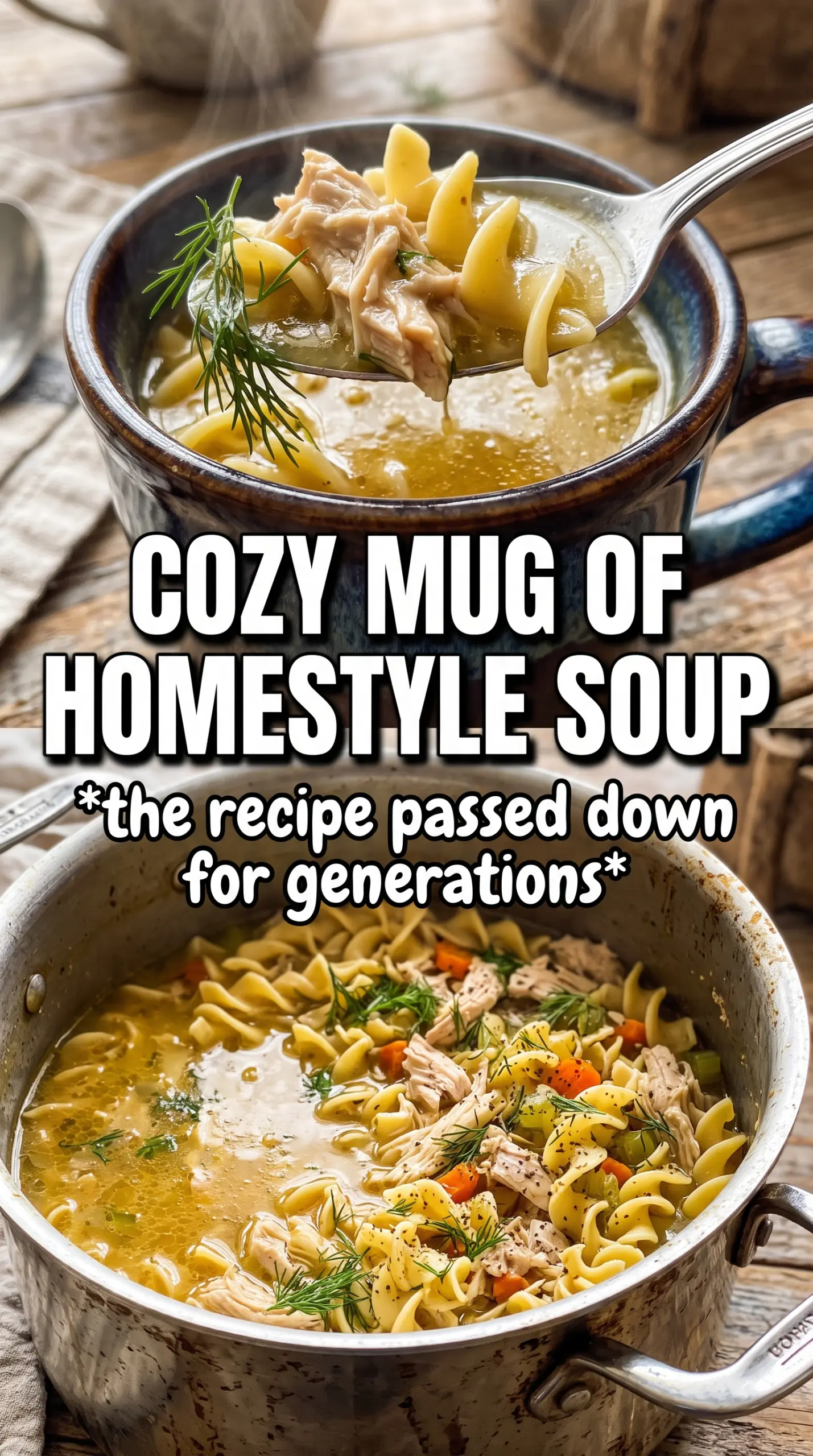
- Whole chicken or bone-in pieces — This is what gives the broth body. A whole chicken makes the richest soup because you get both meat and bones, but bone-in thighs or breasts still work well if that’s what you have. Boneless chicken won’t give you the same depth, so the broth will taste lighter.
- Whole carrots and celery for the broth — Leaving a few vegetables whole lets them perfume the stock without turning the liquid muddy. Slice the rest later for the finished soup so you get texture in the bowl. If you only have all-sliced vegetables, keep them in the pot for the broth stage but strain well before adding the noodles.
- Bay leaves, peppercorns, and thyme — These build the background flavor that makes the soup taste complete. Peppercorns give a clean, subtle bite instead of the sharpness you get from too much ground pepper. Don't swap in a heavy hand of dried herbs here; thyme is enough.
- Fresh dill — Add it at the end so it stays bright and herbal. If it goes in early, it fades into the broth and loses the fresh note that makes the soup taste lifted. Dried dill works in a pinch, but use less because the flavor is flatter.
- Wide egg noodles — These hold up better than thin pasta and give the soup that classic homestyle feel. Cook them just until tender; if they go too long, they soak up broth fast and turn soft. If you need a gluten-free swap, use a sturdy gluten-free egg-style noodle and shorten the cook time a little.
How to Build the Soup in Two Stages Without Overcooking Anything
Starting the Broth
Put the chicken, whole carrots, whole celery, onion, garlic, bay leaves, peppercorns, thyme, and water in a large pot, then bring it to a boil before reducing to a gentle simmer. Foam will rise at the top in the first few minutes; skim it off so the broth stays cleaner and less bitter. Keep the lid partly on and simmer until the chicken is fall-apart tender. If the pot boils hard, the broth can turn cloudy and the chicken can get stringy.
Straining and Shredding
Lift out the chicken and strain the broth, then discard the cooked vegetables and peppercorns. The broth should look golden and smell round, not sharp or raw. Shred the chicken while it's still warm enough to handle easily, but don't chop it too fine or it disappears into the soup. If the meat seems dry, it usually cooked too hard in the first stage.
Finishing the Bowl
Return the broth to the pot and bring it back to a simmer before adding the sliced carrots, celery, diced onion, and remaining garlic. Cook those until the carrots are just tender, then add the noodles and chicken together so the chicken heats through without drying out. Stir in the dill at the very end and season with salt and pepper until the broth tastes full and balanced. If the soup tastes flat, it almost always needs more salt rather than more herbs.
How to Adjust This Soup for What You Have on Hand
Use rotisserie chicken for a faster version
If you're short on time, build the broth from the vegetables, thyme, peppercorns, and garlic, then add shredded rotisserie chicken near the end. You'll lose some of the deep flavor that comes from simmering a whole chicken, but it's still a solid weeknight shortcut.
Make it gluten-free with the right noodle swap
Use a gluten-free noodle that holds up to simmering, then cook it separately if the brand tends to soften fast. Add it to each bowl before ladling in the broth if you want the best texture and the least chance of mushy noodles.
Add a little more richness
A splash of butter at the end gives the broth a softer finish without turning it creamy. Don't add cream here unless you want to move away from the classic homestyle style; it changes the whole feel of the soup.
Storage and Reheating
- Refrigerator: Store for up to 4 days. The noodles will keep soaking up broth, so expect the soup to thicken a bit.
- Freezer: Freeze the broth, chicken, and vegetables without the noodles for the best texture. Cook fresh noodles when you reheat, or the thawed soup will be soft and overcooked.
- Reheating: Warm gently over medium-low heat until steaming, not boiling. If the soup looks too thick, add a splash of water or broth before heating so the noodles don't tighten up and go mushy.
Questions I Get Asked About This Recipe

Homestyle Chicken Noodle Soup
Ingredients
Equipment
Method
- Place whole chicken, 2 whole carrots, 2 whole celery stalks, whole onion, 4 garlic cloves, bay leaves, and peppercorns in a large Dutch oven with the water. Bring to a boil over high heat.
- Skim any foam from the surface, then reduce to a gentle simmer. Simmer for 45-60 minutes, or until the chicken is very tender.
- Strain the broth, discarding the vegetables and peppercorns, then shred the chicken meat. Return the strained broth to the pot and bring it back to a simmer.
- Add sliced carrots, sliced celery, diced onion, and remaining garlic to the simmering broth. Simmer for 10 minutes, until the vegetables begin to soften.
- Add egg noodles and shredded chicken to the pot. Cook for 6-8 minutes, or until the noodles are tender.
- Stir in fresh dill, then season generously with salt and pepper. Taste and adjust before serving.