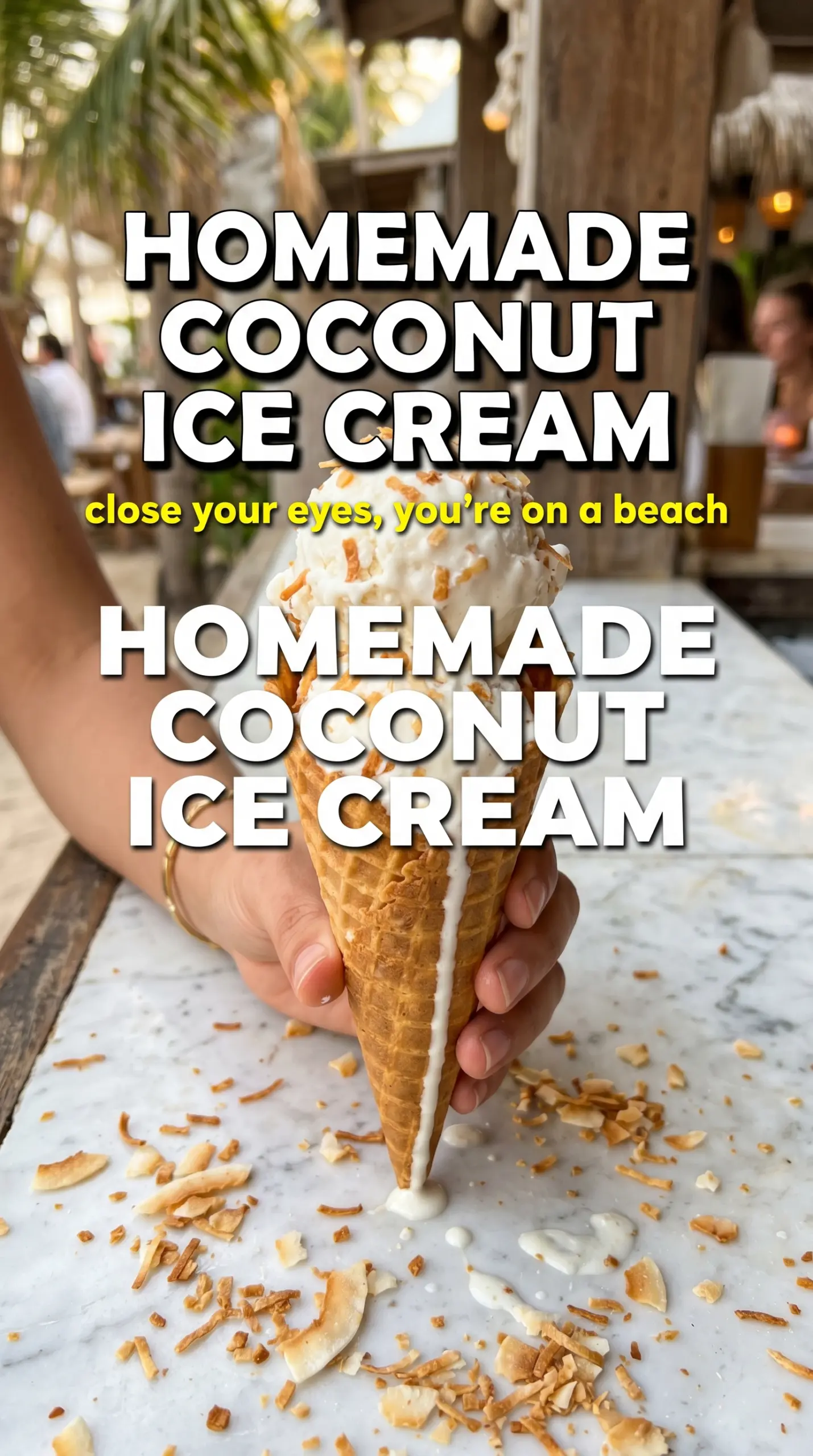
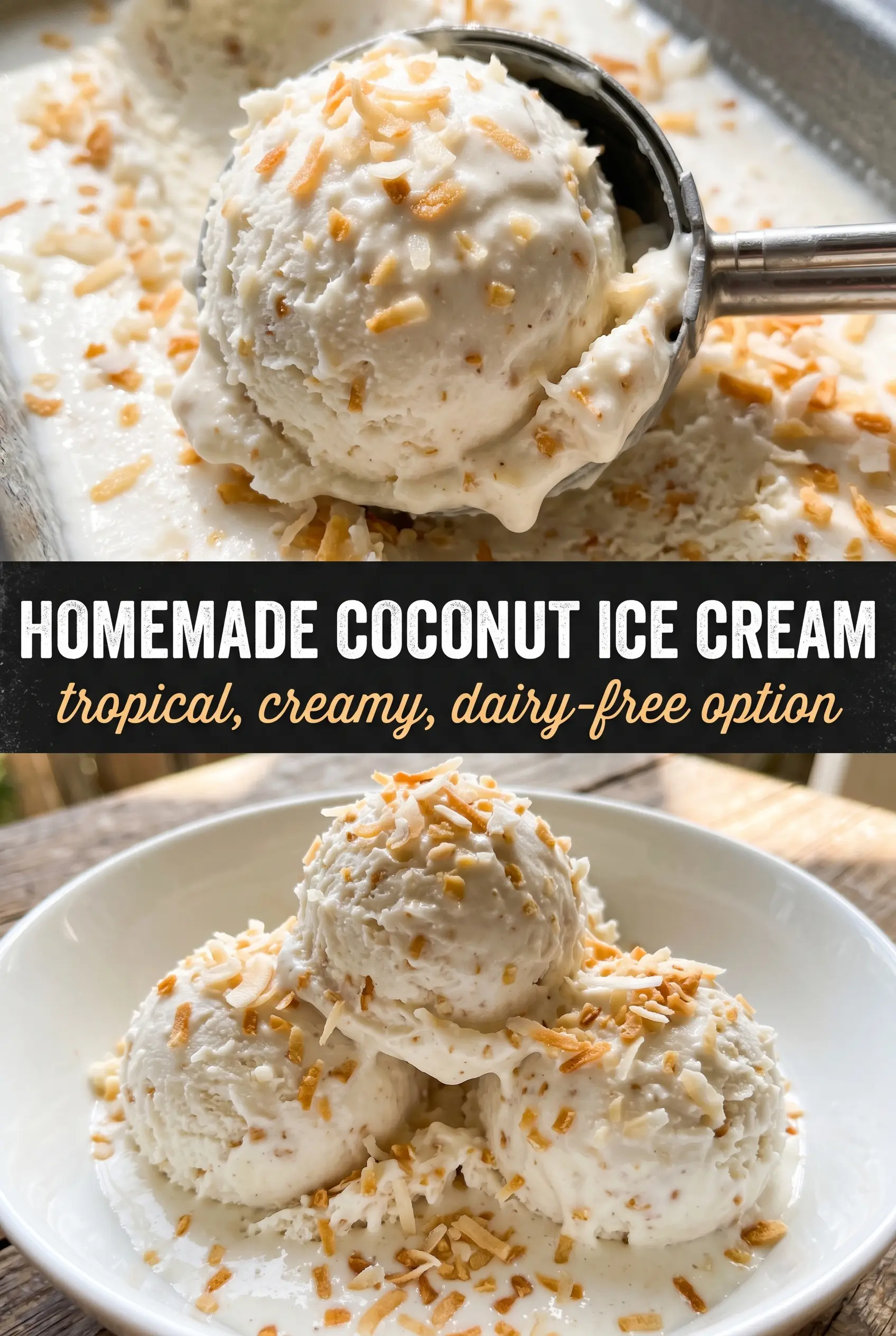
Silky coconut ice cream has a way of tasting richer than it has any right to. This version freezes into dense, scoopable rounds with a clean coconut flavor and little toasted flakes running through each bite, which keeps it from eating flat or one-note. The custard base gives it that old-fashioned creaminess, but the coconut milk keeps the flavor bright and unmistakable.
The trick is treating it like a real custard, not a quick stir-together base. Heating the coconut milk and sugar first helps the sugar disappear before the eggs go in, and tempering the yolks slowly keeps them smooth instead of scrambled. Cook it just until it reaches 175F and lightly coats a spoon, then strain it so any little bits of cooked egg never make it into the churn.
Below, I’m walking through the parts that matter most: how to keep the custard silky, why toasted coconut changes the whole texture, and what to do if you want a dairy-free version without losing that creamy finish.
The custard turned out perfectly smooth and the toasted coconut stayed chewy instead of icy. I chilled it overnight and it churned up thick enough to scoop straight from the freezer.
Save this homemade coconut ice cream for the nights when you want a creamy, toasted-coconut scoop that churns up rich and fragrant.
The Custard Step That Keeps Coconut Ice Cream Smooth
Ice cream goes grainy when the eggs hit heat too fast or the base gets pushed past the point of thickening. Coconut milk is less forgiving than dairy cream because it can separate if you rush it, so the slow tempering step matters here. Whisk in the hot coconut milk gradually, then cook the custard over medium-low until it reaches 175F and clings to the spoon in a thin, even coat.
If it starts looking a little curdled, the heat is already too high. Pull the pan off the burner and keep stirring for a moment; the carryover heat often finishes the job without letting the eggs tighten into bits. Straining the custard is not optional if you want that polished, scoop-shop texture.
What Each Ingredient Is Actually Doing in This Ice Cream
- Full-fat coconut milk — This is the backbone of the recipe. Light coconut milk won’t give you the same dense, lush texture, and that extra fat is what helps the ice cream freeze creamy instead of icy.
- Egg yolks — They thicken the base and give it that custardy body. Whole eggs won’t make the base as velvety, and skipping the yolks entirely leaves you with a thinner, less stable freeze.
- Granulated sugar — Sugar does more than sweeten here; it also softens the freeze so the ice cream stays scoopable. Reducing it too much makes the texture harder straight from the freezer.
- Toasted shredded coconut — Toasting changes the whole bite. It adds a deeper coconut flavor and keeps the mix-ins from tasting wet or stringy against the frozen base.
- Coconut extract — Use it sparingly, but don’t skip it if you want that bold tropical note. Coconut milk alone tastes lovely, but the extract pushes the flavor into full coconut ice cream territory.
How to Churn It Without Losing the Creamy Texture
Warming the Base
Heat the coconut milk and sugar together until the mixture is steaming and the sugar has disappeared. You’re not trying to boil it; you just want enough heat to dissolve the sugar completely and start the custard process. If you see strong bubbling, the heat is too high and the milk can start to taste cooked instead of clean.
Tempering the Yolks
Whisk the egg yolks until smooth in a separate bowl, then drizzle in the hot coconut mixture slowly while whisking constantly. This is the moment that prevents scrambled bits. Pour too quickly and the yolks tighten on contact, which leaves you with a lumpy base that never strains out cleanly.
Cooking to the Right Thickness
Return everything to the saucepan and cook over medium-low heat, stirring the whole time, until the custard reaches 175F. It should coat the back of a spoon and leave a clear trail when you drag a finger through it. If it goes much hotter, the eggs can overcook and the texture turns slightly grainy after freezing.
Chilling and Churning
Strain the custard, stir in the vanilla, coconut extract, and salt, then chill it completely before it goes into the ice cream maker. Warm base going straight into the churn won’t freeze with enough structure. Once it’s fully cold, churn until it looks like soft serve, then fold in the toasted coconut during the last couple of minutes so it stays distributed instead of sinking.
Dairy-Free Version
This recipe is already dairy-free as written if you use coconut milk and skip any dairy toppings. The custard base still gives it structure, so you don’t lose creaminess just because there’s no cream in the mix. Keep the coconut milk full-fat; that’s what carries the texture.
No Ice Cream Maker
You can freeze the chilled custard in a shallow pan and stir it every 30 minutes until it firms up, but the texture won’t be as smooth as churned ice cream. The stirring breaks up large ice crystals, which helps, but an ice cream maker still gives the best body. If you go this route, transfer it to a loaf pan and cover the surface tightly once it’s thickened.
Less Sweet Coconut Ice Cream
You can trim the sugar a little, but don’t cut it aggressively. Sugar helps keep the frozen base soft enough to scoop, so taking too much out makes the ice cream hard and brittle after a night in the freezer. If you want a less sweet finish, add an unsweetened topping instead of changing the base too much.
Storage and Reheating
- Refrigerator: The custard base can be chilled up to 2 days before churning. After that, the flavor is still fine, but the texture gets a little less fresh.
- Freezer: Frozen ice cream keeps well for about 2 weeks in a sealed container with parchment pressed on top. After that, it can pick up ice crystals and lose some of its creamy edge.
- Reheating: Let it sit at room temperature for 5 to 10 minutes before scooping. Don’t microwave it; that melts the edges while the center stays hard.
Answers to the Questions Worth Asking
Homemade Coconut Ice Cream
Ingredients
Equipment
Method
- Heat full-fat coconut milk and granulated sugar in a saucepan over medium heat until the sugar dissolves and the mixture steams, about 3–5 minutes, with visible steam rising from the surface.
- Whisk egg yolks until smooth in a bowl, about 30–60 seconds, until the yolks look uniform and slightly thick.
- Slowly whisk the hot coconut milk mixture into the egg yolks until combined and glossy, keeping the stream steady to prevent scrambling.
- Return the mixture to the saucepan and cook over medium-low heat, stirring constantly, until it reaches 175F (use a thermometer) and coats the back of a spoon, about 5–7 minutes, with a thick custard texture that clings to the spoon.
- Strain the custard into a clean container, then stir in vanilla extract, coconut extract, and salt, about 30–60 seconds, until smooth and evenly scented.
- Cool completely to room temperature, then refrigerate for at least 4 hours until very cold, with the surface set and the mixture chilled throughout.
- Churn the chilled custard in an ice cream maker until thick and scoopable, following the machine’s timing, with a soft-serve consistency forming.
- Fold in toasted shredded sweetened coconut during the last 2 minutes of churning, then transfer to a container and freeze until firm, about 2–4 hours, until the texture is dense and scoopable.