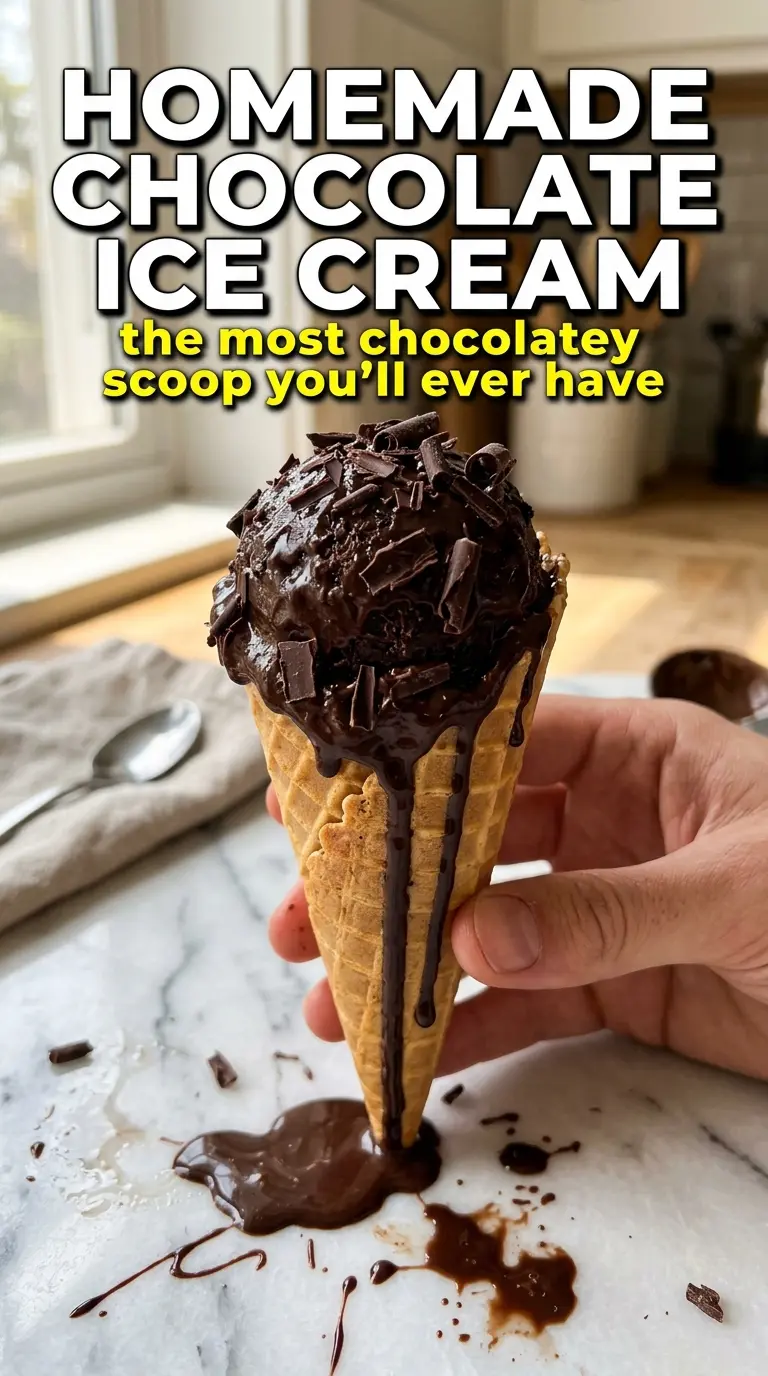
Deep chocolate ice cream earns its place when it tastes dark, not just sweet. This version turns out dense and velvety, with a custard base that gives each scoop a clean melt and a rich cocoa finish that lingers. The chocolate flavor lands in layers instead of shouting all at once, which is exactly what makes it worth churning at home.
The trick is in how the cocoa and chopped chocolate work together. Cocoa gets whisked with sugar first so it disperses evenly instead of clumping, then the dark chocolate melts into the hot dairy for a base that tastes polished and full. The egg yolks thicken everything into a true custard, which is what keeps the texture creamy instead of icy after freezing.
Below, I’ve included the small details that keep the custard smooth, plus a few variations for when you want to change the chocolate intensity or adjust for what’s already in your kitchen.
The custard came out silky and the chocolate flavor was deep without tasting bitter. I chilled it overnight and it churned into the creamiest ice cream I’ve made at home.
Save this dark, custardy homemade chocolate ice cream for the times when you want a scoop that freezes creamy and tastes intensely chocolatey.
The Custard Move That Keeps Chocolate Ice Cream Creamy
Chocolate ice cream turns grainy or icy when the base gets pushed too fast. The yolks need gentle heat to thicken, and the chocolate needs time to melt fully before the custard goes back on the stove. If you rush either part, you end up with a base that tastes flat or a texture that freezes harder than it should.
The safest route is to build the chocolate flavor first, then temper the yolks slowly so they don’t scramble. Once the custard returns to the pan, cook it low and steady until it coats the back of a spoon and reaches 175°F. That temperature matters. It’s hot enough to thicken the base, but not so hot that the eggs tighten into curds.
- Whisked cocoa and sugar — Mixing these dry ingredients before they hit the dairy keeps the cocoa from floating into stubborn little clumps.
- Dark chocolate — This adds depth and a firmer chocolate finish than cocoa alone. Use something you’d actually enjoy eating on its own.
- Egg yolks — They make the custard rich and help the ice cream scoop with a softer, denser texture after freezing.
- Ice bath chilling — Cooling the custard quickly protects the dairy flavor and gets you to the churn stage faster, which improves texture.
What Each Ingredient Is Actually Doing in This Chocolate Base
- Heavy cream — This is what gives the ice cream its plush body. A lower-fat cream won’t hold the same silky texture, so keep the full amount here.
- Whole milk — It lightens the base just enough so the finished ice cream doesn’t eat like frozen fudge. Don’t swap in skim milk unless you want a leaner, icier result.
- Unsweetened cocoa powder — Cocoa builds the deep chocolate backbone. Dutch-process gives a darker, smoother flavor, but natural cocoa works too if that’s what you have.
- Dark chocolate — This gives the custard a rounder, fuller chocolate taste and helps it set with more body. Chop it finely so it melts fast and evenly.
- Egg yolks — They’re the difference between an ice milk texture and a true custard ice cream. There isn’t a full substitute for the richness they bring, but for an egg-free version you’d need a different base entirely.
- Vanilla and salt — Vanilla softens the edges of the chocolate, and salt keeps the flavor from tasting one-note. Add them after straining so they stay clean and bright.
Getting the Base Thick Before It Hits the Ice Cream Maker
Blooming the Cocoa
Start by whisking the cocoa powder with part of the sugar before adding the dairy. That dry sugar cuts through the cocoa and helps it dissolve smoothly instead of turning into stubborn specks. Heat the cream and milk just until steaming, not boiling, or the mixture can pick up a cooked flavor before the chocolate even goes in.
Tempering the Yolks
Whisk the yolks with the remaining sugar until they look paler and a little thicker. Then drizzle in the hot chocolate cream slowly while whisking the whole time. If you dump it in all at once, the eggs can curdle into little bits, and once that happens, the custard never turns perfectly smooth again.
Cooking to the Spoon-Coating Stage
Return the mixture to the saucepan and cook over medium-low heat, stirring constantly with a spatula or wooden spoon. You’re looking for a custard that coats the back of the spoon and leaves a clean line when you run a finger through it. Pull it off the heat the moment it reaches 175°F; if it climbs much higher, the eggs tighten and the texture turns grainy.
Straining and Chilling
Push the custard through a fine mesh sieve into a clean bowl, then stir in the vanilla and salt. This catches any tiny cooked egg bits and gives you a smoother churn later. Set the bowl over an ice bath and stir until it’s cool, then refrigerate it until completely cold. Churning a warm base is one of the fastest ways to end up with soft, loose ice cream that never sets right.
Use Dutch-Process Cocoa for a Darker Finish
Dutch-process cocoa gives this ice cream a deeper color and a smoother, less sharp chocolate flavor. Natural cocoa still works, but the result tastes a little brighter and less fudgy. If all you have is natural cocoa, keep the dark chocolate in place so the base still lands rich.
Make It Dairy-Free with Coconut Milk
Swap in full-fat canned coconut milk for the cream and whole milk if you need a dairy-free version. The texture will be a little softer and the coconut note will show up in the background, but the custard still churns into a scoopable ice cream. Use a good-quality dark chocolate that’s dairy-free as well.
Turn It into Chocolate Chip Ice Cream
Churn the base as written, then fold in chopped chocolate or mini chips during the last minute of churning. This keeps the chips from sinking to the bottom and gives you little shards of texture in every scoop. Freeze the finished ice cream until firm before serving so the mix-ins don’t smear through the base.
Storage and Reheating
- Refrigerator: Store the custard base up to 2 days before churning, tightly covered. After churning, keep the ice cream in the freezer instead of the fridge.
- Freezer: Frozen ice cream keeps well for about 2 weeks in an airtight container. Press parchment or plastic wrap directly on the surface to reduce ice crystals.
- Reheating: This recipe isn’t meant to be reheated. If the ice cream gets too hard, let it sit at room temperature for 5 to 10 minutes before scooping so it softens evenly instead of melting around the edges.
Questions I Get Asked About This Recipe
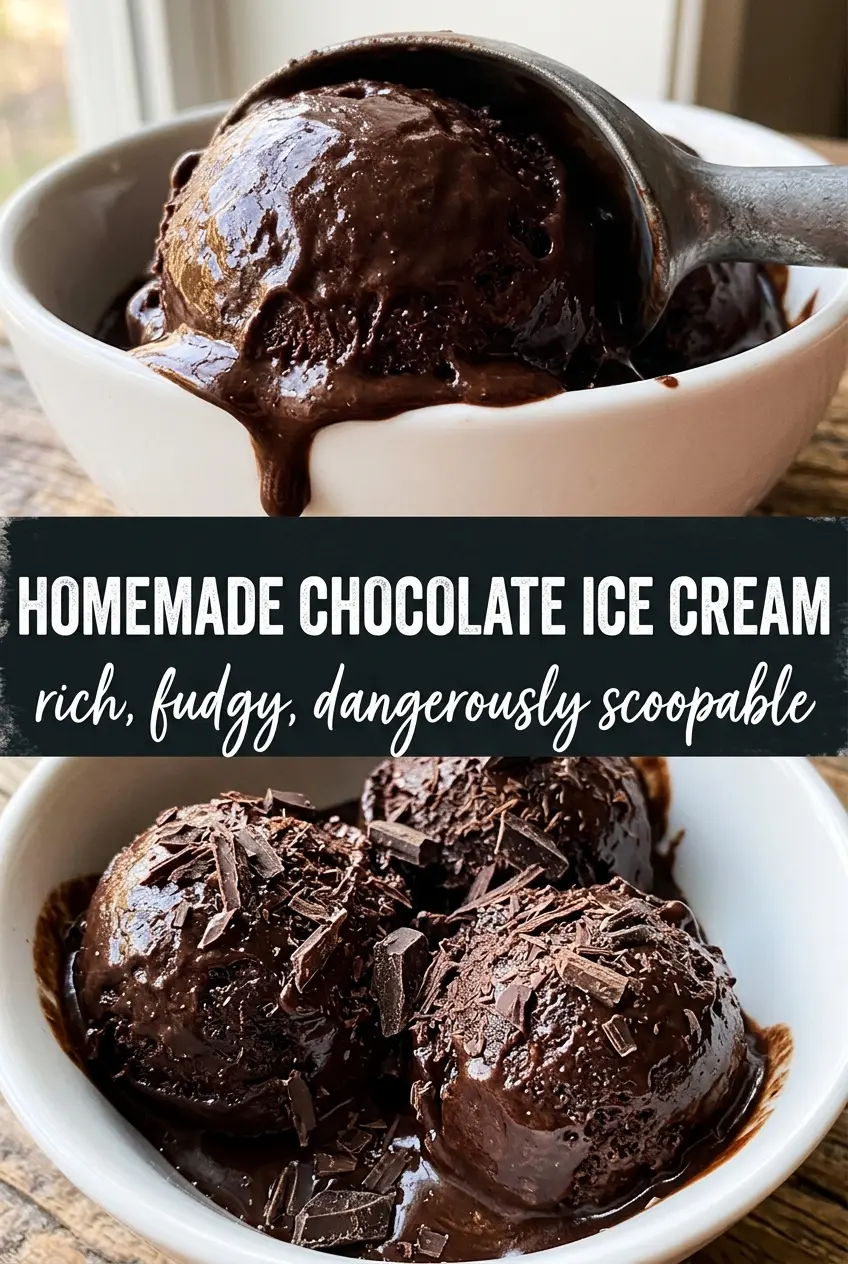
Homemade Chocolate Ice Cream
Ingredients
Equipment
Method
- Whisk the cocoa powder with 1/4 cup of the granulated sugar, then whisk in the cream and whole milk in a saucepan.
- Heat over medium, whisking continuously, until the mixture is steaming, then remove from direct heat briefly.
- Add the finely chopped dark chocolate and whisk until fully melted and smooth.
- Whisk the egg yolks with the remaining 1/2 cup granulated sugar until pale.
- Slowly whisk the hot chocolate cream into the yolks to temper.
- Return the mixture to the saucepan and cook over medium-low heat, stirring constantly, until the custard coats the back of a spoon at 175F.
- Strain the custard through a fine-mesh sieve into a clean container.
- Stir in the vanilla extract and salt, then cool completely over an ice bath.
- Refrigerate at least 4 hours or overnight, then churn in an ice cream maker.
- Freeze until firm, then serve.