Softened butter spread across a wooden board turns into a party appetizer that feels generous without asking much from you. The whole trick is in the texture: the butter should be soft enough to swoop, not melted enough to puddle. Once the toppings hit the surface, every swipe of bread picks up sweet honey, tart cranberries, crunchy pistachios, bright citrus, and just enough rosemary to keep it from tasting one-note.
This version works because the ingredients are chosen for contrast. Salted butter gives the base a head start, so you don’t need to season aggressively. Honey softens the sharp edges of the cranberries, while orange zest lifts the whole board and makes the butter taste fresher. A little flaky salt and red pepper flakes at the end keep each bite from leaning too sweet.
Below, I’ve included the small details that matter most here: how soft the butter should be, how to keep the board looking abundant, and a few smart swaps if you want to change the toppings without losing the balance.
The butter stayed spreadable the whole time and the honey-orange topping made it taste much fancier than the 15 minutes it took to put together. The salty pistachios on top were the part everybody kept going back for.
Holiday Butter Board with honey, cranberries, pistachios, and orange zest is the kind of appetizer that disappears fast, so plan on keeping the bread close by.
The One Thing That Keeps a Butter Board From Looking Messy
The difference between a board that looks abundant and one that looks slapped together is the butter temperature. If it’s too cold, it tears into clumps and won’t hold the swoops that make the board attractive. If it’s too warm, the toppings sink and the whole thing starts to slide around before guests even get to the table.
Room-temperature butter should spread easily but still keep shape when you drag the back of a spoon through it. That’s what gives you those soft ridges that catch honey and hold the cranberries, pistachios, and herbs in place. The board matters too: wood gives the spread a rustic look and keeps the presentation sturdy enough for serving.
What Each Topping Is Doing on the Board
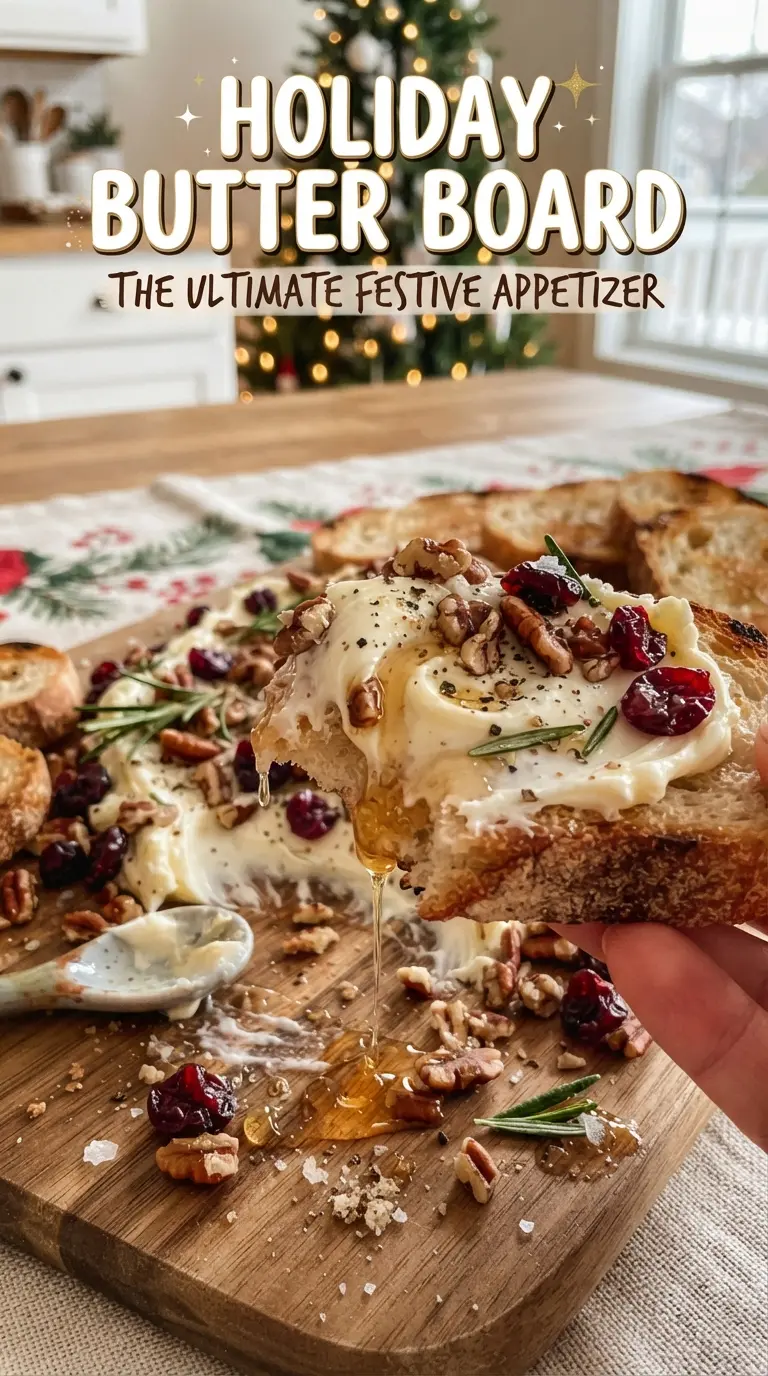
- Salted butter — This is the base, so quality matters. A good salted butter brings flavor before anything else is added, and it keeps the board from tasting flat. If you only have unsalted butter, use it and add a little extra flaky salt at the end.
- Honey — Honey ties the sweet and savory pieces together and gives the butter a glossy finish. Maple syrup can work in a pinch, but it tastes deeper and less floral. Use a light hand or the board gets sticky instead of elegant.
- Dried cranberries — Chop them first so they scatter cleanly and don’t pull the butter off the board in big clumps. Their tart chew gives the board bursts of contrast. If yours are very dry, a minute in warm water, then well-drained, softens them just enough.
- Pistachios — They bring the crunch that makes each swipe interesting. Unsalted or lightly salted pistachios both work, but whole nuts should be chopped so the topping stays balanced and easier to scoop with bread.
- Orange zest and rosemary — These are the detail notes that make the board taste planned, not random. Fresh zest is worth it here because dried citrus won’t give the same bright aroma, and finely chopped rosemary keeps the herb flavor present without chewing into big piney bits.
How to Build the Board So the Toppings Stay Put
Spreading the Butter First
Place the butter on the board in sections if it’s very soft, then use the back of a spoon to drag it into swooshes and swirls. Don’t overwork it into a flat slab; the ridges are what catch the toppings and make the board look full. If the butter is dragging instead of spreading, let it sit for another 10 minutes.
Adding the Sweet and Savory Layer
Drizzle the honey over the butter in thin ribbons so it settles into the grooves instead of pooling in one spot. Scatter the cranberries, pistachios, orange zest, and rosemary across the whole surface rather than piling everything in the center. Even coverage matters here because each bite should give you a little of everything.
Finishing With Salt and Heat
Flaky sea salt is not optional in a board like this. It wakes up the butter and keeps the honey from tasting one-dimensional. The red pepper flakes should be light and sparse; you want a little warmth at the finish, not heat that takes over the appetizer.
Serving Before the Butter Softens Too Much
Bring the bread to the board right away and serve immediately. The toppings hold best when the butter is cool room temperature, and the presentation starts to slide once the board sits too long in a warm room. If the board is for a longer gathering, refresh it in small batches instead of leaving one giant spread out for hours.
How to Adapt This Board for Different Guests
Dairy-Free Version
Use a plant-based butter that comes in a solid stick or block form, not a tub spread that turns greasy on the board. The result will be a little softer and less rich, so keep the honey and salt balanced and serve it cold enough to hold its shape.
Nut-Free Swap
Swap the pistachios for toasted sunflower seeds or pumpkin seeds. You’ll still get crunch, but the flavor will be earthier and a little less sweet, which works well with the honey and orange zest.
Make It More Savory
Add a few chopped olives or a pinch of cracked black pepper alongside the rosemary. That pushes the board in a more savory direction and makes it feel less sweet, especially if you’re serving it before dinner.
Make-Ahead Timing
You can chop the toppings a few hours ahead and keep them covered at room temperature or in the fridge, but assemble the board just before serving. Once the butter is on the board, it’s best at its prettiest and most spreadable in the first 20 to 30 minutes.
Storage and Serving
- Refrigerator: Cover and refrigerate leftover butter for up to 3 days. The toppings will soften and the board won’t look as polished after chilling.
- Freezer: This doesn’t freeze well once assembled. The butter can handle freezing on its own, but the fruit and herbs lose their texture after thawing.
- Serving: Let the butter sit at room temperature for 10 to 15 minutes before serving leftovers again. If it’s too cold, the bread tears instead of swiping cleanly across the surface.
Answers to the Questions Worth Asking
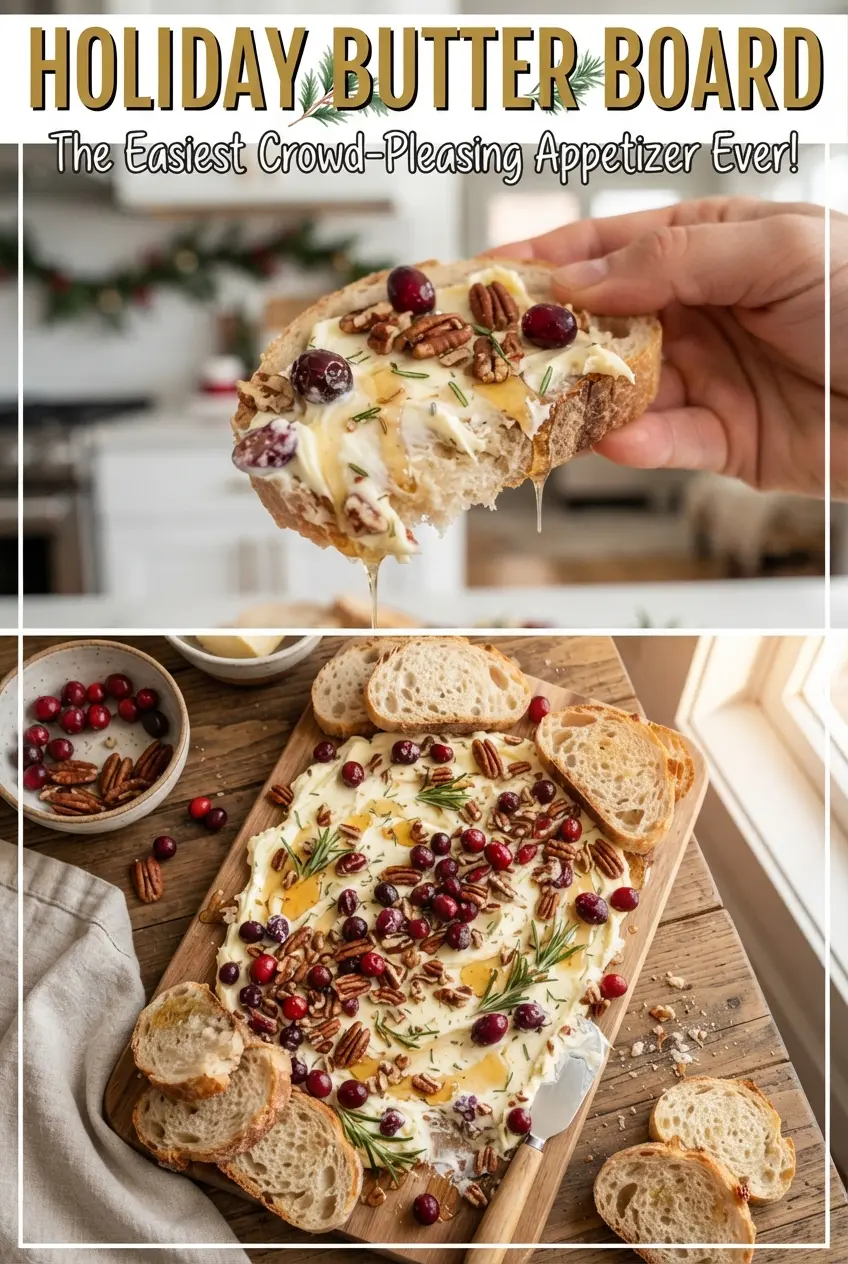
Holiday Butter Board
Ingredients
Method
- Spread the softened salted butter across a wooden board using the back of a spoon, creating swooshes and swirls so the surface looks textured.
- Stop spreading once the butter forms an even layer with visible swirls for topping pickup.
- Drizzle the honey evenly over the butter so it pools slightly in the swirls.
- Scatter the chopped dried cranberries, chopped pistachios, orange zest, and finely chopped rosemary over the top in an even layer.
- Finish with flaky sea salt and red pepper flakes, distributing both across the surface for balanced flavor.
- Serve immediately with torn or sliced baguette or crusty sourdough on the side for swiping.