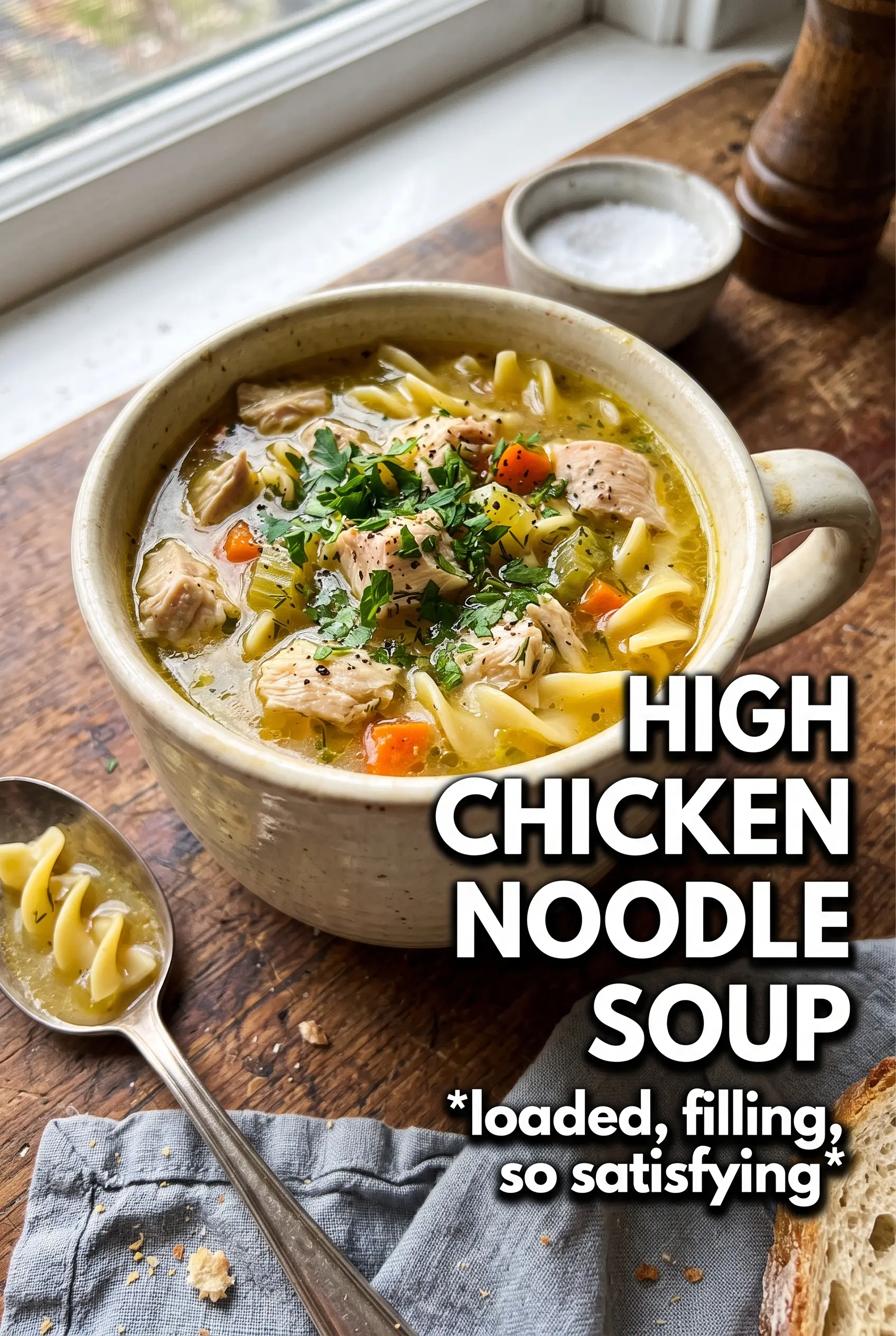
High protein chicken noodle soup hits the bowl with the kind of comfort that feels familiar, but this version eats like a full meal. The broth stays clear and savory, the chicken stays tender, and the chickpeas give the soup extra body without making it heavy. Every spoonful has noodles, vegetables, and enough substance that you don’t end up hungry an hour later.
The trick is building the flavor in stages instead of dumping everything in at once. Sautéing the onion, carrot, and celery first gives the broth a sweeter, deeper base, while browning the chicken lightly before the liquid goes in adds more flavor without turning it dry. Chickpeas work here because they hold their shape and soak up the broth, and lemon at the end keeps the whole pot from tasting flat.
Below you’ll find the small details that matter most: when to add the noodles so they stay tender, how to keep the soup bright instead of cloudy, and the easy swaps that still keep the protein high.
The broth stayed clear, the noodles cooked up tender, and the chickpeas made it feel like a full meal instead of just a light soup. I added the lemon at the end like you said and it kept the whole pot from tasting flat.
Save this high protein chicken noodle soup for a hearty bowl with tender chicken, chickpeas, and lemony broth.
The Part That Keeps the Broth Clear Instead of Starchy
The biggest mistake with noodle soup is adding the pasta too early and letting it simmer the whole time. That turns the broth cloudy, softens the vegetables past the point of tenderness, and leaves you with noodles that keep drinking liquid long after the pot comes off the stove. Here, the noodles go in only after the chickpeas, when the chicken is cooked through and the broth already tastes finished.
That timing keeps the noodles tender and the broth bright. It also gives you a little control over the final texture, which matters with high-protein or whole wheat noodles because they can go from just-right to tired faster than standard egg noodles. Pull the pot as soon as the noodles are tender with a little bite left in the center.
What Each Ingredient Is Doing in the Bowl

- Chicken breast — Diced breast cooks fast and gives you clean, lean protein in every spoonful. Cut it into even pieces so it cooks at the same pace; big chunks stay underdone while smaller ones dry out.
- Chickpeas — These are the second protein anchor and they hold up better than a lot of beans in soup. Rinse and drain them well so the broth stays clean, not canned and murky.
- High-protein or whole wheat egg noodles — This is where the extra staying power comes from. Whole wheat noodles bring a nuttier taste and a firmer bite; high-protein noodles can be a little sturdier, so taste them near the end instead of trusting the timer alone.
- Chicken broth — Use a broth you’d actually drink, because it’s the backbone of the soup. If yours is low-sodium, that’s fine; you’ll just need to season more carefully at the end.
- Lemon juice — This doesn’t make the soup taste lemony. It wakes up the broth and cuts through the starch and richness so the bowl tastes fresh instead of dull.
- Carrots, celery, onion, and garlic — This is the flavor base, and sautéing them first matters more than people think. If you rush this part, the soup will still taste fine, but it won’t have that rounded homemade depth.
Building the Soup So the Chicken Stays Tender
Softening the vegetables first
Start with the olive oil, onion, carrots, and celery in a large pot over medium heat. You want the onion translucent and the vegetables just starting to soften, not browned hard at the edges. This quick sauté takes the raw edge off the aromatics and gives the broth a sweeter base. If the pot looks dry, the vegetables need a little more time, not more heat.
Lightly browning the chicken
Add the garlic for just a minute, then stir in the diced chicken and let it cook until the outside turns opaque and picks up a little color. You’re not cooking it all the way here. The broth finishes the job, and that keeps the chicken from turning stringy. If the pan starts to scorch, lower the heat right away; garlic burns fast and turns the whole pot bitter.
Simmering the broth
Pour in the broth, thyme, and parsley, then bring everything to a boil before dropping it to a steady simmer. That simmer should look lively but not aggressive, with just a few bubbles breaking the surface. Give the chicken about 15 minutes so it becomes fully cooked and the broth picks up the flavor from the vegetables and herbs. If you boil it hard, the chicken gets tough and the broth can taste thin instead of comforting.
Finishing with noodles, chickpeas, and lemon
Stir in the chickpeas and noodles, then cook until the noodles are tender with a little chew left. Add the lemon juice at the end and taste before you reach for the salt, because broth brands vary a lot. The lemon should brighten the soup without standing out as a separate flavor. Finish with parsley and serve it right away while the noodles still have their best texture.
How to Adapt This Soup Without Losing the Protein
Make it dairy-free as written
This soup is naturally dairy-free, which is one reason it works so well for a wide range of eaters. Keep the broth clean and finish with lemon and parsley instead of trying to add cream; cream would blur the bright, brothy character that makes this bowl taste fresh.
Swap the noodles for a gluten-free bowl
Use gluten-free pasta, but cook it separately if you want the best texture. Many GF noodles soften quickly and can break apart in the soup if they sit too long, so adding them to each bowl keeps the broth clear and the noodles intact.
Use rotisserie chicken for a faster version
Shred about 4 cups of cooked rotisserie chicken and add it after the broth has simmered with the vegetables. This cuts the cook time and gives you a deeper roasted flavor, but the soup loses the light browning note you get from cooking the raw chicken in the pot.
Storage and Reheating
- Refrigerator: Store for up to 4 days. The noodles will keep soaking up broth, so expect the soup to thicken as it sits.
- Freezer: It freezes well if you leave the noodles out and add fresh ones after reheating. Frozen noodles tend to go mushy, which changes the texture of the whole bowl.
- Reheating: Reheat gently on the stove over medium-low heat until hot. If the soup has thickened, add a splash of broth or water before warming it; boiling it hard will overcook the chicken and break the noodles apart.