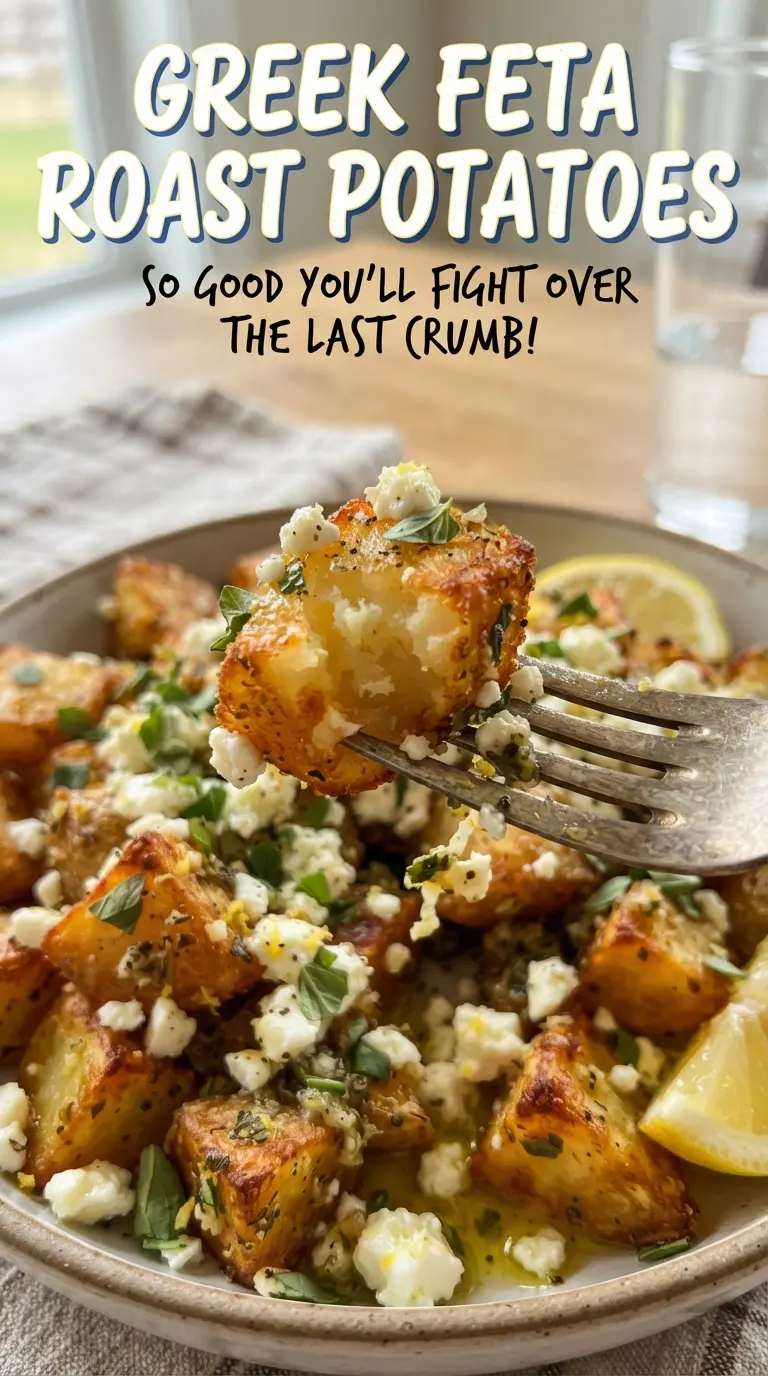
Crispy Greek feta roast potatoes come out with bronzed edges, tender centers, and a bright lemon-oregano finish that keeps them from tasting heavy. The potatoes roast right in a little seasoned liquid, so they pick up flavor all the way through before the pan dries out and the edges start to caramelize.
The trick here is using enough liquid to season the potatoes early, but not so much that they steam the whole time. As the broth and lemon cook off, the potatoes take on that concentrated savory-sharp flavor, and the last stretch in the oven is what gives you the crisp, almost sticky edges worth fighting over.
Below, I’m walking through the exact points that matter most: how to keep the potatoes from turning soft, why the feta goes on at the end, and the small swap that still works if you’re out of fresh dill.
The potatoes got those crisp edges in the pan, and the lemon really mellowed as it roasted. I added the feta right at the end like you said, and it stayed creamy instead of disappearing.
Save these Greek feta roast potatoes for the nights when you want crispy edges, bright lemon, and a salty feta finish in one pan.
The Roast Potatoes That Crisp After the Liquid Disappears
Most roast potato recipes fight with their own moisture. There’s either enough liquid to keep the potatoes flavorful, or enough heat to brown them, but not always both. This version works because the potatoes spend the first part of roasting absorbing seasoned lemony broth, then finish in the same pan once that liquid has cooked away. That second stage is where the texture changes from soft edges to crisp, bronzed corners.
The biggest mistake is pulling them too early. If the pan still looks wet, the potatoes are still steaming. You want the liquid gone and the bottoms deep golden before you call them done, because that dry pan contact is what gives you the crust.
- Yukon gold potatoes — They hold their shape better than russets and turn creamy inside without falling apart. Cut them into even wedges so the smaller pieces don’t burn before the larger ones are tender.
- Chicken broth — This seasons the potatoes from the inside as they roast. Vegetable broth works fine if that’s what you have, but use one with a clean, savory taste, not an aggressively salty one.
- Fresh lemon juice — Bottled lemon juice tastes flatter here. Fresh juice gives the potatoes a bright edge that softens as it roasts instead of turning harsh.
- Feta — Add it after roasting so it stays crumbly and creamy instead of melting into the pan. A block of feta you crumble yourself usually tastes better than the pre-crumbled kind.
What Each Ingredient Is Actually Doing in This Recipe
- Primary ingredient (the star) — Quality matters most. Choose the best you can find.
- Cooking medium (oil, butter, or broth) — This carries flavors and prevents dryness.
- Seasonings (salt, pepper, spices, herbs) — Layer flavors so nothing overpowers. Build depth gradually.
- Aromatics (garlic, onion, herbs) — Cook with fat to bloom flavors. Become the foundation.
- Supporting ingredients — Complement the main ingredient without overpowering it.
- Sauce or liquid (if applicable) — Brings flavors together. Balance richness with acid.
- Acid (lemon, vinegar, wine, or other) — Brightens and prevents flat-tasting results.
- Final finish (garnish, glaze, or sauce) — Prevents one-dimensional taste and adds visual appeal.
How to Get Golden Edges Without Steaming the Pan
Coating the Potatoes Evenly
Toss the wedges in the roasting pan until every surface is slicked with oil and seasoned liquid. If some pieces are left sitting dry on top, they’ll bake up pale while the submerged ones go soft. A single layer matters here because crowded potatoes trap steam and slow the browning.
Roasting Until the Liquid Is Gone
After about half the time, flip the potatoes so a different side gets direct contact with the hot pan. The broth and lemon should reduce almost completely by the end, leaving just a thin coating on the potatoes and a little sticky residue on the bottom. If there’s still a puddle, keep roasting; the crisping only happens once that excess moisture has cooked off.
Finishing With Feta and Herbs
Scatter the feta over the hot potatoes right before serving so it softens at the edges but keeps its shape. Fresh dill gives the sharpest Greek-style finish, while parsley keeps things cleaner and milder. Add the herbs last so they stay bright instead of wilting into the pan.
What to Change When You’re Missing One Ingredient
Dairy-Free Version
Leave off the feta and finish with extra herbs plus a pinch of flaky salt. You’ll lose the salty creaminess, but the lemon and oregano stay bold, and the potatoes still taste complete if you don’t skimp on seasoning.
Vegetarian Swap for the Broth
Use vegetable broth instead of chicken broth. Choose one with a savory backbone so the potatoes still taste seasoned after roasting; very sweet or watery broth makes the pan taste flat.
No Fresh Dill
Use parsley, or a mix of parsley and a little mint if you want a brighter finish. Dried dill won’t give the same fresh pop at the end, so if that’s all you have, use just a small pinch and keep the herbs subtle.
Make the Potatoes Spicier
Add a pinch of red pepper flakes with the oregano. It doesn’t change the method, but it gives the lemon and feta a little heat that plays well with the salty edges.
Storage and Reheating
- Refrigerator: Store for up to 4 days. The potatoes soften as they sit, but the flavor holds up well.
- Freezer: They freeze, but the texture turns mealy after thawing, so I don’t recommend freezing them.
- Reheating: Reheat on a sheet pan at 400F until the edges wake back up. The microwave makes them limp, and that’s the fastest way to lose the crispness you worked for.
Questions I Get Asked About This Recipe
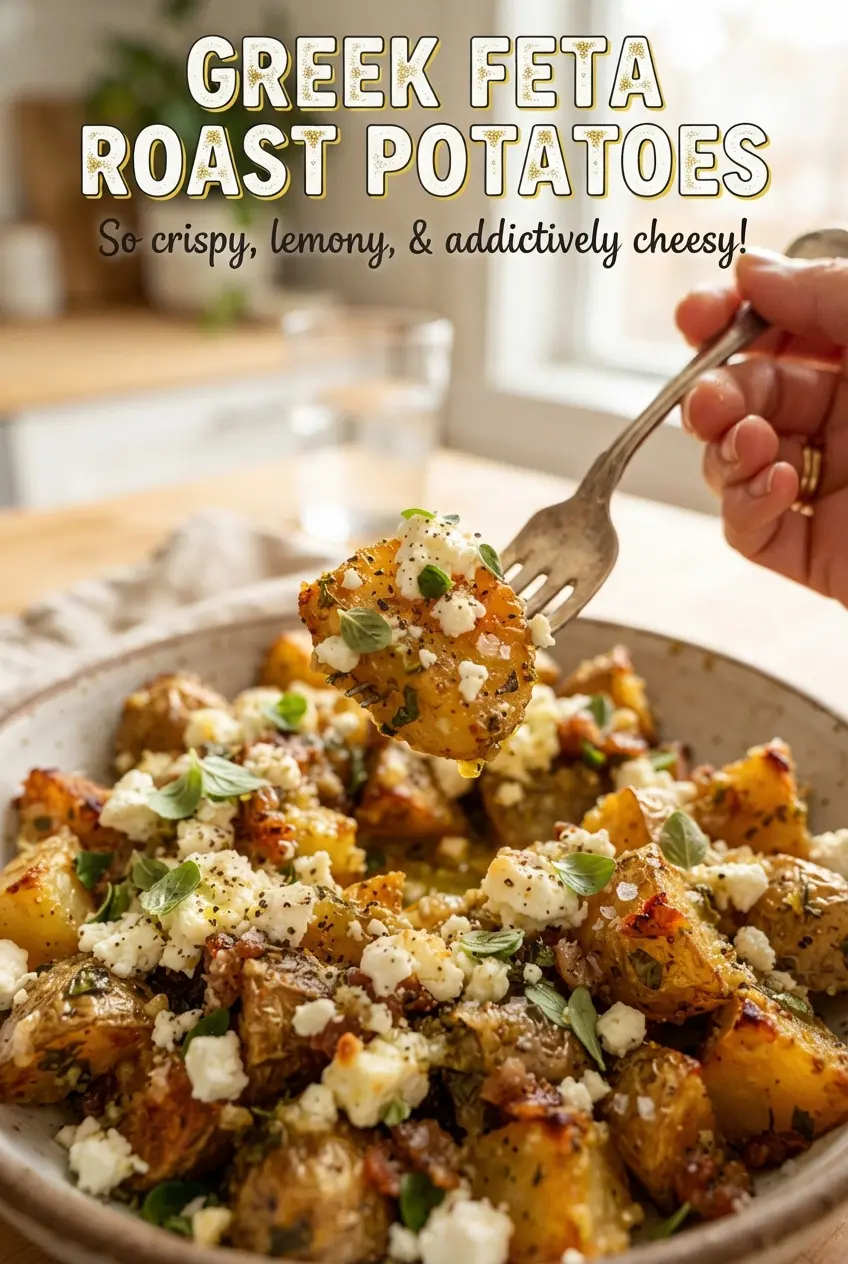
Greek Feta Roast Potatoes
Ingredients
Equipment
Method
- Preheat oven to 425°F and set a roasting pan/sheet pan inside to heat up.
- In the roasting pan, toss potato wedges with olive oil, lemon juice, chicken broth, minced garlic, dried oregano, salt, and black pepper until evenly coated.
- Spread potatoes in a single layer so cut sides have contact with the pan for crisping.
- Roast for 45-50 minutes, flipping halfway, until the liquid is absorbed and edges are crispy and golden. During roasting, keep an eye on color around the 40-minute mark so they brown without burning.
- Remove from the oven and immediately top with crumbled feta so it softens slightly from the hot potatoes.
- Sprinkle with chopped fresh dill or parsley and serve hot.