Golden chicken thighs with lemon, oregano, and feta are the kind of dinner that looks like you worked harder than you did. The skin turns crisp in the oven, the tomatoes collapse into the pan juices, and the feta softens just enough to melt into the edges without disappearing. Every bite lands with salt, brightness, and that little hit of caramelized chicken drippings that makes a simple pan meal taste complete.
This version works because the marinade is short but concentrated. Lemon zest gives you the aromatic part of the citrus that juice alone can’t carry, and the olive oil helps the seasoning cling to the chicken skin instead of sliding off into the pan. Roasting at a higher temperature keeps the thighs juicy while giving the lemons and tomatoes time to blister and deepen. The feta goes on at the end for a reason: if it bakes the whole time, it dries out and turns sandy instead of creamy and soft.
Below, I’ve included the one roasting detail that keeps the chicken skin crisp, plus a few smart swaps if you need to work with what’s in the fridge. There’s also a storage note, because this reheats better than most chicken dinners and the leftovers are worth planning for.
The chicken skin came out crisp, the tomatoes burst into the most amazing pan juices, and the feta on top stayed creamy instead of drying out. I served it with orzo and my husband went back for seconds before I even sat down.
Save this Greek Chicken with Lemon and Feta for a crisp-skinned, tomatoy pan dinner with soft feta and bright lemon in every bite.
The Part Most People Get Wrong About Lemon Chicken
The mistake with lemon chicken is usually overloading the pan with acid too early and expecting the oven to fix it. Lemon juice is useful here, but it’s not the whole story. Zest carries the fragrant oils that stay bright through roasting, while the oil and chicken fat mellow the sharp edges so the sauce tastes balanced instead of aggressively sour.
Bone-in, skin-on thighs matter because they tolerate the hot oven better than leaner cuts. They stay juicy long enough for the skin to render and brown properly. If you swap in boneless chicken, the cooking time drops and the surface won’t hold onto the same amount of flavor, so you’ll want to watch it closely and pull it as soon as it reaches temperature.
What Each Ingredient Is Doing in the Pan
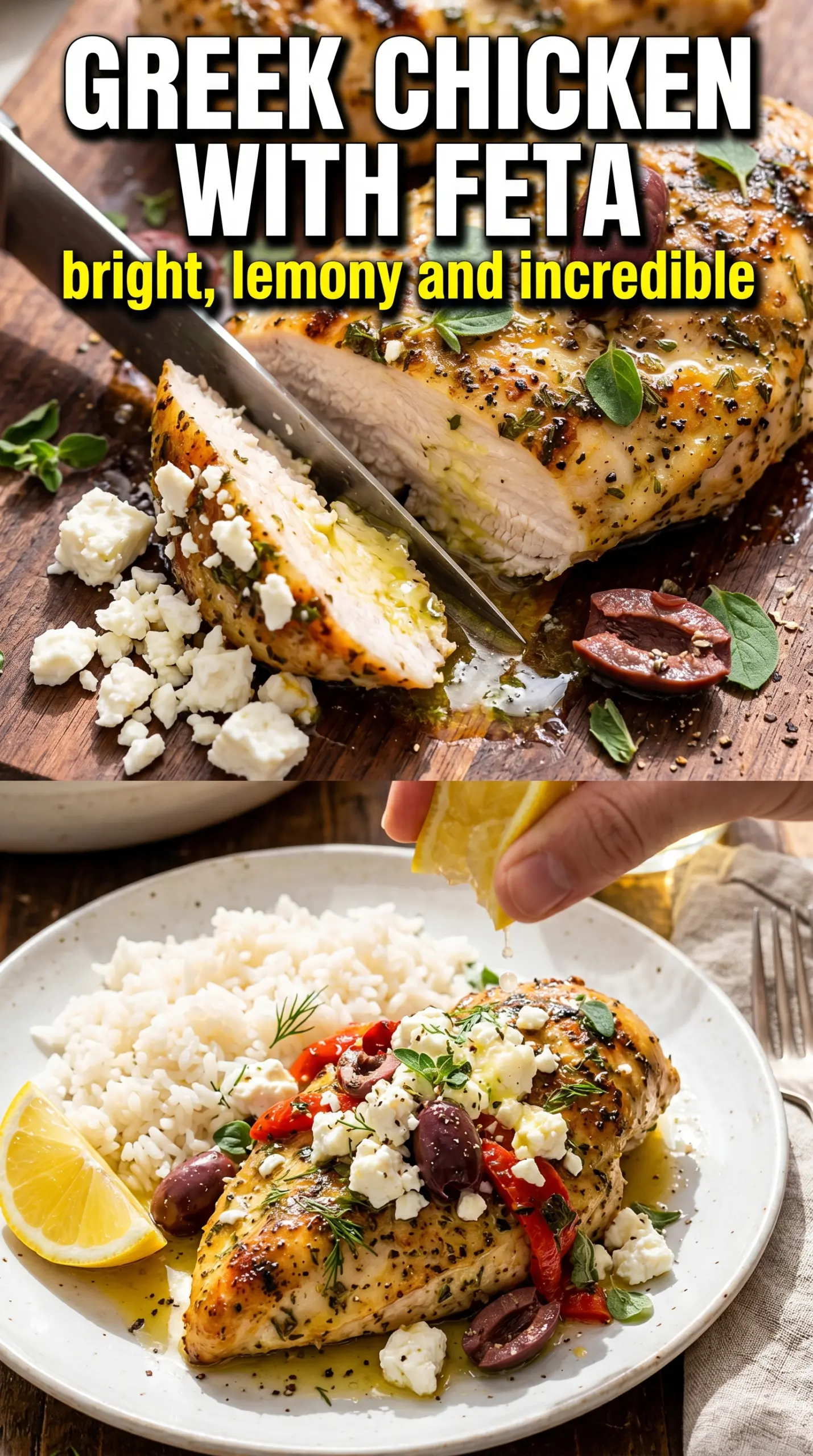
- Bone-in, skin-on chicken thighs — These give you the best chance at juicy meat and crisp skin in the same pan. You can use boneless thighs, but they brown faster and won’t give you the same rich pan juices.
- Olive oil — This carries the garlic, oregano, and paprika across the chicken and helps the skin roast instead of dry out. Use a decent extra-virgin oil here; it’s a real part of the flavor.
- Lemon juice and zest — The zest is nonnegotiable if you want a full lemon taste, not just sharp acidity. Fresh juice is best because bottled juice can taste flat and one-dimensional.
- Feta — Add it after roasting so it softens on contact with the hot chicken and vegetables. If you bake it from the start, it dries out and loses that creamy, salty finish.
- Kalamata olives and cherry tomatoes — The olives deepen the savory side of the dish, and the tomatoes burst into the pan sauce. If your tomatoes are large, cut them in half so they blister and release juice instead of just sitting there.
Roasting the Chicken So the Skin Stays Crisp
Build the Marinade First
Whisk the olive oil, lemon juice, lemon zest, garlic, oregano, smoked paprika, salt, and pepper into a loose marinade, then coat the chicken thoroughly. Thirty minutes is enough time for the seasoning to get into the surface without turning the chicken mushy. If you leave it much longer in a heavily acidic mix, the outside can get a little chalky and the texture starts to suffer.
Give the Chicken Space in the Dish
Arrange the thighs skin-side up in a single layer and don’t crowd them with tomatoes or olives right on top of the skin. The heat needs room to circulate around the chicken so the fat renders properly. If the pieces are jammed together, they steam before they brown, and that’s how you end up with pale skin.
Finish With Feta at the Last Minute
Roast until the thighs hit 165°F and the skin is deep golden, then pull the dish out and scatter the feta immediately. The residual heat softens the cheese just enough to make it creamy at the edges. Fresh oregano goes on last so it keeps its herbal bite instead of fading into the background.
How to Adapt This for a Bigger Crowd or a Different Pan
Make It Dairy-Free
Leave off the feta and finish with extra oregano plus a drizzle of good olive oil. You lose the salty creaminess of the cheese, but the chicken still tastes complete because the lemon, olives, and pan juices carry enough richness on their own.
Use Boneless Chicken Thighs
Boneless thighs work well if you want a faster dinner, but start checking them earlier because they’ll finish in less time. You’ll get less rendered fat for the pan juices, so the tomatoes and lemon slices do more of the heavy lifting for the sauce.
Double It for a Crowd
Use two baking dishes instead of one crowded pan. If you pack everything too tightly, the vegetables steam and the skin softens before it browns, which changes the whole dish.
Storage and Reheating
- Refrigerator: Store leftovers in a covered container for up to 4 days. The feta will soften more as it sits, but the flavor stays excellent.
- Freezer: Freeze the chicken and pan juices without the feta for up to 2 months. The tomatoes will lose some texture after thawing, but the dish still works well over rice or orzo.
- Reheating: Warm covered in a 325°F oven until hot. The biggest mistake is blasting it in the microwave, which makes the skin rubbery and dries out the thighs before the center is warm.
Answers to the Questions Worth Asking

Greek Chicken with Lemon and Feta
Ingredients
Equipment
Method
- Whisk together olive oil, lemon juice, lemon zest, garlic, dried oregano, smoked paprika, salt, and pepper until evenly combined and glossy. Place chicken in a dish and coat thoroughly, then marinate for at least 30 minutes.
- Preheat oven to 425°F, then arrange marinated chicken skin-side up in a large baking dish so the skin faces up for crisping.
- Scatter cherry tomatoes, Kalamata olives, and lemon slices around the chicken to roast alongside the meat and form caramelized edges.
- Roast for 25-28 minutes at 425°F until chicken skin is golden and the thickest part reaches 165°F.
- Remove from the oven and immediately crumble feta over the hot chicken and vegetables so it softens from the heat.
- Garnish with fresh oregano for a bright finish and serve with warm pita or orzo.