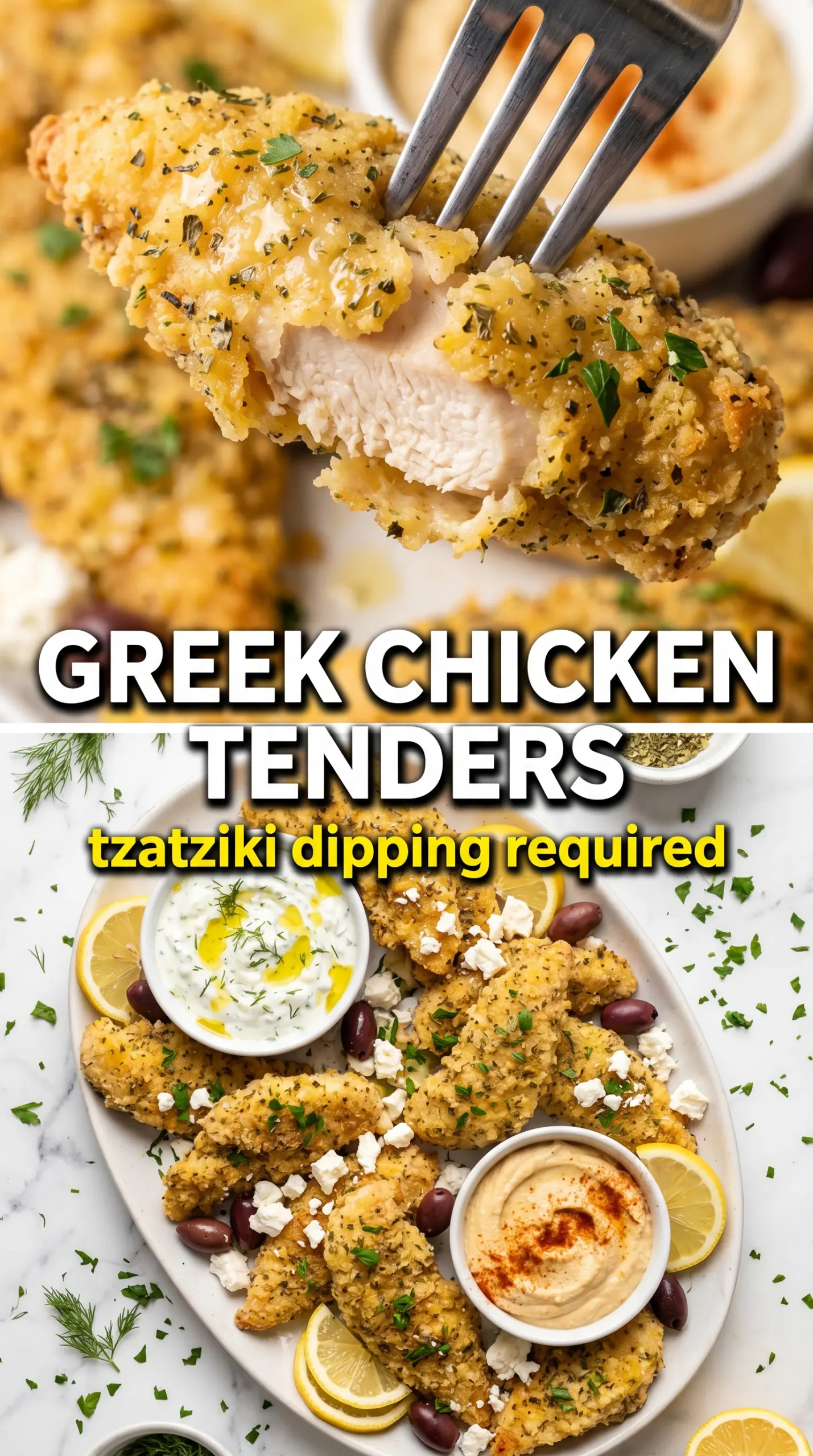
Greek chicken tenders come off the skillet with a crisp, herb-speckled crust and a bright lemon finish that keeps every bite tasting fresh. The short marinade gives the chicken just enough time to take on the oregano, garlic, and citrus without turning soft or mushy, and the quick sear locks in juices while building that golden edge everyone wants.
The key here is balance. Lemon juice and zest bring lift, but the olive oil keeps the marinade from tasting sharp and helps the spices cling to the chicken. A little smoked paprika and cumin round out the edges without pushing the flavor away from the Greek profile, so the tenders taste bold but still clean. Served over cool tzatziki with feta, cucumber, dill, and olives, this is the kind of dinner that feels complete without a lot of moving parts.
Below, I’ve included the small timing details that matter most, plus the swaps I’d use when I want to stretch this into bowls, wraps, or a gluten-free dinner with almost no extra work.
The lemon and oregano came through beautifully, and the chicken stayed juicy even after I cooked it a minute longer for my thicker tenders. The tzatziki underneath was the perfect cool contrast.
Like these lemon-oregano Greek chicken tenders? Save them for the nights when you want a fast skillet dinner with tzatziki and bright Mediterranean flavor.
The Part That Keeps Greek Chicken Tenders Juicy Instead of Dry
Chicken tenders cook fast enough that the difference between juicy and dry is measured in minutes, not judgment. The short marinade does two jobs here: it seasons the surface all the way through and helps the chicken brown faster in the pan. What it does not do is tenderize for hours. That extra time would start to work against you, especially with this much lemon juice in the mix.
Keep the heat at medium-high and work in a single layer. If the pan is crowded, the chicken steams and the oregano never gets that toasted edge that makes the whole dish taste finished. You want a clean sizzle as soon as the chicken hits the pan, then a deep golden crust before you turn it.
- Lemon juice and zest — The juice brings brightness, but the zest carries the real lemon aroma. Use both. If you skip the zest, the marinade tastes flatter and more one-note.
- Olive oil — This helps the marinade coat the chicken and protects the lean tenders from drying out. A decent extra-virgin oil matters here because it’s part of the final flavor, not just a cooking medium.
- Dried oregano — Dried oregano holds up better than fresh in a quick marinade and gives that classic Greek backbone. Fresh oregano can work in a pinch, but use more of it and expect a softer finish.
- Smoked paprika and cumin — These are quiet support players. They add warmth and color without turning the chicken into something that tastes like barbecue.
What Each Ingredient Is Actually Doing in the Marinade
- Chicken tenders — These cook evenly and stay tender without much fuss. If you use chicken breasts instead, slice them into even strips so they finish at the same time.
- Garlic — Fresh minced garlic gives the marinade its sharp, savory edge. Garlic powder will work in a pinch, but it won’t give you the same punch or texture in the crust.
- Lemon juice and zest — The juice seasons the meat and the zest keeps the flavor bright after cooking. That combination is what makes the chicken taste Mediterranean instead of just “lemony.”
- Tzatziki, feta, olives, cucumber, and dill — These aren’t garnish for the sake of garnish. The cool tzatziki and salty feta balance the hot chicken, while cucumber and dill keep the plate tasting fresh instead of heavy.
Getting the Sear Right Before the Tenders Overcook
Building the Marinade
Whisk the olive oil, lemon juice, zest, garlic, oregano, smoked paprika, cumin, salt, and pepper until the oil no longer sits in a separate slick on top. That emulsified look helps the seasoning cling to the chicken instead of pooling in the bowl. Toss the tenders until every surface is coated, then let them sit for 20 minutes at room temperature. Don’t leave them much longer than that or the lemon starts to work the outside of the chicken too hard.
Cooking in a Hot Skillet
Heat the skillet until a drop of water sizzles immediately, then add a thin drizzle of oil. Lay the tenders in without crowding them and leave them alone for 3 to 4 minutes so the crust can form. If they stick, they’re not ready to turn yet. When they release cleanly and the bottom is deep golden with browned spice flecks, flip and cook the second side until the thickest piece hits 165°F.
Finishing on the Platter
Spread the tzatziki first so the warm chicken can sit on top and pick up some of that cool, garlicky sauce. Then scatter the feta, cucumber, olives, and dill around the edges. If you want warm pita, serve it on the side and keep the chicken on the platter; putting the pita under the chicken makes it soggy fast.
How to Adapt These Greek Chicken Tenders for Bowls, Wraps, or a Dairy-Free Plate
Dairy-Free Serving Bowl
Skip the feta and use a dairy-free tzatziki or a lemony tahini sauce instead. You’ll lose the salty tang of feta, so add a few extra olives or a pinch of flaky salt at the end to keep the bowl balanced.
Greek Chicken Wraps
Slice the cooked tenders and tuck them into warm pita with tzatziki, cucumber, and dill. This works well when you need a hand-held dinner, but don’t overload the wrap or the sauce will squeeze out the moment you bite into it.
Gluten-Free Dinner Plate
The chicken itself is naturally gluten-free, so the only thing to watch is what you serve with it. Keep it over rice, roasted potatoes, or extra cucumber and tomatoes, and check that your tzatziki doesn’t hide any flour-based thickeners.
Make-Ahead Marinade Swap
Mix the marinade ingredients up to a day ahead, then add the chicken right before cooking. That saves time without pushing the acid so long that the texture turns a little chalky on the outside.
Storage and Reheating
- Refrigerator: Store cooked chicken in an airtight container for up to 4 days. The coating softens a little, but the flavor holds up well.
- Freezer: Freeze the cooked chicken for up to 2 months. Wrap it tightly and thaw overnight in the fridge so it reheats evenly instead of drying out at the edges.
- Reheating: Warm in a skillet over medium-low heat with a splash of water or broth, just until heated through. Microwaving at full power is the fastest way to make tenders tough.
Answers to the Questions Worth Asking

Greek Chicken Tenders
Ingredients
Equipment
Method
- Whisk together olive oil, lemon juice, lemon zest, minced garlic, dried oregano, smoked paprika, cumin, salt, and pepper until evenly combined and fragrant.
- Toss the chicken tenders in the marinade, then rest for 20 minutes to let the flavors soak in.
- Heat a large skillet or grill pan over medium-high heat and add a drizzle of olive oil, letting it shimmer before cooking.
- Cook the chicken tenders for 3-4 minutes per side until golden with a visible browned crust and the internal temperature reaches 165°F.
- Spread tzatziki on a serving platter and arrange the chicken tenders over the top.
- Scatter crumbled feta, Kalamata olives, cucumber slices, and fresh dill around the chicken for bright pops of color.
- Serve with warm pita and lemon wedges so guests can add extra lemon at the table.