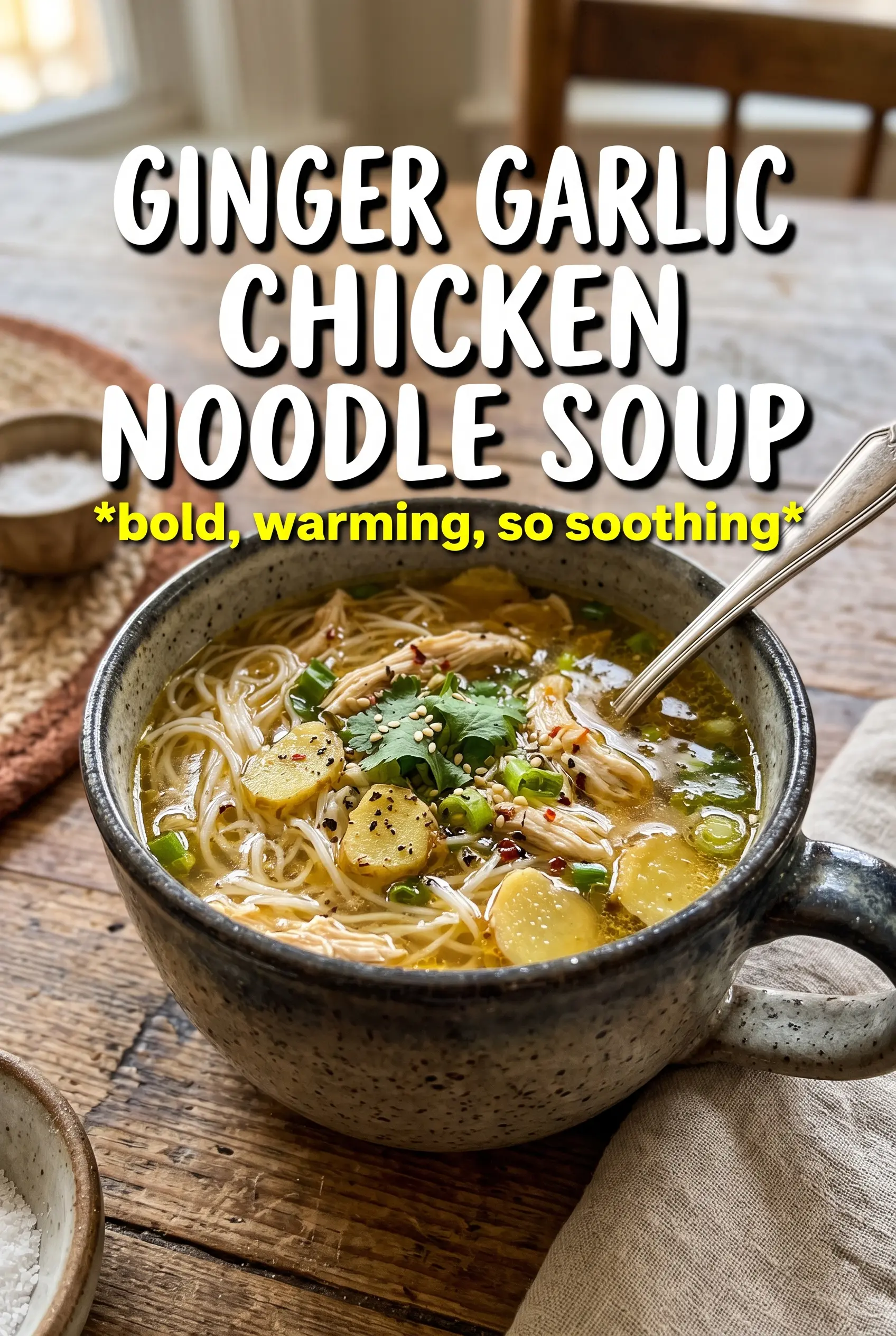
Clear, fragrant broth and tender noodles make this ginger garlic chicken noodle soup the kind of bowl you keep coming back to when you want something comforting without heaviness. The ginger gives it warmth, the garlic builds depth, and the sesame oil at the end ties everything together with a finish that tastes clean and layered, not flat.
The trick here is building flavor in stages instead of dumping everything into the pot at once. Sautéing the onion, carrot, and celery first gives the broth a savory base, and letting the garlic and ginger bloom for a minute or two wakes them up without turning them bitter. I also like to pull the chicken out to shred it separately so it stays juicy and the broth stays clear.
Below you’ll find the small details that matter most: when to add the noodles so they don’t go mushy, how to keep the broth bright, and the swaps that still give you a good bowl when you’re working with what you have.
The broth had that bright ginger-garlic flavor I was hoping for, and the noodles stayed springy instead of turning soft and bloated. I shredded the chicken right after simmering and it soaked up the seasoning perfectly.
Save this ginger garlic chicken noodle soup for the nights when you want a clear, savory broth with tender chicken and noodles that stay just right.
The Part That Keeps the Broth Clear Instead of Muddy
The biggest mistake in noodle soup like this is boiling everything hard from the start. A rolling boil can cloud the broth and make the chicken stringy before the vegetables even soften. A steady simmer gives the chicken time to cook through gently while the broth stays clean and the vegetables hold their shape.
Adding the noodles at the end matters just as much. If they sit in the pot too long, they drink up broth and turn soft, which changes the whole texture of the soup. Cook them just until tender, then serve right away or keep them separate if you know you’ll have leftovers.
What Each Ingredient Is Actually Doing in This Bowl

- Chicken breast or thighs — Breasts stay lean and shred into a clean, light soup. Thighs bring a little more body and stay juicier if you tend to simmer a little longer. Either works, but thighs are more forgiving if you’re not watching the clock closely.
- Fresh ginger and garlic — This is the backbone of the soup. Fresh is worth it here because dried versions don’t give the same bright, aromatic lift. Grate the ginger finely so it melts into the broth instead of floating in fibrous pieces.
- Chicken broth — Use a broth you’d happily sip on its own. Since this soup is clear and simple, the broth carries most of the flavor. If yours is a little weak, simmer it a few extra minutes with the vegetables before adding noodles.
- Soy sauce and rice vinegar — Soy sauce deepens the savory side without making the soup taste like stir-fry, and rice vinegar keeps the broth from feeling heavy. The vinegar goes in at the end so it stays bright instead of cooking off.
- Ramen or egg noodles — Ramen gives you a springy, slightly chewy bite; egg noodles are softer and more familiar. Use whatever you like, but cook them only until tender because they keep softening in the hot broth.
- Sesame oil — Add it at the end. Heat dulls its aroma fast, and you want that nutty finish to sit on top of the ginger and garlic instead of disappearing into the pot.
Building the Soup in the Right Order
Softening the vegetables first
Start with the onion, carrots, and celery in oil and cook them until the onion turns translucent and the carrots start to lose their raw edge. That first layer gives the broth a rounded, savory base instead of a thin, one-note taste. If the pot looks dry, lower the heat rather than adding more oil; too much fat makes the finished soup feel greasy.
Waking up the ginger and garlic
Add the garlic and ginger after the vegetables have softened, then cook just until the mixture smells sharp and fragrant. That usually takes about a minute or two. If garlic starts browning, the heat is too high and it will taste bitter, so pull the pot back and keep it moving.
Simmering the chicken gently
Pour in the broth, soy sauce, and chicken, then bring everything to a boil only long enough to get it started before dropping it to a simmer. You want small bubbles, not a violent boil. The chicken is ready when it reaches 165°F and shreds easily with two forks; if it feels tough, it needs a few more minutes, not more heat.
Finishing with noodles and the brighteners
Shred the chicken and return it to the pot, then add the noodles and cook just until they lose their raw center. Turn off the heat before stirring in the sesame oil and rice vinegar so their flavor stays clear and fresh. Taste at the end and season with salt and pepper after the soy sauce has had a chance to do its work.
How to Adapt This Soup Without Losing What Makes It Good
Use chicken thighs for a richer bowl
Thighs add a little more body and stay tender if the simmer runs long. They also shred into softer pieces, which some people prefer in soup. If you like a fuller, meatier broth, this is the swap I’d reach for first.
Make it gluten-free
Use gluten-free tamari instead of soy sauce and swap in rice noodles or another gluten-free noodle. The soup still tastes balanced, but rice noodles soften faster, so add them only at the very end and serve right away.
Keep it lighter and lower in sodium
Use low-sodium broth and start with half the soy sauce, then taste at the end. The ginger, garlic, and sesame oil still carry the flavor, so you don’t need as much saltiness as you might think. This works well if you want the broth cleaner and less briny.
Turn it into a vegetarian noodle soup
Swap the chicken for sliced mushrooms or cubed tofu and use vegetable broth instead of chicken broth. Mushrooms give you a savory, meaty feel, while tofu makes the soup softer and milder. The broth won’t taste exactly the same, but the ginger and garlic still carry the whole bowl.
Storage and Reheating
- Refrigerator: Store for up to 4 days. The noodles will keep absorbing broth, so expect them to soften.
- Freezer: Freeze the broth, chicken, and vegetables without the noodles for up to 3 months. Cook fresh noodles when you’re ready to serve.
- Reheating: Warm gently over medium-low heat until steaming, not boiling. If you reheat hard, the chicken tightens up and the noodles can go mushy fast.