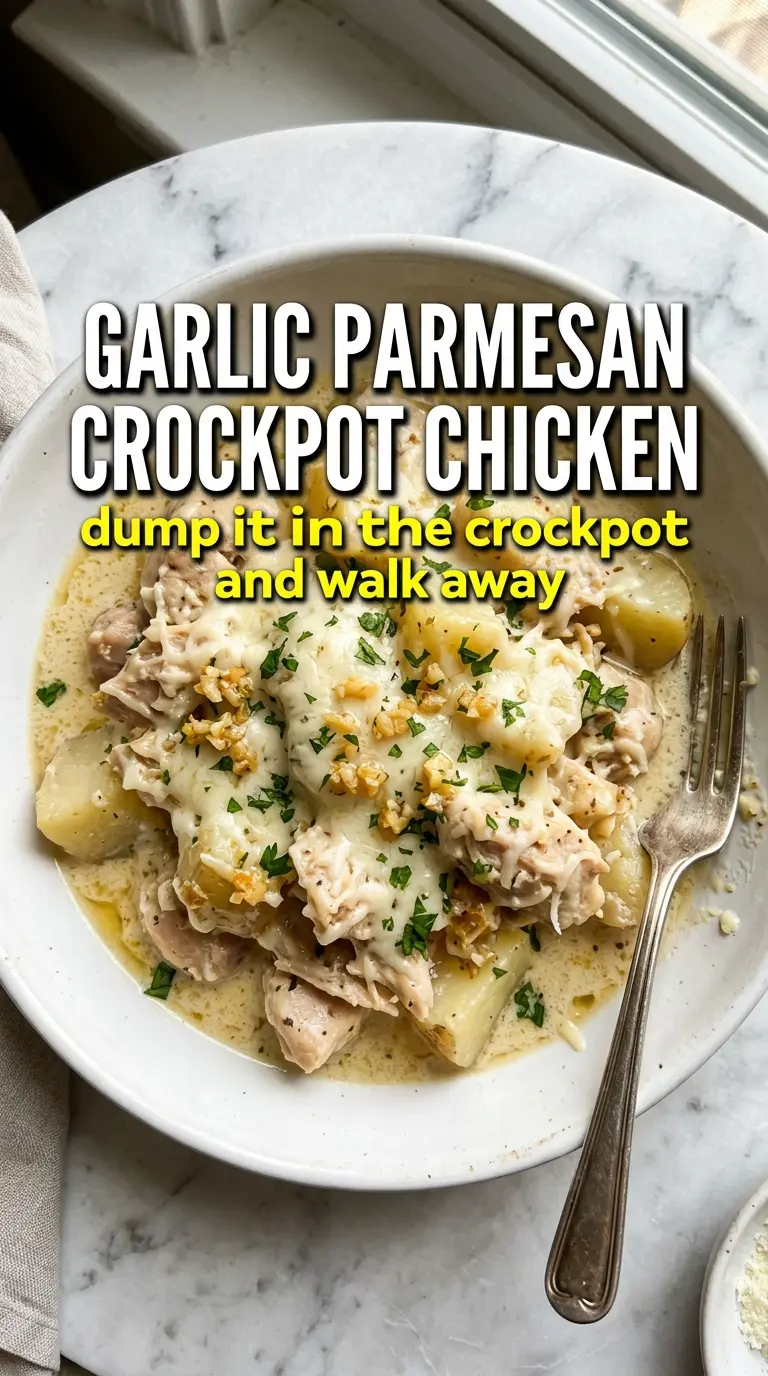
Fall-apart chicken thighs and creamy garlic Parmesan potatoes make this slow cooker dinner feel like more than a shortcut. The potatoes soak up the broth, butter, and garlic from the bottom of the pot, while the chicken cooks on top and bastes the whole dish as it softens. By the time the cream and Parmesan go in, the sauce already has flavor built into it, so it turns glossy instead of thin and bland.
Bone-in, skin-on thighs are the right cut here. They stay juicy through a long cook and give the sauce enough richness to stand up to the cheese. Baby potatoes hold their shape better than large chunks, and halving them gives you edges that absorb the sauce without turning to mash. The last few minutes matter most: the cream and Parmesan go in after the chicken comes out, which keeps the sauce smooth instead of grainy.
Below you’ll find the small technique details that make this crockpot chicken dinner work on a busy night, plus a few smart swaps if you need to adjust for what’s in the fridge.
The potatoes came out tender without falling apart, and the Parmesan sauce thickened up right after I stirred it in. I used to have trouble with crockpot chicken tasting flat, but this had plenty of garlic flavor all the way through.
Save this garlic Parmesan crockpot chicken and potatoes for the kind of dinner that finishes with a silky sauce and barely any cleanup.
The Reason the Sauce Stays Creamy Instead of Breaking
The biggest mistake with slow cooker cream sauces is adding dairy too early and letting it cook for hours. Heavy cream and Parmesan don’t need that kind of heat. They need a hot cooking liquid and a brief stir at the end. That’s what turns the broth and butter into a sauce that clings to the chicken and potatoes instead of separating into greasy puddles.
Another detail that matters here is the order in the slow cooker. The potatoes sit on the bottom because they can handle the longer heat and benefit from the broth pooling around them. The chicken goes on top, skin-side up, so it stays more intact and doesn’t disappear into the liquid.
- Chicken thighs — Bone-in, skin-on thighs stay juicy during a long cook and bring enough fat to help the sauce taste rich. Boneless thighs work too, but they cook faster and won’t give you quite the same deep texture.
- Baby potatoes — Their thin skins and smaller size let them cook through without falling apart. Larger potatoes need to be cut into even chunks, or the smaller pieces will collapse before the center is tender.
- Parmesan — Grate it yourself if you can. Pre-shredded cheese often contains anti-caking starches that can make the sauce sandy instead of smooth.
- Heavy cream — This is what gives the sauce body at the end. Half-and-half can work in a pinch, but the sauce will be thinner and less glossy.
What Each Ingredient Is Actually Doing in This Recipe
- Primary ingredient (the star) — Quality matters most. Choose the best you can find.
- Cooking medium (oil, butter, or broth) — This carries flavors and prevents dryness.
- Seasonings (salt, pepper, spices, herbs) — Layer flavors so nothing overpowers. Build depth gradually.
- Aromatics (garlic, onion, herbs) — Cook with fat to bloom flavors. Become the foundation.
- Supporting ingredients — Complement the main ingredient without overpowering it.
- Sauce or liquid (if applicable) — Brings flavors together. Balance richness with acid.
- Acid (lemon, vinegar, wine, or other) — Brightens and prevents flat-tasting results.
- Final finish (garnish, glaze, or sauce) — Prevents one-dimensional taste and adds visual appeal.
What Happens in the Slow Cooker From Start to Finish
Season the Chicken First
Coat the chicken thighs generously with salt, pepper, garlic powder, onion powder, and Italian seasoning before they go into the pot. That seasoning hits the meat directly and keeps the flavor from sitting only in the sauce. If the seasoning looks sparse, it usually means the chicken needs a little more salt than you think; slow cooking mutes seasoning more than oven roasting does.
Build the Potato Base
Spread the halved baby potatoes across the bottom of the slow cooker, then scatter the minced garlic and butter over them. Pour the broth around the edges so the seasoning washes down through the potatoes instead of floating on top. If the garlic sits exposed on top of dry potatoes, it can taste harsh; tucked into the broth and butter, it turns sweet and mellow.
Cook Until the Meat Gives Easily
Set the chicken thighs on top of the potatoes, skin-side up, and cook until the chicken is tender and the potatoes are pierced easily with a fork. On LOW, that usually takes about 6 to 7 hours. If you rush this on HIGH, the chicken can still work, but the potatoes need a close eye so they don’t go from tender to collapsing.
Finish With the Cream and Parmesan
Lift the chicken out first, then stir in the heavy cream and Parmesan until the sauce looks smooth and lightly thickened. The residual heat is enough to melt the cheese; keeping it off the full cook time is what prevents graininess. Once the sauce turns glossy, return the chicken and spoon it over everything so every piece gets coated.
Small Swaps That Still Keep the Dish on Track
Make It Dairy-Free
Use olive oil instead of butter and swap the heavy cream for full-fat coconut milk. The sauce won’t taste exactly the same, but it will still coat the chicken and potatoes. Skip the Parmesan or use a dairy-free Parmesan-style alternative, knowing the final sauce will be less salty and less sharp.
Use Boneless Chicken Thighs or Breasts
Boneless thighs are the closest swap and still stay tender. Chicken breasts work, but they dry out faster, so start checking early and pull them as soon as they hit 165°F. If you use breasts, cut them a little larger and keep the cook time toward the lower end.
Change Up the Potatoes
Yukon Gold potatoes are a strong backup if you don’t have baby potatoes. Cut them into evenly sized pieces so they cook at the same rate. Russets are starchier and will break down more, which makes the sauce thicker but the texture less defined.
Storage and Reheating
- Refrigerator: Store leftovers in an airtight container for up to 4 days. The sauce thickens as it chills, and the potatoes soften a bit more.
- Freezer: It freezes, but the cream sauce may separate slightly after thawing. For the best texture, freeze the chicken and potatoes without the cream if you know you’ll be freezing a batch.
- Reheating: Warm gently on the stove or in the microwave at medium power with a splash of broth or cream. High heat is what turns the sauce oily and makes the potatoes dry out at the edges.
Answers to the Questions Worth Asking

Garlic Parmesan Crockpot Chicken and Potatoes
Ingredients
Equipment
Method
- Season the chicken thighs generously with salt, pepper, garlic powder, onion powder, and Italian seasoning.
- Place the halved baby potatoes in the bottom of the slow cooker, then scatter the minced garlic and butter cubes over the potatoes.
- Pour the chicken broth over the potatoes and set the chicken thighs skin-side up on top.
- Cover and cook on LOW for 6-7 hours, or HIGH for 3-4 hours, until the chicken and potatoes are tender.
- When finished, lift the chicken to a plate; the thighs should be fall-apart tender when pressed.
- Stir the heavy cream and Parmesan into the cooking liquid until a creamy, thickened sauce forms and looks glossy.
- Return the chicken to the slow cooker and coat everything well in the Parmesan sauce so potatoes are evenly covered.
- Garnish with fresh parsley, using a visible scatter over the golden sauce coating.