Golden, charred Garlic Parmesan Chicken Skewers hit the grill with enough garlic and cheese to turn simple chicken into something people reach for before it even makes it to the platter. The edges crisp up in the heat, the center stays juicy, and the melted Parmesan clings to the chicken instead of disappearing into the flames. A final drizzle of butter over the hot skewers gives the whole thing that glossy, savory finish that makes them taste like more than a quick grilled dinner.
The trick here is keeping the marinade balanced. Olive oil helps the garlic and herbs coat the chicken, lemon juice wakes everything up, and a little Parmesan in the marinade gives the surface a head start on browning. The rest of the cheese goes on after grilling so it stays nutty and visible instead of burning on the grate. That split approach is what gives you those caramelized bits without losing the fresh, salty finish.
Below, I’m walking through the one grill detail that keeps the chicken from sticking, the ingredient choices that matter most, and a few easy ways to adapt these skewers for different diets and weeknight plans.
The chicken stayed juicy and the Parmesan got those crispy little edges on the grill. I liked that the butter went on at the end instead of burning, and the lemon kept everything from tasting heavy.
Like these Garlic Parmesan Chicken Skewers? Save them for the next night you want juicy grilled chicken with crispy cheese edges and almost no cleanup.
The Grill Habit That Keeps Garlic Parmesan Chicken Skewers Juicy
Chicken breast dries out fast when it sits on a hot grill too long, and skewers make that problem worse if the pieces are cut unevenly. Keeping the cubes around 1.5 inches gives them enough structure to stay juicy while still cooking through in the same window. The other part that matters is the marinade time: 30 minutes is enough to season the surface without starting to cure the chicken into a tighter, drier texture.
Grill these over medium-high heat, not screaming-hot fire. You want those visible char marks and browned edges, but you don’t want the garlic in the marinade to turn bitter before the centers reach 165°F. If the skewers stick when you try to turn them, the grates aren’t hot and oiled enough yet, or you moved them too soon.
- Cut size — Keep the chicken pieces close to the same size so they finish together. Smaller bits overcook before the larger ones are ready.
- Marinade balance — Olive oil carries the garlic and herbs across the chicken, while lemon juice keeps the flavor bright. Too much acid, or too long in the marinade, starts to toughen the meat.
- Finishing cheese — Save some Parmesan for after grilling. It melts into the hot chicken and turns lightly tacky instead of disappearing into the fire.
What the Garlic, Lemon, and Parmesan Are Each Doing Here

- Freshly grated Parmesan — This is one place where the good stuff matters. Pre-shredded cheese has anti-caking agents that keep it from melting and clinging the same way, so grate it yourself if you want those little crusty bits on the outside.
- Garlic — Minced garlic in the marinade perfumes the chicken all the way through, but it also burns quickly on a grill. That’s why the heat needs to stay controlled and the butter goes on after cooking, not before.
- Lemon juice — Just enough for brightness and balance. It cuts through the richness of the cheese and butter, but it’s not there to “tenderize” the chicken in any dramatic way.
- Olive oil — It helps the seasoning spread evenly and keeps the chicken from welding itself to the grates. You can use a neutral oil if that’s what you have, but olive oil fits the Italian-American direction of the dish better.
- Butter at the end — Melted butter brushed on after grilling gives the skewers shine and carries the last bit of garlic and herb flavor without scorching. Adding it too early is the fastest way to lose that clean, savory finish.
Getting the Skewers Off the Grill Without Drying Them Out
Mix the Marinade Until It Looks Glossy
Whisk the olive oil, garlic, a portion of the Parmesan, lemon juice, Italian seasoning, basil, salt, and pepper until the mixture looks emulsified and a little thickened. That helps the garlic and cheese cling to the chicken instead of sliding off in the bowl. Once the chicken is coated, let it sit for 30 minutes; longer isn’t better here because the lemon can start to change the texture on the surface.
Thread the Chicken So It Cooks Evenly
Use soaked wooden skewers so they don’t scorch on the grill. Push the chicken pieces on with a little space between them; if they’re jammed together, the centers steam before the edges brown. Keep the pieces similar in thickness as you thread them, and don’t pack one skewer with all the smaller bits or it will finish too soon.
Grill Hot Enough for Color, Not So Hot It Burns
Oil the grates before the chicken goes on, then lay the skewers down and let them sit until they release naturally. If you try to move them too early, the coating tears and leaves the good part behind on the grill. Cook 4 to 6 minutes per side, watching for deep golden color and char marks, and pull them once the thickest piece hits 165°F in the center.
Finish With Butter and the Last Shower of Cheese
As soon as the skewers come off the grill, brush or drizzle on the melted butter and scatter the remaining Parmesan over the top. The heat from the chicken melts the cheese just enough to stick without turning rubbery. Add parsley and lemon wedges at the end so the whole plate tastes fresh, not weighed down.
How to Adapt These Skewers for Different Ovens, Grills, and Diets
Make It Dairy-Free
Skip the Parmesan and finish with extra lemon, parsley, and a little more garlic in the butter substitute, or use a dairy-free butter. You lose the salty crust from the cheese, but the skewers still taste bright and savory if you season the chicken well before grilling.
Use Chicken Thighs Instead
Boneless skinless thighs work beautifully here and stay a little more forgiving on the grill. Cut them into the same size cubes, but expect them to need a minute or two longer since they’re usually thicker and more irregular than breast meat.
Bake Them When the Grill Isn’t an Option
Arrange the skewers on a foil-lined sheet pan and bake at 425°F until the chicken reaches 165°F, then broil for a minute or two for color. You won’t get the same smoky edges, but the Parmesan still browns nicely and the garlic butter finish carries the dish.
Storage and Reheating
- Refrigerator: Store leftovers in an airtight container for up to 3 days. The chicken stays tasty, though the cheese crust softens a bit.
- Freezer: Freeze the cooked chicken off the skewers for up to 2 months. Wrap tightly so the garlic butter doesn’t pick up freezer odors.
- Reheating: Warm gently in a 325°F oven or in a covered skillet over low heat. High heat dries the chicken out before the center is warm, which is the mistake that makes leftover skewers go tough.
Questions I Get Asked About This Recipe
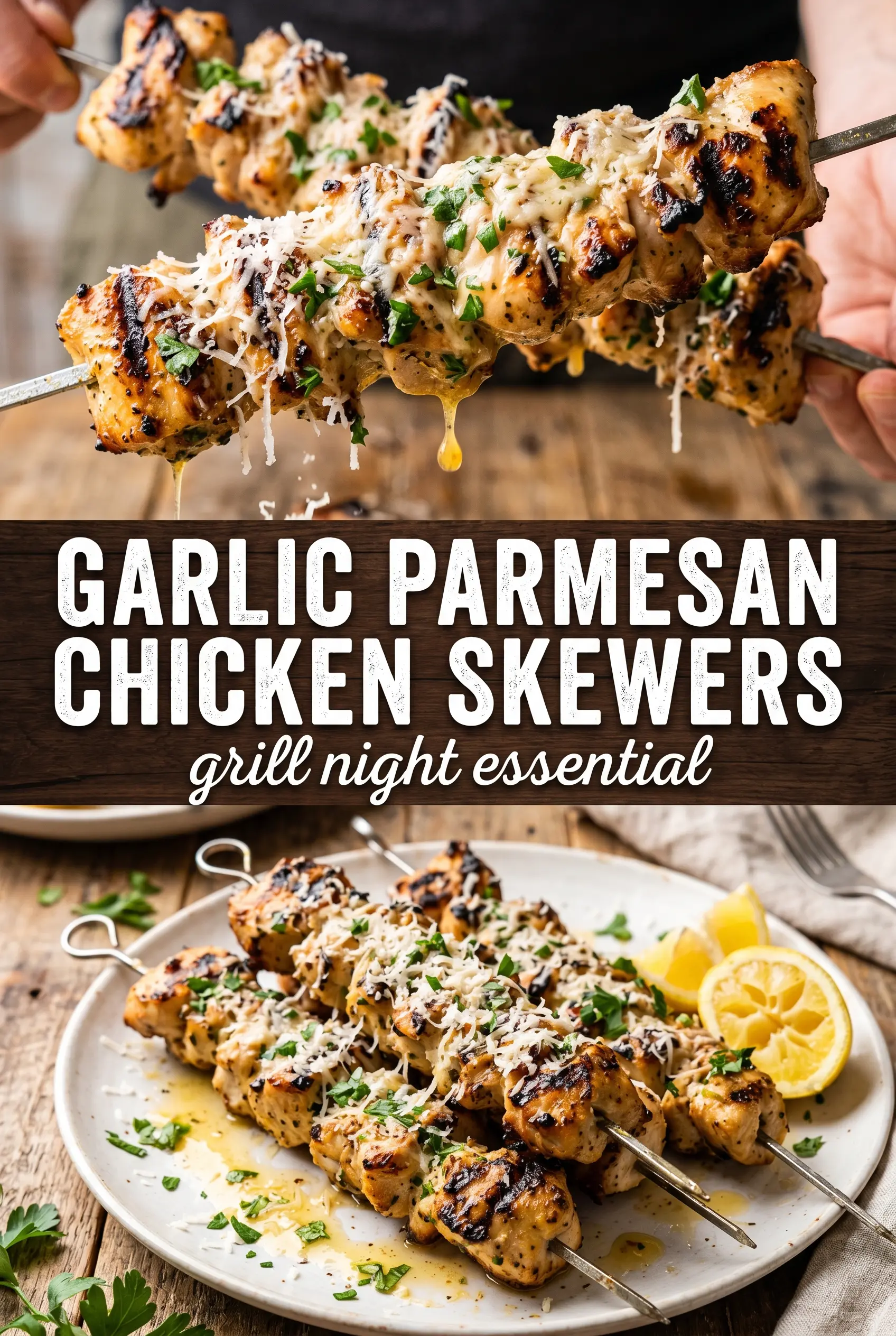
Garlic Parmesan Chicken Skewers
Ingredients
Equipment
Method
- Whisk together olive oil, garlic, 1/4 cup Parmesan, lemon juice, Italian seasoning, basil, salt, and pepper until evenly combined, with a uniform fragrant coating visible.
- Add chicken cubes and toss to coat thoroughly, so every piece looks slicked with the garlic-Parmesan mixture.
- Cover and marinate for 30 minutes, then refrigerate until ready to skewer.
- Soak wooden skewers in water for 30 minutes, keeping them submerged to prevent scorching.
- Thread marinated chicken onto the skewers in an even pattern, leaving small gaps so char marks can form.
- Preheat the grill to medium-high heat and oil the grates, so the surface shimmers slightly when ready.
- Grill skewers for 4-6 minutes per side until deeply golden with visible char marks and the thickest piece reaches 165°F, turning once for even browning.
- Remove skewers from the grill and drizzle with melted butter while hot, letting a glossy herb-butter pool form around the base.
- Scatter remaining Parmesan over the hot skewers so it melts into a lightly crusted layer.
- Garnish with fresh parsley and serve with lemon wedges alongside for bright, fresh squeeze-over flavor.