Silky garlic Parmesan sauce clings to every strand of pasta here, with golden chicken on top and just enough basil to keep the whole bowl tasting fresh. It eats like a restaurant dinner, but the method is straightforward enough for a weeknight, and the skillet does most of the work.
What keeps this version from turning heavy is the balance between cream, broth, and pasta water. The broth loosens the sauce without thinning out the Parmesan, and the starchy pasta water helps it settle into a glossy coating instead of a thick paste. Cooking the chicken separately first gives you better browning and keeps the pasta from getting crowded or steamed.
Below, I walk through the one place people usually run into trouble with creamy pasta sauces, plus the small ingredient choices that make the texture stay smooth instead of grainy. If you’ve ever had Parmesan sauce turn clumpy, this version is built to avoid that.
The sauce turned out smooth and glossy, and the pasta water trick made it coat the noodles instead of pooling in the bowl. My husband went back for seconds before I even sat down.
Save this Garlic Parmesan Chicken Pasta for the night you want a creamy skillet dinner with golden chicken and a sauce that clings to every bite.
The Move That Keeps Parmesan Sauce Smooth Instead of Grainy
The biggest mistake in a dish like this is rushing the cheese. Parmesan wants gentle heat and a little patience; if it goes into a boiling sauce, it can seize and turn sandy before it ever has a chance to melt properly. That’s why the cream and broth simmer first until they’ve lost that thin, raw edge, and the heat stays moderate when the cheese goes in.
Another thing that matters here is the pasta water. It doesn’t just thin the sauce. The starch gives the sauce a slight grip, which helps it cling to spaghetti instead of sliding off the noodles and pooling at the bottom of the bowl. Start with less than you think you need, then add more only if the sauce looks tight.
What Each Ingredient Is Actually Doing in the Skillet
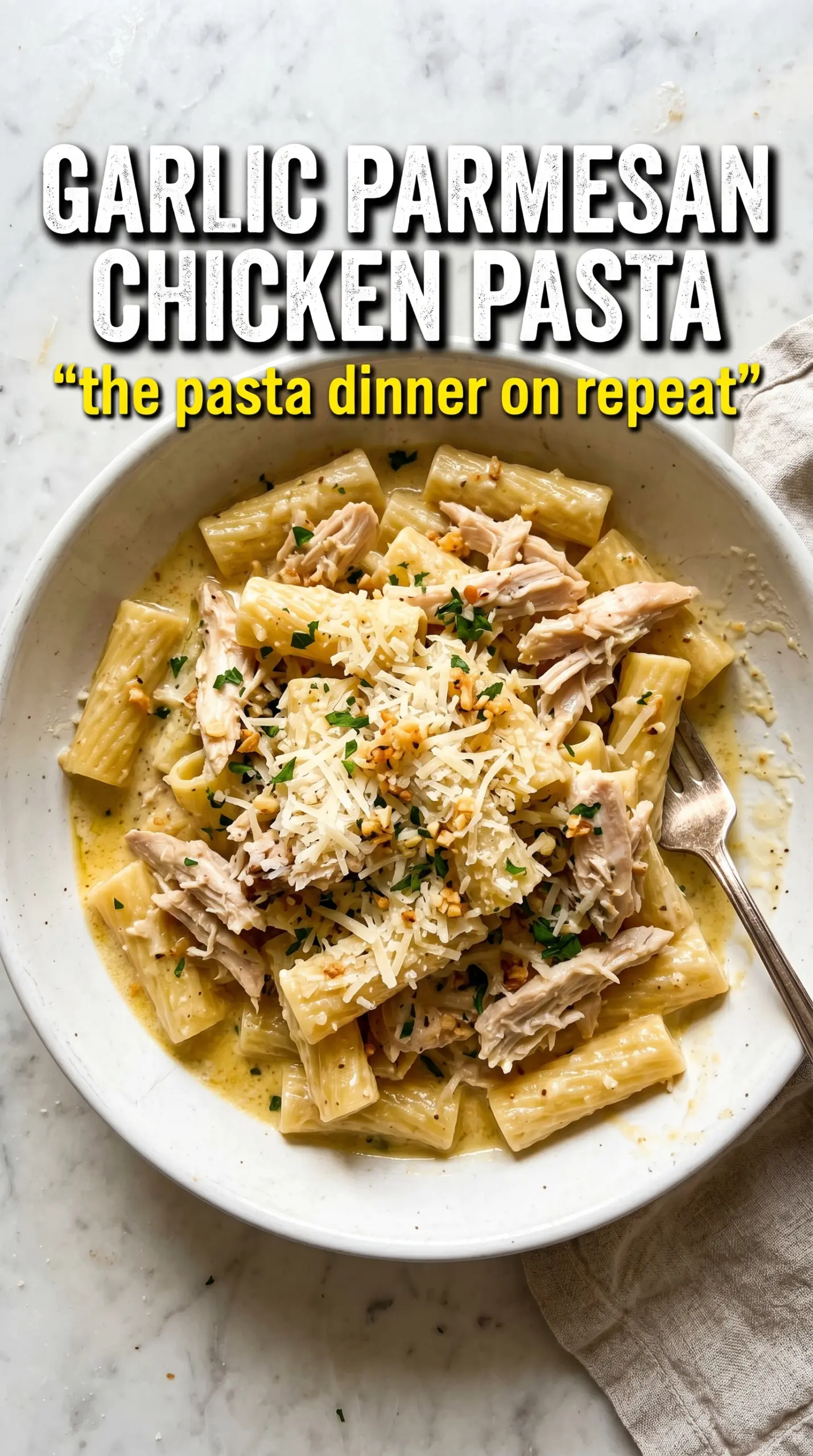
- Chicken breasts — Boneless skinless breasts stay lean and slice nicely over the top, but they dry out if you overcook them by even a few minutes. Pull them at 165°F and let them rest before slicing so the juices stay in the meat instead of running into the sauce.
- Freshly grated Parmesan — This is one place where the pre-shredded version doesn’t behave the same way. Freshly grated Parmesan melts cleaner because it doesn’t have anti-caking additives, which means a smoother sauce and less grit.
- Heavy cream — Cream gives the sauce body without needing flour. Half-and-half can work in a pinch, but the sauce will be lighter and a little less stable, so keep the heat low and don’t let it boil hard.
- Chicken broth — The broth keeps the sauce from tasting flat and helps loosen the richness just enough. Use a low-sodium version if possible so the Parmesan and seasoned chicken stay in control of the salt level.
- Garlic and butter — This is the backbone of the sauce. Let the garlic cook just long enough to smell fragrant, not browned, because bitter garlic will take over the whole dish.
- Pasta water — Reserve it before you drain the pasta. A splash at the end helps the sauce emulsify and settle into a silky coating instead of getting too thick as it sits.
Building the Sauce in the Right Order
Searing the Chicken First
Season the chicken well, then cook it in olive oil over medium-high heat until the outside is golden and the center reaches 165°F. If the skillet looks crowded, work in batches; packed chicken steams before it browns, and you lose the flavor that should end up in the sauce. Let it rest before slicing so it stays juicy and doesn’t dry out once it hits the pasta.
Starting the Garlic Base
Use the same skillet and the browned bits left behind. Melt the butter, then cook the garlic for about a minute over medium heat, just until it smells sweet and sharp at the same time. If the garlic starts to brown, lower the heat immediately, because burnt garlic tastes harsh and will carry through the whole sauce.
Letting the Cream Reduce
Pour in the cream and broth, then let the mixture simmer until it thickens slightly and looks a little glossy around the edges. You’re not trying to cook it down into something heavy; you just want enough reduction that it can hold the cheese without turning watery. Keep the simmer gentle, since a rolling boil can make the cream separate.
Finishing with Cheese and Pasta Water
Take the pan off the heat if it feels too hot, then stir in the Parmesan, Italian seasoning, and red pepper flakes. The sauce should turn smooth and clingy; if it looks tight, add a splash of reserved pasta water and toss until the strands are coated. Add the pasta to the sauce, not the other way around, so every noodle gets covered evenly.
How to Adapt This Garlic Parmesan Chicken Pasta for Different Nights
Make it gluten-free
Use a gluten-free spaghetti or fettuccine and reserve the pasta water the same way. The sauce itself is naturally gluten-free, but the pasta water from gluten-free noodles can be a little less starchy, so you may need one extra splash of cream or broth to keep the texture silky.
Make it lighter without losing the garlic-Parmesan character
Swap the heavy cream for half-and-half and cut the Parmesan by a small handful if you want a thinner sauce with less richness. The result tastes a little less plush, but it still lands in the same lane as long as you keep the heat low and use pasta water to help it emulsify.
Turn it into a vegetable-heavy dinner
Toss in sautéed spinach, mushrooms, or broccoli at the end so they stay defined and don’t water down the sauce. Mushrooms need to be cooked separately first so they brown instead of releasing liquid into the pan, while spinach can go in just long enough to wilt.
Use chicken thighs instead of breasts
Boneless skinless thighs stay juicier and bring a little more richness to the finished dish. They need a few extra minutes to cook through, but they’re more forgiving if you like to brown them deeply before slicing.
Storage and Reheating
- Refrigerator: Store leftovers in an airtight container for up to 3 days. The sauce will thicken as it chills.
- Freezer: I don’t recommend freezing this dish. Cream sauces can separate after thawing, and the pasta turns soft.
- Reheating: Warm gently on the stove over low heat with a splash of broth or milk, stirring often. High heat is what breaks the sauce and dries out the chicken.
Answers to the Questions Worth Asking
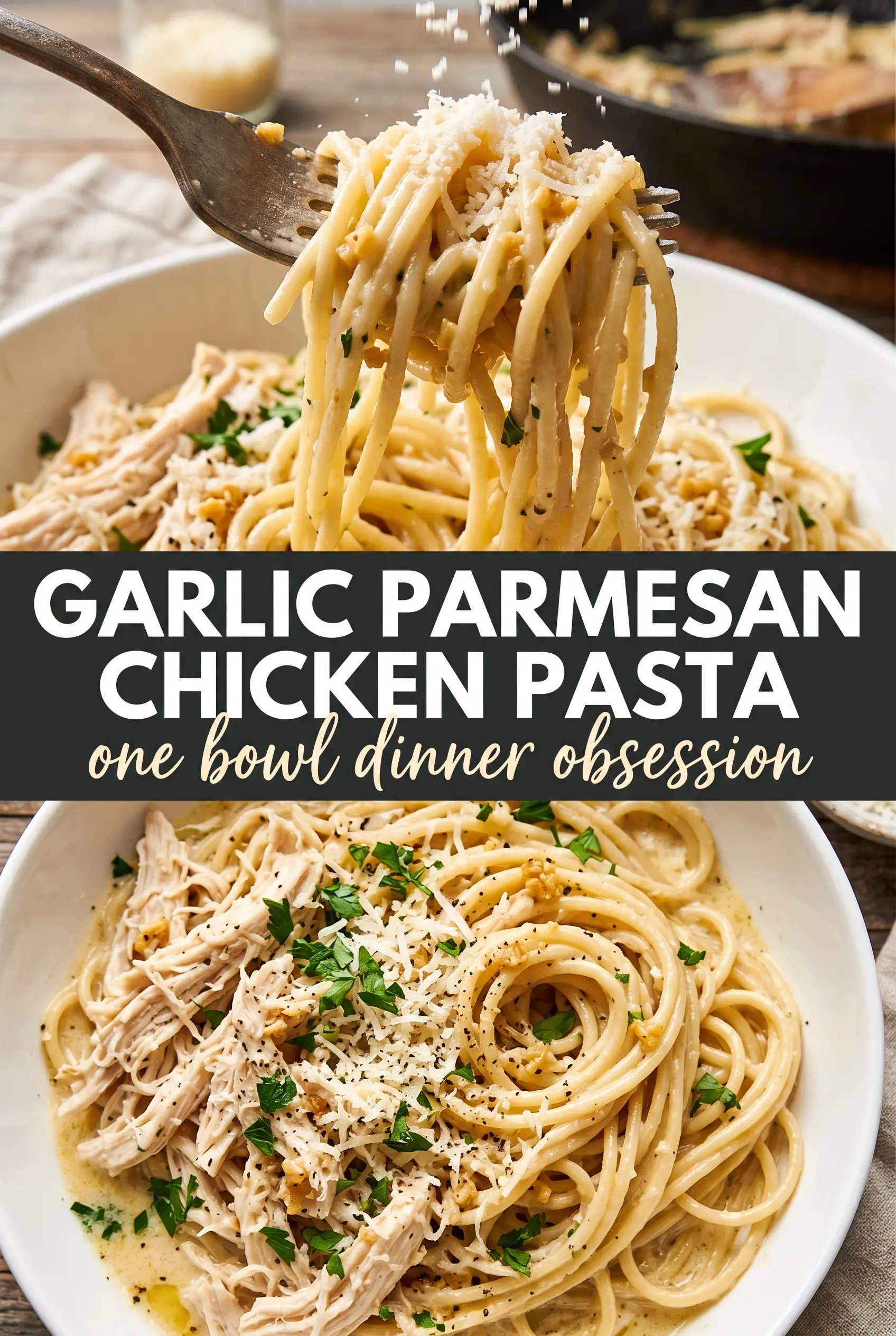
Garlic Parmesan Chicken Pasta
Ingredients
Equipment
Method
- Season the chicken breasts with salt, pepper, garlic powder, and Italian seasoning. Heat olive oil in a large skillet over medium-high heat and cook the chicken for 5-6 minutes per side until golden and cooked through to 165°F.
- Remove the chicken to rest, then slice thin.
- In the same skillet, cook the minced garlic in butter over medium heat for 1 minute until fragrant. Pour in the heavy cream and chicken broth, then simmer for 4-5 minutes until slightly thickened.
- Stir in the freshly grated Parmesan, 1 teaspoon Italian seasoning, and red pepper flakes until smooth. Add reserved pasta water as needed to adjust the sauce consistency.
- Toss the cooked spaghetti or fettuccine in the garlic Parmesan sauce until evenly coated. Divide among plates and top with the sliced chicken.
- Garnish with fresh basil and extra Parmesan for serving.