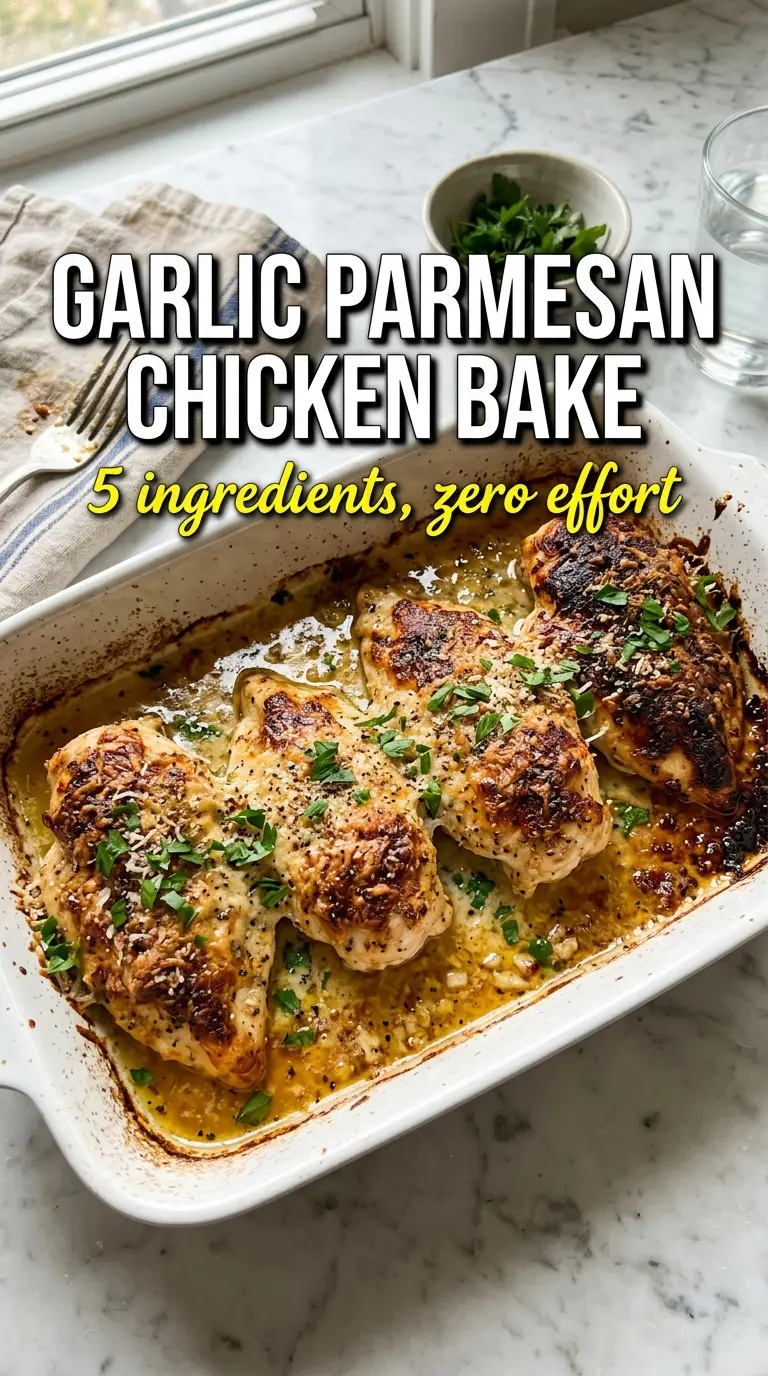
Chicken breasts come out of the oven with a browned, crackly Parmesan crust and juicy meat underneath when the topping is packed on the right way. The butter carries the garlic into every bite, while the panko keeps the cheese from turning into a hard slab. What you get is a weeknight chicken dinner that feels a little more finished than plain baked chicken, but still lands on the table fast.
The part that matters most is the topping. Parmesan alone can bake up dense, but when it’s mixed with panko and pressed firmly over buttered chicken, it turns into a golden shell instead of a greasy layer that slides off. Freshly grated Parmesan makes a difference here because it melts and browns more evenly than the pre-shredded stuff, and the smoked paprika adds just enough color and depth without turning the crust heavy.
Below, I’m walking through the small details that keep the chicken tender and the coating crisp, plus a few swaps for when you need to work with what’s already in the kitchen.
The Parmesan crust browned up beautifully and stayed on the chicken instead of falling into the pan. I baked it for 28 minutes and it came out juicy with that garlicky butter flavor all the way through.
Save this garlic Parmesan chicken bake for the night you want a crispy topping, juicy chicken, and one pan in the oven.
The Trick to Keeping the Parmesan Crust on the Chicken
The crust stays put when the chicken starts dry and the topping gets pressed on with a little pressure. If the surface of the chicken is wet, the butter and cheese mixture loosens up and bakes into a patchy layer instead of a proper crust. That’s the difference between a topping that browns in place and one that slips off in oily clumps.
Another detail that matters is thickness. If one breast is much thicker than the others, the topping will brown before the center is done. Pound the thick end lightly so the pieces bake at the same pace, and pull the dish as soon as the thickest part hits 165°F. Overbaking dries out the chicken before the crust has a chance to do its job.
What Each Part of the Topping Is Actually Doing
- Freshly grated Parmesan — This is the backbone of the crust. It melts into the butter and browns instead of clumping the way pre-shredded cheese can. If you swap in the bagged kind, expect a drier, less even crust.
- Panko breadcrumbs — Panko keeps the topping light and gives it that crackled texture. Regular breadcrumbs work in a pinch, but the crust will be finer and less airy. Pressing the mixture onto the chicken is what helps it hold together.
- Butter and garlic — The butter carries flavor and helps the topping cook into a cohesive layer. Minced garlic is better than powder here because it gives the crust those browned, savory bits that smell like the pan is doing something right. Don’t use garlic powder in the butter unless that’s all you have; it won’t give the same fresh bite.
- Italian seasoning, parsley, and smoked paprika — These round out the cheese so it tastes seasoned all the way through, not just salty on top. The paprika is mostly about color and a faint warm note. If you want a cleaner flavor, leave it out and lean on lemon at the end.
Building the Crust Without Drying Out the Chicken
Season and Set the Base
Season the chicken first, then place it in a greased 9×13 dish with a little space between each breast. That spacing matters because crowded chicken steams instead of browns. If the pieces are uneven, lightly pound the thick ends so they finish together instead of leaving you with dry edges and an undercooked center.
Make the Garlic Butter
Mix the melted butter with the minced garlic and brush it generously over the top of each breast. You want every surface coated, but not swimming, because too much butter can make the crust slide off. The garlic should smell fragrant, not sharp; if it has sat too long in hot butter and started to brown, it can taste bitter.
Press on the Parmesan Layer
Combine the Parmesan, panko, Italian seasoning, parsley, and paprika, then press it firmly over the chicken. Don’t sprinkle it loosely. Pressing gives the cheese something to bind to, and that’s what keeps the coating intact as it bakes. If some topping looks too dry, a light extra brush of butter on the chicken underneath fixes it better than piling on more cheese.
Bake Until the Top Turns Deep Gold
Bake at 400°F for 25 to 30 minutes, watching for a crust that’s deeply golden and spotty brown at the edges. The chicken is done when the thickest part reaches 165°F and the juices run clear. If the top is browning fast before the chicken is cooked through, lay a loose piece of foil over the dish for the last few minutes.
Finish With Lemon and Parsley
Let the chicken rest for a few minutes, then scatter fresh parsley over the top and serve with lemon wedges. That squeeze of lemon wakes up the Parmesan and keeps the dish from tasting flat. If you cut in right away, the juices will run out and the crust can lose some of its crunch.
How to Adapt This Garlic Parmesan Chicken Bake
Gluten-Free Version
Swap the panko for gluten-free breadcrumbs or crushed gluten-free crackers. The crust will still brown well, but it may be a little denser, so press it on firmly and don’t skip the butter underneath.
Dairy-Free Version
Use a plant-based butter and a dairy-free Parmesan-style substitute. The flavor will be a little less sharp and the crust won’t brown quite the same way, but the panko still gives you a good textured topping.
Using Chicken Thighs Instead
Boneless skinless thighs work well if you want richer, juicier meat. They usually need a few extra minutes in the oven, and the top may not look as uniform because thighs are smaller and less flat than breasts.
Making It Spicier
Add a pinch of red pepper flakes to the topping or a little cayenne to the butter. Keep it light. Too much heat can crowd out the garlic and Parmesan that make this bake worth repeating.
Storage and Reheating
- Refrigerator: Store leftovers in an airtight container for up to 3 days. The crust softens a bit, but the flavor stays solid.
- Freezer: It freezes, but the topping loses some crunch after thawing. Wrap portions tightly and freeze for up to 2 months if you don’t mind a softer finish.
- Reheating: Warm in a 325°F oven, covered loosely with foil, until heated through. The biggest mistake is blasting it in the microwave, which turns the chicken rubbery and the crust soggy.
Questions I Get Asked About This Recipe
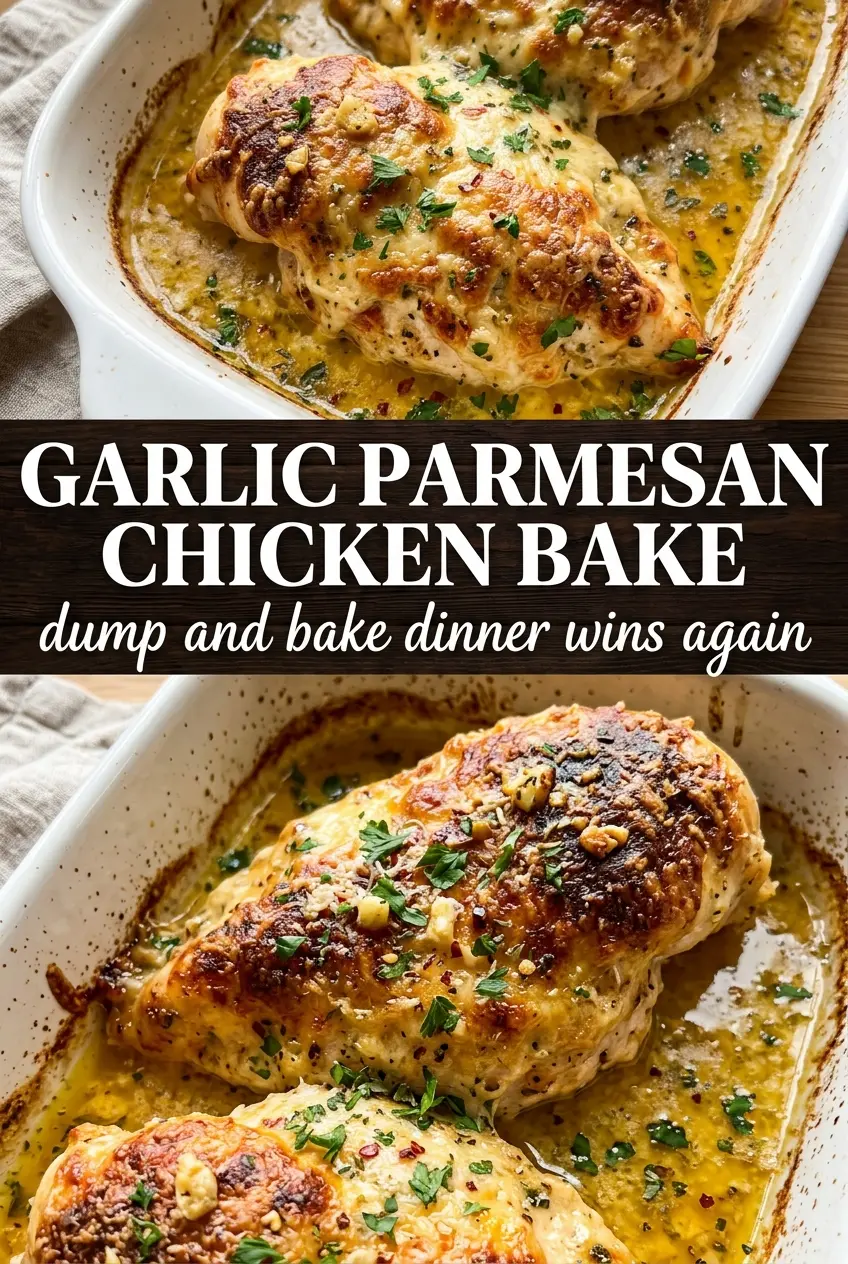
Garlic Parmesan Chicken Bake
Ingredients
Equipment
Method
- Preheat the oven to 400°F and grease a 9x13 baking dish with a thin coating to prevent sticking.
- Season the chicken breasts with salt, pepper, and garlic powder to taste, then place them in the prepared baking dish.
- Mix the melted butter with the minced garlic, then brush generously over each chicken breast so the surface is well coated.
- In a bowl, combine Parmesan, panko, Italian seasoning, dried parsley, and smoked paprika; press firmly over the buttered chicken to coat completely.
- Bake for 25-30 minutes at 400°F until the Parmesan crust is deeply golden and the internal temperature reaches 165°F.
- Garnish with fresh parsley and serve with lemon wedges for bright flavor at the table.