Garlic knots disappear fast because they hit the exact texture people want from bread: a soft, pillowy center with lightly bronzed edges and a buttery garlic finish that clings to every twist. The best ones are tender enough to pull apart in strands, but sturdy enough to hold a generous swipe of marinara without collapsing into a soggy mess.
This version keeps the dough simple and lets the finishing butter do the heavy lifting. Refrigerated pizza dough is the shortcut that makes these weeknight-friendly, but the real payoff comes from brushing the knots twice: once before baking for color, then again with garlicky butter the moment they come out of the oven so the heat blooms the garlic and the Parmesan sticks properly.
Below, you’ll find the small details that keep the knots from unraveling, why the garlic goes in after baking instead of before, and the one thing that makes store-bought dough taste like it came from your favorite neighborhood pizza place.
The knots baked up soft in the middle with those golden edges, and brushing on the garlic butter after baking kept the garlic from tasting bitter. I served them with marinara and my husband ate four before dinner.
Save these golden garlic knots for the nights when warm, pull-apart bread and marinara need to be on the table fast.
The Trick to Garlic Knots That Stay Soft, Not Dense
The biggest mistake with garlic knots is overworking the dough while you shape it. Refrigerated pizza dough is already developed enough; if you keep rolling and stretching until it fights back, the knots bake up tighter and breadier than they should. Cut clean pieces, roll them just long enough to get a 7-inch rope, and tie them without pulling so hard that the dough tears.
Baking them on parchment in a hot oven gives you the lift and color you want without sticking. The knots should look puffed and lightly golden at the edges before you pull them out. If they go too far in the oven, the butter won’t soak in the same way and the center turns chewy instead of soft.
What the Butter, Garlic, and Parmesan Are Each Doing
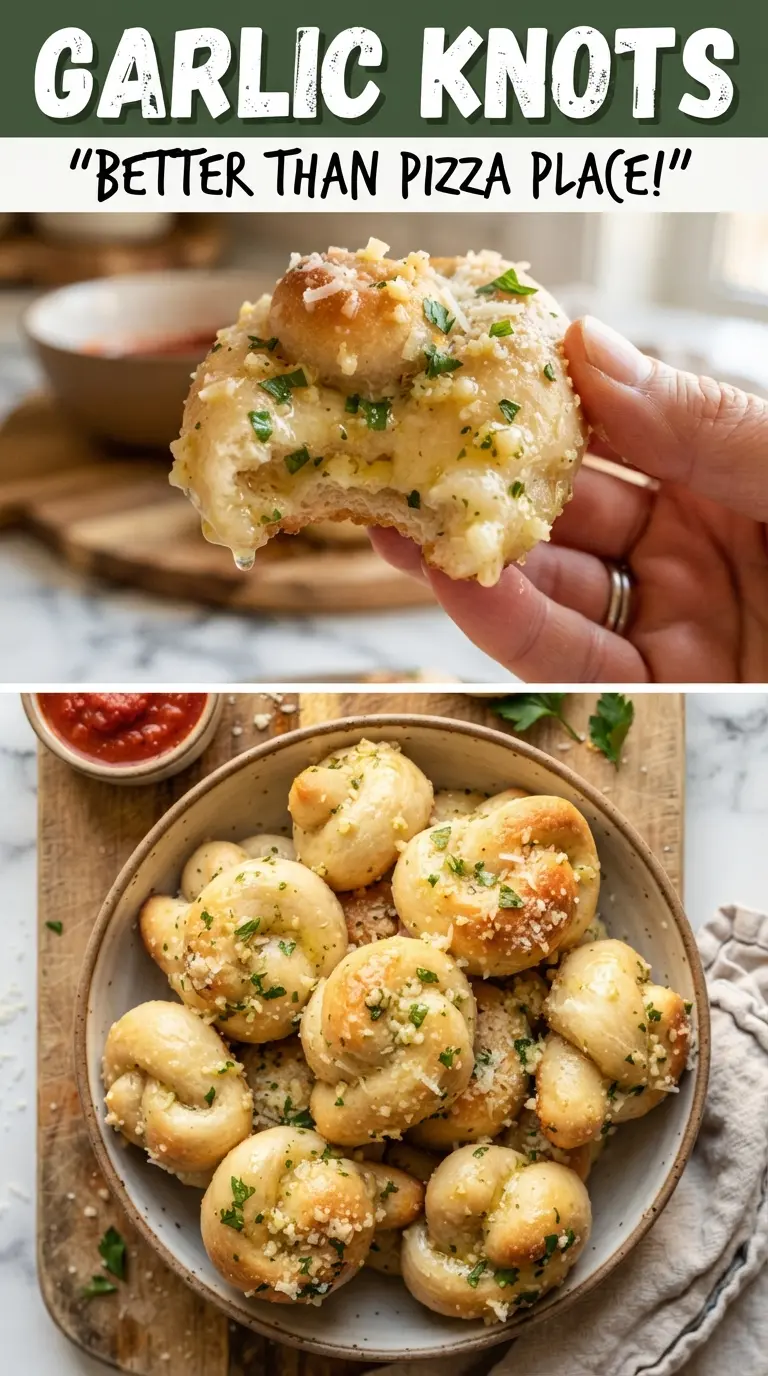
- Refrigerated pizza dough — This is the shortcut that gives you structure without a long rise. Let it come to room temperature first so it stretches cleanly; cold dough snaps back and makes knotting frustrating.
- Butter — Melted butter is the vehicle for all the flavor and the reason the garlic clings to the surface. Use real butter here. It browns beautifully and gives the knots that classic bakery-style finish.
- Garlic — It goes in after baking on purpose. Raw garlic can taste sharp or bitter if it bakes too long, while stirring it into warm butter after the knots come out gives you a fresher, rounder garlic flavor.
- Parmesan — Finely grated Parmesan melts onto the hot knots and adds saltiness plus a little nutty bite. Pre-grated works in a pinch, but freshly grated sticks better and tastes cleaner.
- Parsley — Fresh parsley keeps the topping from feeling heavy. It’s not just color; it adds a clean, herbaceous finish that balances the butter.
How to Shape, Bake, and Finish Them So They Taste Like Bakery Bread
Cutting and Knotting the Dough
Divide the dough into 16 even pieces so the knots bake at the same pace. Roll each piece into a rope about 7 inches long, then tie a loose knot and tuck the ends underneath. Loose is the key word here; if you cinch the knot too tightly, the center stays doughy while the outside browns too fast.
Getting the First Bake Right
Brush the knots lightly with melted butter before they go into the oven. That thin coat helps the surface color and keeps the bread from drying out. Bake until they’re puffed and golden brown, not pale and underdone or dark and tough. If the bottoms are coloring faster than the tops, your oven rack is too low.
Finishing With Garlic Butter While They’re Hot
Stir the garlic, parsley, and salt into the remaining butter only after baking, then brush it over the hot knots right away. The residual heat softens the garlic’s edge and helps the butter soak into the cracks of the knot. Sprinkle on Parmesan while the surface is still warm so it melts slightly instead of falling off in dry flakes.
How to Adapt These Garlic Knots for Different Tables
Make them dairy-free
Use a dairy-free butter substitute that melts cleanly and has a neutral flavor, then skip the Parmesan or swap in a dairy-free hard cheese alternative. The knots will still be soft and garlicky, but the finish will lean a little more savory than cheesy.
Use fresh homemade dough
If you have a favorite pizza dough recipe, use it here. You’ll get a slightly chewier, more bread-like knot, and you may need a minute or two more in the oven depending on how hydrated the dough is.
Add more herb flavor
Swap half the parsley for chopped basil or chives if you want a brighter finish. Basil leans sweeter and more Italian-American, while chives add a mild onion note that plays well with the garlic.
Storage and Reheating
- Refrigerator: Store leftover knots in an airtight container for up to 3 days. They’ll soften a bit as they sit, especially where the butter soaks in.
- Freezer: Freeze baked knots without the final Parmesan for up to 2 months. Wrap tightly and thaw at room temperature before reheating so the centers don’t dry out.
- Reheating: Warm them in a 350F oven for 5 to 8 minutes. The oven brings back the exterior texture better than a microwave, which makes the bread rubbery and mutes the garlic butter.
Answers to the Questions Worth Asking
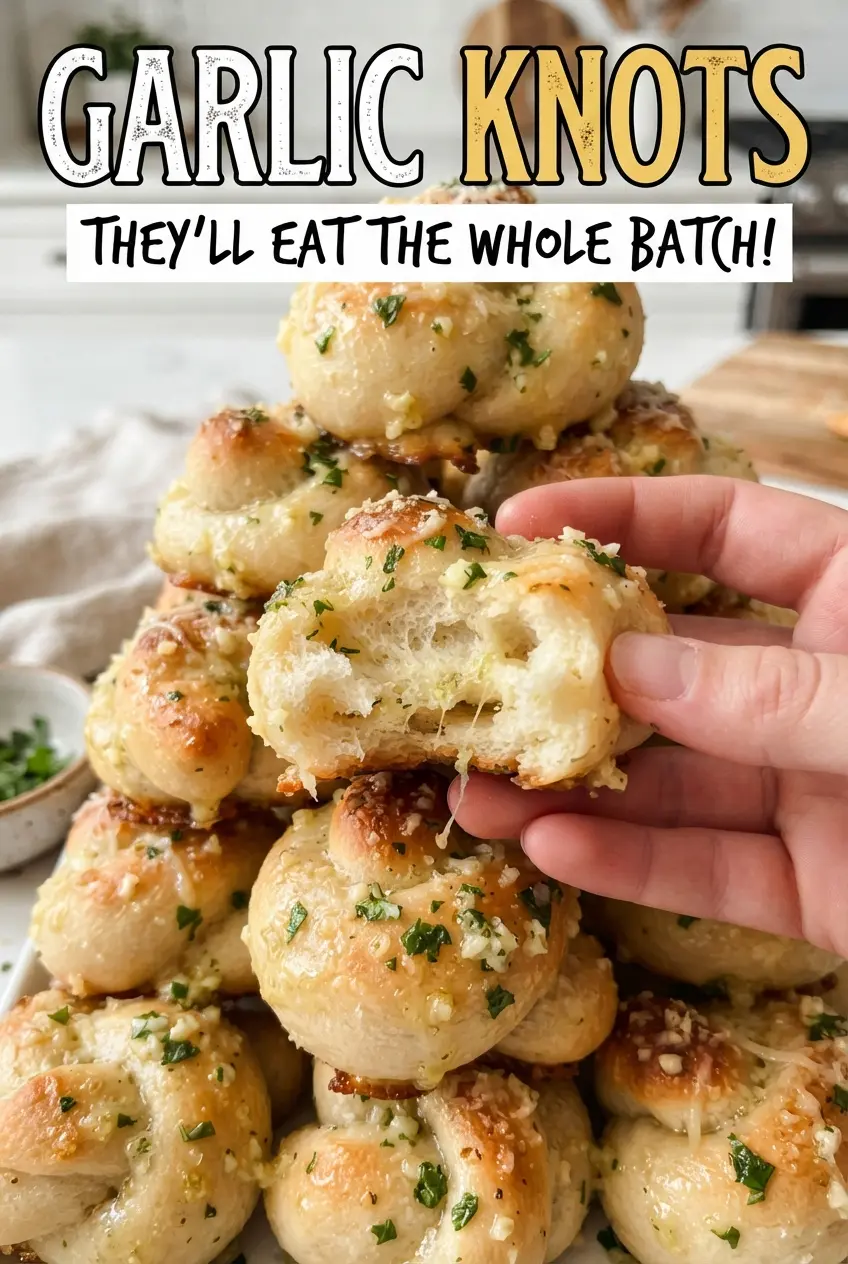
Garlic Knots
Ingredients
Equipment
Method
- Preheat oven to 400F and line a baking sheet with parchment so the knots don’t stick and bake evenly.
- Cut the refrigerated pizza dough into 16 pieces, then roll each into a 7-inch rope and tie into a knot.
- Place the knots on the baking sheet and brush them lightly with the melted butter.
- Bake for 13-15 minutes until golden brown, with a lightly crisp surface around the knots.
- Stir the garlic, parsley, and salt into the remaining butter, then brush over the hot knots so the topping clings and warms through.
- Sprinkle Parmesan over the knots, then serve with marinara sauce for dipping.