Golden seared chicken breasts over buttery mashed potatoes hit that sweet spot between comforting and polished. The chicken stays juicy, the potatoes turn soft and fluffy, and the garlic herb pan sauce ties everything together with just enough richness to make the plate taste finished instead of plain.
What makes this version work is that the seasonings go on the chicken before it ever hits the pan, so the crust has time to build flavor instead of relying on the sauce to do all the work. Yukon Gold potatoes bring a naturally creamy texture without needing a lot of extra fuss, and warming the cream before it goes into the mash keeps the potatoes smooth instead of gluey. The pan sauce is built right in the same skillet, which means all those browned bits from the chicken end up back on the plate where they belong.
Below, I’ll show you how to keep the chicken from drying out, what matters most in the mashed potatoes, and the small pan-sauce move that makes the whole dish taste like more than the sum of its parts.
The chicken got a beautiful crust and the pan sauce came together fast without tasting thin. I liked that the mashed potatoes stayed fluffy instead of turning heavy, and my husband went back for seconds.
Save these garlic herb chicken breasts and creamy mashed potatoes for a dinner that feels cozy, complete, and worth making on a busy night.
The Chicken Crust and the Sauce Need Different Heat
The biggest mistake in a dish like this is treating the chicken and the sauce like they want the same pan temperature. The chicken needs enough heat to brown fast and develop a savory crust, but the garlic in the sauce burns easily, so it gets its own gentler moment after the chicken comes out. That separation is what keeps the sauce from turning bitter.
The other thing people miss is that the pan sauce is not meant to be thick like gravy. It should be glossy and light enough to coat the chicken and drip into the potatoes. If it reduces too far, it gets salty and narrow in flavor, so pull it off the heat once it looks silky and clings to the spoon.
- Chicken breasts — Boneless, skinless breasts cook quickly and slice cleanly over mashed potatoes. If yours are thick on one end, pound them lightly so they cook at the same rate and don’t dry out before the center is done.
- Thyme and rosemary — These herbs give the chicken its savory backbone. Dried herbs work well here because they cling to the surface and bloom in the hot oil; fresh herbs can be used, but they won’t give the same evenly seasoned crust.
- Chicken broth — This is the base of the pan sauce, and it matters more than people think. Use a broth you’d drink on its own if possible, because this sauce is simple enough that weak broth tastes flat fast.
- Butter, divided — A portion goes into the potatoes, and the rest finishes the sauce. That separation matters because butter in the pan sauce gives shine, while butter in the potatoes gives body.
What Each Ingredient Is Actually Doing in This Recipe

- Primary ingredient (the star) — Quality matters most. Choose the best you can find.
- Cooking medium (oil, butter, or broth) — This carries flavors and prevents dryness.
- Seasonings (salt, pepper, spices, herbs) — Layer flavors so nothing overpowers. Build depth gradually.
- Aromatics (garlic, onion, herbs) — Cook with fat to bloom flavors. Become the foundation.
- Supporting ingredients — Complement the main ingredient without overpowering it.
- Sauce or liquid (if applicable) — Brings flavors together. Balance richness with acid.
- Acid (lemon, vinegar, wine, or other) — Brightens and prevents flat-tasting results.
- Final finish (garnish, glaze, or sauce) — Prevents one-dimensional taste and adds visual appeal.
Building the Plate in the Right Order
Start with the Potatoes While the Chicken Is Still Raw
The potatoes take the longest passive time, so get them going first. Boil them until a fork slides through without resistance, but don’t let them collapse and soak up extra water, or the mash turns loose and heavy. Drain them well, then let them steam for a minute before mashing so you’re not trapping excess moisture in the bowl.
Season the Chicken Like You Mean It
Pat the chicken dry before seasoning. Moisture on the surface blocks browning, and browning is where the flavor starts. Press the garlic powder, paprika, thyme, rosemary, salt, and pepper onto both sides so the spices stay on the meat instead of falling into the pan the second it heats up.
Sear Until the Chicken Releases on Its Own
Set the chicken in the hot oil and leave it alone until a deep golden crust forms. If you try to move it too soon, it will stick; once it’s ready, it releases cleanly. Cook the second side until the thickest part reaches 165°F, then pull it out right away so the carryover heat finishes the job without drying it out.
Turn the Skillet Drippings Into Dinner
After the chicken is out, add the butter and garlic to the same pan. The garlic should smell fragrant within a minute, not brown; if it darkens, the sauce will taste harsh. Pour in the broth and scrape up every browned bit from the bottom, then let it simmer just until the liquid looks lightly glossy and spoonable.
Storage and Reheating
- Refrigerator: Store the chicken, mashed potatoes, and sauce in separate airtight containers for up to 3 days. The potatoes will firm up a bit, which is normal.
- Freezer: The chicken freezes well for up to 2 months. The mashed potatoes can be frozen, but they may turn slightly grainy when thawed, so I only freeze them if I’m out of better options.
- Reheating: Reheat the chicken gently in the oven or covered in a skillet with a splash of broth. Warm the potatoes over low heat with a little cream or milk stirred in, and don’t blast them in the microwave or they’ll dry out at the edges before the center is hot.
What to Change When You Want a Different Version of Dinner
Dairy-Free Without Losing the Comfort
Use olive oil or a plant-based butter in both the potatoes and the sauce, and warm unsweetened oat milk or almond milk instead of cream. The potatoes won’t taste quite as rich, but they’ll still be smooth and satisfying if you keep the liquid modest and mash them while hot.
Make It With Chicken Thighs
Boneless thighs work well if you prefer darker meat. They need a little longer in the pan, but they stay juicier and taste a bit richer, which plays nicely with the garlic herb sauce.
Lighter Mashed Potatoes
Swap half the butter for extra warm milk if you want a lighter side. The potatoes will be less plush, but they’ll still hold the sauce well and won’t feel as heavy on the plate.
Gluten-Free as Written
This recipe is naturally gluten-free as long as your chicken broth is certified gluten-free. That’s the only place hidden gluten tends to show up in a dish like this.
Storage and Reheating
- Refrigerator: Store the chicken, mashed potatoes, and sauce in separate airtight containers for up to 3 days. The potatoes will firm up a bit, which is normal.
- Freezer: The chicken freezes well for up to 2 months. The mashed potatoes can be frozen, but they may turn slightly grainy when thawed, so I only freeze them if I’m out of better options.
- Reheating: Reheat the chicken gently in the oven or covered in a skillet with a splash of broth. Warm the potatoes over low heat with a little cream or milk stirred in, and don’t blast them in the microwave or they’ll dry out at the edges before the center is hot.
Questions I Get Asked About This Recipe
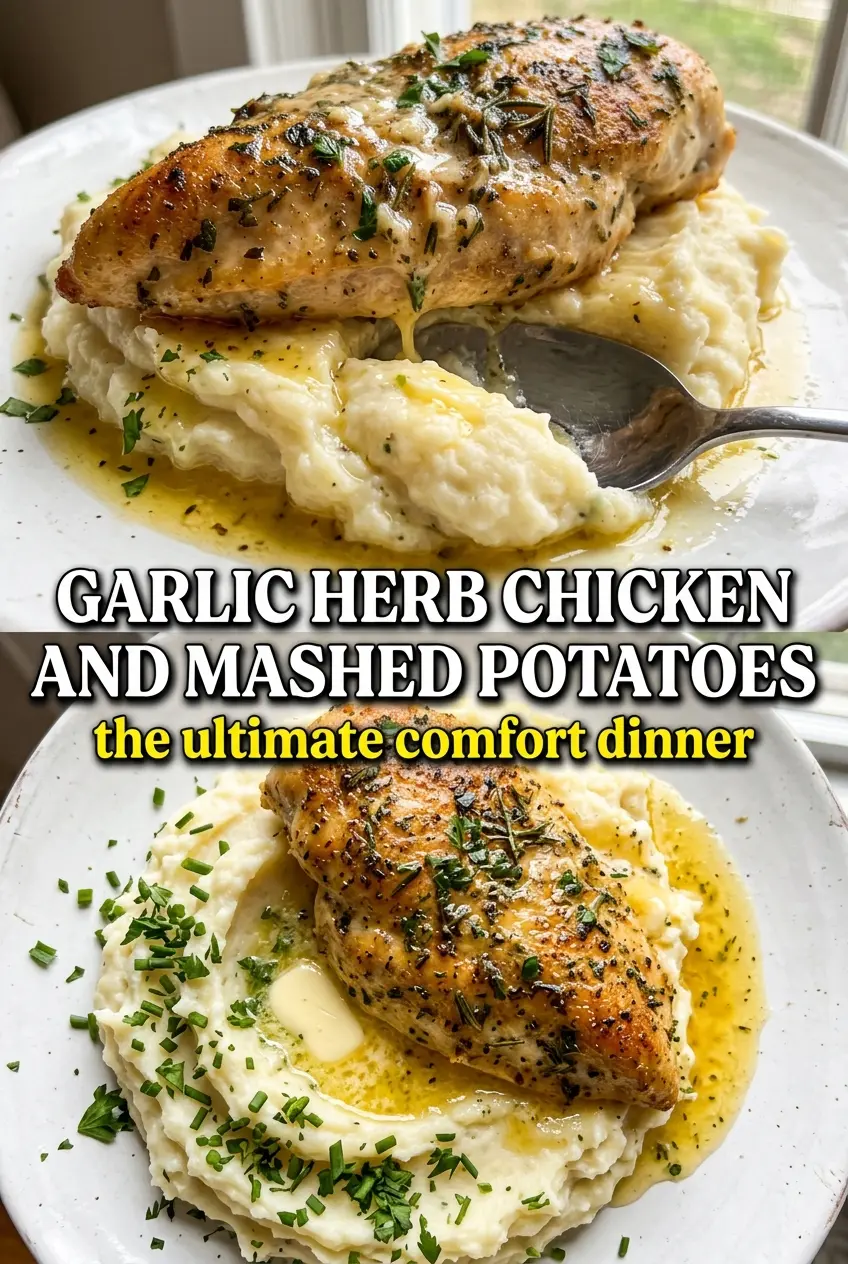
Garlic Herb Chicken Breast with Mashed Potatoes
Ingredients
Equipment
Method
- Boil the cubed Yukon Gold potatoes in salted water for 15-18 minutes until fork-tender, then drain well and return to the pot.
- Mash the hot potatoes with butter and warmed heavy cream (or whole milk), then season with salt, pepper, and garlic powder until smooth and fluffy; keep warm.
- Season both sides of the chicken breasts with garlic powder, smoked paprika, dried thyme, dried rosemary, salt, and pepper.
- Heat olive oil in a cast iron skillet over medium-high heat and sear chicken for 5-6 minutes per side until golden and cooked through to 165°F, then remove to a plate.
- Melt 2 tablespoons butter in the same pan and cook the minced garlic for 1 minute until fragrant.
- Add chicken broth and scrape up the browned bits, then simmer 2-3 minutes until a simple pan sauce forms.
- Spoon mashed potatoes onto plates and place the seared chicken on top.
- Drizzle the garlic pan sauce over the chicken and mashed potatoes.
- Finish with fresh parsley garnish before serving.