Golden garlic butter chicken thighs over creamy Parmesan rice hit that sweet spot between comforting and a little bit luxurious. The chicken brings a crisp, deeply seasoned sear, and the rice underneath catches every drop of the pan drippings, butter, and garlic so nothing tastes separate. It eats like one of those dinners that looks like you spent all afternoon on it, even though the stovetop does most of the work.
What makes this version work is the order. The chicken gets fully browned first, then the same skillet builds the rice so the flavor starts in the pan instead of in a separate pot. Parmesan and cream go in at the end, after the rice has already softened, which keeps the sauce from turning gritty or breaking. The result is creamy without going gluey, with just enough thyme and garlic to keep the whole dish balanced.
Below you’ll find the little timing details that matter most, plus a few smart swaps if you need to use what you already have. This is the kind of weeknight dinner that rewards paying attention for a few minutes, then quietly takes care of itself.
The rice turned out creamy but not mushy, and the chicken stayed juicy even after I nestled it back in at the end. My husband kept scooping up the pan sauce from the corners of the skillet.
Love the way the Parmesan rice soaks up the garlic butter pan drippings? Save this skillet dinner for the nights when you want comfort food without extra cleanup.
The Secret to Keeping the Rice Creamy Instead of Heavy
The biggest mistake in chicken-and-rice skillet meals is adding the dairy too early or cooking the rice in too much liquid without enough heat control. Here, the rice cooks first in broth until it’s tender and the liquid is absorbed, then the Parmesan and cream finish the dish off the heat of the simmer. That keeps the sauce silky instead of sticky and gives the rice time to drink in the broth before the cheese shows up.
The chicken also matters here because the fond left behind in the skillet becomes part of the rice. If the pan looks dark at the bottom after searing, that’s a good thing. A quick garlic sauté loosens those browned bits into the butter, and that is where a lot of the flavor lives.
- Boneless skinless chicken thighs — Thighs stay juicier than breasts in a recipe like this, especially since they go back into the rice at the end. If you use chicken breasts, slice them thinner and pull them as soon as they hit 165°F so they don’t dry out.
- Long-grain white rice — This gives you separate, tender grains that still absorb the broth and cream well. Short-grain rice turns softer and can lean pasty in this kind of skillet dish.
- Parmesan cheese — Freshly grated Parmesan melts smoother and tastes sharper than the shelf-stable kind. Pre-shredded cheese often has anti-caking agents that can make the sauce grainy.
- Heavy cream — This is what makes the rice feel rich without thinning out the garlic butter flavor. Half-and-half can work in a pinch, but the final dish will be lighter and slightly less luxurious.
What Each Ingredient Is Actually Doing in This Recipe

- Primary ingredient (the star) — Quality matters most. Choose the best you can find.
- Cooking medium (oil, butter, or broth) — This carries flavors and prevents dryness.
- Seasonings (salt, pepper, spices, herbs) — Layer flavors so nothing overpowers. Build depth gradually.
- Aromatics (garlic, onion, herbs) — Cook with fat to bloom flavors. Become the foundation.
- Supporting ingredients — Complement the main ingredient without overpowering it.
- Sauce or liquid (if applicable) — Brings flavors together. Balance richness with acid.
- Acid (lemon, vinegar, wine, or other) — Brightens and prevents flat-tasting results.
- Final finish (garnish, glaze, or sauce) — Prevents one-dimensional taste and adds visual appeal.
Building the Skillet in the Right Order
Season and Sear the Chicken
Season the thighs well before they hit the pan so the surface has enough salt and spice to hold up against the rice. Get the olive oil hot over medium-high heat, then leave the chicken alone long enough to build a deep golden crust before turning it. If it sticks when you try to flip too soon, it isn’t ready yet; once it releases cleanly, the sear is where you want it.
Wake Up the Garlic and Rice
After the chicken comes out, lower the heat a touch and melt the butter in the same skillet. The garlic only needs about a minute; once it smells fragrant, stir in the rice and let the grains toast until the edges look a little translucent. If the garlic starts to brown, the pan is too hot and it’ll taste bitter in the finished dish.
Simmer Until the Liquid Disappears
Pour in the broth, bring it up to a boil, then cover and drop the heat to low so the rice can steam gently. Don’t keep lifting the lid, because every peek lets out heat and steam and can leave the center underdone. When the rice is tender and the liquid is absorbed, it should look fluffy but still moist, not dry or crunchy.
Finish with Parmesan and Cream
Stir in the Parmesan, heavy cream, and thyme after the rice has cooked through. The heat left in the pan is enough to melt the cheese and turn everything glossy. If the rice looks too thick, add a splash of broth; if it looks loose, give it another minute or two off the heat before you return the chicken.
Bring the Chicken Back Home
Set the chicken right on top of the rice and spoon a little of the creamy mixture over it. That last minute in the pan lets the thighs warm through without overcooking, and it gives the rice one more chance to pick up the chicken juices. Finish with parsley so the dish tastes fresh instead of heavy.
Small Changes That Still Keep the Dish On Track
Use chicken breasts instead of thighs
Chicken breasts work, but they need a little more attention because they dry out faster. Pound them to an even thickness so they cook at the same pace, then pull them from the skillet as soon as they reach 165°F and let them rest before returning them to the rice.
Make it gluten-free without changing the texture
This dish is naturally gluten-free as written, as long as your chicken broth is certified gluten-free. The rice, cheese, cream, and seasonings don’t need any special swaps.
Swap in dairy-free ingredients
Use a plant-based butter and unsweetened coconut cream or a plain dairy-free cooking cream, then choose a dairy-free Parmesan-style alternative that melts well. The sauce won’t taste exactly the same, but you still get a creamy skillet rice with plenty of garlic and herb flavor.
Add vegetables without watering it down
Stir in a handful of baby spinach at the end or fold in cooked peas with the Parmesan and cream. Raw watery vegetables added too early can throw off the liquid balance, so keep any add-ins small and cooked or quick-wilting.
Storage and Reheating
- Refrigerator: Store leftovers in an airtight container for up to 4 days. The rice will thicken as it sits, which is normal.
- Freezer: It freezes, but the cream sauce will lose some of its silky texture after thawing. Freeze in portions for up to 2 months and expect the rice to soften a bit.
- Reheating: Reheat gently on the stove or in the microwave with a splash of broth or water to loosen the rice. High heat can make the dairy separate and turn the chicken rubbery, so warm it slowly.
Questions I Get Asked About This Recipe
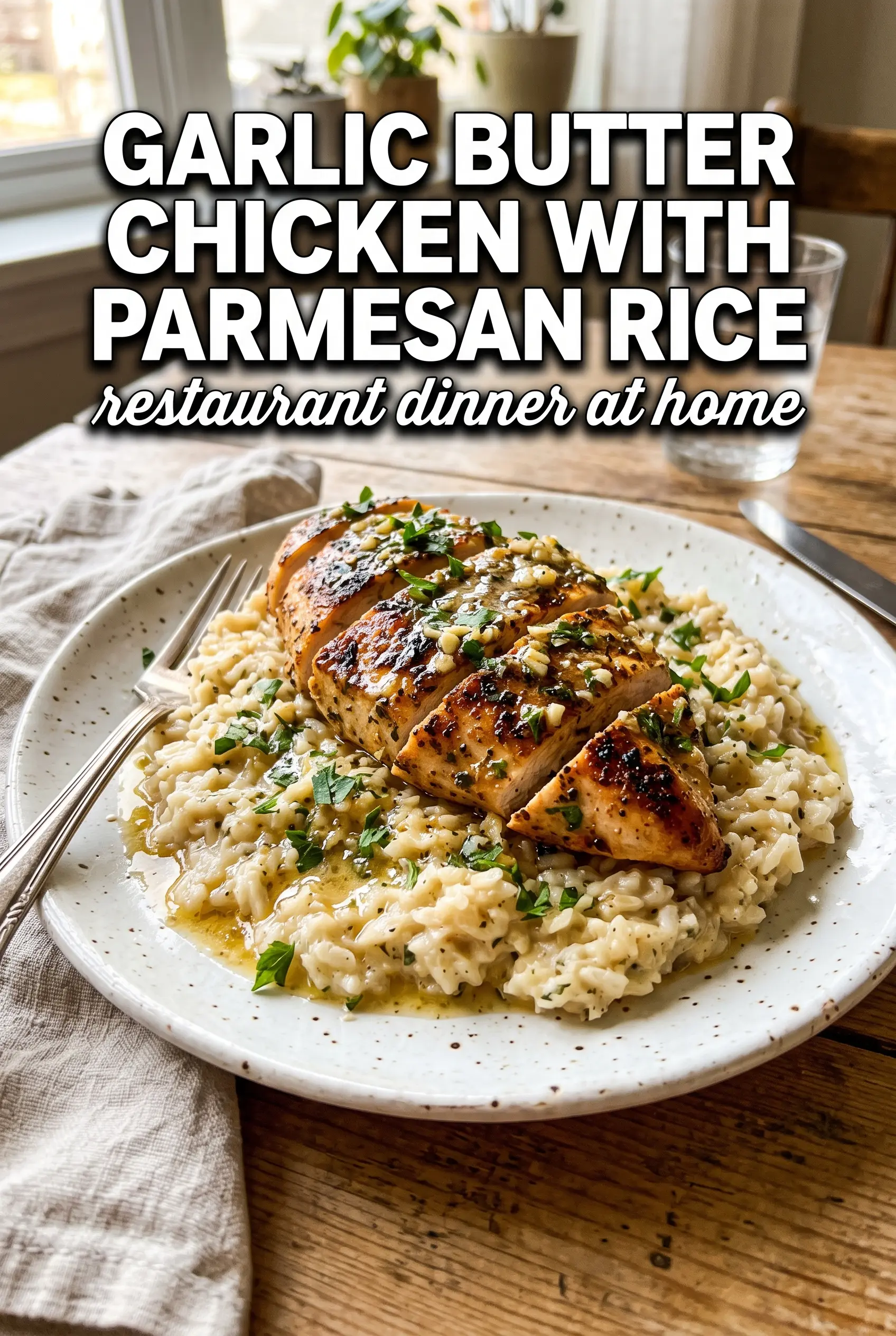
Garlic Butter Chicken with Parmesan Rice
Ingredients
Equipment
Method
- Season the boneless skinless chicken thighs with salt, pepper, garlic powder, and smoked paprika to taste. Heat 2 tbsp olive oil in a large skillet over medium-high until shimmering, then sear for 5-6 minutes per side until golden.
- Cook the chicken through to 165°F. Remove the thighs to a plate and set aside while you make the Parmesan rice.
- Melt 4 tbsp butter in the same skillet over medium heat. Cook the minced garlic for 1 minute until fragrant and lightly golden.
- Add the long-grain white rice to the skillet and toast for 2 minutes, stirring so grains are glossy. You should smell toasted garlic and see the rice edges slightly dry.
- Pour in 2 cups chicken broth and bring to a boil over high heat. Cover with a lid and simmer over low heat for 18 minutes until the rice is tender and the liquid is mostly absorbed.
- Stir in the grated Parmesan cheese, heavy cream, and dried thyme until creamy and saucy. Keep the heat low so the mixture turns glossy and clings to the rice.
- Return the golden seared chicken thighs to the pan. Nestle them into the creamy Parmesan rice so the drippings warm through.
- Garnish with fresh parsley and serve immediately. Let the dish rest in the skillet for 2 minutes so the sauce thickens around the edges.