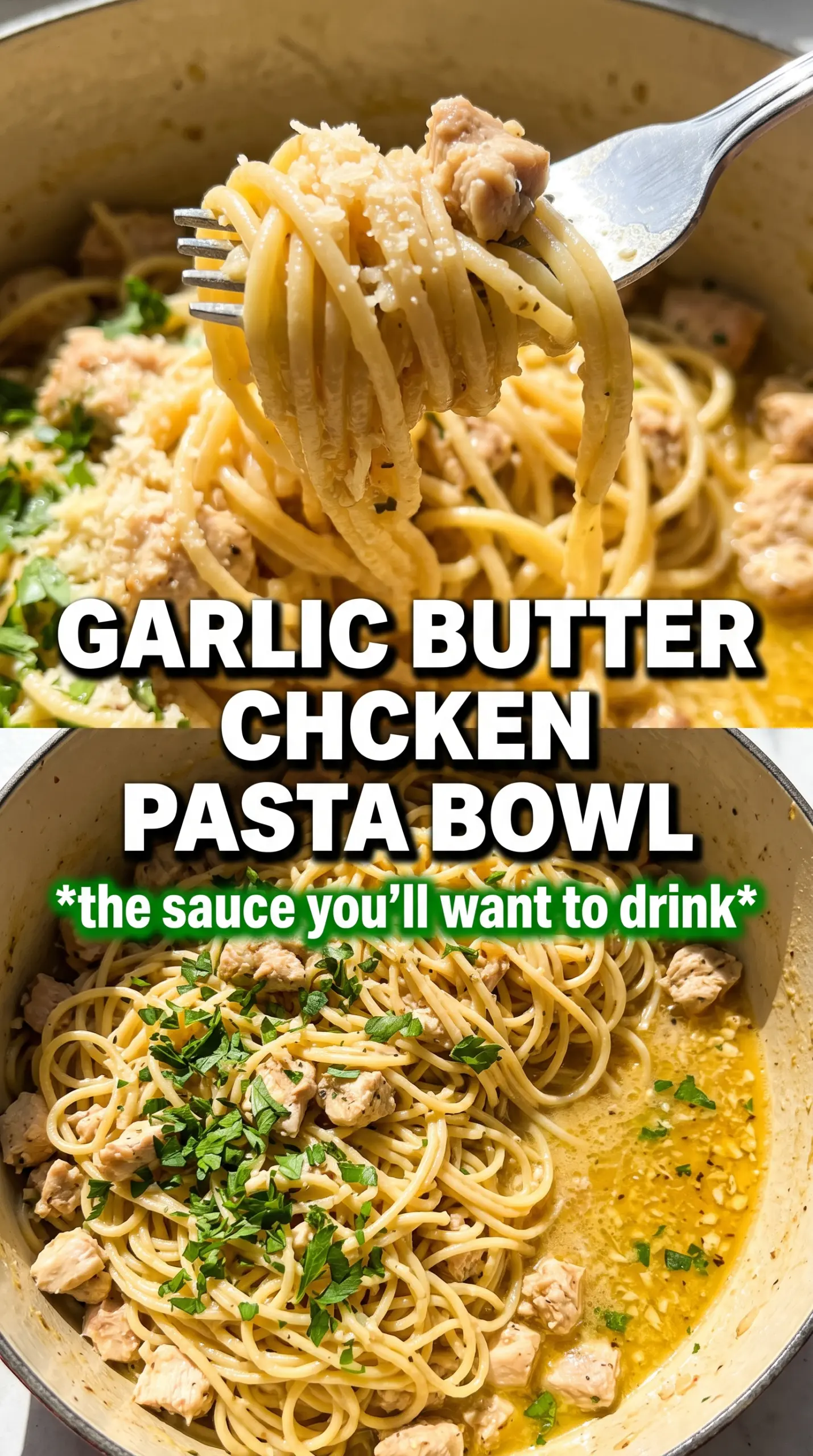
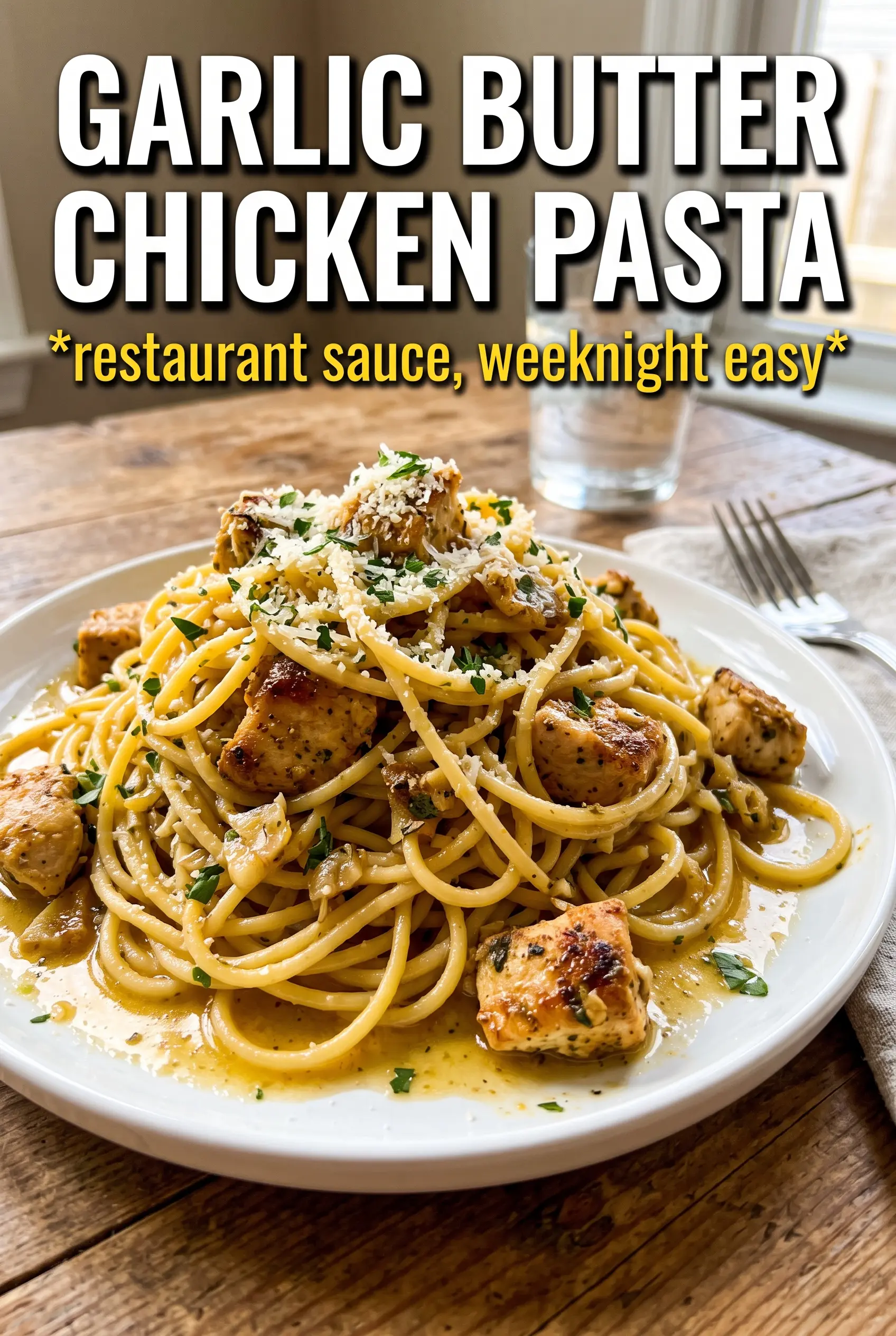
Garlic butter chicken pasta lands in that sweet spot between comforting and polished: silky spaghetti, juicy chicken, and a glossy sauce that clings instead of pooling at the bottom of the bowl. The butter carries the garlic, the lemon keeps it from feeling heavy, and the Parmesan gives the whole thing a savory finish that tastes like you worked harder than you did.
What makes this version work is the order. The chicken gets a real sear first, then the same pan becomes the sauce base, which means every browned bit adds depth instead of getting washed down the drain. A splash of pasta water is what turns melted butter and garlic into something that coats the noodles instead of slipping off them.
Below, I’ll walk through the small details that matter here: how to keep the garlic from scorching, when to add the pasta water, and what to do if you want a creamier, spicier, or lighter bowl without losing the character of the dish.
The sauce clung to every strand and the chicken stayed juicy, even after I let it sit for a few minutes. My husband kept going back for “just one more bite” because the garlic, butter, and lemon balance was spot on.
Save this garlic butter chicken pasta for the nights when you want glossy spaghetti, golden chicken, and a fast pan sauce that tastes like more effort than it takes.
The Part Where Most Garlic Butter Pastas Go Flat
The biggest mistake here is treating the sauce like a separate thing you pour over pasta at the end. That usually leaves you with butter on one side and noodles that taste plain on the other. This dish works because the pasta finishes in the skillet, where it can absorb the garlic butter and pick up a little body from the starch in the water.
Garlic burns fast once it hits hot fat, and burned garlic makes the whole pan bitter. Keep the heat at medium when the butter goes in, and pull the pan off the burner for a moment if the garlic starts to brown too quickly. You want fragrant and lightly golden at the edges, not dark and crisp.
- Chicken strips — Cutting the chicken into even strips helps it cook fast and stay tender. Thin pieces brown better than thick chunks, and they’re easier to toss through the pasta without shredding.
- Fresh garlic — Eight cloves sounds like a lot, but garlic is the point here. Jarred garlic will work in a pinch, but it tastes flatter and can turn harsh in butter.
- Pasta water — This is what turns the sauce from greasy to glossy. The starch helps the butter and Parmesan emulsify, so add it a splash at a time instead of dumping it all in.
- Freshly grated Parmesan — Pre-grated cheese often has anti-caking agents that keep it from melting smoothly. Grate it yourself if you want the sauce to finish silky instead of grainy.
What Each Ingredient Is Doing in the Pan
- Olive oil — This helps the chicken sear without the butter browning too fast. You still get richness from the butter later, but the oil gives you a better frying surface at the start.
- Butter — Butter gives the sauce its round, creamy mouthfeel. Use the real thing here; there isn’t a substitute that gives the same flavor and finish.
- Lemon juice — A little acid keeps the sauce from tasting heavy. It also sharpens the garlic and brings the Parmesan into focus instead of letting the dish feel flat.
- Red pepper flakes — These don’t make the pasta spicy-spicy; they add a little background heat that keeps the butter sauce from tasting one-note. If you want more warmth, add a pinch more when the garlic goes in.
- Parsley — Fresh parsley isn’t just garnish here. It cuts through the richness and gives the final bowl a clean, bright finish.
Getting the Chicken, Garlic, and Pasta to Meet at the Right Moment
Searing the Chicken First
Season the chicken well before it hits the pan, then cook it in olive oil over medium-high heat until it’s deeply golden and cooked through. You want color on the outside and just-cooked meat inside; if the pan is crowded, the chicken steams and you lose that flavor. Move it to a plate as soon as it’s done so it doesn’t keep overcooking while you build the sauce.
Building the Garlic Butter Base
Use the same skillet without wiping it out. Add the butter, then the garlic and red pepper flakes, and stir until the garlic smells sweet and nutty at the edges. If the garlic turns dark in spots, the heat is too high, and the sauce will taste bitter, so lower the burner before adding anything else.
Coating the Spaghetti
Add the drained spaghetti straight into the skillet and toss it through the garlic butter before you reach for the pasta water. Then add the reserved water a little at a time until the sauce turns silky and coats the strands instead of sliding off them. Finish with lemon juice and Parmesan, toss again, and top with the chicken and parsley while the pasta is still hot.
How to Tweak This Bowl Without Losing What Makes It Good
Make it dairy-free
Swap the butter for a good plant-based butter and use a dairy-free Parmesan alternative if you like. The sauce will still coat well, but it won’t have quite the same rich finish, so the lemon and parsley matter even more for brightness.
Use a different pasta shape
Spaghetti gives you those long glossy strands, but linguine, fettuccine, or even penne will work. Short pasta holds a little more sauce in the ridges, while long pasta gives you the classic buttery twirl.
Add vegetables without watering it down
Spinach, peas, or thin asparagus work best because they cook fast and don’t flood the pan. Stir them in near the end so they stay bright and don’t turn the sauce watery.
Make it gluten-free
Use your favorite gluten-free spaghetti and reserve a little extra cooking water, since GF pasta can dry out faster. Toss gently at the end so the noodles stay intact and don’t break apart.
Storage and Reheating
- Refrigerator: Store leftovers in an airtight container for up to 3 days. The pasta will absorb some of the sauce as it sits.
- Freezer: It freezes, but the sauce and pasta both lose some of their texture. I only freeze it if I’ve got no other option.
- Reheating: Reheat gently on the stove or in the microwave with a splash of water or broth. High heat dries out the chicken and makes the sauce separate, so warm it slowly and stir once or twice as it loosens.
Questions I Get Asked About This Recipe
Garlic Butter Chicken Pasta
Ingredients
Equipment
Method
- Season the chicken strips with salt, pepper, garlic powder, and Italian seasoning. Heat olive oil in a large skillet over medium-high heat and cook the chicken for 4-5 minutes per side until golden and cooked through, then remove and set aside.
- Melt the butter in the same skillet over medium heat. Add minced garlic and red pepper flakes and cook for 1-2 minutes until fragrant and golden at the edges, stirring as needed.
- Add lemon juice to the skillet and toss in the cooked spaghetti. Add reserved pasta water a splash at a time, tossing until the sauce coats all the pasta.
- Top the pasta with the seared chicken strips so they warm through in the hot sauce. Sprinkle Parmesan and fresh parsley generously over the top.
- Serve immediately while the spaghetti is glossy and the chicken is hot.