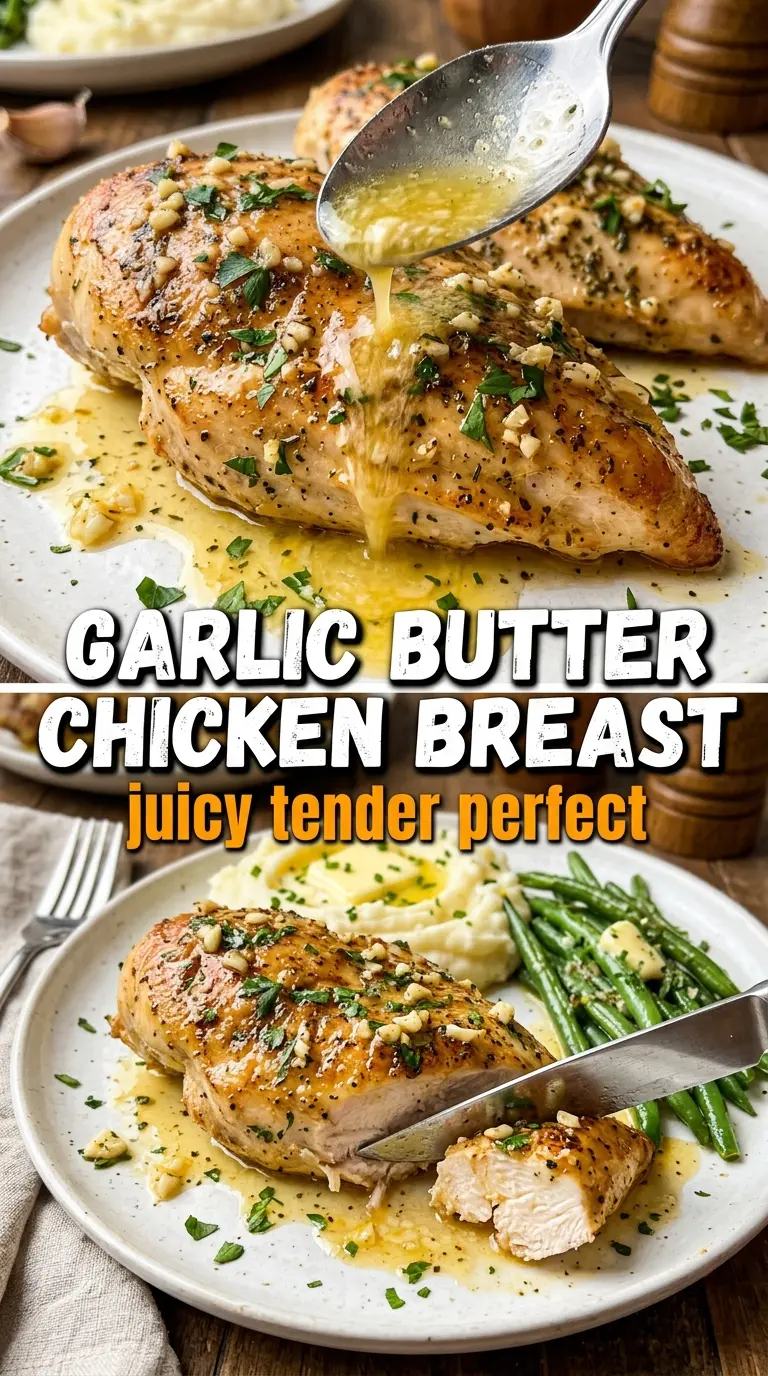
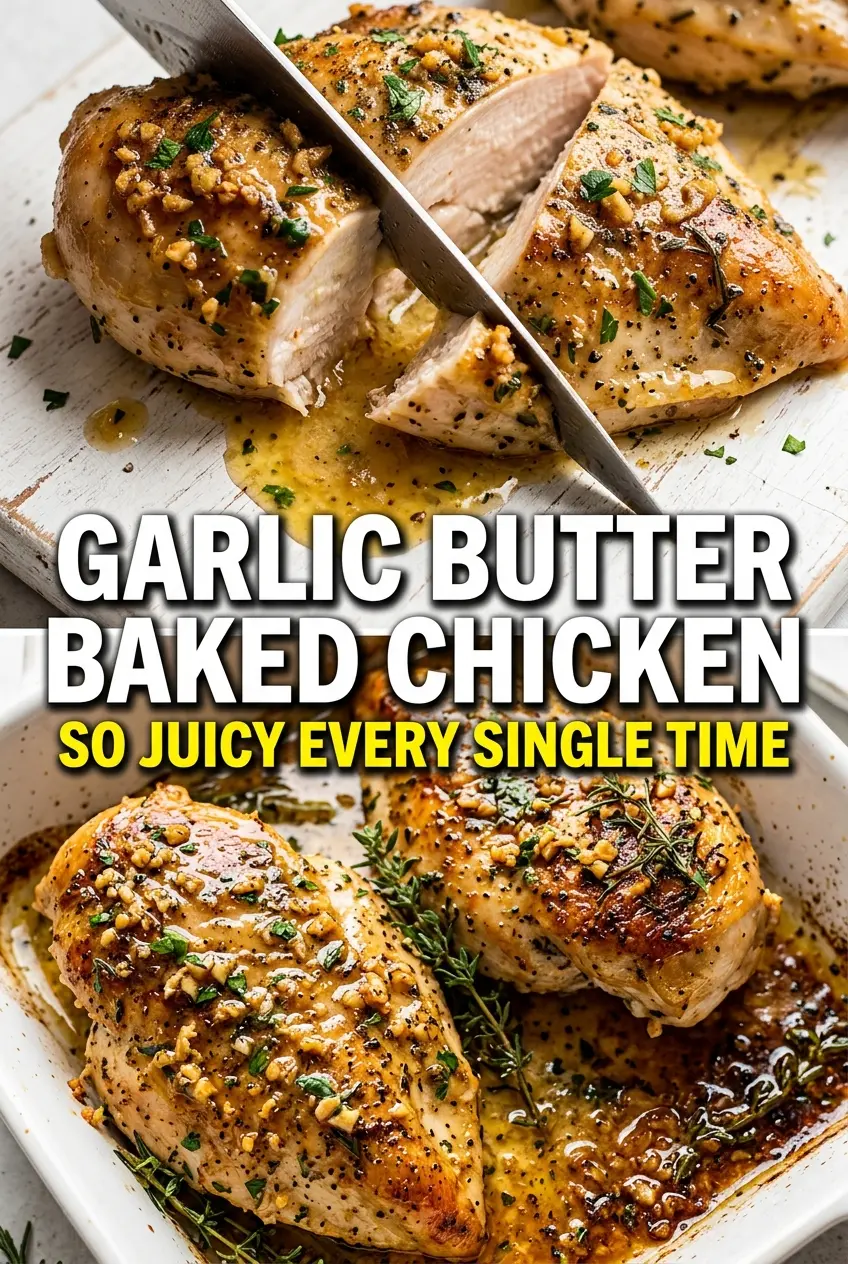
Garlic butter baked chicken breast comes out with a bronzed top, a juicy center, and pan juices that practically beg to be spooned over everything on the plate. The butter turns the chicken from plain weeknight protein into something that tastes finished, with enough garlic and herbs to keep each bite interesting all the way through.
The trick is treating the butter like a baste, not just a topping. It gets poured over the chicken before baking, then spooned back over halfway through so the surface stays glossy and the meat cooks in that seasoned fat instead of drying out. A hot oven helps the outside color without dragging the chicken through a long, slow bake that can leave the breasts stringy.
Below you’ll find the small details that matter here: how to season chicken breasts so they don’t taste flat, why fresh herbs work best in the butter, and how to know when the pan is ready to come out before the meat goes over.
The butter kept the chicken incredibly juicy, and the garlic-herb pan juices were perfect spooned over rice. I checked at 22 minutes and it was right at 165 with the edges just starting to caramelize.
Save this garlic butter baked chicken breast for the nights when you want juicy chicken and a glossy herb butter sauce with almost no cleanup.
The Butter Needs to Go Under, Over, and Back On Again
Chicken breasts dry out when the outside cooks too slowly and the juices have time to run away. The fix here is a hot oven, a generous butter baste, and one mid-bake spooning of the pan juices so the top never gets a chance to go leathery. That second baste matters more than people think. It refreshes the surface, carries the garlic and herbs back onto the meat, and keeps the butter from just pooling harmlessly at the bottom of the dish.
Another common mistake is uneven thickness. If one end is much thicker, the thin side overcooks before the thick side is done. A quick pound to an even thickness gives you a better result than adding extra minutes and hoping for the best.
- Chicken breasts — Boneless, skinless breasts work best here because they cook quickly and take on the butter glaze cleanly. If yours are huge, slice them horizontally or pound them to an even thickness so the thin ends don’t go dry.
- Butter — This is the backbone of the dish. Melted butter carries the garlic and herbs over the chicken and helps the surface brown. You can swap in ghee if you want a slightly nuttier flavor and a higher heat tolerance, but plain butter gives the best classic result.
- Fresh garlic and herbs — Fresh garlic gives the pan sauce its punch, and parsley, thyme, and rosemary make the butter taste layered instead of one-note. Dried herbs will work in a pinch, but use less and expect a flatter flavor.
- Lemon juice — A small amount keeps the butter from tasting heavy and helps sharpen the whole dish at the end. Bottled lemon juice works if that’s what you have, but fresh is brighter and cleaner.
What Each Ingredient Is Actually Doing in This Recipe
- Primary ingredient (the star) — Quality matters most. Choose the best you can find.
- Cooking medium (oil, butter, or broth) — This carries flavors and prevents dryness.
- Seasonings (salt, pepper, spices, herbs) — Layer flavors so nothing overpowers. Build depth gradually.
- Aromatics (garlic, onion, herbs) — Cook with fat to bloom flavors. Become the foundation.
- Supporting ingredients — Complement the main ingredient without overpowering it.
- Sauce or liquid (if applicable) — Brings flavors together. Balance richness with acid.
- Acid (lemon, vinegar, wine, or other) — Brightens and prevents flat-tasting results.
- Final finish (garnish, glaze, or sauce) — Prevents one-dimensional taste and adds visual appeal.
Getting the Chicken to 165 Without Overshooting It
Season the chicken first
Salt, pepper, garlic powder, and smoked paprika go on both sides before the butter ever hits the pan. That dry seasoning layer gives the chicken flavor all the way through instead of only where the sauce lands. If the breasts are wet when you season them, the spices slide off, so pat them dry first for better coverage.
Build the garlic herb butter
Stir the minced garlic, parsley, thyme, rosemary, and lemon juice into melted butter until everything looks evenly flecked. Don’t let the garlic sit in hot butter for long before it goes in the oven or it can turn sharp and bitter. You want the garlic barely warmed, not browned.
Baste halfway through baking
Pour the butter over the chicken, then bake until the tops are starting to color and the pan juices are bubbling. At the halfway point, spoon the juices from the dish back over each breast. That quick baste is what keeps the top from drying out while the center finishes cooking, and it gives you those caramelized herb bits stuck to the surface.
Rest before slicing
Pull the chicken when it hits 165°F in the thickest part, then rest it for 5 minutes. If you slice too soon, the juices spill out onto the board and the meat eats drier than it should. Resting keeps the chicken juicy and gives the pan sauce time to settle so you can spoon it over the top.
Make It Dairy-Free
Use a good dairy-free butter substitute with a flavor you already trust, not a watery spread. The chicken will still cook well, but the sauce won’t brown or taste as rich, so the herbs and lemon matter even more.
Use Chicken Thighs Instead
Boneless skinless thighs work if you want a richer, more forgiving cut. They usually need a few extra minutes in the oven, and they stay juicy even if you miss the timing by a minute or two.
Add Parmesan for a Saltier Finish
A light shower of finely grated Parmesan over the chicken right after it comes out of the oven adds a savory edge and helps the butter cling. Don’t add it before baking or it can turn greasy and clumpy.
Storage and Reheating
- Refrigerator: Store leftovers in an airtight container for up to 4 days. The chicken stays moist, though the butter will firm up when chilled.
- Freezer: It freezes well for up to 2 months. Freeze the chicken with a little of the pan juice so it doesn’t dry out when reheated.
- Reheating: Warm covered in a 300°F oven until heated through, or reheat gently in a skillet with a splash of water or broth. High heat is what turns leftover chicken tough, so keep the heat low and stop as soon as it’s hot.
Answers to the Questions Worth Asking
Garlic Butter Baked Chicken Breast
Ingredients
Equipment
Method
- Preheat oven to 425°F and lightly grease a baking dish, so it’s ready when the chicken is seasoned.
- Season chicken breasts on both sides with salt, pepper, garlic powder, and smoked paprika, rubbing to fully coat the surfaces.
- Melt butter, then stir in garlic, parsley, thyme, rosemary, and lemon juice until combined and fragrant, with the herbs speckled through the melted butter.
- Place chicken in the prepared dish and pour garlic herb butter over each breast, coating thoroughly so a golden layer pools around the base.
- Bake for 20-25 minutes total, basting with the pan juices once at the halfway point until the surface is deep golden and an instant-read thermometer shows 165°F in the thickest part.
- Rest chicken 5 minutes, keeping it covered loosely so the juices redistribute and the butter glistens.
- Serve with pan juices spooned over and lemon wedges alongside, so every bite has a glossy garlic herb coating.