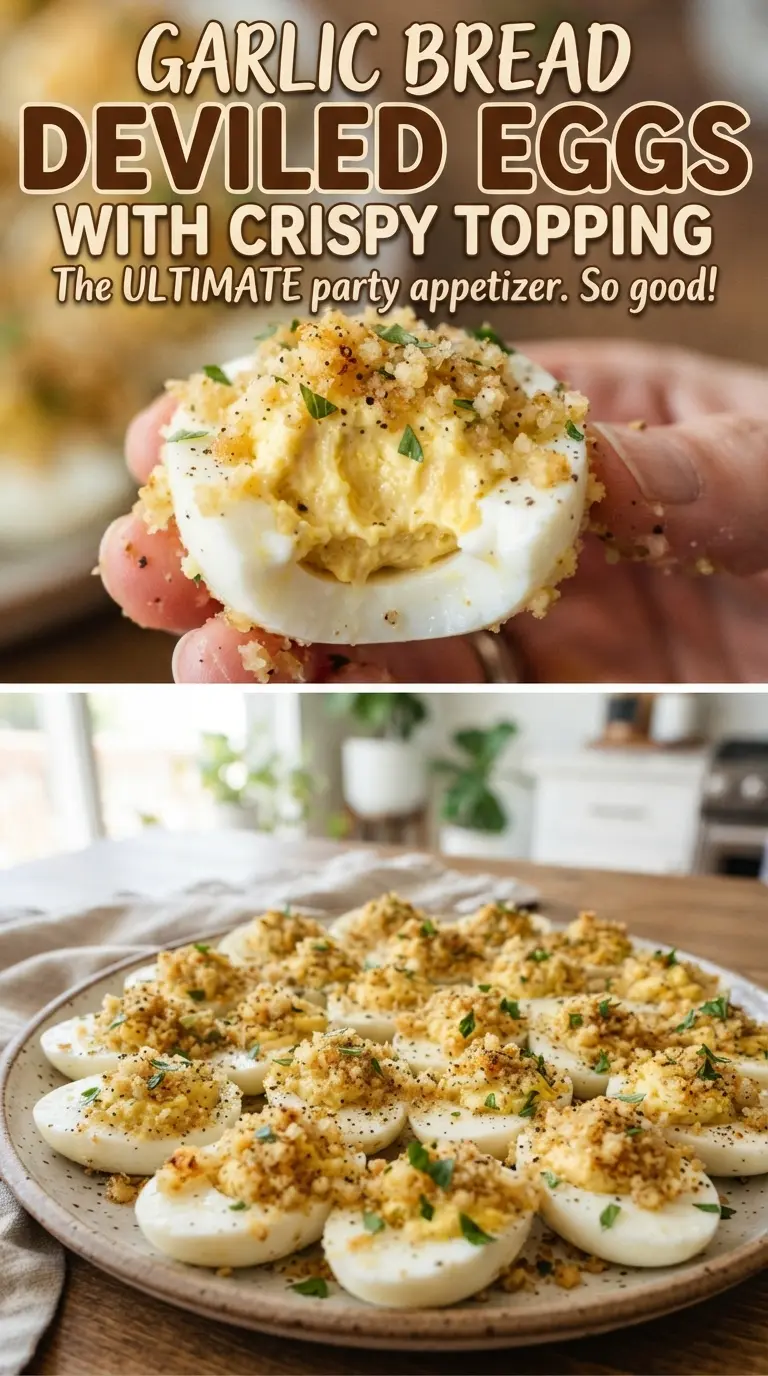
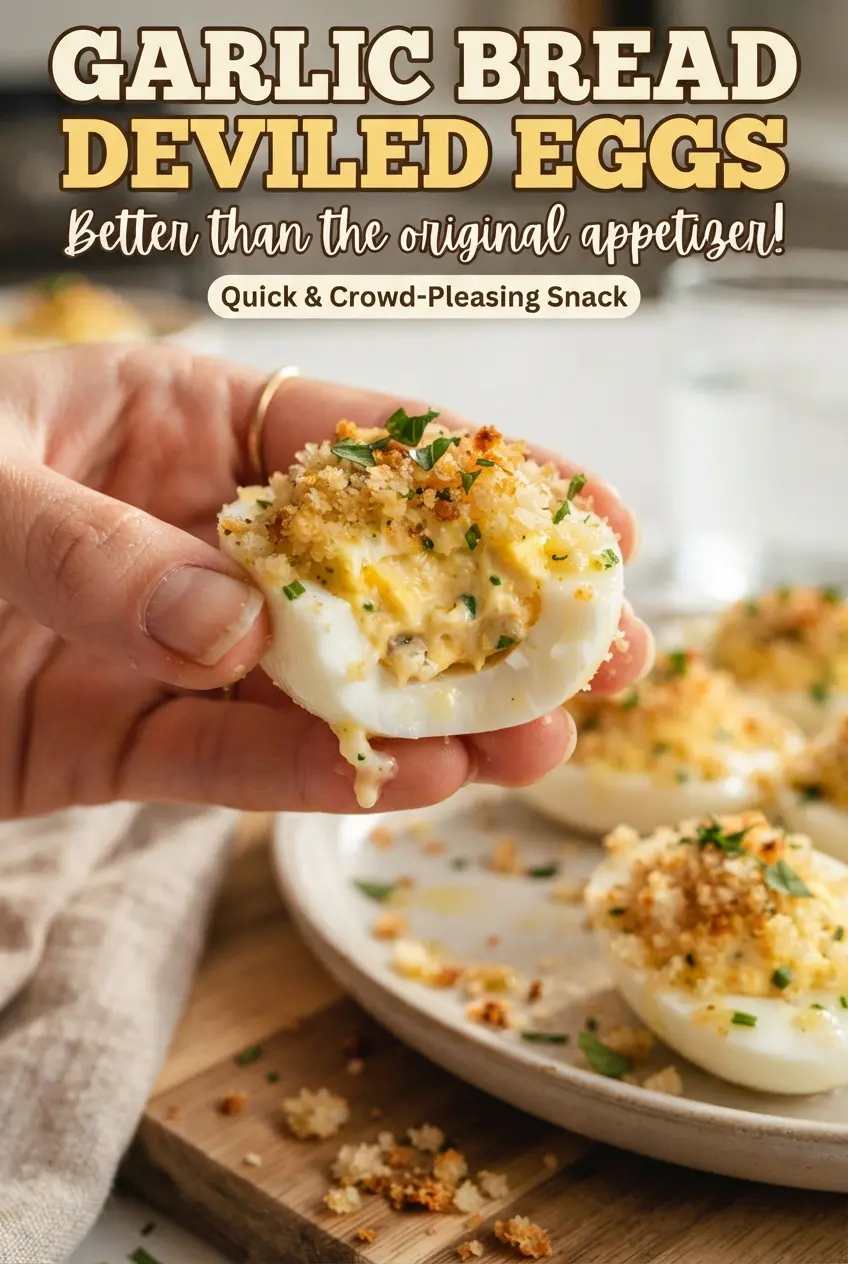
Garlic Bread Deviled Eggs bring the best parts of a garlic bread basket straight to the appetizer tray: creamy yolk filling, sharp Parmesan, and that buttery, crunchy breadcrumb topping that makes every bite taste finished. The eggs still feel classic, but the garlic breadcrumb layer gives them a little drama and a lot more texture than standard deviled eggs.
The trick is building two separate layers of flavor instead of forcing everything into the filling. The yolks stay smooth and rich with mayonnaise, Dijon, and Parmesan, while the garlic stays divided between the filling and the topping so it doesn’t turn harsh. Toasting the panko in butter until it’s deeply golden matters here, because pale breadcrumbs taste dusty next to the creamy eggs. Add that topping at the last second and it stays crisp instead of going soft.
Below, I’ve included the exact point where deviled eggs usually go wrong, plus a few swaps if you want to make these ahead or adjust them for different diets.
The filling was silky and the garlic breadcrumbs stayed crunchy right up to the last egg. I made them for Easter and everyone kept grabbing “just one more.”
Garlic Bread Deviled Eggs bring creamy yolks and crunchy garlic-Parmesan topping together in one bite.
The Part That Stops Deviled Eggs From Turning Soggy
The mistake most deviled eggs make is softening everything into one flat texture. A good filling needs to stay creamy, but the topping should stay separate until the eggs hit the table. That’s why the breadcrumbs are cooked in butter first and added at the very end. If you mix them into the filling, they absorb moisture and lose the point of being there.
Boiling the eggs the right way matters too. Bringing them just to a boil, covering, and letting them stand off the heat gives you set whites and yolks without that chalky gray ring. The ice bath after cooking isn’t optional if you want clean peeling. Warm eggs cling to their shells and leave you with torn whites, which is the fastest way to make a neat platter look messy.
- Eggs — Fresh enough to taste clean, but not ultra-fresh if you want easier peeling. Eggs that are a few days old usually release from the shell more cleanly.
- Mayonnaise — This carries the filling and gives it the plush texture deviled eggs need. Use a mayo you actually like, because its flavor comes through.
- Parmesan — Adds saltiness and a savory edge that keeps the filling from tasting one-note. Finely grated Parmesan blends in better than coarse shreds.
- Garlic — Grated garlic in the filling gives a sharper, cleaner hit, while minced garlic in the butter turns sweet and toasted. Don’t swap in garlic powder here unless you have to; it won’t taste the same.
- Panko breadcrumbs — Regular breadcrumbs get dense fast. Panko stays lighter and gives the topping its crackly bite.
What Each Ingredient Is Actually Doing in This Recipe
- Primary ingredient (the star) — Quality matters most. Choose the best you can find.
- Cooking medium (oil, butter, or broth) — This carries flavors and prevents dryness.
- Seasonings (salt, pepper, spices, herbs) — Layer flavors so nothing overpowers. Build depth gradually.
- Aromatics (garlic, onion, herbs) — Cook with fat to bloom flavors. Become the foundation.
- Supporting ingredients — Complement the main ingredient without overpowering it.
- Sauce or liquid (if applicable) — Brings flavors together. Balance richness with acid.
- Acid (lemon, vinegar, wine, or other) — Brightens and prevents flat-tasting results.
- Final finish (garnish, glaze, or sauce) — Prevents one-dimensional taste and adds visual appeal.
Building the Filling and Crunch in Two Separate Moves
Getting the Eggs Cooked Cleanly
Set the eggs in a pot and cover them with cold water before bringing everything to a boil. Once the water boils, cover the pan, pull it off the heat, and let the eggs stand for 12 minutes. That off-heat finish keeps the yolks tender instead of dry. As soon as the time is up, chill them fast in cold water so the shells slip off cleanly and the yolks stop cooking.
Making the Garlic Breadcrumb Topping
Melt the butter in a skillet, add the minced garlic, and cook it for about 30 seconds. The garlic should smell fragrant, not browned; once it goes too dark, it turns bitter fast. Stir in the panko and toast until the crumbs are evenly golden and crisp, then pull the pan off the heat and add the parsley. Let the topping cool a little before using it so it stays dry and crunchy.
Whipping the Yolks Until Smooth
Mash the yolks with mayonnaise, Parmesan, Dijon, grated garlic, and salt until the mixture looks creamy and uniform. If you leave it a little chunky, it won’t pipe well and the filling can feel dense on the tongue. A fork works, but a small bowl and the back of a spoon give you better control. Taste the filling before you start piping; Parmesan varies a lot in saltiness, and this is the moment to balance it.
Filling and Finishing the Platter
Spoon or pipe the filling into the egg whites, then keep the garlic breadcrumbs off until the very end. If you add them early, the steam from the eggs softens them within minutes. Finish with extra Parmesan right before serving so it clings to the top and looks intentional, not dusty. A little parsley on top makes the whole plate look brighter and keeps the garlic from feeling heavy.
How to Adjust These Eggs for Different Tables
Make-Ahead Party Eggs
You can cook the eggs, make the filling, and toast the breadcrumbs a day ahead. Keep the whites and filling separate, then pipe and top them right before serving so the crumbs stay crisp and the eggs don’t weep.
Dairy-Free Version
Swap the Parmesan for a dairy-free Parmesan-style cheese or leave it out and add a pinch more salt plus a little extra Dijon. The filling will still be creamy, but it loses some of the savory depth Parmesan brings.
Gluten-Free Crunch
Use certified gluten-free panko or crushed gluten-free crackers in the topping. The texture stays crunchy, though crackers brown a little faster, so watch the pan closely once they start toasting.
Extra-Garlicky Version
Add a second small clove of grated garlic to the filling if you want a sharper bite. That pushes the eggs closer to garlic bread territory, but don’t overdo it or the raw garlic will crowd out the Parmesan.
Storage and Reheating
- Refrigerator: Store the egg whites and filling separately for up to 2 days. The breadcrumbs should stay in a separate container so they don’t soften.
- Freezer: Don’t freeze assembled deviled eggs. The whites turn rubbery and the filling gets grainy after thawing.
- Reheating: These aren’t meant to be reheated. Let the filling come off the chill for about 10 minutes before serving, then add the topping right before the platter goes out.
Questions I Get Asked About This Recipe
Garlic Bread Deviled Eggs
Ingredients
Equipment
Method
- Melt butter in a skillet over medium heat, then add minced garlic and cook for 30 seconds until fragrant (do not brown).
- Add panko breadcrumbs to the skillet and toast for 3-4 minutes, stirring often, until golden and crisp. Visual cue: crumbs should look evenly browned with a light, dry texture.
- Stir in chopped parsley and immediately transfer the breadcrumbs to a plate to cool slightly, so they stay crunchy.
- Place eggs in a pot, cover with cold water, and bring to a boil over high heat.
- Once boiling, cover the pot, remove from heat, and let the eggs stand for 12 minutes to set the yolks.
- Chill the eggs until cold, then peel them and halve lengthwise.
- Mash the yolks with mayonnaise, Parmesan, Dijon mustard, grated garlic, and salt until smooth.
- Pipe or spoon the filling into the egg white halves, mounding slightly on top.
- Sprinkle the garlic breadcrumbs generously over the eggs just before serving so the topping stays crunchy.
- Finish with extra Parmesan on top for a salty, savory garnish.