Roasted strawberry ice cream has a deeper, darker strawberry flavor than anything made with fresh berries alone. The oven takes the edge off the fruit and turns the juices jammy, with a little balsamic tang in the background that makes the whole base taste fuller and more grown-up. Churned into custard, it freezes into a scoop that lands somewhere between silky and dense, with that rich spoon-coating texture homemade ice cream should have.
The trick is roasting the berries until their juices reduce and the edges start to caramelize. That concentrated puree carries the whole flavor of the ice cream, so you don’t need to overload the base with fruit or artificial sweetness. The custard itself stays smooth because the yolks thicken gently, then the strawberry puree goes in after straining, which keeps the finish clean and creamy instead of grainy.
Below, I’m walking through the roasting step that gives this ice cream its depth, plus the small custard details that keep it silky. If you’ve ever had strawberry ice cream taste flat or icy, this version fixes both problems.
The roasted strawberries made all the difference — the flavor was deep and jammy, and the custard churned up so smooth after the 4-hour chill.
Save this roasted strawberry custard ice cream for when you want a deep berry flavor and a silky scoop that starts with the oven, not the churn.
The Roast Is What Gives This Ice Cream Its Real Strawberry Flavor
Fresh strawberries are bright, but they can taste thin once they’re frozen into cream. Roasting changes that. As the berries soften, their juice concentrates, the sugar starts to caramelize at the edges, and the balsamic vinegar folds in a quiet acidity that makes the fruit taste deeper instead of sweeter. That’s what keeps this ice cream from tasting one-note.
The other place people go wrong is adding too much fruit puree to the custard base. If the mixture gets overloaded with water, the ice cream freezes harder and loses that creamy body. Here, the berries are roasted down first, then pureed, so the flavor is bold without watering down the custard.
What Each Ingredient Is Actually Doing in This Ice Cream
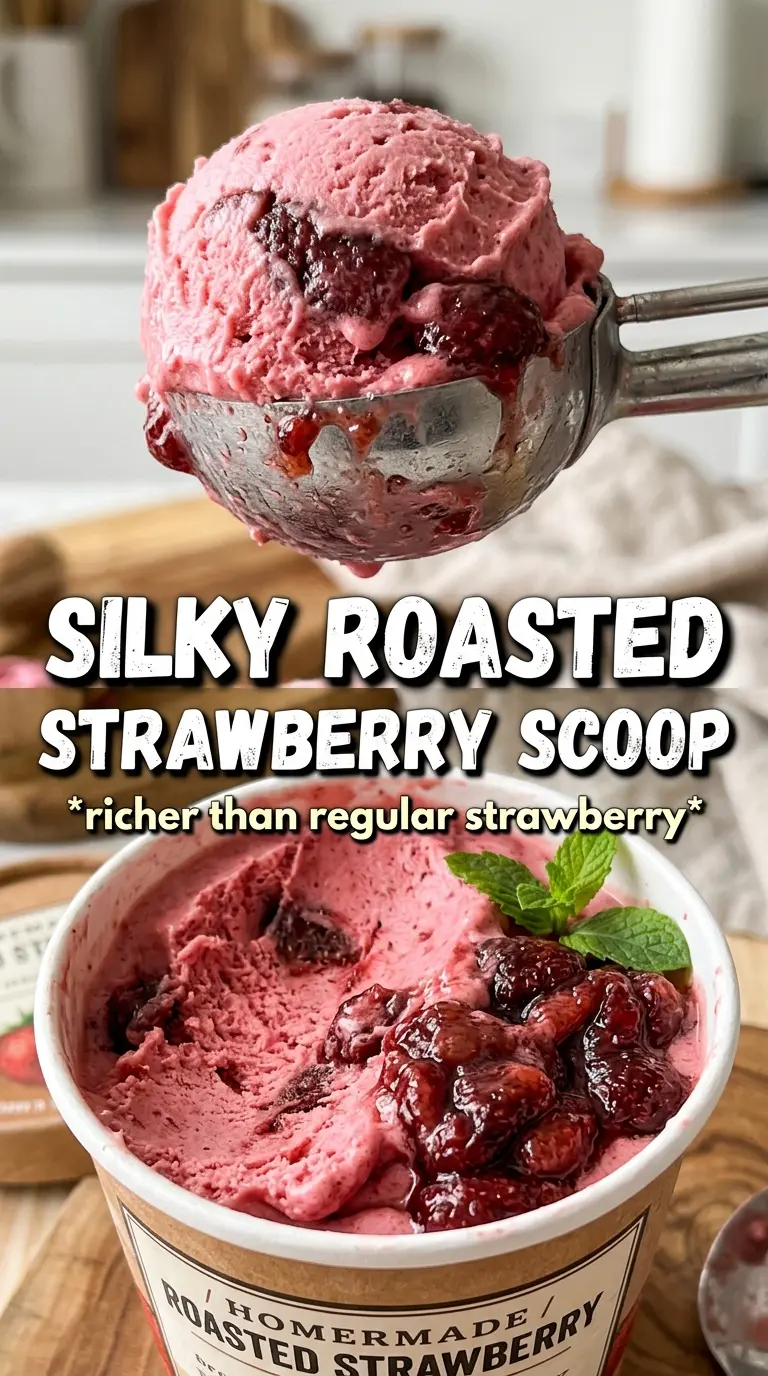
- Base ingredient (cream, milk, or custard) — This provides the foundation and richness. Quality matters.
- Sweetener (sugar, honey, or condensed milk) — This sweetens and prevents ice crystals. The ratio is critical.
- Flavor element (vanilla, fruit, chocolate, or other) — This defines the ice cream personality. Use quality ingredients.
- Egg yolks (if making custard base) — These create richness and silky texture. Optional but elevates ice cream.
- Churning (if using ice cream maker) — This incorporates air and prevents ice crystals. Critical for smooth texture.
- Freezing temperature and time — Proper freezing prevents rock-hard texture. Store at 0°F or below.
- Mix-ins (chocolate, cookies, fruit, or swirls) — These add texture and prevent one-dimensional flavor. Add near end of churning.
- Serving temperature (slightly soft, not rock hard) — This provides creamy mouthfeel. Remove from freezer 5 minutes before serving.
What the Yolks, Dairy, and Balsamic Are Each Doing Here
- Strawberries — Use ripe berries, but don’t worry if they aren’t perfect-looking. Roasting fixes a lot of the flatness you’d notice in raw fruit, and halved berries expose enough surface area to concentrate quickly.
- Aged balsamic vinegar — This isn’t here to make the ice cream taste like vinegar. It sharpens the strawberry flavor and helps the fruit taste jammy and layered. A cheap balsamic will still work, but use one that tastes smooth, not harsh.
- Heavy cream and whole milk — The cream brings richness, while the whole milk keeps the base from becoming greasy or overly heavy. Don’t swap in low-fat milk if you want the same scoopable texture; the finished ice cream will freeze icier.
- Egg yolks — These are what turn the base into custard. They give the ice cream body and that dense, velvety mouthfeel. Whisk them with the sugar first so they start thickening evenly when the hot dairy goes in.
- Vanilla — It rounds out the strawberry and makes the custard taste more complete. Add it after straining so the aroma stays fresh.
Building the Custard Without Scrambling the Yolks
Roasting the berries until they collapse
Toss the strawberries with part of the sugar and the balsamic, then spread them in a single layer so the juices can reduce instead of steaming. You want the berries darkened at the edges, syrupy in the pan, and soft enough to mash with a spoon. If there’s a lot of liquid left, keep roasting a few minutes longer; watery berries are the fastest way to dull the finished flavor.
Warming the dairy and tempering the eggs
Heat the cream and milk until they’re steaming and just below a simmer. In a separate bowl, whisk the yolks with the remaining sugar until they look slightly thickened and pale. Add the hot dairy slowly while whisking the whole time, which keeps the eggs from turning into little bits of scrambled yolk.
Cooking the custard to the right thickness
Return the mixture to the pan and cook it gently until it reaches 175°F. The texture should coat a spoon, and if you drag a finger across the back of that spoon, the line should stay clean. Keep the heat low and stir constantly; if the custard starts to steam hard or bubble aggressively, you’re pushing it too far and risking graininess.
Finishing, chilling, and churning
Strain the custard, then stir in the roasted strawberry puree, vanilla, and salt. Cool it over an ice bath first, then refrigerate until fully cold. That long chill matters because cold base churns faster and traps air better, which gives you a smoother texture. Don’t rush this part or the ice cream maker will struggle and the result will be loose and icy.
How to Adapt This Roasted Strawberry Custard Ice Cream for Different Kitchens
Dairy-free version with full flavor
Use full-fat coconut milk in place of the cream and milk, but expect a faint coconut note and a softer set. The custard will still work best with yolks, so this is a dairy-free swap, not an egg-free one. Chill it fully before churning because the coconut fat needs time to firm up.
Strawberry-basil variation
Add a few torn basil leaves to the custard while it cools, then strain them out before chilling. Basil lifts the berry flavor and gives the ice cream a fresher finish, especially if you’re serving it with extra strawberries on top.
Lower-sugar adjustment
You can reduce the sugar a little, but don’t cut it too far or the ice cream will freeze harder and taste less rounded. The sugar here isn’t just for sweetness; it also helps the custard stay scoopable. If you want it less sweet, lean on the balsamic and the roasting rather than slashing the sugar in half.
Storage and Reheating
- Refrigerator: Store the churned base before freezing for up to 2 days, tightly covered. It should stay smooth and pourable when cold.
- Freezer: Freeze in an airtight container for up to 2 weeks for the best texture. After that, it can pick up iciness and the strawberry flavor starts to fade.
- Reheating: Let it sit at room temperature for 5 to 10 minutes before scooping. If it’s frozen rock-hard, don’t microwave it; that melts the edges before the center softens.
Answers to the Questions Worth Asking
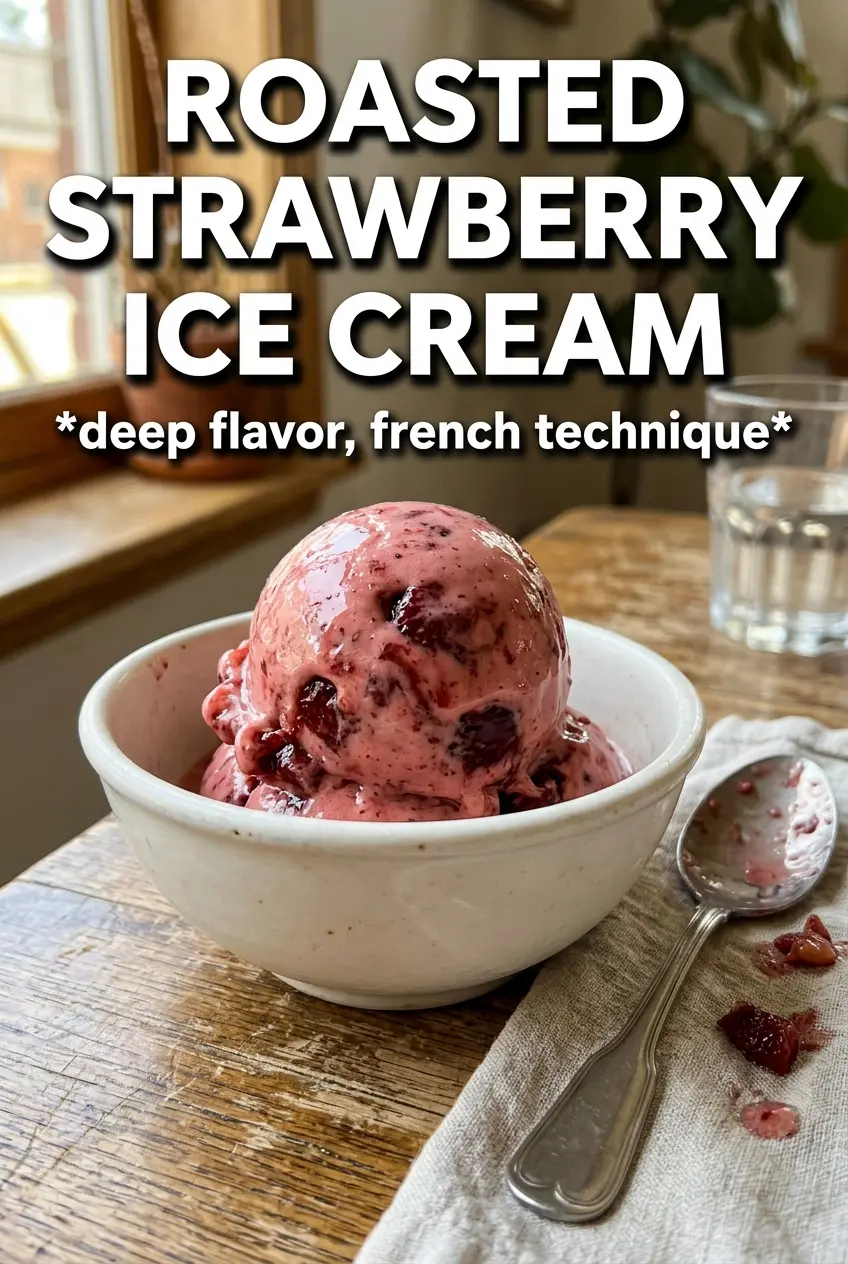
French-Style Roasted Strawberry Ice Cream
Ingredients
Equipment
Method
- Preheat the oven to 375°F and line a baking sheet. Toss the hulled and halved fresh strawberries with 1/4 cup of the granulated sugar and the aged balsamic vinegar, then spread in an even layer.
- Roast for 30-35 minutes at 375°F until deeply caramelized and jammy. Cool the roasted strawberries, then puree until smooth and set aside.
- In a saucepan, heat the heavy cream and whole milk until steaming but not boiling. Meanwhile, whisk the egg yolks with the remaining 1/4 cup granulated sugar until slightly thickened and paler.
- Temper the yolks by whisking in the hot cream-milk mixture slowly. Return everything to the saucepan and cook, stirring constantly, until the custard reaches 175°F and coats the back of a spoon (visual cue: a clear line remains when you run a finger through).
- Strain the custard into a bowl, then stir in the roasted strawberry puree, vanilla extract, and salt. Mix until fully smooth and evenly colored.
- Cool completely over an ice bath until no longer warm to the touch. Refrigerate for 4 hours, covered, until thoroughly chilled (visual cue: cold all the way through).
- Churn the custard in an ice cream maker according to the manufacturer’s instructions, until thickened to soft-serve consistency. Transfer to a container and freeze until firm.