French silk ice cream lands in that rare space between frozen mousse and classic custard ice cream, with a texture that feels almost impossibly smooth on the tongue. The chocolate tastes deep and grown-up, not candy-sweet, and the soft whipped cream folded in at the end gives it that French silk pie character without turning heavy or dense.
The key is building a custard first, then folding in whipped cream after the base is fully chilled. That extra step is what keeps the finished ice cream plush instead of stiff. Using both melted dark chocolate and cocoa powder gives the flavor more depth than chocolate alone, and the egg yolks keep everything rich enough to scoop cleanly after freezing.
Below, you’ll find the exact point where the custard should thicken, the best way to keep the chocolate from seizing, and a few variations for when you want to change the intensity or make it work with what you’ve got on hand.
The custard turned out silky and the chocolate flavor was deep without being too sweet. I chilled it overnight and it churned into the smoothest ice cream I’ve made at home.
Save this French Silk Ice Cream for the nights when you want a mousse-like chocolate scoop with a deep, bittersweet finish.
The Custard Needs Low Heat, Not More Stirring
Most homemade chocolate ice cream gets tripped up at the custard stage. If the heat climbs too fast, the yolks tighten into tiny bits before the base has a chance to thicken evenly. This recipe works because the milk and cream are warmed first, then slowly whisked into the yolks and sugar so everything comes up to temperature gradually.
The target is 175°F, and that number matters. At that point the custard coats a spoon, but it still pours smoothly. Go much hotter and the texture goes grainy; stop too early and the base never gets enough body, which leaves the finished ice cream soft in the wrong way instead of silky.
What the Chocolate, Cocoa, and Egg Yolks Each Bring to the Bowl
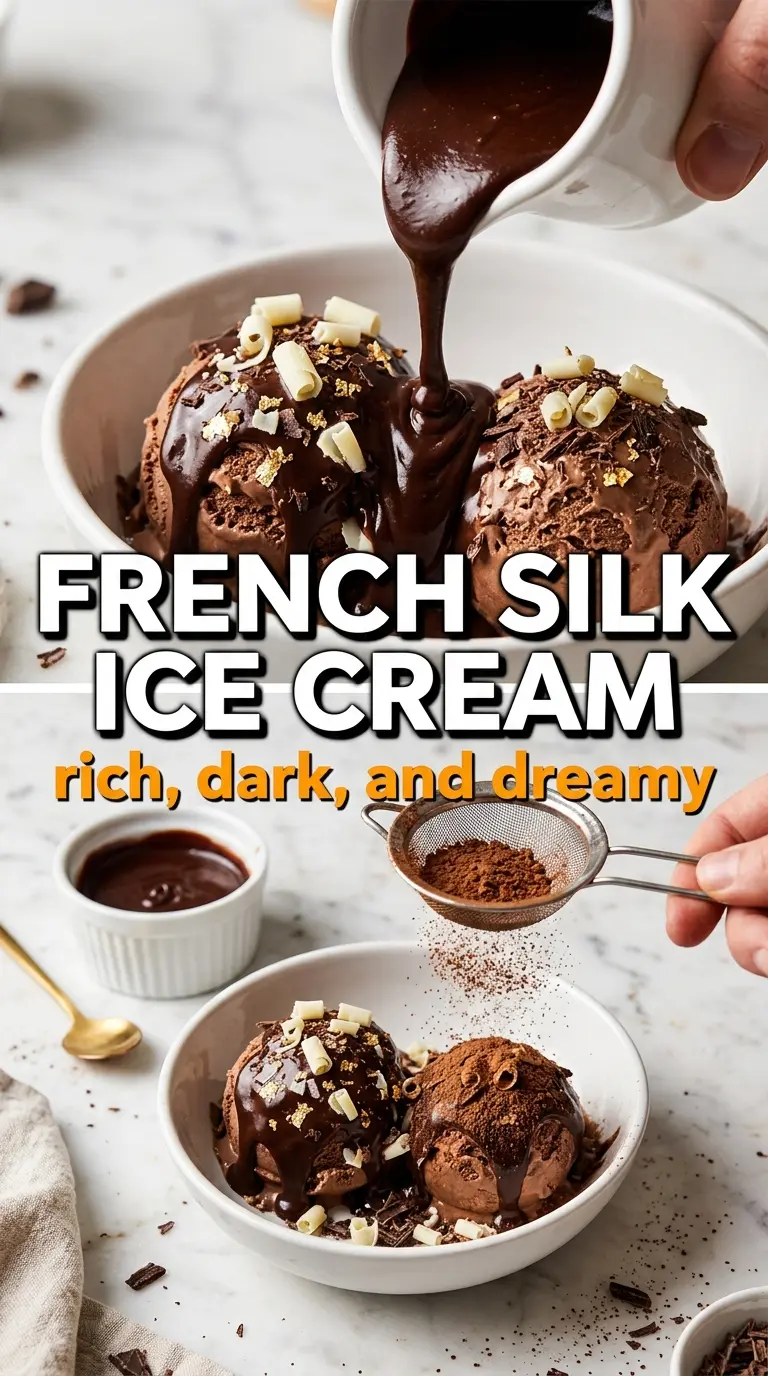
- Dark chocolate — This is the backbone of the flavor. A 70% bar gives the ice cream its deep, slightly bitter edge and keeps it from tasting flat. Chips work in a pinch, but a chopped bar melts smoother and usually tastes cleaner.
- Unsweetened cocoa powder — Cocoa adds that concentrated chocolate note you can taste in the first bite and the aftertaste. It’s what makes this taste like French silk pie instead of plain chocolate custard. Use a natural unsweetened cocoa here; Dutch-process also works, but the flavor leans a little darker and less sharp.
- Egg yolks — They give the base its custard body and that plush mouthfeel. Whole eggs won’t give the same richness, and skipping the yolks leaves you with a thinner, icier result. Whisk them with the sugar before adding the hot dairy so they temper instead of scrambling.
- Whipped cream — Folding in softly whipped cream after chilling is the move that makes this feel mousse-like. If you whip it to stiff peaks, it gets harder to fold in and you lose some of that airy silkiness. Soft peaks blend in with fewer streaks and keep the base light.
Building the Silk Without Breaking the Custard
Melting the Chocolate First
Set the chopped chocolate over a double boiler and let it melt gently until glossy and smooth. If steam or splashes get into the bowl, the chocolate can seize into a grainy paste, so keep the bowl dry and the heat modest. Set it aside while you work on the custard; it should be melted, not hot enough to cook anything on contact.
Tempering the Yolks
Heat the cream, milk, and cocoa until the mixture is steaming, then whisk it in a slow stream into the yolks beaten with sugar. This gradual addition keeps the yolks from curdling. If you dump it in all at once, you’ll get little cooked egg flecks and the base will never turn smooth again.
Cooking to the Right Thickness
Return the mixture to the saucepan and cook it, stirring constantly, until it reaches 175°F. At that point it should look slightly thicker and coat the back of a spoon without feeling heavy. Pull it off the heat as soon as it hits temperature; if you push much past that, the yolks tighten and the finished ice cream loses its velvet texture.
Finishing, Chilling, and Churning
Whisk the melted chocolate into the hot custard until the base turns completely smooth, then stir in vanilla and salt and strain it. The strainer catches any tiny cooked bits or cocoa clumps, and that one step is part of what gives the final ice cream its polished texture. Chill the base completely before folding in the whipped cream and churning; if it’s still warm, the cream collapses and the churned ice cream turns heavier than it should.
How to Adjust the Chocolate Without Losing the Mousse-Like Texture
Make it darker and more intense
Use a 75% to 80% chocolate bar instead of 70%. The ice cream will taste less sweet and more bittersweet, which is great if you like a truer chocolate finish. Don’t add more cocoa on top of that unless you want the base to get a little dry and bitter.
Make it gluten-free and naturally rich
This recipe is already gluten-free as written, which is one of the nice things about a custard-based ice cream. Just check your chocolate bar and cocoa powder to confirm there’s no cross-contamination if that matters for your kitchen. The texture doesn’t need any flour or starch to set, so nothing is lost here.
Skip the ice cream maker
You can freeze the chilled base in a shallow container and stir it every 30 to 45 minutes for a few hours, but it won’t be quite as smooth as churned ice cream. The whipped cream helps here by keeping the texture softer and less icy. Expect a denser scoop and serve it after 10 minutes at room temperature for the best texture.
Use Dutch-process cocoa for a deeper color
Dutch-process cocoa gives the base a darker color and a rounder chocolate note. It won’t change the texture much, but the finished ice cream will look closer to that near-black, glossy scoop you see in the best French silk pie-inspired desserts. If you use it, keep the rest of the recipe unchanged.
Storage and Reheating
- Refrigerator: Keep the churned ice cream in a tightly sealed container for up to 1 week in the freezer; in the refrigerator it will melt, so it isn’t a storage option for the finished dessert.
- Freezer: This freezes well for about 2 weeks with the best texture in the first 3 to 5 days. Press parchment or plastic wrap directly on the surface before sealing the container to slow ice crystals.
- Reheating: Not applicable, but let the container sit at room temperature for 5 to 10 minutes before scooping. If it feels rock hard, don’t microwave it; that melts the edges and leaves the center icy.
Answers to the Questions Worth Asking
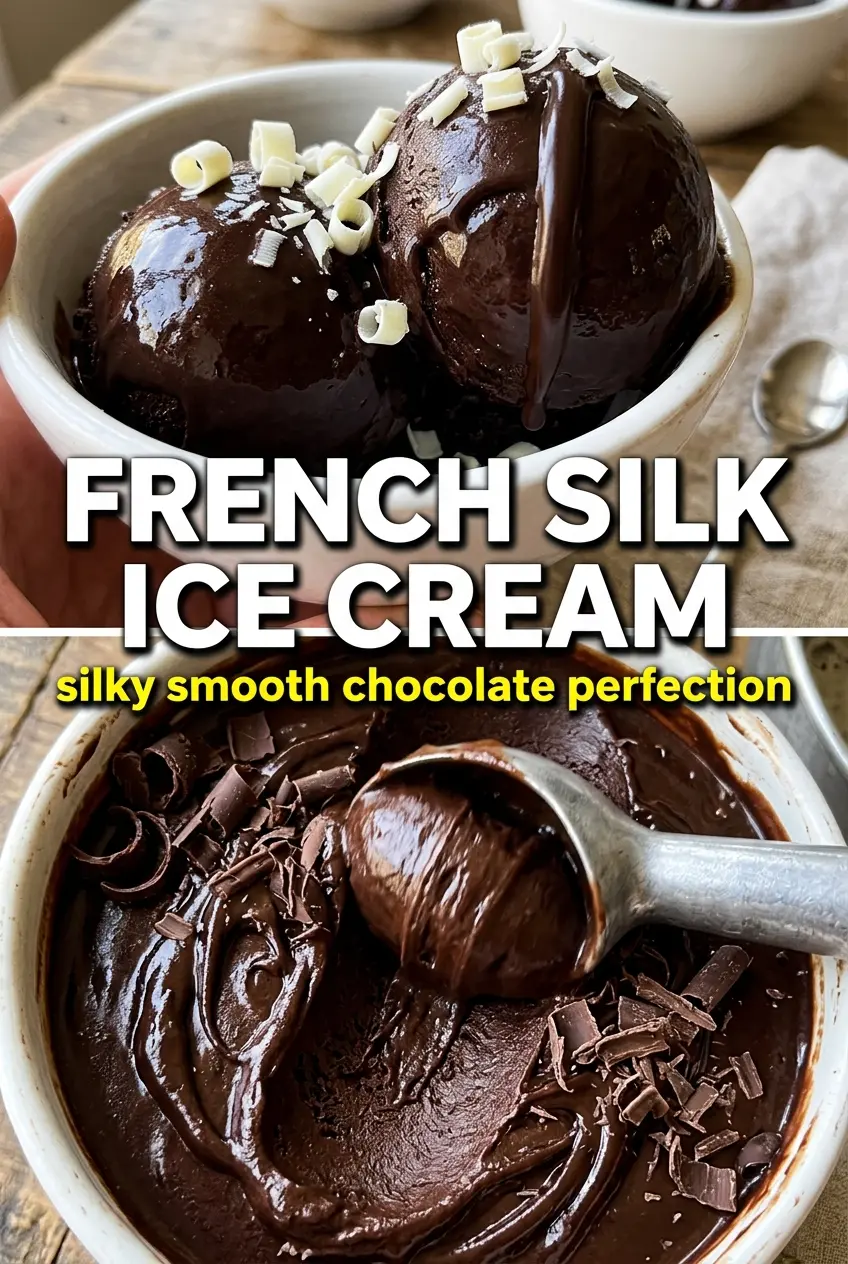
French Silk Ice Cream
Ingredients
Equipment
Method
- Melt the dark chocolate over a double boiler until smooth, then set aside off heat for later.
- Heat 1-1/2 cups of the heavy cream, the whole milk, and the cocoa powder until steaming, about 3–5 minutes.
- Slowly whisk the steaming chocolate mixture into the egg yolks beaten with the granulated sugar to keep the eggs from scrambling.
- Return everything to a saucepan and cook while stirring until it reaches 175°F, about 8–12 minutes, until it lightly thickens.
- Remove from heat and whisk in the melted dark chocolate until fully smooth and glossy.
- Whisk in the vanilla extract and salt, then strain and cool completely until no longer warm.
- Whip the remaining 1/2 cup heavy cream to soft peaks, then fold it into the cooled chocolate custard gently to preserve the mousse texture.
- Refrigerate the mixture for 4 hours until thoroughly chilled.
- Churn the chilled mixture in an ice cream maker until it reaches a soft-frozen, scoopable consistency, about 20–25 minutes.
- Transfer to a container and freeze until firm, at least 4 hours, for clean scoops.