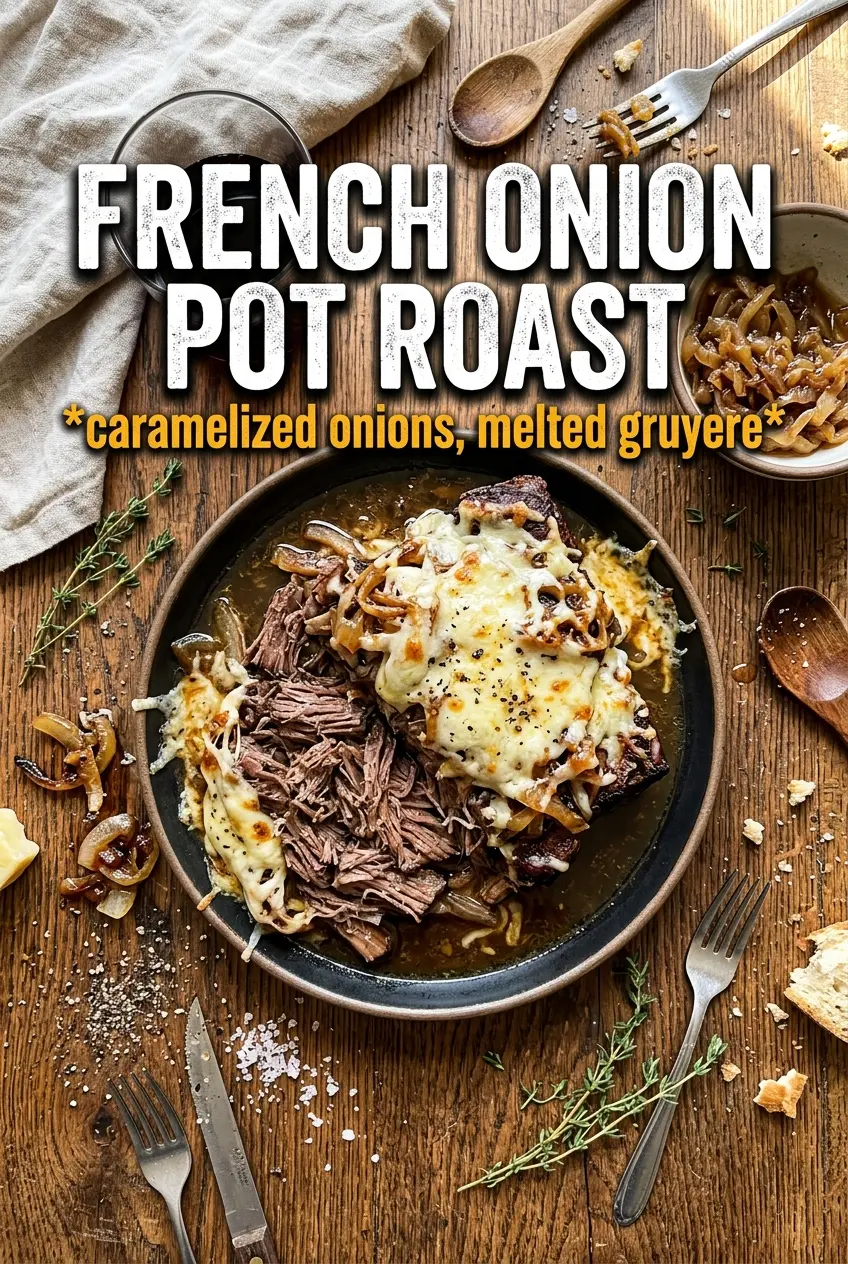
French onion pot roast gives you everything people love about French onion soup and turns it into a full dinner: deeply browned beef, jammy onions, rich broth, and that final blanket of melted Gruyere over toasted baguette. The roast comes out fork-tender, but what keeps this version from tasting heavy is the long onion caramelization and the way the broth stays savory instead of turning cloudy and dull.
The key is patience at two points. First, the onions need time over medium-low heat until they collapse into a dark, sweet base with real depth, not just softened slices. Second, the chuck roast needs a proper sear before it goes into the braise, because that browned crust is what gives the sauce its backbone. If you rush either one, the finished pot roast tastes flat instead of layered.
Below, I’ve included the little details that matter most: when the onions are actually ready, why the wine step helps, and how to broil the Gruyere without scorching the bread before the cheese melts.
The onions turned jammy and sweet, and the broth tasted like French onion soup after three hours in the oven. My husband kept going back for more of the broth with the toasted baguette.
Save this French Onion Pot Roast for when you want fall-apart beef, caramelized onions, and melted Gruyere in one Dutch oven dinner.
The Cut That Turns Tough Beef Into Spoon-Tender Roast
Chuck roast is the right cut here because it has enough connective tissue to turn silky during a long braise. Leaner beef dries out before the onions and broth have time to do their work. If your roast seems chewy after the full cook time, it usually means it needed more time, not more heat. The oven stays at 325°F so the liquid moves gently; hard boiling tightens the meat and clouds the broth.
- Chuck roast — This is the cut that gives you shreddable beef and a rich broth. Brisket can work, but chuck is more forgiving and usually has better marbling for this style of braise.
- Onions — Four large onions look like a lot at the start, but they cook down dramatically. Yellow onions are the best choice because they caramelize evenly and taste sweet without losing their backbone.
- Dry white wine — Wine adds brightness and lifts the browned bits from the pan. If you don’t want to use wine, beef broth works, but the sauce will taste a little rounder and less sharp.
- Gruyere — Gruyere melts into that classic French onion finish without getting greasy. Swiss cheese can stand in, but it won’t taste as nutty or melt with the same creamy stretch.
What Each Ingredient Is Actually Doing in This Recipe

- Primary ingredient (the star) — Quality matters most. Choose the best you can find.
- Cooking medium (oil, butter, or broth) — This carries flavors and prevents dryness.
- Seasonings (salt, pepper, spices, herbs) — Layer flavors so nothing overpowers. Build depth gradually.
- Aromatics (garlic, onion, herbs) — Cook with fat to bloom flavors. Become the foundation.
- Supporting ingredients — Complement the main ingredient without overpowering it.
- Sauce or liquid (if applicable) — Brings flavors together. Balance richness with acid.
- Acid (lemon, vinegar, wine, or other) — Brightens and prevents flat-tasting results.
- Final finish (garnish, glaze, or sauce) — Prevents one-dimensional taste and adds visual appeal.
Building the Broth Around the Onions, Not Just the Roast
Getting the Sear First
Pat the chuck roast dry and season it well before it touches the pan. When the oil is hot, lay the beef in and let it sit until a deep brown crust forms, then turn it and brown the other side. If the meat sticks at first, leave it alone; it will release when the crust develops. A pale sear gives you pale gravy, and this dish needs that browned base to taste complete.
Cooking the Onions All the Way Down
Use the butter and keep the heat at medium-low. The onions should soften first, then slowly turn golden, then take on a deep amber color with the edges almost jammy. This usually takes 30 to 35 minutes, and rushing it leaves you with sweet onions instead of caramelized ones. If the pan looks dry, a splash of broth helps, but don’t crank the heat just to speed things along.
Deglazing and Braising Gently
Once the garlic smells fragrant, add the wine and scrape up every brown bit from the bottom of the pot. That fond is where a lot of the roast’s flavor lives. Stir in the broth, Worcestershire, thyme, and bay leaves, then return the beef and cover the pot tightly. The liquid should barely bubble in the oven; if it’s boiling hard, the meat can tighten before it softens.
The Cheese Finish
When the beef shreds easily, pull out the bay leaves and break the roast into the broth. Ladle it into bowls, top with toasted baguette rounds, and cover with Gruyere. Broil just until the cheese melts and spots of gold appear at the edges. Walk away for a minute if needed, because the jump from melted to scorched is quick under the broiler.
How to Adapt This Pot Roast for Different Tables
Dairy-Free Version Without Losing the Onion Depth
Skip the butter and use olive oil for the onions, then leave off the Gruyere at the end. The dish still tastes rich because the caramelized onions and braising liquid carry the flavor; you just lose the creamy, browned cheese finish. If you want a little extra body, serve it over mashed potatoes instead of with the baguette.
Gluten-Free Serving Style
The braise itself is naturally gluten-free if your Worcestershire sauce is certified gluten-free. Replace the baguette with toasted gluten-free bread or serve the roast over polenta, mashed potatoes, or rice. The texture stays comforting, but you keep the same oniony broth and melted cheese finish.
Extra-Savory, Wine-Free Version
Use beef broth instead of wine and add an extra splash of Worcestershire for more depth. You’ll lose the brightness that wine gives the sauce, so taste the broth before it goes into the oven and adjust the salt carefully. This version lands a little darker and meatier, which is useful if you’re serving people who don’t want any wine in the pot.
Storage and Reheating
- Refrigerator: Store the beef and broth together for up to 4 days. The flavor gets even deeper overnight, though the onions will soften more.
- Freezer: Freeze the roast and broth without the baguette or cheese for up to 3 months. Thaw in the fridge before reheating so the meat warms evenly.
- Reheating: Warm it gently on the stove or in a covered Dutch oven at 300°F until hot through. Don’t boil it hard, or the beef can turn stringy and the broth can taste muddy.
Questions I Get Asked About This Recipe
French Onion Pot Roast
Ingredients
Equipment
Method
- Preheat oven to 325F. Heat olive oil in a Dutch oven and sear the chuck roast until deeply browned, then remove it to a plate.
- Cook onions in butter over medium-low heat for 30-35 minutes, stirring until deeply caramelized and dark golden. Add garlic and cook for 1 minute until fragrant.
- Pour in the wine and deglaze, scraping up browned bits from the bottom of the pot until the liquid looks cohesive. Stir in beef broth, Worcestershire sauce, thyme, and bay leaves.
- Return the roast to the Dutch oven and bring the broth back to a simmer. Cover and braise in the 325F oven for 3 to 3-1/2 hours until fall-apart tender.
- Remove bay leaves, then shred the beef in the broth. Ladle the pot roast into bowls.
- Float toasted baguette on top of each bowl and generously cover with Gruyere. Broil for 3-4 minutes until the cheese is golden and bubbly.