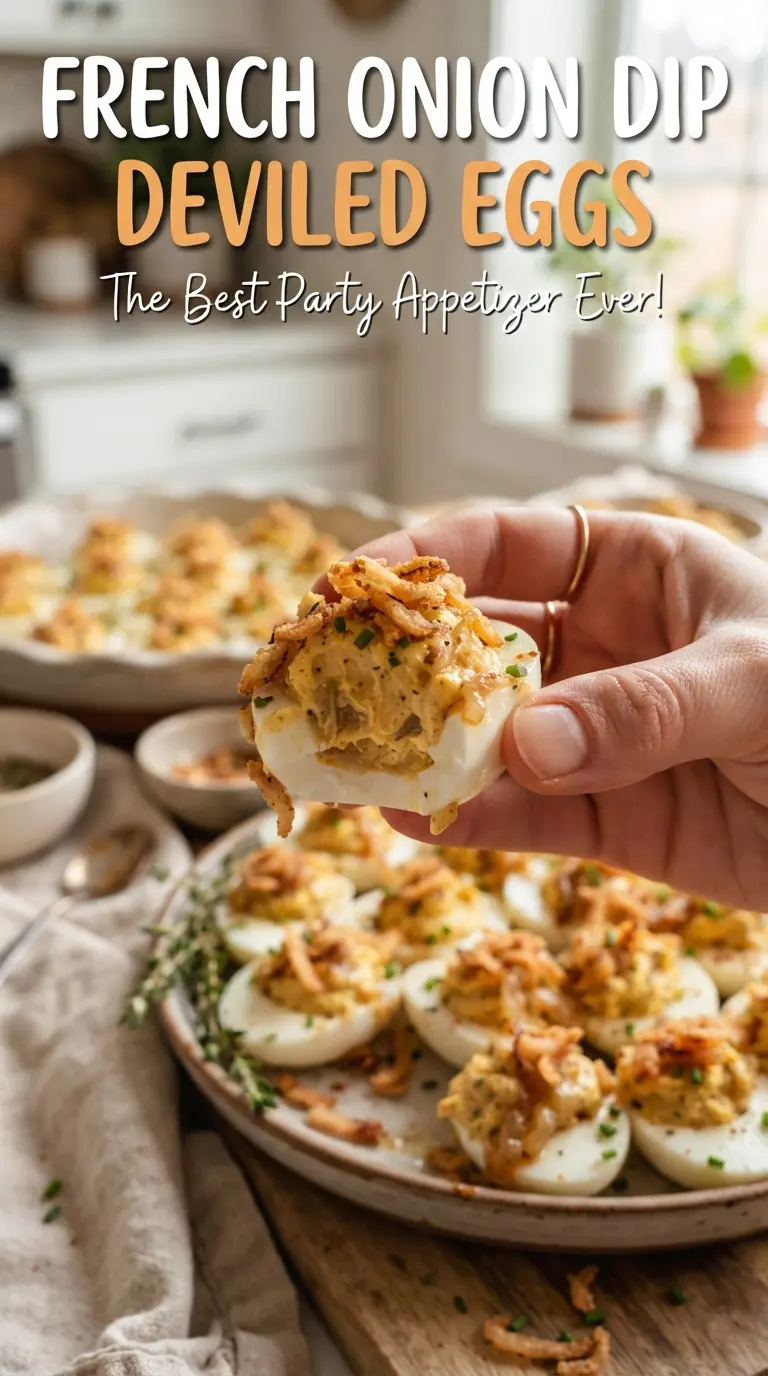
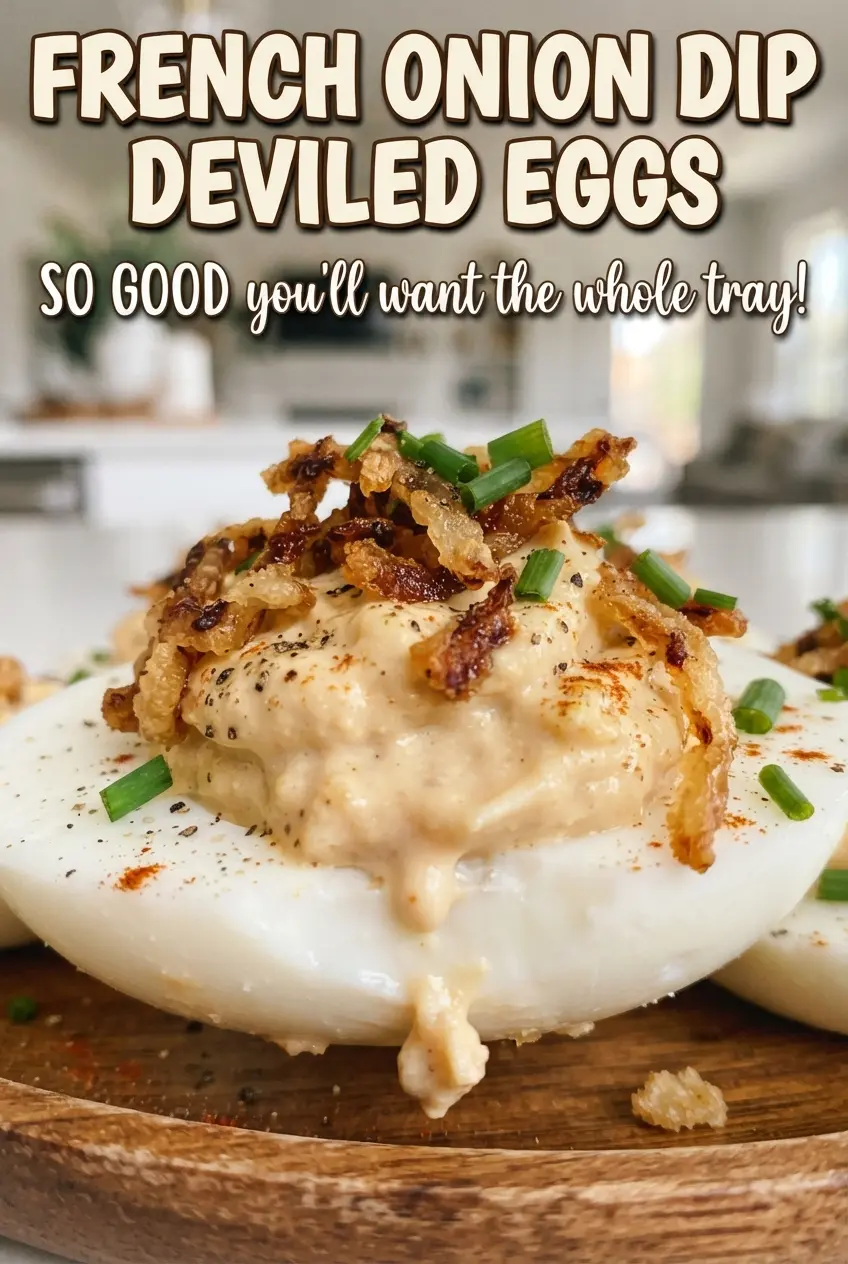
French onion dip deviled eggs hit that sweet spot between nostalgic and unexpectedly polished. The filling stays tangy and creamy, the caramelized onions bring deep onion flavor instead of raw sharpness, and the crispy fried onions on top give every bite a little crunch. They disappear fast because they taste familiar, but they eat like something special enough for a party platter.
What makes this version work is patience with the onions and restraint with the filling. The yellow onion cooks low and slow until it turns jammy and sweet, which keeps the dip-like flavor from tasting harsh or one-note. Sour cream and mayonnaise give the yolk filling body and tang, while Worcestershire and onion powder add that classic French onion depth without making the mixture muddy.
Below you’ll find the part that matters most: how to keep the onions from burning, how to get a filling that pipes cleanly, and how to finish the eggs so the topping stays crisp until serving time.
The onions turned out sweet and jammy, and the crispy topping stayed crunchy even after the platter sat out for a bit. I’ve made deviled eggs for years, and this filling had the best balance of tang and savory onion flavor.
Save these French Onion Dip Deviled Eggs for the appetizer table — creamy yolks, sweet caramelized onions, and that crunchy fried onion finish.
The Onion Timing That Keeps This Filling Sweet, Not Sharp
The onions are the difference between a deviled egg that tastes like a topping and one that tastes like French onion dip. If you rush them, they stay harsh and watery, and that onion bite comes through in the filling. Cook them over medium-low heat until they collapse, deepen in color, and smell sweet and savory at the same time.
The other place people lose the texture is in the yolk filling. A heavy hand with mayonnaise makes it loose, while not enough dairy makes it pasty and hard to pipe. The sweet spot here is a mash that holds its shape but still moves easily through a piping bag or zip-top bag with the corner snipped off.
- Yellow onion — This is the backbone of the recipe. It turns sweet and jammy as it cooks, which gives you the French onion flavor without needing broth or soup mix.
- Sour cream — This adds the tang that makes the filling taste like dip. Plain Greek yogurt can work in a pinch, but the flavor is sharper and the texture is a little tighter.
- Mayonnaise — Mayo gives the filling body and smoothness. Use a good one here; bland mayo makes the whole thing taste flat.
- Worcestershire sauce — A small amount adds savory depth and keeps the filling from tasting like plain egg yolk with onion stirred in.
- Crispy fried onions — These belong on top, not folded into the filling if you want them to stay crisp. If you only have French-fried onions from a can, crush them lightly so they sit neatly on the eggs.
What Each Ingredient Is Actually Doing in This Recipe
- Primary ingredient (the star) — Quality matters most. Choose the best you can find.
- Cooking medium (oil, butter, or broth) — This carries flavors and prevents dryness.
- Seasonings (salt, pepper, spices, herbs) — Layer flavors so nothing overpowers. Build depth gradually.
- Aromatics (garlic, onion, herbs) — Cook with fat to bloom flavors. Become the foundation.
- Supporting ingredients — Complement the main ingredient without overpowering it.
- Sauce or liquid (if applicable) — Brings flavors together. Balance richness with acid.
- Acid (lemon, vinegar, wine, or other) — Brightens and prevents flat-tasting results.
- Final finish (garnish, glaze, or sauce) — Prevents one-dimensional taste and adds visual appeal.
Building the Filling So It Pipes Cleanly
Cooking the Onions Down Properly
Melt the butter, add the onion, and keep the heat at medium-low so the edges soften before they brown too fast. Stir often and scrape the pan so the onions cook evenly instead of spotting and burning. They should end up deep golden and soft enough to almost melt when pressed with a spoon. If they start sticking hard or turning bitter, the heat is too high and the color will get ahead of the sweetness.
Making the Yolk Base Smooth
Mash the yolks until there are no dry lumps before you add the sour cream, mayonnaise, Worcestershire, onion powder, garlic powder, and salt. A fork works fine, but a small mesh strainer gives the smoothest filling if you want a cleaner pipe. The mixture should look thick and glossy, not stiff or runny. If it feels too tight, add a small spoonful of sour cream rather than more mayo; that keeps the tang balanced.
Folding in the Onion Flavor
Let the caramelized onions cool before folding in about half of them, or they can melt the filling and make it greasy. You want visible onion pieces running through the yolks, not a fully blended purée. The filling should taste a little stronger than you want in the finished egg because the whites and toppings soften it up. Pipe or spoon it into the egg halves, then top with the remaining onions, the crispy fried onions, and a few snipped chives for a fresh finish.
Three Ways to Make These Eggs Work for Your Crowd
Dairy-Free Version
Swap the butter for olive oil and use a dairy-free sour cream and mayonnaise. The filling will still be creamy, but the tang can vary by brand, so taste before piping and add a touch more Worcestershire if it needs depth.
Lower-Carb Crunch
Skip the crispy fried onions and top with extra chives plus a pinch of smoked paprika if you want more visual contrast. You lose the obvious crunch, but the flavor stays firmly in French onion dip territory without the breaded topping.
Make-Ahead for a Party Platter
Boil and peel the eggs, caramelize the onions, and mix the filling a day ahead, but keep the whites and filling separate until serving day. The topping stays crisp only if you add it at the last minute, and that last step makes the eggs look freshly made.
Storage and Reheating
- Refrigerator: Store assembled eggs in a covered container for up to 2 days. The topping softens a little, but the flavor stays good.
- Freezer: Don’t freeze deviled eggs. The whites turn rubbery and the filling breaks after thawing.
- Reheating: Serve these cold or lightly chilled. If the onions were made ahead, let them sit at room temperature for a few minutes so they’re not icy, then assemble just before serving.
Questions I Get Asked About This Recipe
French Onion Dip Deviled Eggs
Ingredients
Equipment
Method
- Melt the butter in a cast iron skillet over medium-low heat, then add the finely diced yellow onion and cook, stirring occasionally, for 20-25 minutes until deep golden. Visual cue: the onions should turn jammy and smell sweet and toasty.
- Remove the skillet from heat and cool the caramelized onions completely. Visual cue: the onions should be thick and spreadable, not warm and runny.
- Place the eggs in a pot, cover with cold water, and bring to a boil. Visual cue: bubbles should rapidly roll to the surface.
- Cover the pot, remove from heat, and let the eggs stand for 12 minutes. Visual cue: the yolks should be set but still tender.
- Chill the eggs until cold, then peel and halve them lengthwise. Visual cue: cleanly peeled eggs with flat-cut halves ready for filling.
- Mash the yolks with the sour cream, mayonnaise, Worcestershire sauce, onion powder, garlic powder, and salt until smooth. Visual cue: the mixture should be creamy with no dry yolk bits.
- Fold in half of the caramelized onions until evenly distributed. Visual cue: streaks should disappear, leaving a uniform golden mixture.
- Pipe the filling into the egg white halves. Visual cue: neat ridges from the piping tip.
- Top each deviled egg with the remaining caramelized onions, crispy fried onions, and fresh chives. Visual cue: a glossy onion layer with crunchy fried onion texture on top.