Deeply golden broth, tender shredded chicken, and soft noodles make this flu-fighting chicken noodle soup the kind of pot you keep coming back to when you want something warm, bright, and gently spicy. The ginger and garlic give it a clear, savory backbone, while lemon and apple cider vinegar keep the broth tasting lively instead of flat. It eats like comfort food, but it still feels clean and restorative enough to sip when you need a reset.
What makes this version work is the layering. Bone-in chicken builds a richer broth than boneless pieces ever will, and the turmeric and cayenne need that long simmer to mellow into the pot instead of tasting sharp. The honey goes in at the end for balance, not sweetness, and the lemon and vinegar wake everything up right before serving.
Below, I walk through the one timing detail that keeps the noodles from turning mushy and the small finishing move that makes the broth taste like it simmered all day, even though it doesn’t take that long.
The broth came out clear, cozy, and full of ginger-garlic warmth, and the noodles stayed tender instead of falling apart. I added the lemon at the end like you said and it made the whole pot taste brighter.
Save this chicken noodle soup for the nights when you want a golden broth with ginger, garlic, and lemon that tastes like it actually did something.
The Broth Needs Time to Turn Round, Not Just Hot
A fast boil can make soup look active, but it doesn’t build the kind of broth this recipe needs. The chicken, ginger, garlic, and turmeric need a steady simmer so the broth turns fragrant and golden without getting harsh or cloudy. If the pot is boiling hard, the chicken tightens up and the garlic can take on a bitter edge.
The other thing people miss is when to add the noodles. Put them in after the chicken is shredded and returned to the pot, not at the beginning, or they’ll swell until they steal too much broth and go soft. This soup should still have a clear, spoonable broth at the end, not a starchy stew.
What Each Ingredient Is Actually Doing in This Soup

- Bone-in chicken — This is the backbone of the soup. Bones add body and depth to the broth that boneless chicken breasts can’t fully match. If you only have boneless chicken, it will still work, but the broth will taste lighter.
- Fresh ginger and garlic — These are what give the soup its warming, almost restorative edge. Fresh is worth using here; dried ginger doesn’t bring the same brightness, and pre-minced garlic can taste flatter after simmering.
- Turmeric and cayenne — Turmeric gives the broth its deep color and a subtle earthiness, while cayenne adds gentle heat. The amount here keeps the soup warming, not spicy-hot. If you’re sensitive to heat, cut the cayenne in half instead of skipping it entirely.
- Lemon juice and apple cider vinegar — These are the finishing ingredients that keep the soup from tasting heavy. The vinegar doesn’t make it sour; it sharpens the broth so the chicken, noodles, and aromatics taste cleaner.
- Egg noodles — They cook quickly and soak up flavor fast. Wide noodles work too, but keep an eye on them because they can go from tender to bloated in a minute or two.
Building the Soup So the Noodles Stay Tender
Start with the Long Simmer
Combine the chicken, vegetables, broth, turmeric, cayenne, thyme, garlic, and ginger in a large pot, then bring it just to a boil before lowering the heat. You want a gentle simmer with small bubbles breaking the surface, not a rolling boil. That steady heat keeps the broth clear and gives the chicken time to cook through without turning stringy.
Shred While the Chicken Is Still Warm
Pull the chicken out once it’s cooked through and shred it while it’s still warm enough to fall apart easily. If you wait too long, it tightens and gets harder to shred into those soft pieces you want in soup. Return it to the pot right away so it can soak up the broth again.
Cook the Noodles at the End
Add the egg noodles only after the chicken is back in the pot. They need just 6 to 8 minutes, and the broth should be at a gentle simmer so they cook evenly without breaking apart. If the soup looks a little thinner at this point, don’t worry; the noodles will absorb a bit, and the finishing acid brings the broth back into balance.
Finish with Brightness, Not More Heat
Stir in the honey, lemon juice, and apple cider vinegar once the noodles are tender, then season with salt and pepper. This is the point where the soup comes into focus. If it tastes flat, it usually needs salt first, then a little more lemon, not more cayenne.
Three Ways to Adjust It Without Losing the Point
Make It Gluten-Free
Use gluten-free egg noodles or rice noodles and check your broth label before you start. Rice noodles cook faster and soften more as they sit, so add them even later than egg noodles if you want the texture to hold.
Make It Dairy-Free Without Changing Anything
This recipe is naturally dairy-free as written, which is part of why it tastes so clean and brothy. Keep it that way if you want the ginger, lemon, and garlic to stay front and center.
Use Chicken Breast Instead of Bone-In Pieces
Chicken breast works in a pinch, but the broth will be lighter and you may want an extra pinch of salt at the end. Pull it as soon as it’s cooked through so it stays tender, because lean chicken dries out faster than bone-in pieces.
Storage and Reheating
- Refrigerator: Keep in a covered container for up to 4 days. The noodles will continue to soften, so the soup gets thicker by day two.
- Freezer: It freezes well if you leave out the noodles and add fresh ones when reheating. Frozen noodles turn mushy, and the broth is much better when you freeze it on its own.
- Reheating: Warm it gently on the stovetop over medium-low heat until steaming. If it was stored with noodles, add a splash of broth or water because they soak up liquid fast.
Questions I Get Asked About This Recipe
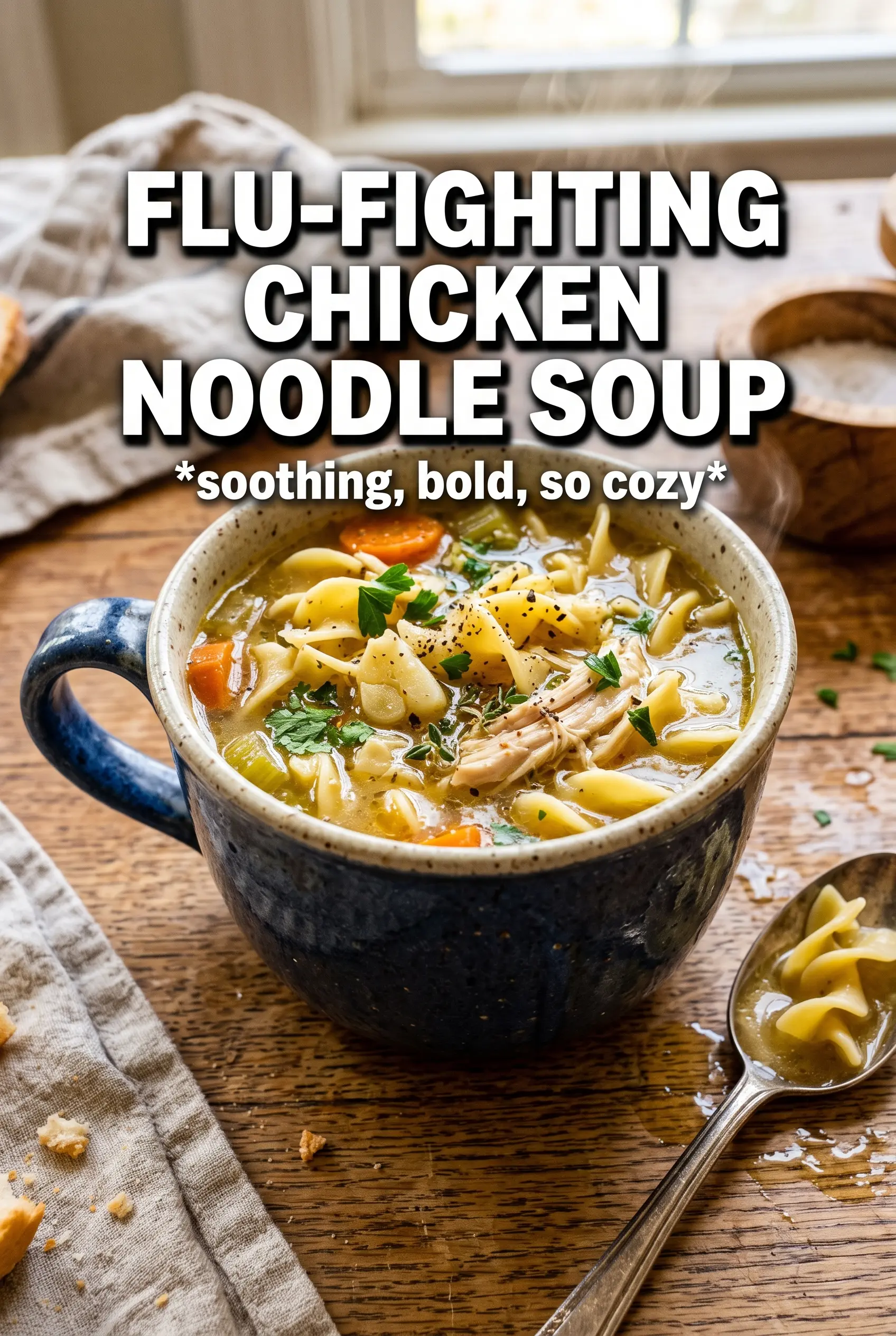
Flu-Fighting Chicken Noodle Soup
Ingredients
Equipment
Method
- In a large pot, combine the chicken, carrots, celery, onion, garlic, ginger, chicken broth, turmeric, cayenne pepper, and dried thyme.
- Bring to a boil, then reduce heat to a steady simmer for 25-30 minutes, until the chicken is cooked through.
- Remove the chicken from the pot, shred it, and return the shredded chicken to the broth.
- Add the egg noodles and simmer for 6-8 minutes, stirring occasionally, until tender.
- Stir in the honey, lemon juice, and apple cider vinegar, then season with salt and pepper to taste.
- Serve hot with fresh parsley and extra lemon wedges for squeezing.