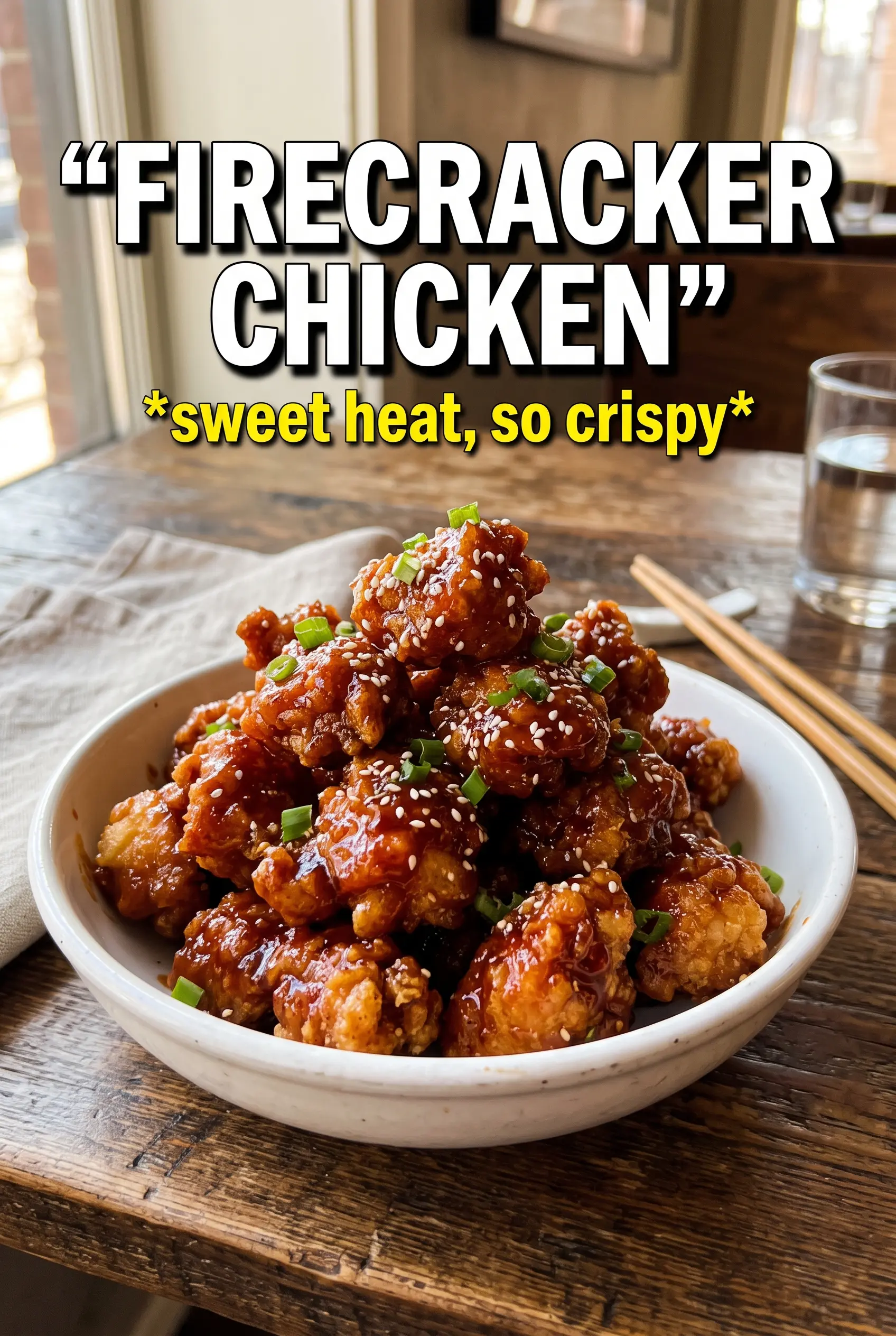
Crispy firecracker chicken hits that sweet spot between takeout comfort and homemade control: crunchy edges, sticky sauce, and a burn that builds without taking over the whole bite. The chicken stays crisp long enough to matter because it gets coated, fried hot, and sauced at the very end, instead of sitting in the glaze until it softens into mush.
The sauce leans on a balance that works every time — hot sauce for tang and heat, brown sugar for body, butter for gloss, and a little vinegar to keep the sweetness from tasting flat. Cornstarch in the coating helps the exterior set up fast, while the flour adds enough structure to give you that craggy, golden crust. If you’ve had saucy chicken turn limp before, the timing here is the fix.
Below, you’ll find the small details that keep the coating crisp and the sauce shiny, plus a few ways to adjust the heat or make the dish work with what you already have in the pantry.
The coating stayed crisp even after I tossed it in the sauce, and the sweet heat was balanced enough that we didn’t need to add anything else to dinner.
Craving that glossy, sticky Firecracker Chicken? Save this one for the nights you want crispy bites with sweet heat and almost no cleanup.
The Crisp-to-Sauce Timing That Keeps Firecracker Chicken Crunchy
The mistake with saucy chicken is usually not the sauce itself. It’s letting the chicken sit in it too long before serving. Once the coating has absorbed enough liquid, the crust goes from crisp to soft fast, especially if the sauce is thin or the chicken is crowded in the pan.
That’s why this version gets fried first, drained briefly, and then tossed in sauce only at the end. A quick return to the pan for a minute or two gives the glaze time to cling and caramelize without fully soaking through the crust. You want the sauce thick enough to coat the back of a spoon, not run off the chicken like syrup.
- Frying hot and fast — The chicken cooks in shallow oil at 375°F, which sets the coating before the meat overcooks. If the oil is too cool, the crust absorbs fat and turns greasy instead of crisp.
- Finishing in the pan — That last brief toss is what turns the sauce from glossy to sticky. It also concentrates the brown sugar just enough to give the chicken that lacquered look.
- Resting after frying — A short drain on a rack or paper towels keeps excess oil from thinning the sauce. Skip the long hold, though; this dish is best while the crust still has some snap.
What Each Ingredient Is Actually Doing in Firecracker Chicken
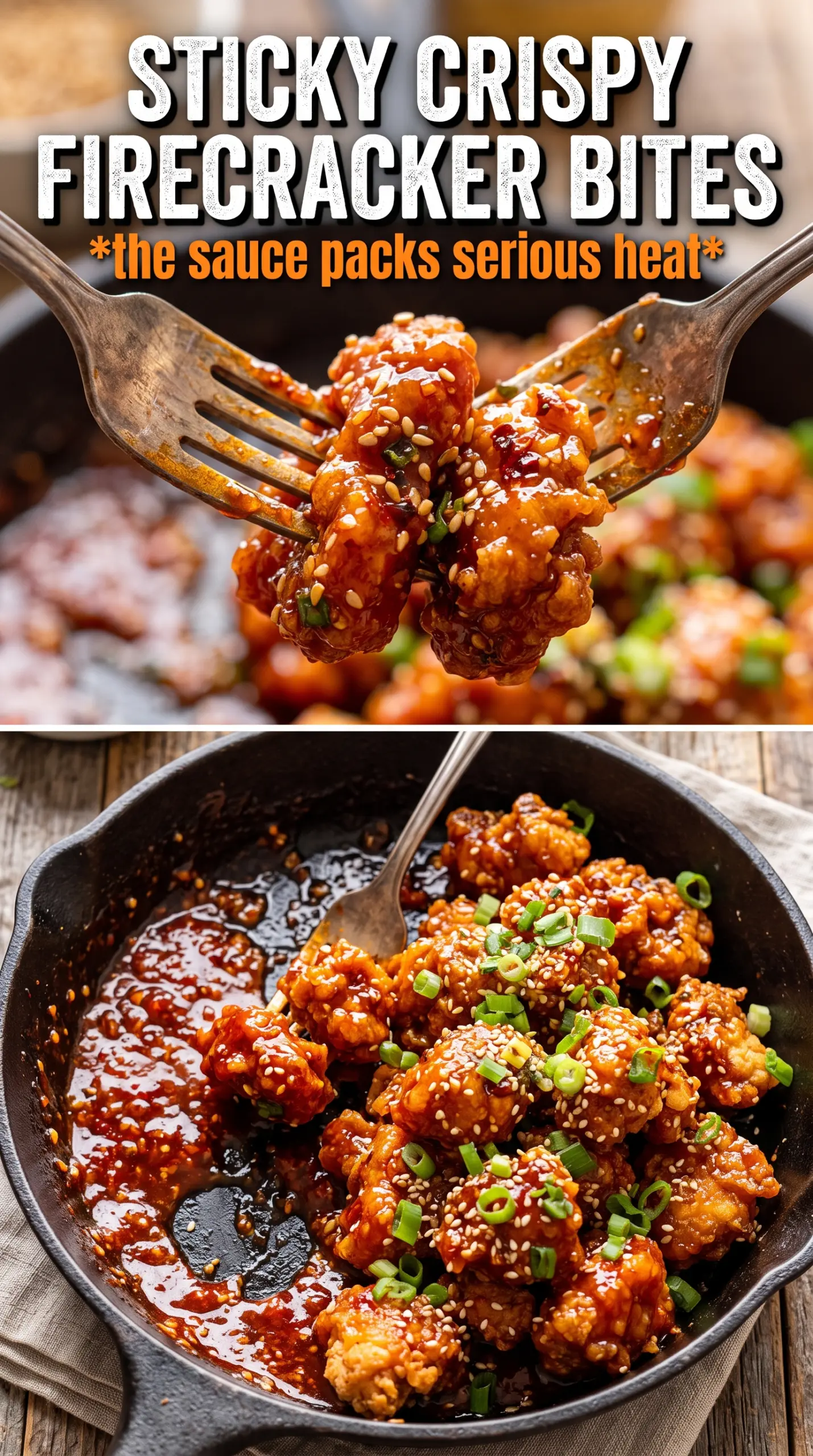
- Chicken breasts — Boneless skinless breasts give you clean, bite-sized pieces that cook quickly and stay lean under the sauce. Thighs will work if that’s what you have, but they’ll be juicier and a little less firm once coated.
- Cornstarch and flour — This combination is the reason the crust clings and fries up with some texture instead of tasting dusty. Cornstarch adds crispness; flour gives the coating enough body to survive the sauce.
- Hot sauce — Frank’s-style hot sauce brings vinegar sharpness and a peppery base that cuts through the sugar. A thicker or sweeter sauce can work, but you’ll lose the clean firecracker bite.
- Brown sugar, butter, and vinegar — Brown sugar builds stickiness, butter smooths the heat, and vinegar keeps the whole thing from tasting one-note. Don’t swap the vinegar for more hot sauce; you need that bright edge.
- Soy sauce and garlic powder — Soy sauce adds salt and depth without making the glaze taste like standard teriyaki. Garlic powder melts right into the sauce and seasons it evenly, while fresh garlic can burn or overpower the pan.
- Red pepper flakes — These give you visible heat and a little texture in the sauce. Start with less if you want a mild version; you can always add more at the end.
Getting the Chicken Fried Before the Sauce Goes On
Coating the Pieces Evenly
Toss the chicken until every piece is lightly but fully coated, with no wet patches left on the surface. That dry exterior is what fries into a crisp shell. If the pieces look pasty or clumped, shake off the excess and separate them before they go into the oil.
Frying in Shallow Oil
Use enough oil to come about halfway up the chicken pieces, then keep the heat steady at 375°F. The chicken should sizzle the moment it hits the pan and turn deep golden in 3 to 4 minutes per side. If the crust browns too fast, the oil is too hot; if it looks pale after several minutes, the oil is too cool and the coating will come out heavy.
Building the Firecracker Sauce
Combine the sauce ingredients over medium heat and stir until the butter melts and the mixture looks smooth and glossy. The sauce should thicken slightly as it simmers, but it doesn’t need to reduce for long. If it starts to separate, the heat is too high; pull it back and whisk until it comes together again.
Tossing and Caramelizing at the End
Add the fried chicken to the sauce and toss quickly until every side is coated, then return it to the pan for just 1 to 2 minutes. That short finish gives the sugar time to cling and darken without turning the crust soft. Serve it right away over rice while the glaze is still shiny and the edges of the chicken are still crisp.
How to Adjust Firecracker Chicken Without Losing the Crunch
Make it milder without watering it down
Cut the red pepper flakes back to 1/2 teaspoon and use the lower end of the hot sauce amount. The flavor still reads as Firecracker Chicken because the sweet-sour glaze stays in place; it just lands with a gentler burn.
Swap in chicken thighs for a juicier result
Use boneless skinless thighs cut into the same size pieces and fry them the same way. You’ll get a richer, softer bite and a little more forgiveness if the chicken sits for a minute before saucing, though the texture won’t be quite as clean as breast meat.
Bake it instead of frying
Coat the chicken, lay it on a rack over a sheet pan, and bake at 425°F until cooked through and crisp at the edges. It won’t be quite as crunchy as fried, but it still holds up well once coated in sauce, especially if you broil it for the last minute or two.
Gluten-free version
Use a gluten-free all-purpose blend in place of the flour and swap in tamari for the soy sauce. The crust still fries up nicely because the cornstarch is doing part of the heavy lifting, and the sauce keeps the same sweet heat.
Storage and Reheating
- Refrigerator: Store leftovers in an airtight container for up to 3 days. The coating softens as it sits, but the flavor stays strong.
- Freezer: It freezes, but the crust won’t stay crisp after thawing. For the best result, freeze the plain fried chicken and make the sauce fresh when you’re ready to serve.
- Reheating: Warm it in a skillet over medium-low heat with a splash of water if the sauce has tightened up. The microwave will heat it, but it makes the coating soggy fast.