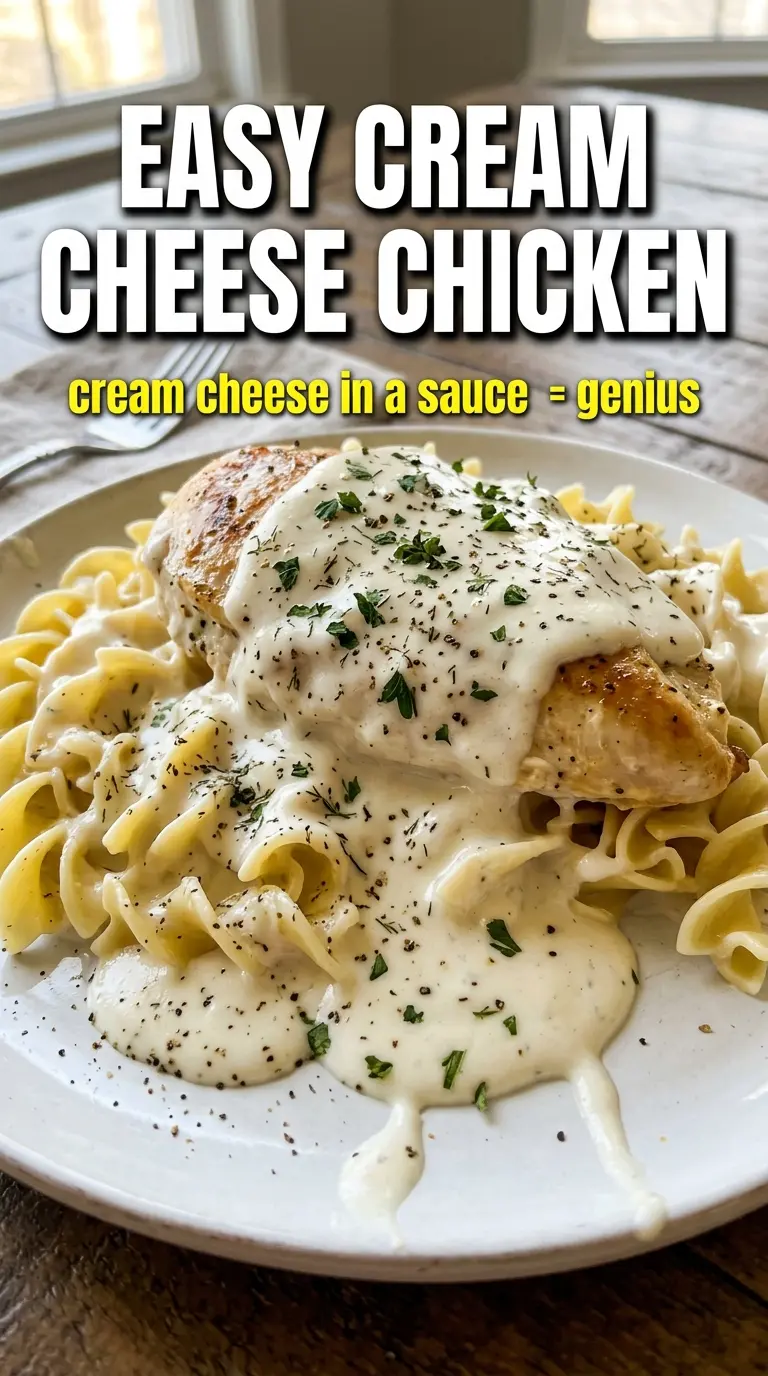
Juicy chicken breasts cloaked in a tangy cream cheese sauce have a way of making a plain skillet dinner feel like something you’d order at a small neighborhood restaurant. The sauce turns silky and thick enough to coat the chicken instead of sliding off it, and the lemon zest at the end keeps the richness from going heavy. It’s the kind of meal that lands on the table fast but still tastes like you paid attention.
What makes this version work is the order of the pan work. The chicken gets a real sear first, which leaves browned bits in the skillet for the sauce to pick up, and the cream cheese melts best when it’s softened and added after the broth has loosened the fond. Sour cream goes in off the boil, not into a rolling bubble, so the sauce stays smooth instead of turning grainy.
Below, I’ve included the tiny details that matter most: how to keep the sauce from breaking, what to swap if you’re short on an ingredient, and the point where the chicken goes back in so it stays juicy.
The sauce turned out silky and thick, and the lemon at the end kept the cream cheese from tasting heavy. I followed the part about adding the sour cream off the heat and it stayed completely smooth.
Love a skillet dinner with a glossy cream cheese sauce and bright lemon finish? Save this Easy Cream Cheese Chicken for the nights you want something fast, rich, and still fresh-tasting.
Why the Sauce Stays Smooth Instead of Turning Grainy
The biggest mistake in cream cheese chicken is rushing the dairy. If the cream cheese goes into a dry pan or the heat stays too high, it clumps before it has a chance to loosen into a sauce. The broth first, then the cream cheese, gives the fat and water a little room to meet in the middle.
Softened cream cheese matters here. Cold cubes take longer to melt, which tempts people to turn up the burner, and that’s when the sauce starts to separate. Keep the heat at medium-low once the dairy goes in, and stir until the sauce looks glossy and unified before the chicken returns to the skillet.
- Cream cheese — This is the body of the sauce, and the full-fat block style gives the smoothest finish. Whipped cream cheese spreads faster but often makes a thinner sauce, so I’d skip it here.
- Sour cream — It adds tang and lightens the richness. Greek yogurt can work in a pinch, but use it the same way and keep the heat low so it doesn’t curdle.
- Chicken broth — This loosens the fond and creates the base for the sauce. Use a broth you’d actually drink; bland broth gives you a flat sauce no amount of seasoning can fully fix.
- Lemon juice and zest — The juice sharpens the sauce, while the zest gives a fresher finish without making it sour. If you only have juice, use it sparingly and rely more on the zest if you can get it.
- Fresh chives — They’re more than garnish here. That little oniony bite cuts through the cream sauce and keeps each bite from tasting one-note.
What Each Ingredient Is Actually Doing in This Recipe
- Primary ingredient (the star) — Quality matters most. Choose the best you can find.
- Cooking medium (oil, butter, or broth) — This carries flavors and prevents dryness.
- Seasonings (salt, pepper, spices, herbs) — Layer flavors so nothing overpowers. Build depth gradually.
- Aromatics (garlic, onion, herbs) — Cook with fat to bloom flavors. Become the foundation.
- Supporting ingredients — Complement the main ingredient without overpowering it.
- Sauce or liquid (if applicable) — Brings flavors together. Balance richness with acid.
- Acid (lemon, vinegar, wine, or other) — Brightens and prevents flat-tasting results.
- Final finish (garnish, glaze, or sauce) — Prevents one-dimensional taste and adds visual appeal.
Building the Skillet in the Right Order
Seasoning and Searing the Chicken
Pat the chicken dry first, then season it well on both sides with salt, pepper, garlic powder, and onion powder. It should hit the hot olive oil with a faint sizzle and stay put long enough to develop a deep golden crust. If the pan feels crowded, the chicken will steam instead of brown, so cook in batches if needed. Pull it once the center reaches 165°F; it’ll finish loosely in the sauce without drying out.
Using the Pan Drippings
Once the chicken comes out, leave the browned bits in the skillet. That’s the flavor base for the sauce, and the garlic only needs about 30 seconds before the broth goes in. If the garlic browns, it turns bitter fast, so keep it moving and add the liquid before it takes on much color. Scrape the bottom well; those stuck-on bits disappear into the sauce and make it taste built, not assembled.
Melting the Cream Cheese
Add the softened cream cheese in cubes and stir over medium-low heat until the sauce looks smooth and no white pieces remain. Don’t chase a fast melt with high heat. That usually gives you a broken, oily sauce with stubborn lumps. The sauce should thicken enough to coat the back of a spoon before you move on.
Finishing with Sour Cream and Citrus
Stir in the sour cream, lemon juice, and Italian seasoning after the cream cheese has fully melted. This is where the sauce becomes tangy and balanced, but it also becomes more delicate. Keep it below a boil or the sour cream can curdle and turn the texture grainy. Once it looks creamy and smooth, return the chicken and spoon the sauce over the top so every piece gets coated.
How to Adapt This Chicken When You Need a Different Finish
Dairy-Free Version
Use a dairy-free cream cheese and a plain unsweetened dairy-free yogurt in place of the sour cream. The sauce will still get creamy, but it may be a little less rich and a touch looser, so let it simmer gently for an extra minute before adding the chicken back.
Extra Tangy Sauce
Add an extra teaspoon of lemon juice and a pinch more zest at the end. That brightens the sauce without thinning it much, and it works especially well if your broth is on the mild side.
Gluten-Free Dinner
This recipe is naturally gluten-free as written if your chicken broth is certified gluten-free. The only place gluten usually sneaks in is the broth, so that label is the one worth checking.
What to Serve It Over
Mashed potatoes, rice, or buttered noodles all catch the sauce well. I like something simple underneath because the sauce is the star and the starch just needs to hold it in place.
Storage and Reheating
- Refrigerator: Store leftovers in an airtight container for up to 3 days. The sauce thickens as it chills, so it may look tighter the next day.
- Freezer: I don’t recommend freezing this one. Cream-based sauces tend to separate after thawing, and the texture turns a little grainy.
- Reheating: Rewarm gently on the stove over low heat with a splash of broth or water. High heat is the fastest way to break the sauce, especially once the sour cream is already in it.
Questions I Get Asked About This Recipe

Easy Cream Cheese Chicken
Ingredients
Equipment
Method
- Season the chicken breasts with salt, pepper, garlic powder, and onion powder to taste, then heat olive oil in a large skillet over medium-high heat until shimmering. Add the chicken and sear 5-6 minutes per side until deeply golden and the internal temperature reaches 165°F, then remove to a plate.
- In the same pan, cook the minced garlic for 30 seconds until fragrant. Pour in the chicken broth and scrape up the browned bits from the bottom of the skillet.
- Add the cream cheese cubes and stir over medium-low heat until fully melted and smooth. Mix in the sour cream, lemon juice, and Italian seasoning until the sauce is creamy and well combined, and do not boil after adding sour cream.
- Return the chicken to the pan and spoon the sauce over each breast so it coats the top surface. Garnish with fresh chives and lemon zest right before serving.