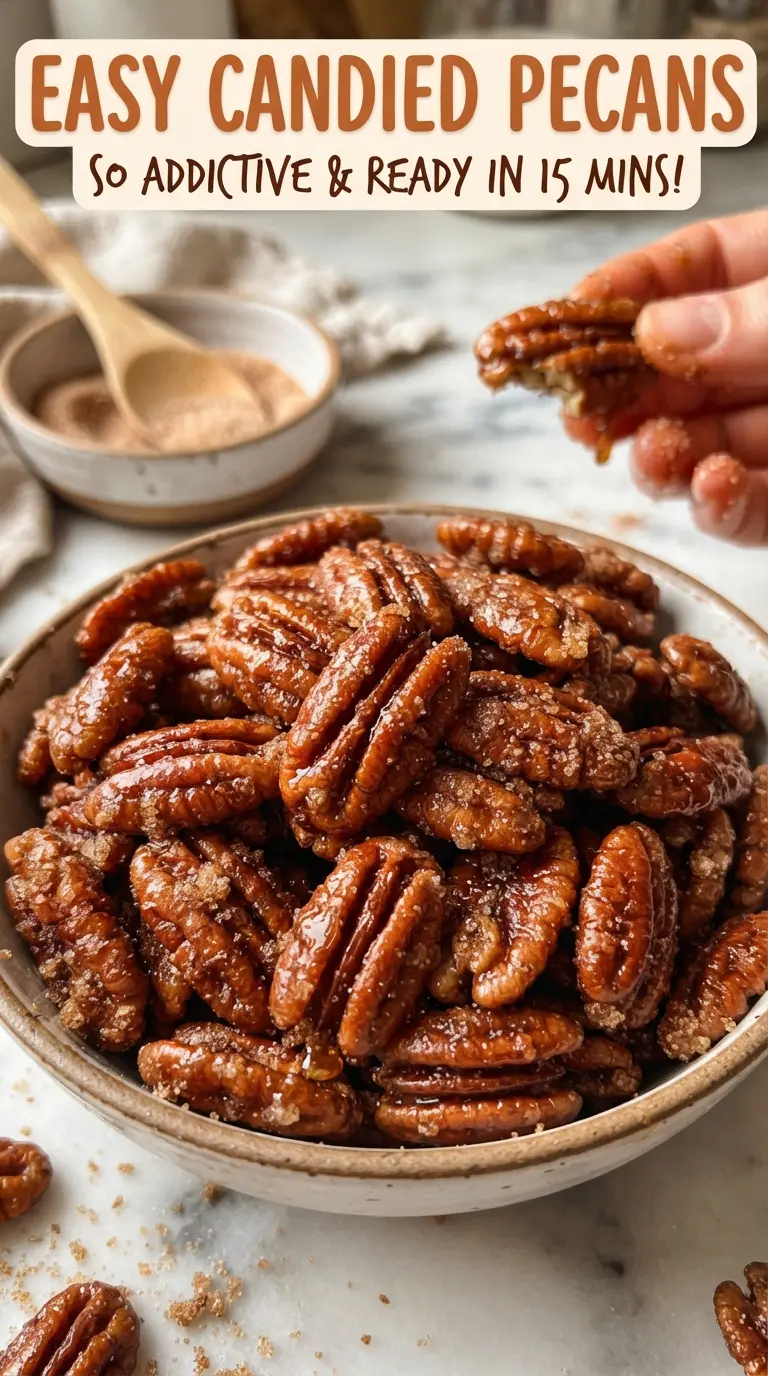
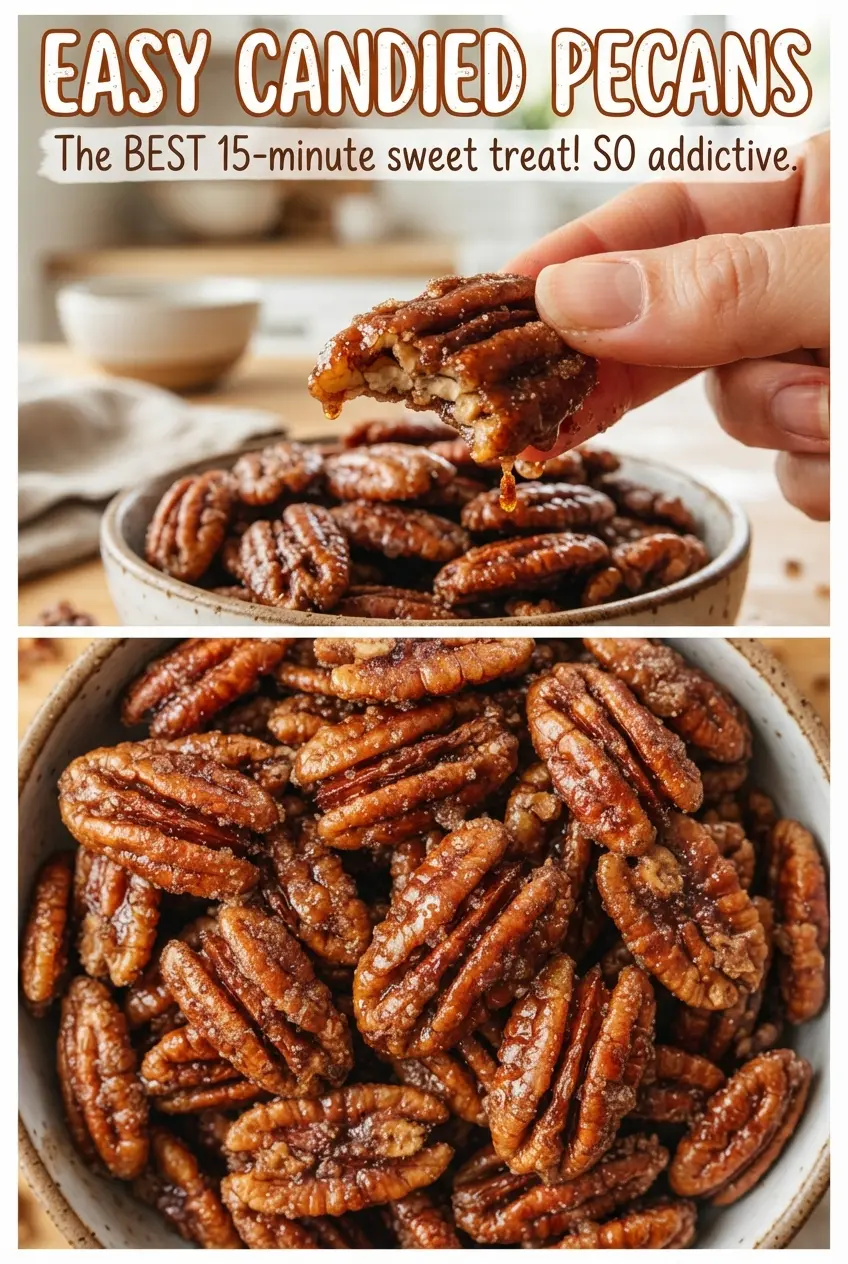
Candied pecans turn glossy, crisp, and deeply cinnamon-sweet in the oven, with just enough salt to keep the sugar from tasting flat. The coating bakes into a crackly shell that snaps when you bite it, then gives way to the buttery pecan underneath. They’re the kind of snack that disappears from the pan before they ever make it to a bowl.
The trick is the frothy egg white. It acts like glue without making the nuts heavy, so the sugar mixture clings evenly and bakes into that thin, crunchy shell instead of sliding off in patches. Low heat matters too. At 250°F, the sugar dries and sets gradually, which is what keeps the nuts crisp instead of scorched. Stirring every 15 minutes breaks up any clumps and keeps the coating even.
Below, I’ve included the one cooling step you don’t want to rush, plus a few smart swaps if you need to tweak the spice or make a bigger batch.
The coating baked on evenly and didn’t turn sticky after cooling. I kept sneaking a few from the tray, and they stayed crunchy all week in a jar.
These candied pecans bake up with that crackly cinnamon shell that stays crunchy after cooling, so they’re worth saving for snacking, gifting, or topping salads and yogurt.
The Part That Makes Candied Pecans Stay Crunchy
Most candied nut recipes go wrong in one of two ways: the sugar burns before the nuts dry out, or the coating turns sticky because the nuts never cooled long enough. The low oven temperature solves the first problem, but the cooling step solves the second. If you move them too soon, steam gets trapped under the sugar shell and softens everything you just worked to create.
Stirring every 15 minutes matters for another reason. The sugar mixture starts to clump as it heats, and those clumps can turn into hard little boulders if they sit in one place. Turning the pecans breaks that up and keeps every piece coated in an even layer instead of a patchy, sandy mess.
- Pecan halves — Halves toast more evenly than pieces and give you those big, glossy clusters people actually reach for. If you only have pecan pieces, reduce the stirring a little gently so they don’t break apart too much.
- Egg white — This is the binder. It foams around the nuts and gives the sugar something to grab onto. Don’t skip the froth; a loose, barely mixed egg white won’t coat the pecans evenly.
- Cinnamon — Ground cinnamon adds warmth, but it also helps the sugar coating taste finished instead of one-note sweet. If yours is old and pale, the pecans will still work, but the flavor will fall flat.
- Vanilla — Vanilla rounds out the sugar and gives the nuts a baked, candy-shop aroma. Add it to the egg white before the pecans so it distributes evenly.
What Each Ingredient Is Actually Doing in This Recipe
- Primary ingredient (the star) — Quality matters most. Choose the best you can find.
- Cooking medium (oil, butter, or broth) — This carries flavors and prevents dryness.
- Seasonings (salt, pepper, spices, herbs) — Layer flavors so nothing overpowers. Build depth gradually.
- Aromatics (garlic, onion, herbs) — Cook with fat to bloom flavors. Become the foundation.
- Supporting ingredients — Complement the main ingredient without overpowering it.
- Sauce or liquid (if applicable) — Brings flavors together. Balance richness with acid.
- Acid (lemon, vinegar, wine, or other) — Brightens and prevents flat-tasting results.
- Final finish (garnish, glaze, or sauce) — Prevents one-dimensional taste and adds visual appeal.
How to Build the Coating So It Bakes Up Crackly, Not Sticky
Whisking the Binder
Whisk the egg white, water, and vanilla until the mixture looks frothy and loose, like thin soap bubbles. You’re not trying to whip stiff peaks here. That froth is what helps the sugar cling in a thin layer instead of pooling at the bottom of the bowl. If the egg white is still slippery and clear, the coating won’t grab properly.
Coating the Nuts Evenly
Toss the pecans in the egg white until every piece looks damp and lightly glossy, then add the sugar mixture and keep tossing until the dry ingredients disappear. The nuts should look shaggy and sandy, not wet in puddles. If you see extra sugar collecting in the bowl, keep tossing a little longer so it bakes onto the pecans instead of becoming a sugary crust on the pan.
Slow Baking and Stirring
Spread the nuts in a single layer on parchment and bake at 250°F for a full hour, stirring every 15 minutes. They’ll look slightly dull at first, then gradually take on a dry, matte crust as the sugar sets. If your oven runs hot, check them during the last 15 minutes; burnt sugar smells sharp and bitter fast.
Cooling Until the Shell Sets
Take the pan out and leave the pecans alone until they’re completely cool. This is the part people rush, and it’s the difference between crunchy pecans and sticky ones. They firm up as they lose heat. When they’re cool enough to handle, break apart any clusters and store them airtight right away.
Three Ways to Change the Flavor Without Losing the Crunch
Maple-cinnamon pecans
Replace 1/4 cup of the sugar with maple sugar if you have it, or add 1 teaspoon maple extract in place of part of the vanilla. The nuts will taste a little deeper and less candy-sweet, but the texture stays the same because the oven time doesn’t change.
Gluten-free and naturally snackable
This recipe is already gluten-free, which makes it an easy one to keep on hand for parties and gifting. Just check your cinnamon and vanilla if you’re cooking for someone with a serious allergy, since cross-contact is more common there than in the pecans themselves.
Less sweet, more toasted
Cut the sugar back by 1/4 cup if you want a lighter coating, but know that the crust will be thinner and a little more rustic. The pecans will still bake up crunchy, just with more nut showing through and a less candy-like finish.
Storing for later
Store the cooled pecans in an airtight container at room temperature for up to 2 weeks. They don’t need reheating, and the microwave will soften the sugar shell, so leave them out of the fridge and don’t cover them while they’re still warm.
Questions I Get Asked About This Recipe
Easy Candied Pecans
Ingredients
Equipment
Method
- Preheat oven to 250F and line a sheet pan with parchment, leaving the surface ready for a single-layer spread.
- Whisk egg white, water, and vanilla extract until frothy, and look for small bubbles across the mixture.
- Toss pecan halves in the egg coating until evenly coated, so every piece looks lightly glossy.
- Mix sugar, ground cinnamon, and salt, then toss with the pecans until all nuts are coated with the cinnamon-sugar mixture.
- Spread the pecans in a single layer on the prepared sheet pan so they roast rather than steam.
- Bake for 1 hour, stirring every 15 minutes until the coating looks crackly and glossy at the edges.
- Cool completely on the pan until the coating turns crunchy and firms up, then break apart any clusters.
- Store candied pecans airtight to keep the crunch, and let them sit at room temperature before sealing for best texture.