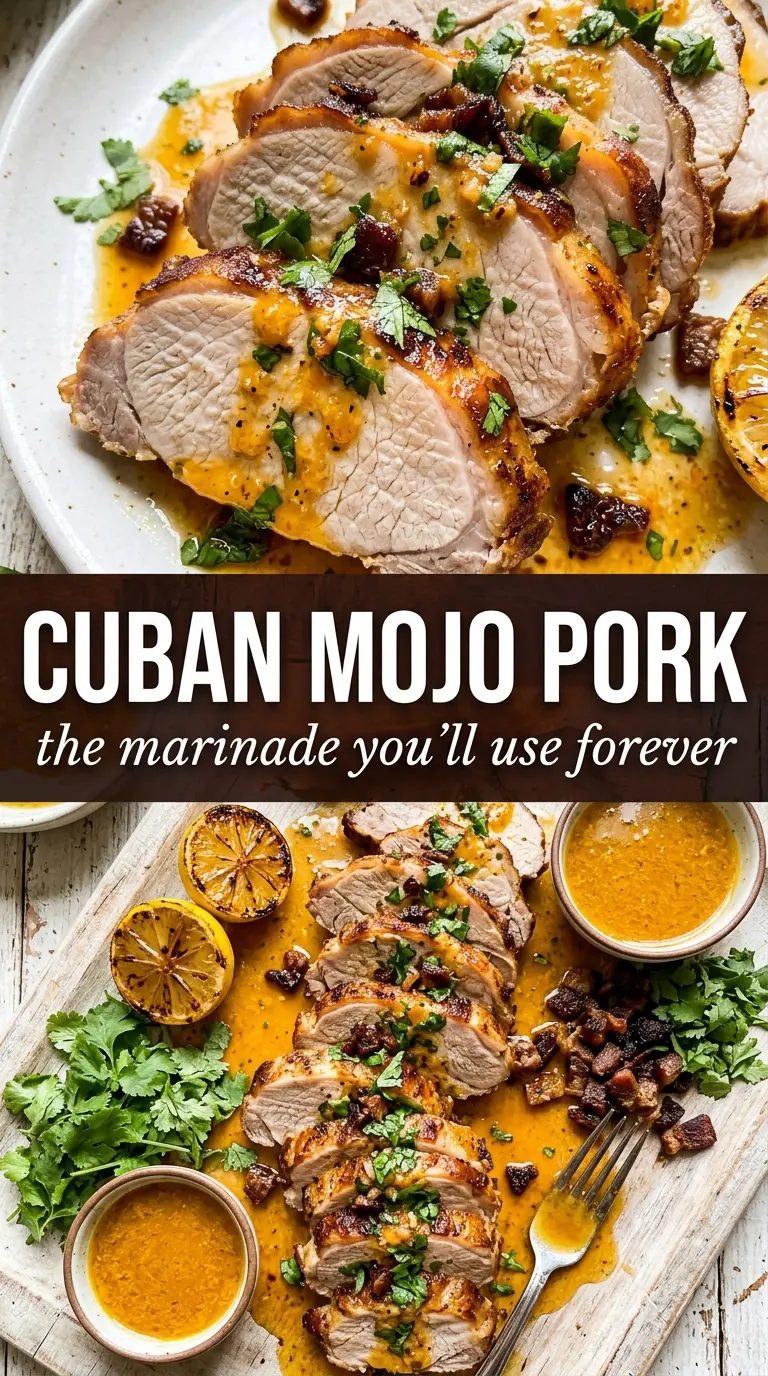
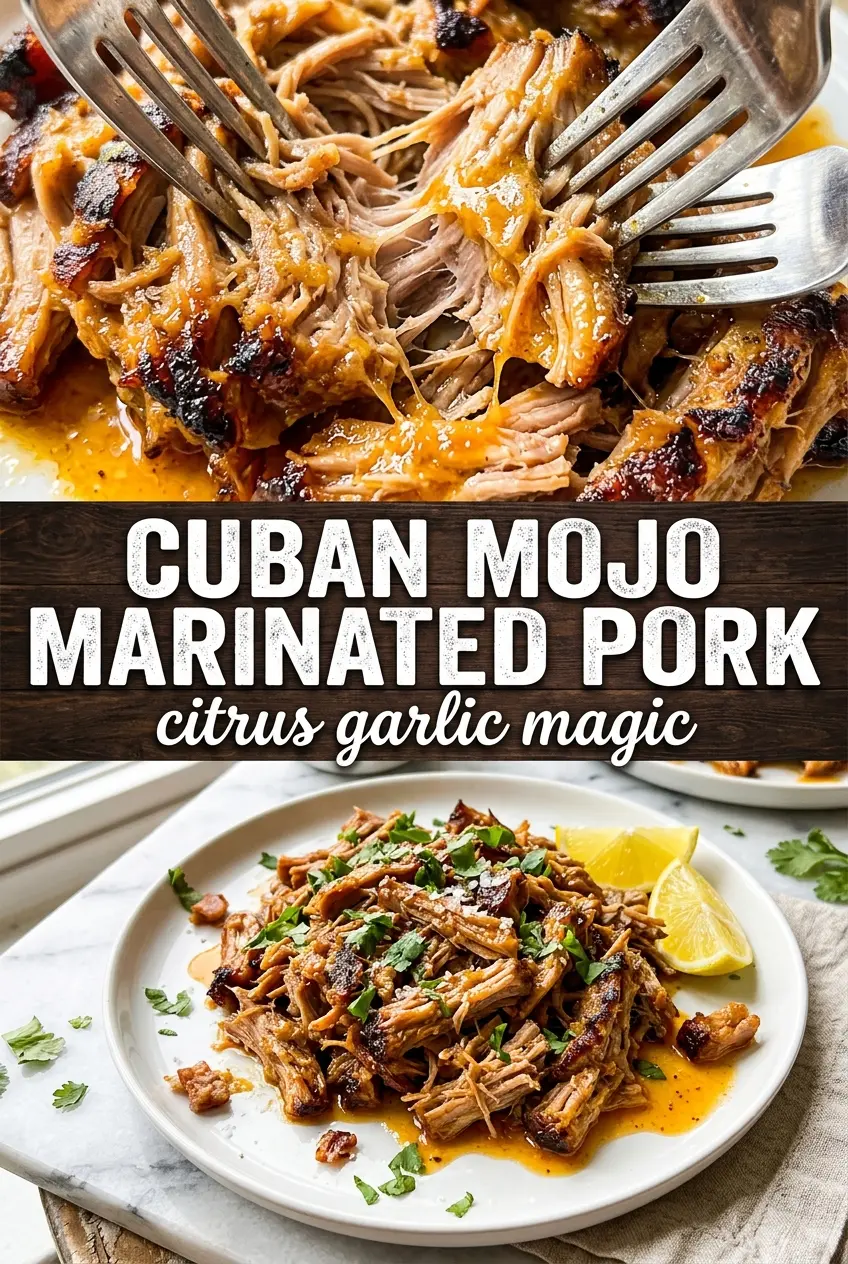
Juicy, pull-apart Cuban mojo marinated pork earns its place at the center of the table because the crust turns deeply caramelized while the inside stays tender and saturated with garlic, citrus, and cumin. The oven does most of the work, but the marinade sets up the whole dish with enough brightness to keep the rich pork shoulder from tasting heavy.
What makes this version work is the balance in the mojo. Fresh orange juice brings sweetness and body, lime keeps it sharp, and plenty of garlic carries all the way through the roast. Scoring the pork gives the marinade more surface to cling to, and the long covered roast breaks down the shoulder before the final uncovered blast turns the outside into something you can actually pull apart with a fork.
Below, you’ll find the small details that matter most: how long to marinate, when to uncover the pan, and what internal temperature gives you that shreddable texture instead of dry slices.
The pork was fork-tender and the citrus-garlic marinade soaked all the way through. I uncovered it at the end like you said and the crust came out beautifully browned without drying out the meat.
Save this Cuban mojo pork for the nights when you want a deeply caramelized roast with bright citrus, garlic, and a shreddable finish.
The Part People Skip: Letting the Mojo Penetrate the Pork Shoulder
The biggest mistake with mojo pork is treating the marinade like a surface sauce. Pork shoulder is thick and stubborn, so the flavor needs time and a little help from the knife. Scoring the fat and meat all over gives the citrus, garlic, and spices more places to get in, and the overnight rest does the work that a quick hour in the fridge never will.
Mojo also needs the right balance of acid and fat. Too much lime without enough orange can make the pork taste sharp instead of rounded, and too little oil leaves the garlic and spices harsh. The olive oil carries the aromatics, while the orange juice softens the edges so the roast tastes bold, not sour.
- Pork shoulder or butt — This cut is the right choice because the connective tissue melts during the long roast, which is what gives you shreddable meat instead of a dry slab. Lean cuts won’t give you the same texture no matter how long you marinate them.
- Fresh orange juice — Bottled juice tastes flat here. Fresh juice gives the marinade its mellow sweetness and keeps the citrus flavor from turning harsh in the oven.
- Fresh lime juice — Lime adds the sharp edge that makes mojo taste alive. If you only have bottled lime juice, use it, but expect a slightly less bright finish.
- Garlic — Don’t skimp. It mellows during roasting and becomes savory rather than biting, which is exactly what you want in a Cuban pork roast.
- Cumin, oregano, and smoked paprika — These seasonings don’t just add flavor; they build the warm, earthy base that helps the citrus make sense. Dried oregano works better than fresh here because it holds up during the long roast.
What Each Ingredient Is Actually Doing in This Recipe
- Primary ingredient (the star) — Quality matters most. Choose the best you can find.
- Cooking medium (oil, butter, or broth) — This carries flavors and prevents dryness.
- Seasonings (salt, pepper, spices, herbs) — Layer flavors so nothing overpowers. Build depth gradually.
- Aromatics (garlic, onion, herbs) — Cook with fat to bloom flavors. Become the foundation.
- Supporting ingredients — Complement the main ingredient without overpowering it.
- Sauce or liquid (if applicable) — Brings flavors together. Balance richness with acid.
- Acid (lemon, vinegar, wine, or other) — Brightens and prevents flat-tasting results.
- Final finish (garnish, glaze, or sauce) — Prevents one-dimensional taste and adds visual appeal.
How to Roast It So the Outside Caramelizes Without Drying Out
Blending the Mojo
Blend the garlic, juices, oil, spices, cilantro, salt, and pepper until the marinade looks mostly smooth and fragrant. You want the garlic broken down enough to coat the pork evenly, not left in big chunks that can burn on the surface. If the mixture tastes aggressively sharp now, don’t worry; the roast softens that edge as it cooks.
Scoring and Marinating
Cut shallow slashes across the pork shoulder in a crosshatch pattern, then tuck it into a zip-top bag or covered dish with the marinade. The cuts help the seasoning reach past the surface, and the bag keeps the pork surrounded instead of leaving one side dry. Four hours is the minimum I’d use, but overnight gives the best flavor all the way through.
The Covered Roast
Set the pork in a roasting pan, pour the marinade over it, and cover the pan tightly with foil before it goes into a 325°F oven. That covered time is where the shoulder turns tender, and if the foil isn’t sealed well you’ll lose the moisture that keeps the meat from tightening up. After about 2 1/2 hours, the pork should already look softer and the fat should be starting to render.
Uncovering for the Crust
Pull the foil off and roast for another 30 to 45 minutes until the outside turns deep golden and the internal temperature reaches 190°F. That final stage is about drying the surface just enough for caramelization without overcooking the interior. If the pan seems dry, spoon a little of the juices over the top once or twice so the sugars in the marinade don’t scorch before the crust sets.
Resting and Shredding
Let the pork rest for 15 minutes before you shred or slice it. Resting keeps the juices from running all over the cutting board the second you cut in, and it gives the meat time to relax so it pulls apart cleanly. Finish with lime wedges and chopped cilantro so each serving gets a last hit of freshness.
How to Adapt Cuban Mojo Pork for a Smaller Roast, a Dairy-Free Table, or Leftovers
Make It with Pork Loin Instead of Shoulder
Pork loin will cook faster and slice neatly, but it won’t shred the way shoulder does. If you use it, start checking early and pull it when it reaches 145°F to 150°F, then rest before slicing. You’ll get a leaner result with less richness and less built-in forgiveness.
Go Dairy-Free Without Changing a Thing
This recipe is naturally dairy-free, which is one reason it’s such an easy crowd dish. Keep the marinade as written and lean on the cilantro and lime at the end for freshness. The flavor has enough richness from the pork and olive oil that nothing gets missed.
Use the Leftovers for Sandwiches or Bowls
Leftover mojo pork tastes even better after a night in the fridge because the citrus and garlic settle into the meat. Reheat it gently with a spoonful of the pan juices so it stays moist, then pile it into sandwiches, rice bowls, or tacos. High heat is the fastest way to turn those leftovers stringy and dry.
Storage and Reheating
- Refrigerator: Store in an airtight container for up to 4 days. The flavor deepens, and the pork stays moist if you keep a little of the cooking juices with it.
- Freezer: Freezes well for up to 3 months. Shred first, cool completely, and freeze with a bit of juice so the meat doesn’t dry out when thawed.
- Reheating: Reheat covered in a 300°F oven or gently on the stovetop with a splash of the pan juices. Don’t blast it in the microwave on high or the leaner edges will turn tough before the center is warm.
Questions I Get Asked About This Recipe
Cuban Mojo Marinated Pork
Ingredients
Equipment
Method
- Blend garlic, orange juice, lime juice, olive oil, cumin, dried oregano, smoked paprika, salt, and black pepper until smooth, then stir in chopped cilantro for an even, fragrant mojo base.
- Preheat oven to 325°F and set out a roasting pan.
- Score pork shoulder all over and place it in a zip-lock bag, then pour marinade over and seal.
- Refrigerate 4–8 hours or overnight so the pork absorbs the garlic-citrus mojo.
- Place pork in a roasting pan, pour marinade over, cover tightly with foil, and roast for 2.5 hours at 325°F.
- Uncover and roast 30–45 minutes more at 325°F until the outside is golden and caramelized, and the internal temperature reaches 190°F.
- Rest the pork 15 minutes before shredding or slicing so the juices settle.
- Serve with lime wedges and cilantro, spooning over any pan juices for extra mojo flavor.