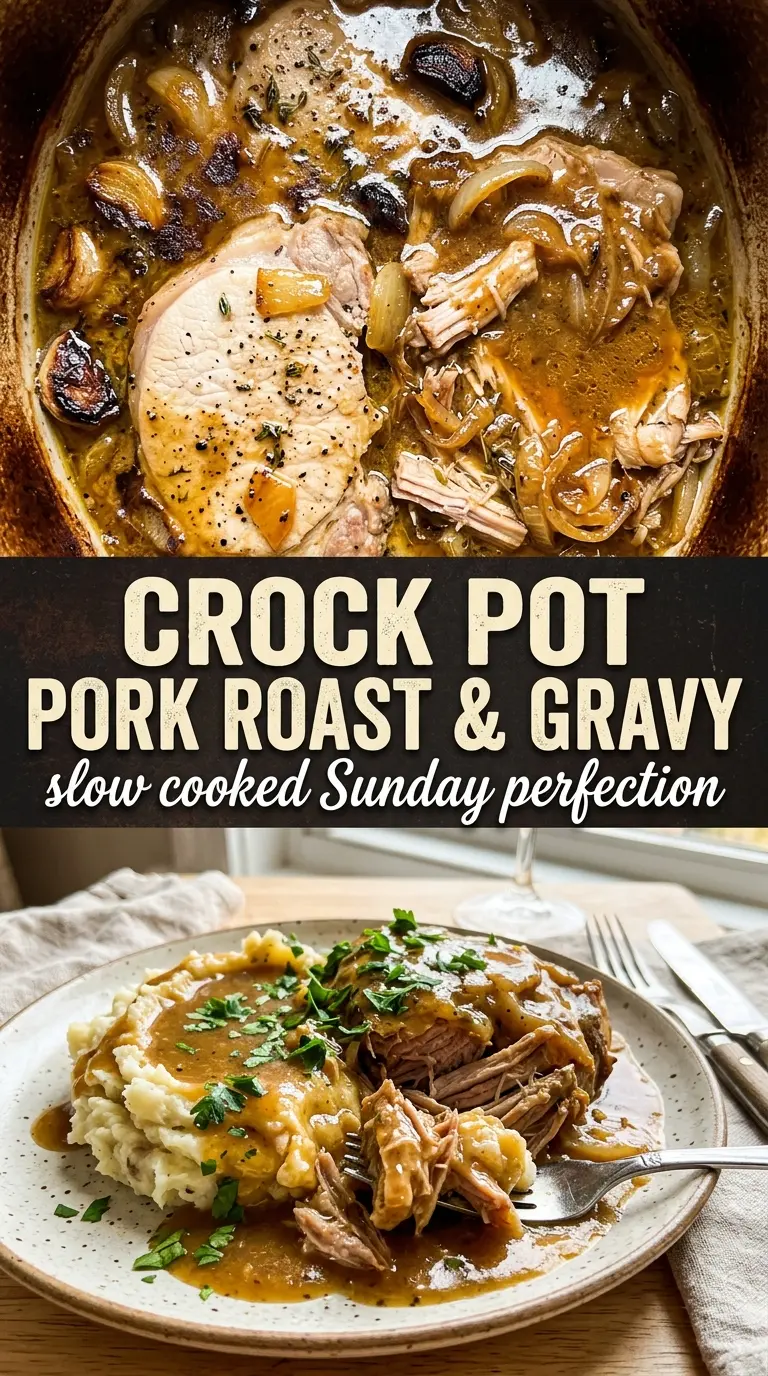
Fork-tender pork roast with rich, dark gravy is the kind of slow cooker dinner that earns a permanent spot in the rotation. The pork turns soft enough to slice or shred with almost no resistance, and the gravy picks up all the best savory notes from the onion soup mix, Worcestershire, and the browned bits left in the skillet. It tastes like it took all day because it did, but the active work is light enough for a busy morning.
What makes this version work is the sear. Browning the roast first gives the finished gravy a deeper, meatier base than a straight dump-and-go method ever will. The cream of mushroom soup adds body, the beef broth loosens it into an actual gravy, and the onion layer underneath keeps the pork from sitting flat in the liquid while it cooks.
Below, I’ve included the little details that keep the gravy smooth and the pork from drying out, plus the easiest way to thicken it if you want a spoon-coating sauce at the end.
The pork got so tender it shredded with a spoon, and the gravy was smooth and rich after I whisked in the cornstarch at the end. My husband kept going back for more of the sauce over mashed potatoes.
Save this crock pot pork roast and gravy for the kind of night when you want fork-tender meat and a slow-simmered gravy without hovering over the stove.
The Sear Is What Keeps This Pork Roast from Tasting Flat
A lot of slow cooker pork roasts end up tasting one-note because they go straight into the pot without any browning. That’s the mistake to avoid here. The quick sear builds a deeper savory base and gives the gravy something to cling to once the roast cooks down.
The other thing that matters is how the liquid is layered. The onion and garlic go underneath the pork, then the gravy mixture goes over the top. That keeps the roast lifted a little and prevents the bottom from overcooking in a puddle of liquid while the top stays pale and bland.
- Pork loin roast or shoulder — Pork shoulder gives you the most forgiving, shreddable texture. Pork loin stays a little leaner and slices more cleanly, but it can dry out if you push the cook time too far.
- Cream of mushroom soup — This is the shortcut that gives the gravy body. There isn’t a perfect one-ingredient substitute if you want the same silky texture, though cream of chicken works in a pinch and tastes a little lighter.
- Worcestershire sauce — Don’t skip it. It adds the salty, savory depth that keeps the gravy from tasting like warmed soup. If you need a substitute, use soy sauce plus a tiny splash of vinegar.
- Onion soup mix — This does a lot of heavy lifting, so low-sodium homemade substitutes can work, but the flavor won’t be as concentrated. If you use a homemade blend, add extra onion powder and a little beef bouillon for depth.
- Cornstarch slurry — This is optional, but it’s the cleanest way to thicken the gravy at the end. Stir it in only after the pork comes out, while the slow cooker is on High, or the gravy can turn gluey instead of glossy.
What Each Ingredient Is Actually Doing in This Recipe
- Primary ingredient (the star) — Quality matters most. Choose the best you can find.
- Cooking medium (oil, butter, or broth) — This carries flavors and prevents dryness.
- Seasonings (salt, pepper, spices, herbs) — Layer flavors so nothing overpowers. Build depth gradually.
- Aromatics (garlic, onion, herbs) — Cook with fat to bloom flavors. Become the foundation.
- Supporting ingredients — Complement the main ingredient without overpowering it.
- Sauce or liquid (if applicable) — Brings flavors together. Balance richness with acid.
- Acid (lemon, vinegar, wine, or other) — Brightens and prevents flat-tasting results.
- Final finish (garnish, glaze, or sauce) — Prevents one-dimensional taste and adds visual appeal.
The Part of the Slow Cooker Method That Actually Matters
Seasoning and Browning the Roast
Pat the pork dry first, then season it generously on all sides. When it hits the hot oil, you want a deep golden crust, not a gray steam job, so give it time before turning. If the pan feels crowded or the heat is too low, the meat will release liquid and never brown properly. That crust is the start of the gravy’s flavor.
Building the Slow Cooker Base
Scatter the diced onion and garlic across the bottom of the slow cooker. They act like a rack and a flavor layer at the same time. Whisk the soup, broth, Worcestershire, and onion soup mix until smooth before pouring it in; if you leave lumps in the soup mix, they can stay grainy all the way through cooking.
Cooking Until the Pork Relaxes
Set the slow cooker on Low for 8 to 9 hours if you want the most tender result. The pork is ready when it gives easily to a fork and starts pulling apart at the edges. If you use High, watch the clock closely because leaner loin roast can go from tender to dry faster than people expect. The goal is soft fibers, not boiled meat.
Finishing the Gravy Without Breaking It
Lift the pork out first, then whisk in the cornstarch slurry if you want a thicker gravy. Keep the cooker on High and stir until the sauce turns glossy and lightly coats a spoon. If it still looks thin, give it a few more minutes rather than dumping in more starch all at once, because too much cornstarch turns the gravy pasty instead of rich.
How to Adjust This Pork Roast When You Need a Different Finish
Use pork shoulder for shreddable comfort food
Pork shoulder gives you the softest, most fall-apart texture and stands up well to the long cook time. It’s the best choice if you want the meat to soak up the gravy and pile it over mashed potatoes or rice. The tradeoff is that it’s richer and a little less neat to slice.
Swap in a gluten-free gravy base
Use a gluten-free cream soup and a gluten-free onion soup mix, then keep the rest of the method the same. The texture stays close to the original, but you’ll want to check the seasoning at the end because some gluten-free mixes taste a little less salty.
Make it dairy-free without losing the gravy texture
Choose a dairy-free condensed cream soup and keep the broth, Worcestershire, and onion soup mix as written. The result is still creamy and spoonable, but the flavor leans a little more savory than rich. If the sauce needs more body, thicken it at the end with the cornstarch slurry rather than trying to cook it down too far.
Storage and Reheating
- Refrigerator: Store the pork and gravy together for up to 4 days. The gravy thickens as it chills, which is normal.
- Freezer: It freezes well for up to 2 months. Cool it fully, pack the pork with plenty of gravy, and thaw overnight before reheating so the meat doesn’t dry out.
- Reheating: Warm it gently on the stove or in the microwave with a splash of broth. The common mistake is blasting it until the gravy breaks and the pork tightens up.
Answers to the Questions Worth Asking
Crock Pot Pork Roast and Gravy
Ingredients
Equipment
Method
- Generously season the pork loin roast or shoulder with salt, pepper, garlic powder, and onion powder all over. Heat 2 tablespoons oil in a skillet over medium-high heat until shimmering, then place the roast in the pan.
- Sear the pork on all sides until golden, about 3–5 minutes per side depending on thickness. Turn with tongs so the exterior browns evenly and develops color before slow cooking.
- Add the diced onion and minced garlic to the bottom of the slow cooker. Spread them into an even layer so they don’t burn and flavor the pork as it cooks.
- Mix the cream of mushroom soup, beef broth, Worcestershire sauce, and onion soup mix until smooth. Pour the mixture over the pork so it’s mostly covered.
- Cook on Low for 8–9 hours, covered, until the pork is tender and pulls apart easily. If using High, cook for 4–5 hours, covered, until the same fork-tender texture is reached.
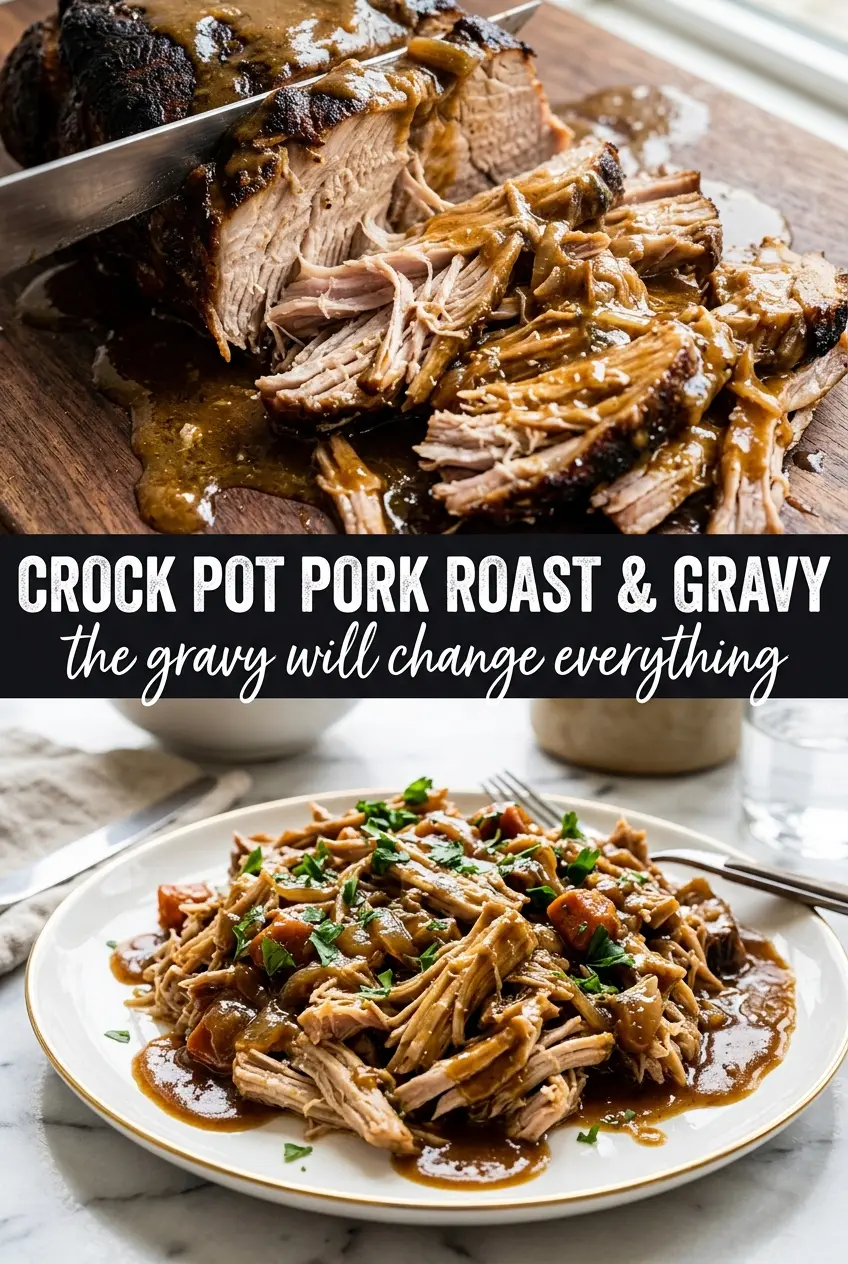
- Remove the pork from the slow cooker and place it on a cutting board to slice or shred. Turn the slow cooker to High so the gravy bubbles lightly while you thicken it.
- Stir the cornstarch slurry (cornstarch mixed with water) into the hot gravy and cook on High until smooth and thickened. Keep stirring until there are no lumps and the gravy coats a spoon.
- Slice or shred the pork and serve it smothered in the thick gravy. Spoon the gravy over the top so the pork stays juicy and dark, glossy, and well-seasoned.