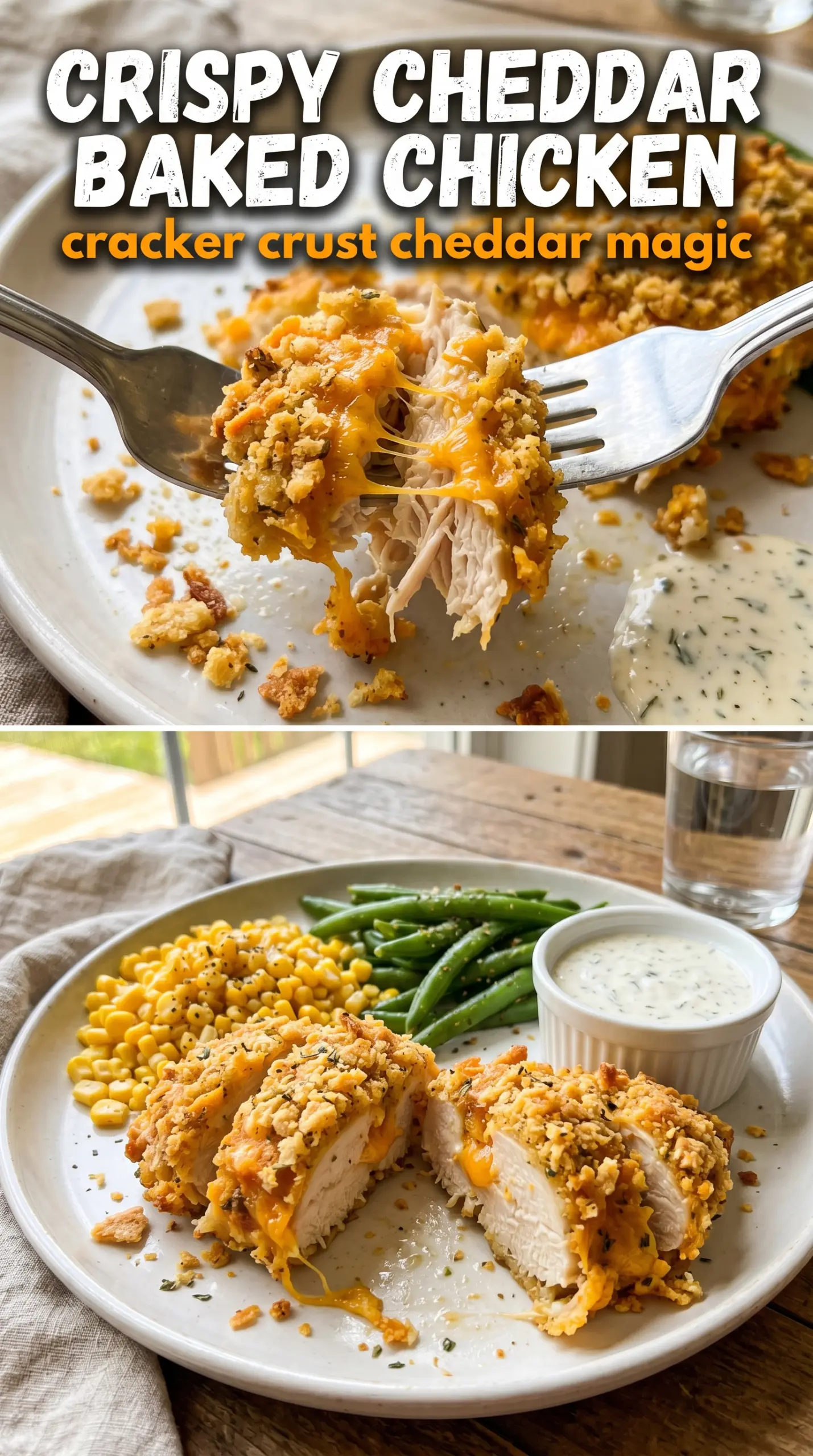
Baked crispy cheddar chicken earns its place on the table the second you cut into it and hear that crust crackle. The outside turns deeply golden and shatters in cheesy shards, while the chicken underneath stays juicy and tender instead of drying out under a thick coating. The cream sauce on the side brings everything together without softening the crust too soon, so every bite still has that crunchy, salty edge.
The trick is the sour cream layer. It acts like both glue and moisture insurance, helping the cracker-and-cheddar coating cling tightly while keeping the chicken from baking into something chalky. Finely shredded sharp cheddar matters here because it melts into the crust and browns hard; coarsely shredded cheese won’t settle and crisp the same way. Pressing the topping on firmly is what gives you that dramatic finish instead of a patchy one.
Below, I’m walking through the exact texture cues that tell you when the crust is ready, plus a couple of swaps that still keep the chicken crisp. If you’ve ever had a baked breaded chicken go soggy before dinner hit the table, this method fixes the two places that usually go wrong.
The crust browned up beautifully and stayed crunchy even after I added the sauce. My husband kept going back for “just one more bite” because the cheddar edge had that deep, toasted flavor instead of tasting greasy.
Crispy Cheddar Chicken with that golden cracker crust is the kind of dinner you’ll want to pin for busy nights when you need a crunchy baked chicken that still feels special.
The Step That Keeps the Crust Crispy Instead of Soggy
The biggest mistake with baked cheddar chicken is treating the topping like a loose blanket. It needs pressure. When you press the shredded cheddar and cracker mixture onto the sour cream-coated chicken, the dairy on the outside acts like a tacky base and the crumbs start to fuse as soon as the heat hits them. That’s what gives you the thick, shattery crust instead of a flaky layer that slides off the first time you move the chicken.
Another thing that matters here is spacing. If the breasts are crowded in the pan, steam gets trapped and the bottom edge softens before the top has time to brown. A 9×13 dish gives the crust room to dry and crisp. The chicken is done when the coating is deeply golden and the thickest part hits 165°F; if you wait for the cheese to look fully “melted,” you’ve already gone too far.
What Each Ingredient Is Actually Doing in This Dish
- Chicken breasts — Boneless, skinless breasts give you the cleanest slice and the biggest crunchy surface area. If one side is much thicker than the other, pound it lightly so it bakes evenly and the crust doesn’t burn before the center is done.
- Sour cream — This is doing double duty as seasoning base and adhesive. Plain Greek yogurt works in a pinch, but it brings a sharper tang and can bake up a touch less plush.
- Sharp cheddar — Sharp cheddar browns better than mild cheddar because it brings more flavor and less moisture. Finely shredding it matters; big shreds melt into strings instead of building that dense crust.
- Ritz crackers — They add butteriness and a crisp, tender crumb that bakes up better than plain breadcrumbs here. If you need a swap, crushed butter crackers or panko mixed with melted butter can work, but the texture will be a little drier and less rich.
- Cream of chicken soup — This makes the sauce smooth and savory without needing a long simmer. Whisk it with the sour cream off the heat or over very low heat; hard boiling can make it grainy.
- Smoked paprika — This is the small detail that keeps the crust from tasting one-note. It gives the cheese topping a warmer, deeper finish without making the chicken taste smoky in an obvious way.
Building the Crust and Sauce in the Right Order
Coating the Chicken First
Whisk the sour cream with the garlic powder, onion powder, salt, and pepper until it looks smooth and loose, then coat each chicken breast all over. You want a complete layer, not globs, because thick patches bake into wet spots under the crust. If the chicken looks dry in places, the topping won’t stick there and those areas turn bare in the oven.
Mixing the Cheddar Crumble
Stir the shredded cheddar, crushed Ritz crackers, and smoked paprika together until the cheese is scattered evenly through the crumbs. Press the mixture onto the chicken with your hand, then press again. That second press matters because the cheese needs to physically grab onto the sour cream layer before it starts melting.
Baking Until the Top Goes Deep Gold
Bake at 375°F until the crust is deeply golden and the chicken reaches 165°F in the thickest part, usually 28 to 32 minutes. If the top is browning faster than the center cooks, tent the dish loosely with foil for the last few minutes. Don’t pull it early just because the crust looks set; undercooked chicken is the one problem this recipe doesn’t forgive.
Making the Sauce Without Breaking It
Warm the cream of chicken soup with sour cream in a small saucepan until smooth and steamy, not boiling. The sauce should be pourable and glossy. If it turns thick or grainy, the heat was too high; drop the burner and whisk in a spoonful of water or milk to bring it back before serving.
Gluten-Free Crust Swap
Use crushed gluten-free butter crackers or finely crushed gluten-free cornflakes in place of the Ritz crackers. Cornflakes give the crunchiest result, while gluten-free crackers land closer to the original buttery, salted flavor.
Dairy-Free Version
Swap the sour cream for a plain dairy-free alternative and use shredded dairy-free cheddar-style shreds that melt well. The crust won’t brown quite as deeply, but it still gives you a crisp shell if you press it on firmly and bake until the coating feels set.
Using Chicken Thighs Instead
Boneless thighs work well if you want a juicier, richer result, but they take a few minutes longer and the crust won’t sit as flat. Arrange them in a single layer and check temperature in the thickest part so the coating doesn’t overbrown while the meat finishes.
Storage and Reheating
- Refrigerator: Store leftovers for up to 3 days. The crust softens in the fridge, but the flavor holds up well.
- Freezer: Freeze the baked chicken without the sauce for the best texture. Wrap tightly and freeze up to 2 months, then thaw in the refrigerator before reheating.
- Reheating: Reheat on a wire rack set over a baking sheet at 350°F until hot through. The oven brings back some crispness; the microwave turns the crust soggy fast, especially if the sauce is already on the chicken.
Questions I Get Asked About This Recipe
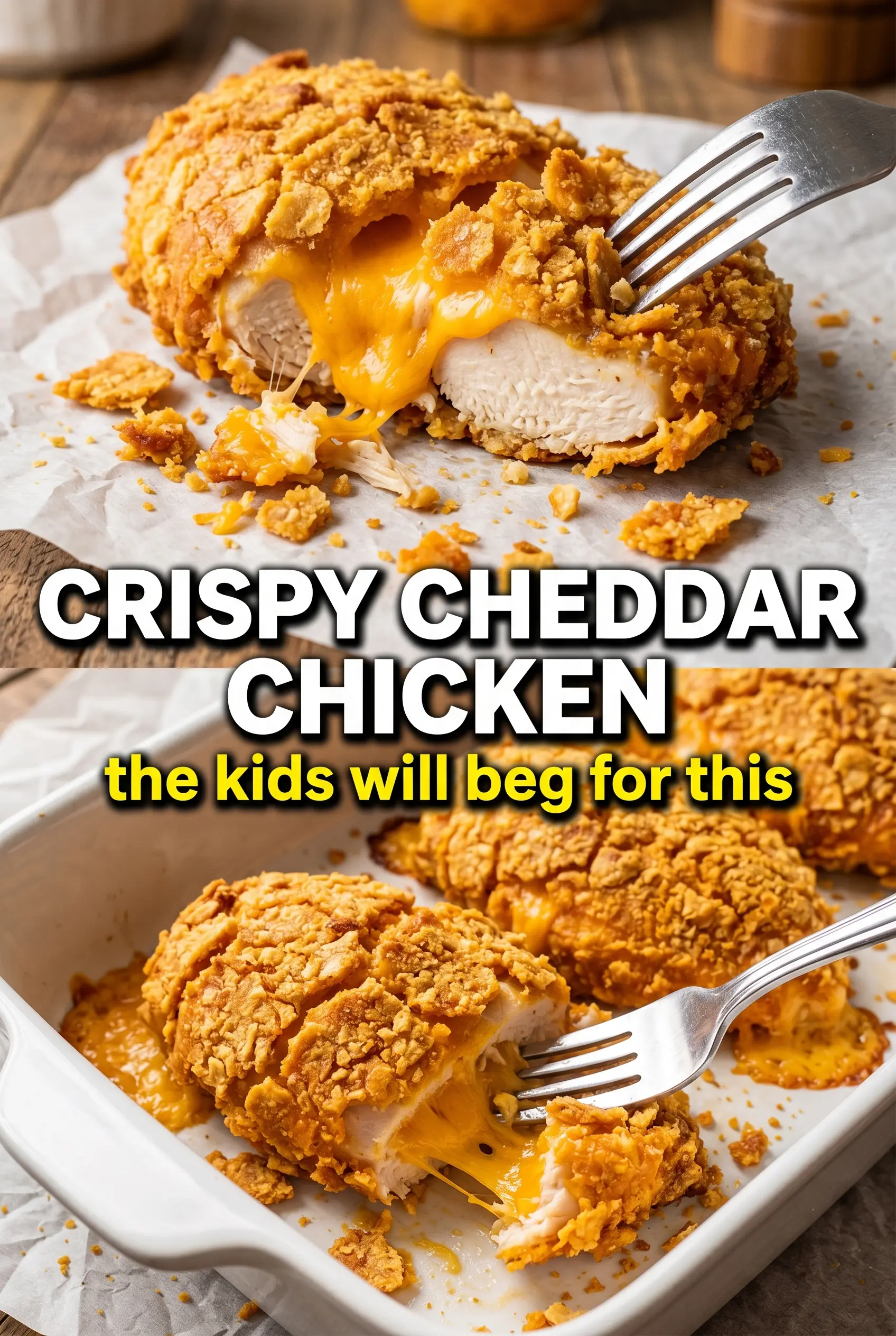
Crispy Cheddar Chicken
Ingredients
Equipment
Method
- Preheat oven to 375°F and grease a 9x13 baking dish.
- Whisk together sour cream, garlic powder, onion powder, salt, and pepper until smooth, then coat each chicken breast completely.
- Combine shredded cheddar, crushed Ritz crackers, and smoked paprika, then stir to evenly distribute the spices.
- Press the cheddar-cracker mixture firmly over the sour cream-coated chicken on all sides so it adheres.
- Place chicken in the prepared dish and bake for 28-32 minutes until the crust is golden and internal temperature reaches 165°F, with a visibly set, browned topping.
- Whisk cream of chicken soup with sour cream, warm in a small saucepan over low heat until pourable, then drizzle around the chicken.
- Garnish with fresh parsley for a fresh green finish.