Golden-seared chicken breasts tucked into a silky sun-dried tomato and spinach cream sauce are the kind of skillet dinner that earns repeat requests fast. The sauce clings to the chicken instead of pooling thinly on the plate, and the spinach gives it enough freshness to keep every bite balanced. Fresh basil on top finishes the whole thing with a bright, herbal note that keeps the richness in check.
What makes this version work is the order of the pan work. The chicken browns first, then the garlic and tomatoes go into the same skillet so every bit of flavor stays in the sauce. The broth loosens the browned bits, the cream comes in low and slow, and the Parmesan thickens without turning grainy. If you’ve had cream sauces split or turn flat, it’s usually because the heat was too high or the cheese went in too fast.
Below you’ll find the small details that matter: how to get a deep sear without drying out the chicken, why sun-dried tomatoes in oil taste better here than the dry ones, and the few swaps that still keep the sauce velvety.
The sauce thickened up beautifully and coated the chicken instead of running all over the plate. I followed the timing exactly and the spinach stayed bright, not mushy.
Save this Creamy Tuscan Chicken for the nights when you want a skillet dinner with a glossy Parmesan sauce and zero fuss.
The Reason the Sauce Stays Silky Instead of Breaking
Most cream sauces for chicken go wrong at the same two points: the pan is too hot when the dairy goes in, or the sauce gets rushed before the Parmesan has time to melt. This recipe avoids both problems by using the chicken drippings, a splash of broth, and a gentle simmer to build body before the cream ever gets a chance to misbehave. That gives you a sauce that looks glossy and tastes rich without turning greasy.
The sear matters too. You want real browning on the chicken breasts, not just pale cooked meat, because those brown bits are what give the sauce its backbone. Once the cream is in, lower the heat and let it move from thin to spoon-coating slowly. If it bubbles hard, pull it back; that’s when cream sauces get grainy or separate.
What Each Ingredient Is Actually Doing in the Skillet
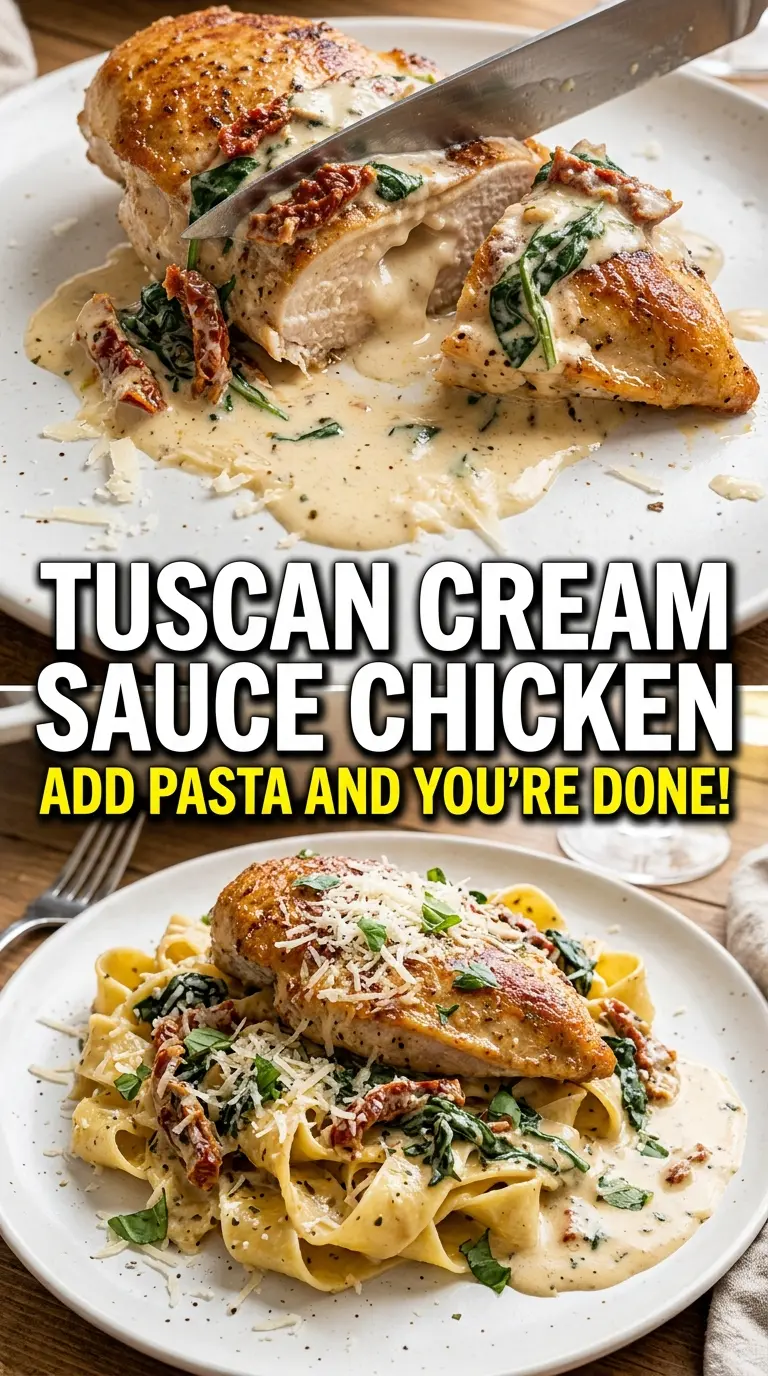
- Chicken breasts — Boneless, skinless breasts keep this quick and lean, but they need even thickness so they cook through before the outside dries out. If one end is much thicker, pound it lightly so the whole piece sears and finishes at the same pace.
- Sun-dried tomatoes in oil — These bring concentrated sweetness and a little tang, plus the oil they’re packed in carries flavor into the pan. Dry sun-dried tomatoes can work if that’s all you have, but they need to be rehydrated first or they’ll stay chewy instead of melting into the sauce.
- Heavy cream — This is what gives the sauce its body and that velvety finish. Half-and-half will make a thinner sauce and is more likely to break if you boil it, so use heavy cream if you want the same rich result.
- Parmesan — Grated Parmesan thickens the sauce and adds the salty, nutty edge that keeps the cream from tasting flat. Freshly grated melts cleaner than the bagged kind, which can sometimes make the sauce a little sandy.
- Fresh baby spinach — Spinach softens into the sauce in a minute or two and adds color and a gentle vegetal note. Baby spinach works best because the leaves are tender; mature spinach will need more time and can turn a little tough.
- Garlic and Italian seasoning — Garlic builds the base, and the Italian seasoning ties the sauce to the Tuscan-style profile without making it taste like plain cream. If your seasoning blend is salt-heavy, adjust the salt on the chicken a little more carefully at the start.
The 25 Minutes That Matter Most
Getting the Sear First
Season the chicken generously before it hits the pan, then cook it in hot olive oil until the outside is deep golden and the inside reaches 165°F. Don’t crowd the skillet; if the chicken sits too close together, it steams and you lose the crust that gives the sauce its best flavor. Once it’s done, move it to a plate and leave the browned bits in the pan.
Building the Base in the Same Skillet
Add the garlic to the same pan and cook it for about 30 seconds, just until it smells fragrant. Then stir in the sun-dried tomatoes and broth and scrape the bottom well, because that’s where the flavor lives. If the garlic browns hard, it turns bitter fast, so keep it moving and don’t let the pan run too hot at this stage.
Finishing the Cream Sauce
Stir in the cream, Parmesan, Italian seasoning, and red pepper flakes, then let the sauce simmer gently until it thickens enough to coat a spoon. Keep the heat low once the cream goes in. High heat is what makes dairy separate, while a slow simmer gives the Parmesan time to melt smoothly into the sauce.
Wilt, Return, and Serve
Add the spinach and stir just until it collapses into the sauce. Return the chicken to the skillet and spoon the sauce over the top so it warms through without overcooking. Finish with basil right before serving; if you add it too early, the herbs lose that fresh pop and disappear into the sauce.
How to Adapt This Skillet for Different Nights
Make It Dairy-Free Without Losing the Creamy Finish
Use full-fat coconut cream instead of heavy cream and swap the Parmesan for a dairy-free Parmesan-style alternative. The sauce will be a little sweeter and less sharp, but it still turns silky if you keep the heat low and don’t boil it hard.
Make It Gluten-Free Without Changing the Method
This recipe is naturally gluten-free as written, as long as your chicken broth and Parmesan are certified gluten-free. The texture and timing stay the same, so this is one of the easiest versions to serve to a mixed crowd.
Swap in Chicken Thighs for a Juicier Result
Boneless chicken thighs work well here and give you a richer, more forgiving bite. They usually need a few extra minutes in the skillet, but they stay tender even if you overshoot the timing a little.
Make the Sauce a Little Lighter
You can use half-and-half instead of cream, but the sauce won’t thicken as deeply and it needs gentler heat. It’s best for a lighter weeknight version, not for a sauce that has to hold up on the plate for a long time.
Storage and Reheating
- Refrigerator: Store leftovers in an airtight container for up to 3 days. The sauce will thicken as it chills, and the spinach will soften a bit more.
- Freezer: This dish isn’t ideal for freezing because cream sauces can separate after thawing. If you do freeze it, expect a slightly grainier texture when reheated.
- Reheating: Warm it gently on the stovetop over low heat with a splash of broth or cream to loosen the sauce. Don’t blast it in the microwave on high, or the chicken can turn rubbery and the sauce can split.
Answers to the Questions Worth Asking
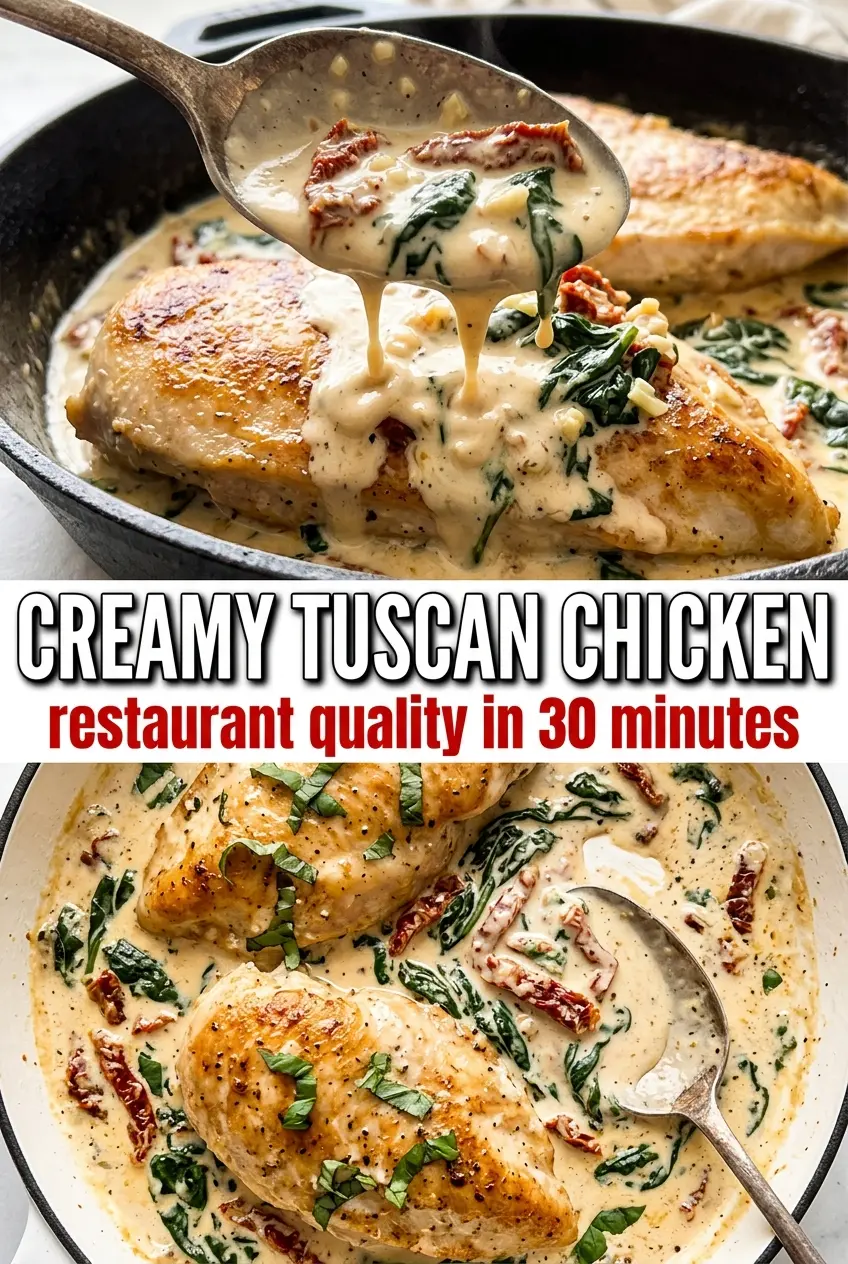
Creamy Tuscan Chicken
Ingredients
Equipment
Method
- Season the chicken breasts generously with salt, pepper, garlic powder, Italian seasoning, and smoked paprika. Heat olive oil in a large skillet over medium-high heat until shimmering, then sear chicken for 5-6 minutes per side until golden and cooked through to 165°F.
- Transfer the seared chicken to a plate and set aside while you build the sauce. Leave the browned bits in the skillet for maximum flavor.
- Cook minced garlic in the same pan for 30 seconds, stirring, until fragrant. Add the sun-dried tomatoes and cook for 1 minute so they soften slightly.
- Pour in the chicken broth and deglaze, scraping up the browned bits with the sauce. Stir in heavy cream, Parmesan cheese, Italian seasoning, and red pepper flakes, then simmer for 4-5 minutes until noticeably thickened and glossy.
- Stir in the fresh baby spinach and cook just until wilted, 30-60 seconds. Keep the sauce at a gentle simmer so it stays thick and coats the spoon.
- Return the chicken breasts to the pan and spoon the sauce over each breast. Garnish with fresh basil and serve hot.