Rigatoni coated in a creamy, savory sun-dried tomato sauce has a way of tasting like more work than it actually takes. The sauce clings to every ridge, the spinach melts into the pasta, and the whole pan comes together with the kind of rich, tangy finish that makes a meatless dinner feel complete. It’s the sort of bowl you keep going back to for one more forkful because the sauce stays balanced: bright from the tomatoes, mellow from the coconut cream, and deepened by garlic and tomato paste.
What makes this version work is the layering. The sun-dried tomato oil carries the garlic and tomato flavor through the pan, the tomato paste cooks long enough to lose its raw edge, and the coconut cream gives you body without dairy. Nutritional yeast doesn’t just stand in for cheese; it adds that savory, slightly nutty backbone that keeps the sauce from tasting flat. A little reserved pasta water at the end is what turns everything glossy instead of heavy.
Below, I’ve included the small details that keep the sauce smooth, plus a few swaps for making this pasta fit what you’ve got on hand.
The sauce turned out silky and coated the rigatoni instead of pooling at the bottom. I was surprised how the sun-dried tomato oil and pasta water brought it all together without needing any dairy.
Pin this creamy sun-dried tomato vegan pasta for a fast dairy-free dinner with a glossy sauce and plenty of garlicky spinach.
The Secret to Keeping Coconut Cream from Turning Heavy
The biggest mistake with coconut-based pasta sauce is treating it like dairy cream and cranking up the heat. Coconut cream can look fine at first and then turn greasy or dull if it gets too aggressive a simmer. Keep the sauce at a gentle bubble after it goes in. That gives the tomato paste time to cook through and the nutritional yeast time to dissolve into the sauce instead of staying grainy.
The other thing that matters here is pasta water. It’s not just there to loosen the sauce; the starch helps bind the oil, cream, and tomato together so the sauce coats the pasta instead of sliding off. If the pan starts looking tight before the spinach wilts, add the water a splash at a time. You want a sauce that moves slowly across the spoon, not one that’s thick like paste.
What Each Ingredient Is Actually Doing in This Pasta
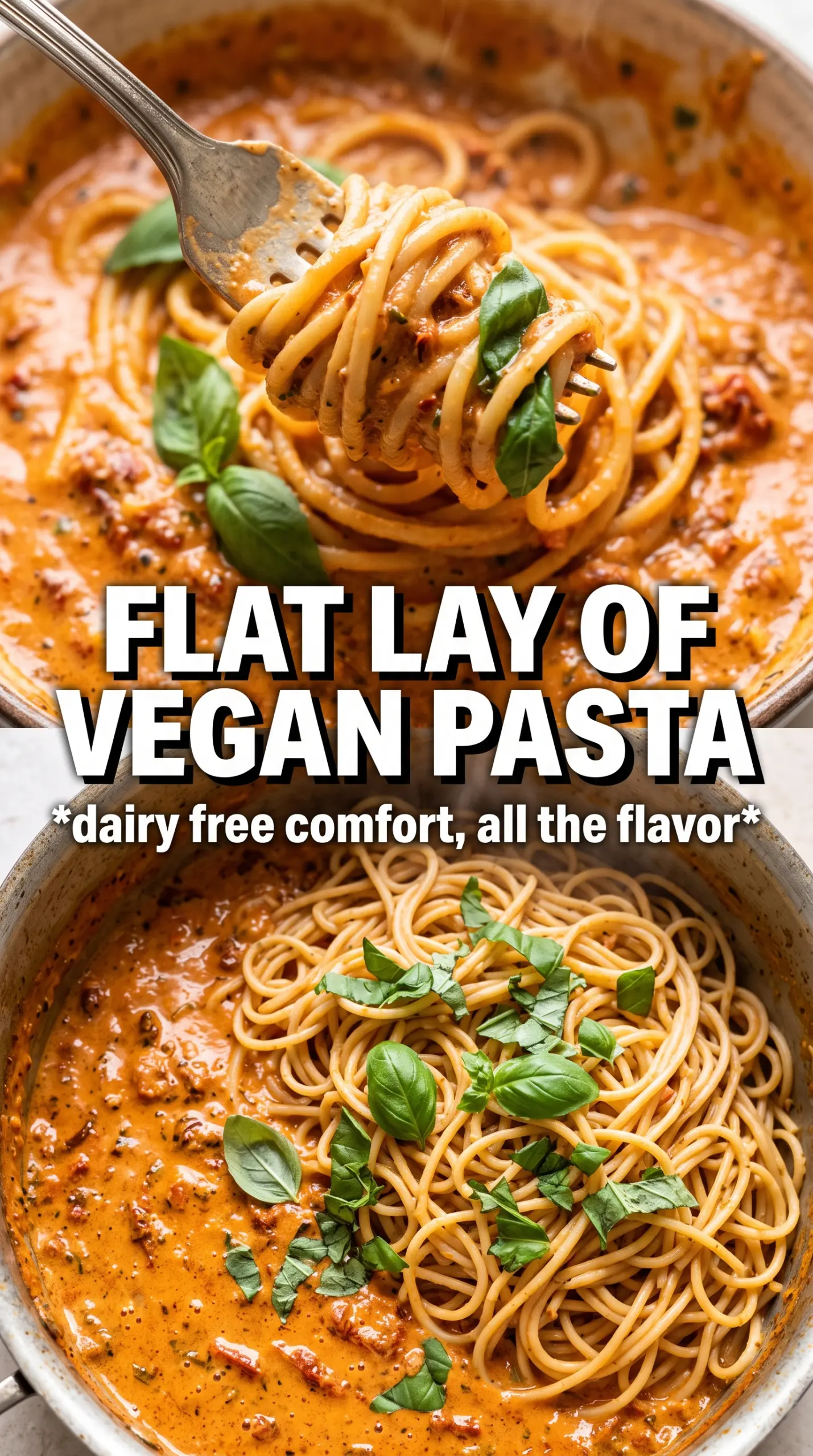
- Sun-dried tomatoes in oil — These carry concentrated tomato flavor and a little sweetness, and the oil they’re packed in is part of the recipe. That oil flavors the garlic from the start, which is why the sauce tastes deeper than if you used plain olive oil. If yours are very dry, chop them small so they soften faster in the pan.
- Full-fat coconut cream — This is what gives the sauce its body and gloss. Light coconut milk won’t give you the same thickness, and it can make the sauce feel thin or split easier once the pasta goes in. If you use coconut milk anyway, reduce the pasta water and expect a looser finish.
- Nutritional yeast — This brings the savory, cheesy note that keeps the sauce from tasting like coconut-tomato soup. It dissolves best into the warm cream before the pasta gets added, which helps avoid clumps. For the strongest flavor, use the full amount and finish with a little extra on top.
- Tomato paste — A minute in the hot oil is enough to take away the raw edge and deepen the whole sauce. Skipping that step leaves the pasta tasting flatter and a little sharp. Cook it until it darkens slightly and starts to stick to the pan before you add the cream.
- Rigatoni or penne — You want a shape with ridges or a hollow center so the sauce has somewhere to catch. Smooth pasta works, but it won’t hold the sauce as well. Rigatoni gives the best bite here because the thick sauce gets into the tubes.
Building the Sauce Before the Pasta Goes In
Waking up the garlic and tomatoes
Start by warming the sun-dried tomato oil in a large skillet, then add the garlic and chopped tomatoes. You’re looking for the garlic to smell fragrant and the tomatoes to soften at the edges, not for either one to brown. If the heat is too high, the garlic gets bitter fast, and that bitterness carries through the whole dish. Two minutes is usually enough.
Cooking out the tomato paste
Stir in the tomato paste and let it sit in the hot oil long enough to darken a shade and lose its raw smell. This step is small, but it makes the sauce taste round instead of sharp. If the paste starts to scorch, the pan is too hot, so pull it back for a few seconds and keep stirring. A well-cooked paste should smell sweet and concentrated.
Finishing with cream, seasoning, and pasta water
Add the coconut cream, Italian seasoning, red pepper flakes, and nutritional yeast, then keep the sauce at a steady simmer for about five minutes. Once the pasta goes in, add reserved pasta water a splash at a time until the sauce clings in a silky layer. Toss in the spinach last so it just wilts and stays green. If it turns dark and soggy, it stayed in the pan too long.
Make It Spicier or Keep It Milder
The red pepper flakes give this pasta a gentle back-of-the-throat warmth. For a hotter version, double them and finish with black pepper; for a milder bowl, cut them in half and lean on the basil for freshness instead. The sauce stays balanced either way because the coconut cream softens the heat.
Gluten-Free Version
Use your favorite gluten-free rigatoni or penne and cook it just shy of fully tender so it can finish in the sauce. Gluten-free pasta tends to drink up liquid fast, so keep a little extra pasta water nearby and toss gently. The sauce works well with it because the coconut cream keeps the texture smooth instead of sticky.
Swap the Coconut Cream if You Need a Different Base
Cashew cream gives a more neutral, slightly richer finish if you don’t want any coconut flavor. Blend soaked cashews with water until smooth, then use it the same way as the coconut cream. The sauce will taste a little less sweet and a little more like a classic cream sauce.
Make It Heartier with Extra Vegetables
Add sautéed mushrooms, zucchini, or roasted broccoli if you want a bigger pan of pasta. Just cook watery vegetables before they go into the sauce so they don’t thin it out. Mushrooms are the best match here because they soak up the tomato-garlic base and add more savory depth.
Storage and Reheating
- Refrigerator: Store in an airtight container for up to 4 days. The sauce will thicken as it chills, and the pasta will absorb more of it.
- Freezer: It freezes better than many cream sauces, though the texture softens a bit after thawing. Freeze in portions for up to 2 months and thaw overnight in the fridge.
- Reheating: Warm it gently on the stove with a splash of water or unsweetened plant milk. High heat is the mistake here; it can make the sauce separate and the pasta turn dry before the center is hot.
Questions I Get Asked About This Recipe
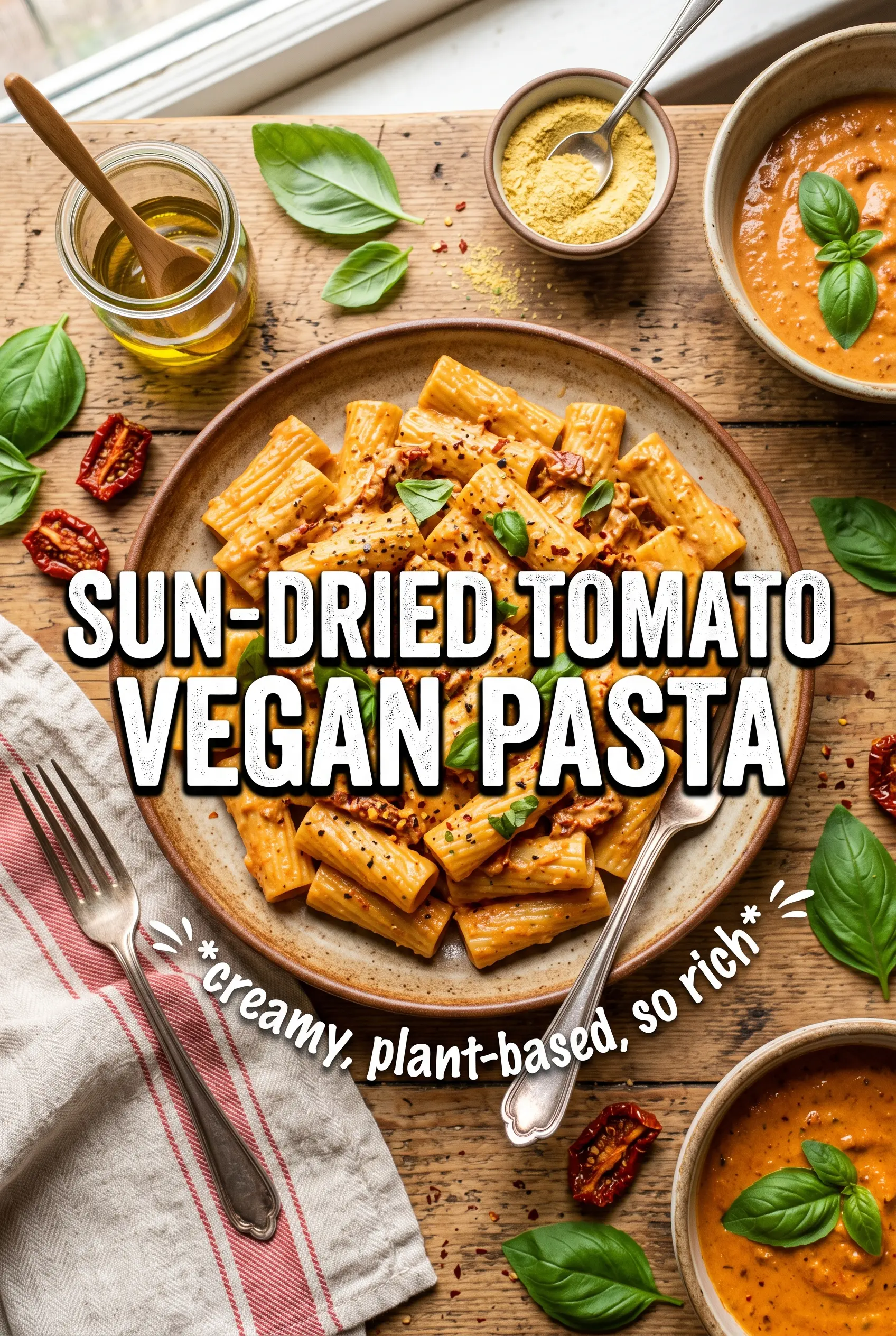
Sun-Dried Tomato Vegan Pasta
Ingredients
Equipment
Method
- Bring a large pot of water to a boil and cook rigatoni or penne until al dente. Reserve 1 cup of pasta water before draining.
- In a Dutch oven, heat sun-dried tomato oil over medium heat. Sauté garlic and chopped sun-dried tomatoes for 2 minutes until fragrant and slightly softened.
- Stir in tomato paste and cook for 1 minute to deepen flavor. Keep stirring so it doesn’t scorch.
- Add coconut cream, Italian seasoning, red pepper flakes, and nutritional yeast to the Dutch oven. Simmer for 5 minutes until the sauce looks creamy and cohesive.
- Add the drained pasta to the sauce and pour in reserved pasta water as needed. Toss until the sauce clings to the noodles.
- Add baby spinach and toss for 1 to 2 minutes until wilted. Keep tossing just until tender.
- Season with salt and pepper to taste. Top with fresh basil and extra nutritional yeast before serving.