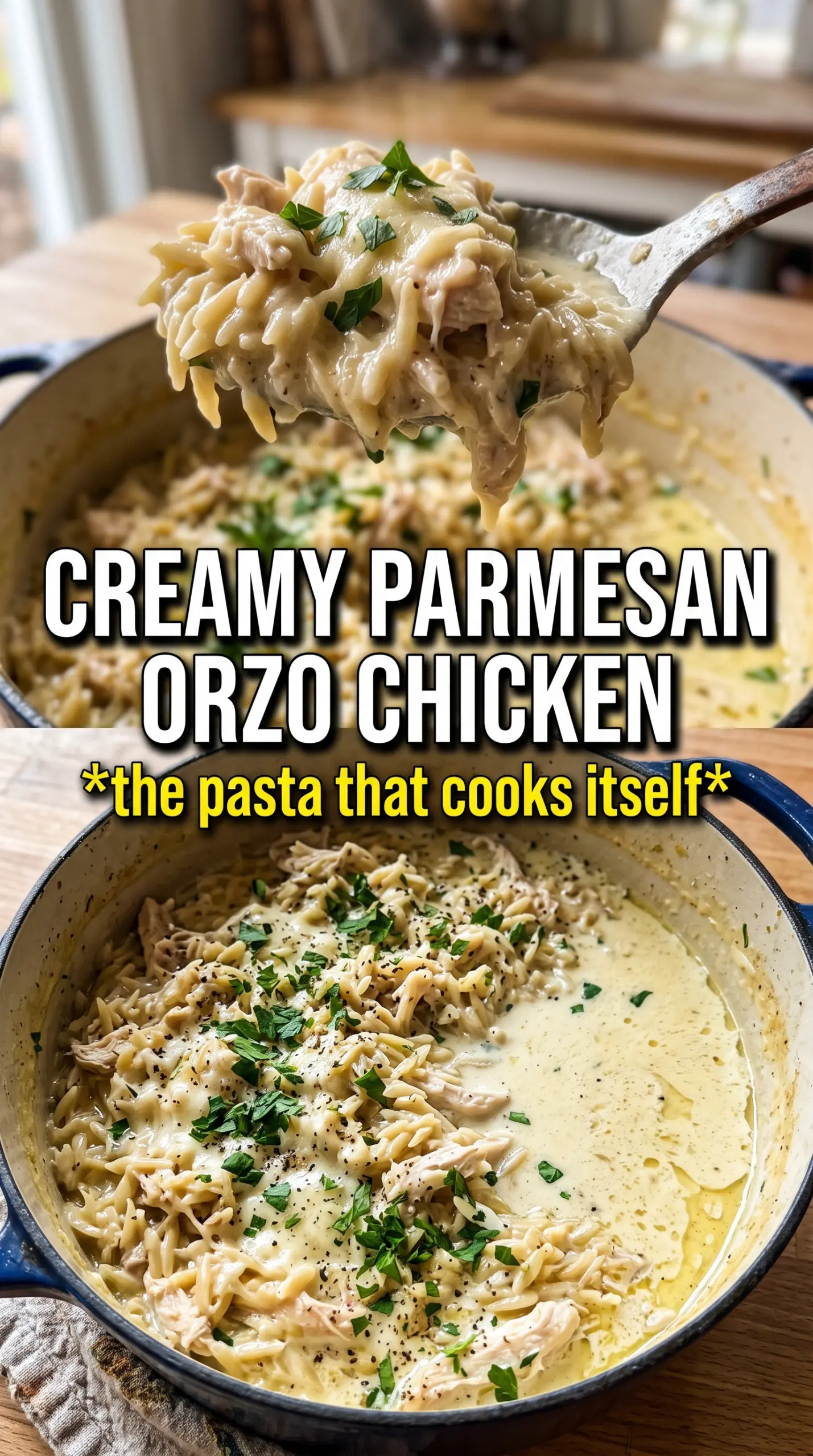
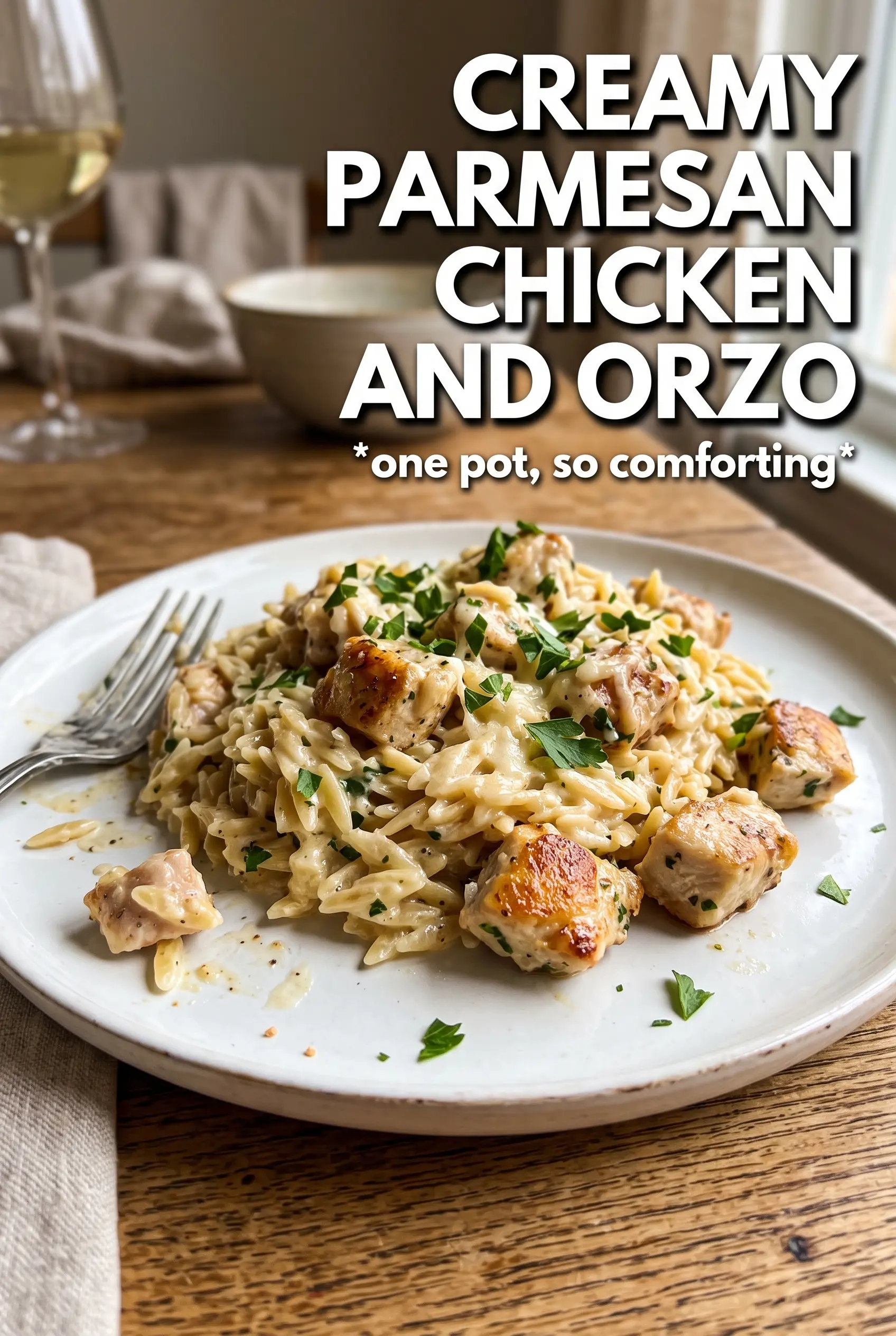
Golden chicken thighs over creamy Parmesan orzo hit that sweet spot between comfort food and a dinner that still feels thoughtful. The orzo turns silky instead of gluey, the Parmesan melts into the sauce without clumping, and the sun-dried tomatoes bring just enough sharpness to keep each bite moving. When the spinach folds in at the end, it gives the whole pan a little freshness without watering anything down.
What makes this version work is timing. The chicken gets a real sear first, which builds flavor in the pan and gives you those browned bits that season the sauce later. The orzo also gets toasted briefly before the liquid goes in, and that small extra step keeps it from tasting flat. Once the cream and broth are simmering, the pasta cooks right in the sauce, so it absorbs flavor instead of just sitting beside it.
If you’ve ever had one-pan pasta go thick, sticky, or oddly grainy, the details below will help. The method here leans on low, steady simmering and a gradual finish with the cheese so the sauce stays smooth all the way to the table.
The sauce stayed creamy even after I added the Parmesan, and the orzo had that perfect tender bite without turning mushy. I used sun-dried tomatoes in oil and they gave the whole pan such a good savory pop.
Save this creamy Parmesan chicken and orzo for the nights when you want one pan, a silky sauce, and dinner that lands like it took much more effort than it did.
The Chicken Needs a Real Sear Before the Orzo Goes In
A lot of one-pan pasta recipes rush past the meat and go straight to the sauce, but that leaves you with pale chicken and a flatter-tasting pan. Here, the thighs get browned first so the skillet starts with fond, which is the browned layer that gives the cream and broth their backbone. If the chicken is crowded, it steams instead of sears, and you lose the best flavor in the dish.
Chicken thighs are the right cut for this because they stay juicy while the orzo finishes cooking. If you use breasts, pull them sooner and keep an eye on the internal temperature so they don’t dry out before the pasta is done. The goal is golden skinless chicken with enough color to season the whole pan, not a rushed pale surface that disappears into the sauce.
What Each Ingredient Is Actually Doing in This Pan
- Boneless skinless chicken thighs — These stay tender through the whole cook time and hold up better than breasts in a creamy skillet sauce. Breasts work in a pinch, but they’ll need less time in the pan and can dry out if you leave them in while the orzo finishes.
- Orzo — This pasta is small enough to cook evenly in the sauce and still keep some bite. Don’t swap in a larger pasta shape without changing the liquid and timing, because the sauce-to-pasta ratio here is built for orzo’s quick, even absorption.
- Heavy cream — This is what gives the sauce its body and keeps the Parmesan from turning grainy. Half-and-half can work, but the sauce will be thinner and a little more fragile, so keep the heat lower and don’t let it boil hard.
- Parmesan cheese — Freshly grated Parmesan melts smoother and tastes sharper than the shelf-stable kind. Pre-grated cheese often contains anti-caking agents that can make the sauce a little dusty or clumpy, especially if the pan is too hot.
- Sun-dried tomatoes — These bring concentrated sweetness and acidity that cut through the cream. Oil-packed tomatoes are the easiest choice because they’re softer and more flavorful; if yours are dry-packed, soak them in hot water for 10 minutes first.
- Baby spinach — It wilts quickly and adds a little color without fighting the sauce. Add it at the end so it softens but doesn’t disappear into the pan.
The Ten Minutes That Turn Broth and Cream Into Dinner
Build the Fond First
Season the chicken well, then sear it in olive oil over medium-high heat until the surface is deep golden and it releases cleanly from the skillet. If it sticks, give it another minute; pulling it too early tears the crust and leaves flavor behind. Remove the chicken once it’s cooked through, then keep every browned bit in the pan because that’s what will flavor the orzo.
Toast the Orzo Before the Liquid Goes In
Cook the garlic just until fragrant, then add the dry orzo and stir for about a minute. It should smell a little nutty and pick up some of the oil and pan drippings. If the garlic browns, it turns bitter fast, so keep it moving and don’t let it sit in the hot skillet alone.
Simmer Until the Orzo Is Tender and the Sauce Clings
Pour in the broth and cream, bring everything to a gentle simmer, and stir often as the orzo cooks. You want the liquid bubbling softly, not boiling hard, because aggressive heat can make the cream separate and the pasta catch on the bottom. The sauce is ready when the orzo is tender and the liquid looks creamy enough to coat a spoon instead of pooling like soup.
Finish With Cheese and Greens Off the Hot Edge
Stir in the Parmesan, spinach, and sun-dried tomatoes once the orzo is almost done. If the pan is still raging hot when the cheese goes in, the sauce can turn grainy, so lower the heat and let the residual warmth do the work. Nestle the chicken back in at the end just long enough to warm through, then finish with basil for a fresh top note.
How to Adapt This Creamy Parmesan Chicken and Orzo Without Losing the Plot
Swap the chicken thighs for chicken breasts
Use boneless skinless breasts if that’s what you have, but cut them into cutlets or smaller pieces so they cook before the orzo overcooks. Breasts are leaner, so they won’t give you quite the same richness, and they’ll dry out if you leave them in the pan the full time.
Make it gluten-free with rice-shaped pasta
Use a gluten-free orzo-style pasta and watch the liquid closely, because some brands absorb more slowly and some break down faster than wheat orzo. Add extra broth only if the pan starts looking dry before the pasta turns tender.
Go dairy-free with a creamy unsweetened substitute
Use an unsweetened, plain coconut cream or a thick oat-based cooking cream, then replace the Parmesan with a dairy-free Parmesan-style alternative. The sauce will taste a little less sharp and less savory than the original, so add a touch more salt and a squeeze of lemon if it needs brightness.
Add mushrooms for a deeper, earthier pan sauce
Brown sliced mushrooms after the chicken comes out and before the garlic goes in. They add a meatier bite and pick up all the browned flavor in the skillet, but they also release moisture, so cook them until that liquid cooks off or the sauce will taste thin.
Storage and Reheating
- Refrigerator: Store leftovers in an airtight container for up to 3 days. The sauce thickens as it chills, and the orzo will soak up more liquid.
- Freezer: I don’t recommend freezing this dish. Cream sauces and orzo both change texture after thawing, and the sauce can turn grainy.
- Reheating: Reheat gently on the stovetop over low heat with a splash of broth or cream, stirring often. The common mistake is blasting it in the microwave or on high heat, which dries out the chicken and tightens the sauce into a paste.
Questions I Get Asked About This Recipe
Creamy Parmesan Chicken and Orzo
Ingredients
Equipment
Method
- Season chicken thighs with salt, pepper, garlic powder, Italian seasoning, and smoked paprika. Heat olive oil in a large skillet over medium-high heat and sear chicken for 4-5 minutes per side until golden and cooked through, then remove.
- In the same pan, cook minced garlic over medium-high heat for 30 seconds until fragrant. Add uncooked orzo and toast for 1 minute, stirring so it lightly coats.
- Pour in chicken broth and heavy cream, then bring to a simmer over medium-high heat. Cook uncovered for 10-12 minutes, stirring often, until orzo is tender and the sauce is creamy.
- Stir in grated Parmesan cheese, baby spinach, and sliced sun-dried tomatoes. Cook just until the spinach wilts and the mixture looks smooth and creamy.
- Nestle the seared chicken thighs back into the orzo and heat through for 2 minutes. Keep the pan at a gentle simmer so everything warms evenly.
- Garnish with fresh basil and serve immediately.