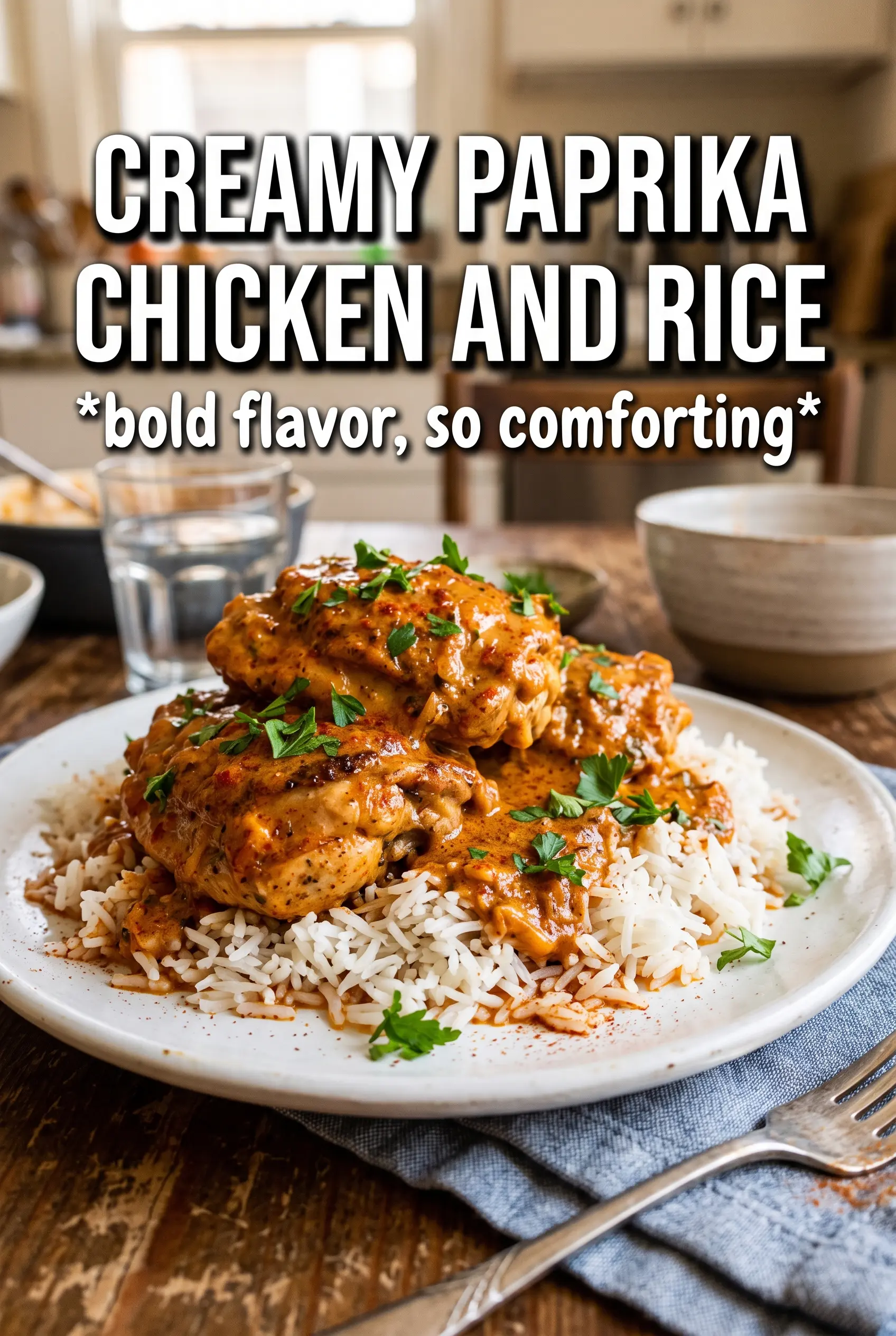
Golden chicken thighs tucked into a red paprika sauce over fluffy rice have a way of disappearing fast. The skin turns crisp in the pan first, then the sauce picks up all that savory depth from the browned bits left behind. By the time the sour cream goes in, the whole skillet tastes round, smoky, and a little tangy, with enough body to coat the rice instead of running off the plate.
The key here is treating the paprika like an ingredient that needs respect. Sweet Hungarian paprika gives the sauce its color and warmth, while the smaller amount of smoked paprika adds depth without turning the dish bitter. Sour cream goes in off the heat at the end, which keeps the sauce smooth instead of grainy. That little timing detail is what separates a glossy paprika sauce from one that splits.
Below you’ll find the pan timing that keeps the chicken juicy, the simple swap that works if you only have boneless thighs, and the one reheating trick that keeps the sauce from breaking the next day.
The sauce turned out silky and clung to the chicken instead of pooling at the bottom, and the smoked paprika gave it that deep, cozy flavor without overpowering the sour cream.
Save this creamy paprika chicken with rice for the nights when you want a one-pan sauce that turns silky, smoky, and spoonable.
The trick to keeping paprika sauce smooth instead of grainy
Paprika can go from fragrant to bitter fast if it sits in a hot pan too long. That’s why the garlic and both paprikas go in after the onion softens, then get just a minute with the heat before the tomatoes and broth join the party. You want the spices to bloom, not fry. That short window wakes up the color and flavor without scorching the powder.
The other place people run into trouble is the dairy. Sour cream belongs at the end, after the pan comes off the heat, because boiling it can make the sauce separate or turn grainy. If the sauce looks a little thin before you stir it in, don’t panic; it thickens as it simmers with the chicken and settles further once the sour cream goes in.
What each ingredient is doing in this pan

- Bone-in, skin-on chicken thighs — These stay juicier than breasts and give the sauce more flavor through the browned skin and drippings. Boneless thighs will work, but they cook faster and won’t add quite as much body to the pan sauce.
- Sweet Hungarian paprika — This is the main flavor and color source. Use fresh paprika if you can; old paprika tastes flat and the sauce loses that deep red look.
- Smoked paprika — A small amount adds depth and makes the dish taste fuller. Too much can take over, so keep the measurement tight unless you want a stronger smoky note.
- Sour cream — This is what turns the tomato base into a creamy sauce. Full-fat sour cream is the safest choice because it handles heat better and tastes smoother; lower-fat versions are more likely to split.
- Crushed tomatoes and chicken broth — Tomatoes give the sauce structure and a little acidity, while broth loosens everything into a spoonable consistency. If you need to use low-sodium broth, keep an eye on the final seasoning at the end.
- Onion and garlic — They build the savory base under the paprika. Dice the onion finely so it melts into the sauce instead of staying chunky.
Building the skillet sauce from sear to finish
Getting the chicken skin deeply golden
Season the thighs on both sides, then lay them skin-side down in the oil over medium-high heat and leave them alone until the skin is deeply golden and releases easily from the pan. That usually takes 6 to 7 minutes. If you try to move them too soon, the skin will stick and tear instead of crisping. Flip for just a few minutes on the other side, then pull them out while you build the sauce.
Waking up the paprika without burning it
Cook the onion in the same pan until it’s soft and translucent, scraping up the browned bits as it cooks. Add the garlic and both paprikas, stir constantly, and keep it to about a minute. The pan should smell warm and a little sweet, not sharp or smoky-burnt. If the garlic starts browning, the heat is too high and the paprika will taste harsh.
Simmering the chicken until it turns tender
Stir in the crushed tomatoes and broth, then bring the sauce to a simmer before returning the chicken skin-side up. Cover the pan and let it cook gently for 18 to 20 minutes, just until the chicken reaches 165°F. A hard boil can tighten the meat and make the sauce greasy, so keep the bubbles small and steady. The sauce should thicken enough to coat a spoon by the time the chicken is done.
Finishing with sour cream the right way
Take the pan off the heat before stirring in the sour cream. Add it gradually and stir until the sauce turns smooth and creamy with pale swirls disappearing into the red base. If you dump it into a boiling sauce, it can curdle or look speckled. Spoon the chicken and sauce over hot rice right away so the rice catches every bit of the creamy paprika gravy.
How to change this when you need a different pan or diet
Make it with boneless chicken thighs
Boneless thighs work well if you want a faster dinner, but they need less simmering time, usually about 12 to 15 minutes. You’ll lose a little of the rich flavor that comes from bone-in thighs, so keep the sauce tasting bold and don’t overcook them or they’ll turn stringy.
Dairy-free version with a creamy finish
Use full-fat coconut cream or an unsweetened dairy-free sour cream alternative at the very end, off the heat. The sauce won’t taste exactly the same, but you’ll keep the silky texture. Coconut cream adds a faint sweetness, so lean a little harder on the paprika and black pepper.
Serve it without rice
This is good over mashed potatoes, buttered egg noodles, or cauliflower rice. Mashed potatoes give the closest cozy texture, while cauliflower rice keeps the dish lower carb and still catches the sauce. Skip the rice if you want, but keep some kind of soft base so the sauce has somewhere to go.
Storage and Reheating
- Refrigerator: Store the chicken and sauce in an airtight container for up to 4 days. The sauce will thicken as it chills.
- Freezer: The tomato base freezes well, but dairy sauces can get a little grainy after thawing. For best texture, freeze before adding the sour cream and stir it in after reheating.
- Reheating: Warm gently on the stove over low heat with a splash of broth or water. Don’t boil it, or the sour cream can separate and the chicken can dry out.