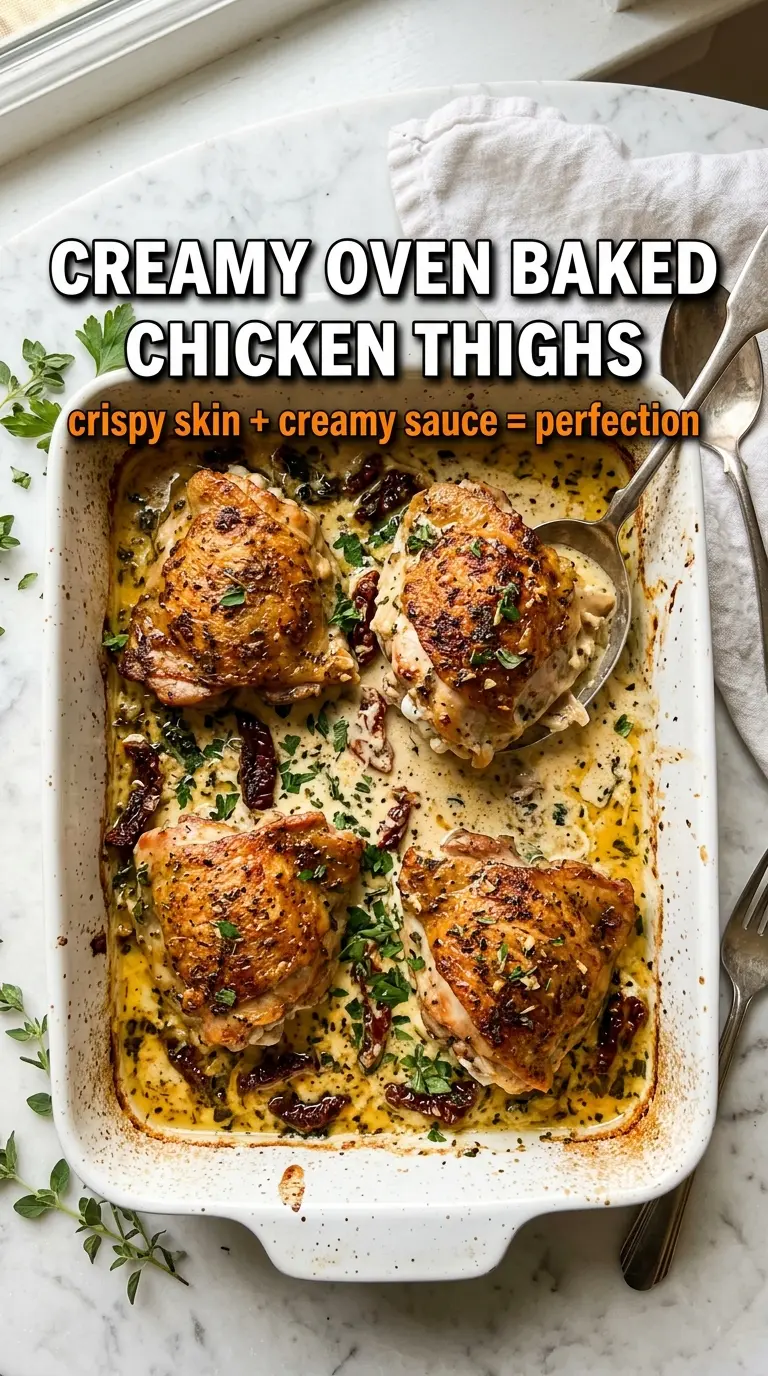
Golden-skinned chicken thighs baked in a garlicky cream sauce hit that sweet spot between comfort food and dinner that feels a little special without asking much from you. The skin stays crisp where it can, the sauce turns silky and spoonable, and the whole dish comes out rich with enough herb and garlic flavor to keep each bite from tasting heavy.
The trick is starting the chicken on the stovetop first. That sear gives the skin a head start and leaves browned bits in the pan, which become the base of the sauce instead of being washed away. The broth loosens those bits, the cream softens the edges, and the Parmesan helps the sauce thicken as it bakes.
Below you’ll find the exact order that keeps the sauce smooth, plus a few useful swaps if you need to work with what’s already in the kitchen. This is one of those recipes that rewards a little attention up front and pays you back at the table.
The skin stayed crisp even after baking, and the sauce thickened into this rich garlic cream that coated the chicken instead of running all over the plate. My husband asked if I could put this on the weekly list.
Save these creamy oven baked chicken thighs for the night you want crispy skin, a silky garlic-Parmesan sauce, and one pan to do most of the work.
The Crispy Skin Question Most Cream Sauces Get Wrong
The biggest mistake with creamy baked chicken thighs is putting the chicken straight into the sauce and hoping the oven will fix everything. It won’t. Skin needs direct heat first, or it goes soft before it has a chance to brown, and once that happens you never get that contrast between crisp top and rich sauce underneath.
This recipe keeps the skin exposed on purpose. The chicken sears skin-side down until it’s deeply golden, then finishes uncovered in the oven so the top stays above the sauce instead of steaming in it. The sauce also starts on the stovetop, which means the garlic gets fragrant, the broth lifts the browned bits, and the cream has a chance to thicken before the chicken goes back in.
- Bone-in, skin-on chicken thighs — These hold up better than breasts and bring enough fat to stay juicy through the bake. Boneless thighs work in a pinch, but they cook faster and the skinless version loses that crisp finish.
- Heavy cream — This is what gives the sauce body without curdling in the oven. Half-and-half can work if that’s what you have, but the sauce will be thinner and more likely to break if it boils hard.
- Parmesan — Use finely grated Parmesan so it melts smoothly into the cream. Pre-shredded cheese often brings a dusty coating that makes the sauce grainy instead of silky.
- Chicken broth — A small splash gives the sauce enough looseness to pick up the fond from the pan. Water won’t give you the same depth, so broth is one place worth using the real thing.
What Each Ingredient Is Actually Doing in This Recipe
- Primary ingredient (the star) — Quality matters most. Choose the best you can find.
- Cooking medium (oil, butter, or broth) — This carries flavors and prevents dryness.
- Seasonings (salt, pepper, spices, herbs) — Layer flavors so nothing overpowers. Build depth gradually.
- Aromatics (garlic, onion, herbs) — Cook with fat to bloom flavors. Become the foundation.
- Supporting ingredients — Complement the main ingredient without overpowering it.
- Sauce or liquid (if applicable) — Brings flavors together. Balance richness with acid.
- Acid (lemon, vinegar, wine, or other) — Brightens and prevents flat-tasting results.
- Final finish (garnish, glaze, or sauce) — Prevents one-dimensional taste and adds visual appeal.
How to Build the Sauce Without Losing the Skin
Seasoning the Chicken
Coat the thighs generously on all sides, including under the skin if you can loosen it without tearing it. The seasoning layer matters here because the sauce carries flavor, but the chicken itself still needs to taste like something before it ever hits the pan. If the surface looks wet, pat it dry first or the skin will steam instead of sear.
Searing for Color and Texture
Start the chicken skin-side down in hot olive oil and leave it alone until the skin is deep golden and releases easily from the skillet. If you try to turn it too early, it will stick and tear. The goal is not to cook it through here; it’s to build color and render some fat so the skin can finish crisping in the oven.
Making the Cream Sauce in the Same Pan
After the chicken comes out, cook the garlic just until fragrant, then add the broth and scrape the pan clean with a spoon. That brown residue is the flavor base. Stir in the cream, Parmesan, Italian seasoning, and thyme over steady medium heat, not a hard boil. If the sauce looks thin at this point, that’s fine; it thickens as the chicken bakes and the sauce reduces around the edges.
Baking Until the Sauce Thicken and the Chicken Finishes
Set the chicken skin-side up in the sauce so the top stays exposed. Bake uncovered until the chicken reaches 165°F and the sauce bubbles around the edges with a slightly thicker look in the center. If the sauce seems loose when the chicken is done, let the pan rest for 5 minutes before serving; it settles into a better consistency fast.
How to Adjust This Dish Without Losing What Makes It Good
Make It Dairy-Free
Use full-fat canned coconut cream in place of the heavy cream and skip the Parmesan, then add a little extra salt and a squeeze of lemon at the end to keep the sauce from tasting flat. The sauce won’t taste the same, but it will still turn rich and spoonable. Keep the heat gentle so the coconut doesn’t split.
Use Boneless Chicken Thighs
Boneless thighs cook faster and are easier to serve, but you lose the crackly skin and some of the pan flavor. Sear them for less time, then start checking early in the oven so they don’t dry out. The sauce still works beautifully, just with a softer finish.
Add Vegetables to the Pan
Mushrooms, spinach, or halved cherry tomatoes fit in well here. Add mushrooms with the garlic so they can release moisture before the cream goes in. Add spinach at the very end so it wilts into the sauce instead of disappearing into it.
Storage and Reheating
- Refrigerator: Store leftovers in an airtight container for up to 3 days. The skin softens, but the flavor holds well.
- Freezer: Freeze if needed, but the cream sauce may separate a little when thawed. It still works best for meal prep, not for keeping the skin crisp.
- Reheating: Warm gently in a covered skillet over low heat or in a 325°F oven until heated through. A hard microwave blast makes the sauce greasy and the chicken dry.
Answers to the Questions Worth Asking

Creamy Oven Baked Chicken Thighs
Ingredients
Equipment
Method
- Preheat oven to 400°F. Season chicken thighs generously on all sides with salt, pepper, garlic powder, smoked paprika, and Italian seasoning.
- Heat olive oil in a large oven-safe skillet over medium-high heat. Sear chicken skin-side down for 6-7 minutes until the skin is deeply golden and crispy.
- Flip the chicken and sear for 3 more minutes. Remove the chicken to a plate while you make the sauce.
- Cook garlic in the same pan for 1 minute. Stir in chicken broth and deglaze, scraping up the browned bits.
- Stir in heavy cream, Parmesan cheese, dried Italian seasoning, and dried thyme. Cook just until combined and smooth, with herbs visible throughout.
- Nestle chicken thighs skin-side up into the cream sauce. Spoon a little sauce over the top so the chicken stays surrounded as it bakes.
- Bake uncovered for 25-28 minutes at 400°F until internal temperature reaches 165°F. The sauce should thicken and turn bubbly around the chicken skin.
- Garnish with fresh parsley. Serve hot with the creamy sauce.