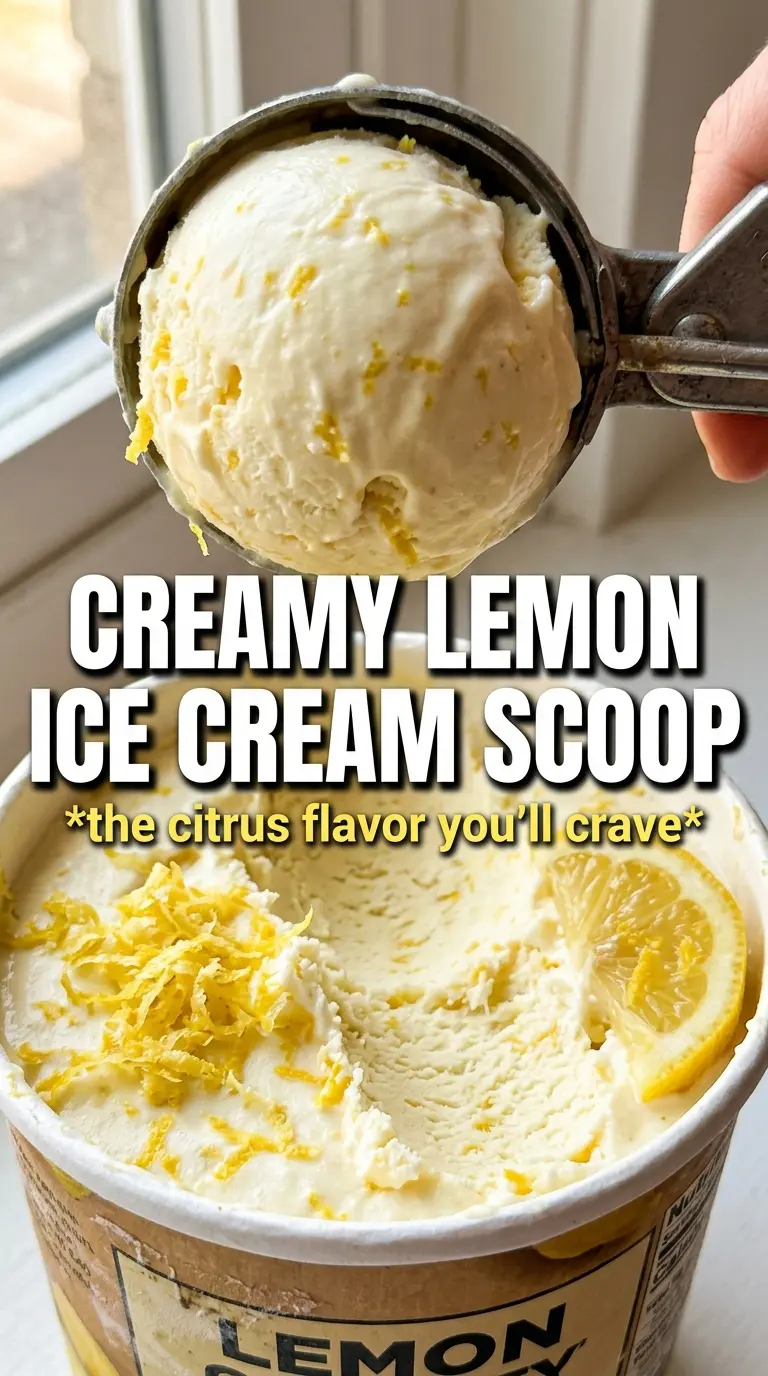
Bright lemon ice cream hits hardest when the citrus stays sharp and the base stays velvet-smooth. This version does both. The custard gives it a rich, scoopable body, while fresh lemon juice and zest keep every bite clean and vivid instead of muddy or flat.
The trick is in the order. The dairy and egg yolks get cooked into a custard first, which gives the ice cream that luxurious texture, then the lemon goes in after straining so the acid doesn’t fight the eggs on the stove. That keeps the texture silky and the flavor bright. If you’ve ever had lemon ice cream that tasted like sweet cream with a whisper of lemon, this one lands on the other side of that problem.
Below you’ll find the exact point where the custard should thicken, why zest matters more than extra juice, and a few small adjustments that help the flavor stay bold after freezing.
The custard turned out silky and the lemon stayed bright after freezing, not dull like some homemade ice creams. I loved that the zest gave it an extra pop without making it bitter.
Save this creamy lemon ice cream for the days when you want a bright citrus dessert with a custard-rich finish.
The Part Most Lemon Ice Cream Gets Wrong
The mistake most home cooks make is adding the lemon too early or too aggressively. Acid and eggs don’t play nicely over heat, and if the juice goes into the pan before the custard is cooked, the mixture can turn grainy or even curdle. Cooking the custard first, then straining and finishing with lemon off the heat, keeps the texture smooth and gives the citrus a cleaner, brighter edge.
The other trap is leaning only on juice. Lemon juice brings sharpness, but zest carries the fragrant oils that make the flavor taste full instead of thin. That combo matters once the base is frozen, because cold mutes flavor. This recipe uses both for a reason.
- Egg yolks — These are what make the ice cream feel custardy instead of icy. Don’t swap them out unless you’re changing the whole style of the recipe.
- Heavy cream and whole milk — Cream gives body; milk keeps the base from turning too dense. Using all cream can make the finished ice cream feel heavy.
- Fresh lemon juice — Bottled juice tastes flatter and less alive here. Fresh juice gives the cleanest citrus finish.
- Lemon zest — This is where the real lemon aroma lives. Use a fine grater and only take the yellow part; the white pith turns bitter fast.
- Vanilla — Just a small amount rounds out the lemon without making it taste like vanilla ice cream with citrus mixed in.
What Each Ingredient Is Actually Doing in This Ice Cream
- Base ingredient (cream, milk, or custard) — This provides the foundation and richness. Quality matters.
- Sweetener (sugar, honey, or condensed milk) — This sweetens and prevents ice crystals. The ratio is critical.
- Flavor element (vanilla, fruit, chocolate, or other) — This defines the ice cream personality. Use quality ingredients.
- Egg yolks (if making custard base) — These create richness and silky texture. Optional but elevates ice cream.
- Churning (if using ice cream maker) — This incorporates air and prevents ice crystals. Critical for smooth texture.
- Freezing temperature and time — Proper freezing prevents rock-hard texture. Store at 0°F or below.
- Mix-ins (chocolate, cookies, fruit, or swirls) — These add texture and prevent one-dimensional flavor. Add near end of churning.
- Serving temperature (slightly soft, not rock hard) — This provides creamy mouthfeel. Remove from freezer 5 minutes before serving.
How to Keep the Custard Smooth Before the Freeze
Heating the Dairy Without Scorching It
Warm the cream and milk until they are steaming and just starting to move around the edges, not boiling. Boiling pushes the dairy too far and makes the custard harder to control when it hits the yolks. In a separate bowl, whisk the yolks and sugar until they look lighter and slightly thickened, then stream in the hot dairy slowly while whisking constantly. That gradual tempering keeps the eggs from scrambling.
Cooking to the Right Thickness
Return the mixture to the saucepan and stir over medium-low heat until it reaches 175F. It should coat the back of a spoon and leave a clear line when you run a finger through it. If it starts to steam heavily or bubble, the heat is too high and the yolks can overcook at the bottom of the pan before the custard thickens evenly. Keep the spatula moving along the edges and across the center so nothing catches.
Finishing With Lemon at the End
Strain the custard through a fine mesh sieve, then stir in the lemon juice, zest, vanilla, and salt off the heat. That order keeps the custard silky and catches any tiny bits of cooked egg before they end up in the churned ice cream. The mixture may taste a touch stronger than you expect before freezing; cold dulls lemon, so it should taste bright now. Chill it completely over an ice bath, then refrigerate it for at least 4 hours so it churns faster and freezes with a finer texture.
Make It Dairy-Free With Coconut Cream
Swap the heavy cream and milk for full-fat coconut milk and coconut cream in equal total volume. The ice cream will be a little softer and carry a faint coconut note, which works nicely with lemon, but it won’t taste as neutral or custard-like as the original.
Use Meyer Lemons for a Sweeter Citrus Finish
Meyer lemons are less sharp and a little floral, so the ice cream tastes softer and rounder. If you use them, keep the zest amount the same and taste the base before churning; you may want a small extra squeeze of juice if the flavor feels too gentle.
Turn It Into a Lemon Cream Pie Base
Fold in crushed vanilla wafer crumbs after churning, then freeze until firm. The crumbs add a pie-crust feel and soak up just enough moisture to give each bite a cookies-and-cream texture without stealing the citrus focus.
Storage and Reheating
- Refrigerator: The churned base isn’t meant to sit in the fridge once frozen, but the custard can be chilled up to 2 days before churning.
- Freezer: Store the finished ice cream in an airtight container with parchment pressed directly on the surface for up to 2 weeks. After that, it starts to pick up ice crystals and lose some of the lemon brightness.
- Reheating: Let it sit at room temperature for 5 to 10 minutes before scooping. If it’s frozen rock hard, don’t microwave it; that melts the edges and leaves the center icy.
Questions I Get Asked About This Recipe
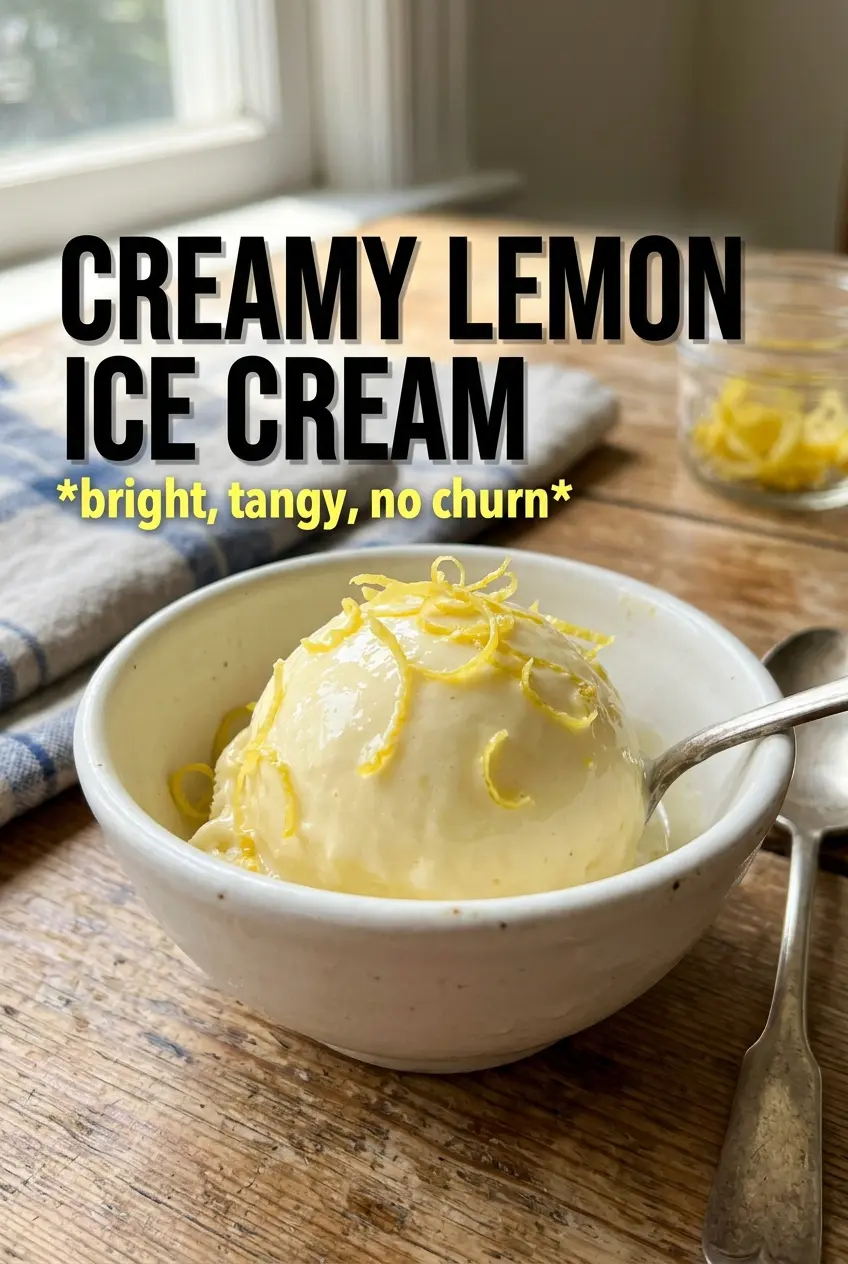
Creamy Lemon Ice Cream
Ingredients
Equipment
Method
- Heat heavy cream and whole milk in a saucepan until steaming, then reduce the heat to medium-low. Whisk slowly into egg yolks beaten with granulated sugar.
- Return the mixture to the saucepan and cook over medium-low heat, stirring constantly. Cook until the custard reaches 175F, then remove from heat.
- Strain the custard through a fine mesh sieve into a bowl. Stir in fresh lemon juice, lemon zest, vanilla extract, and salt until fully combined.
- Cool the custard completely using an ice bath. Refrigerate at least 4 hours until well chilled.
- Churn the chilled custard in an ice cream maker according to the manufacturer’s instructions. Freeze until firm before serving.