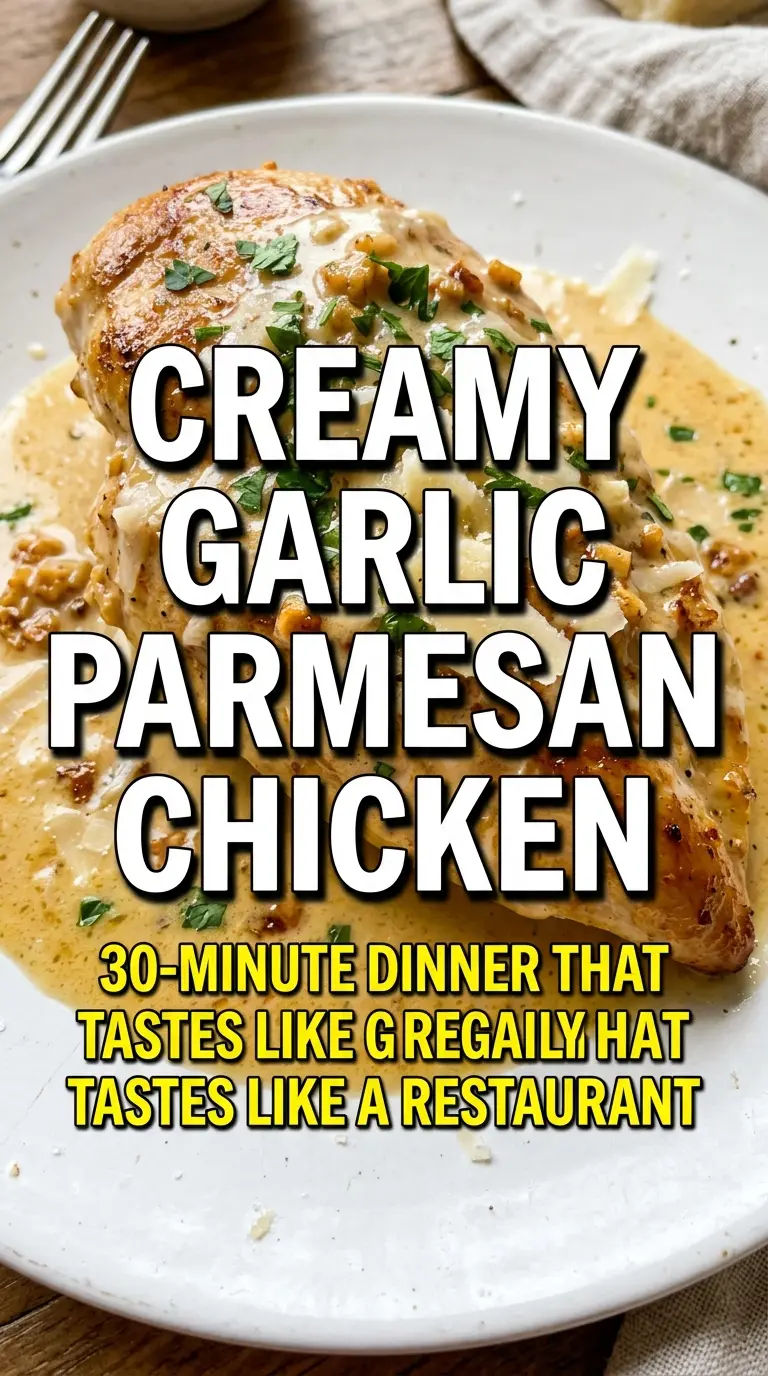
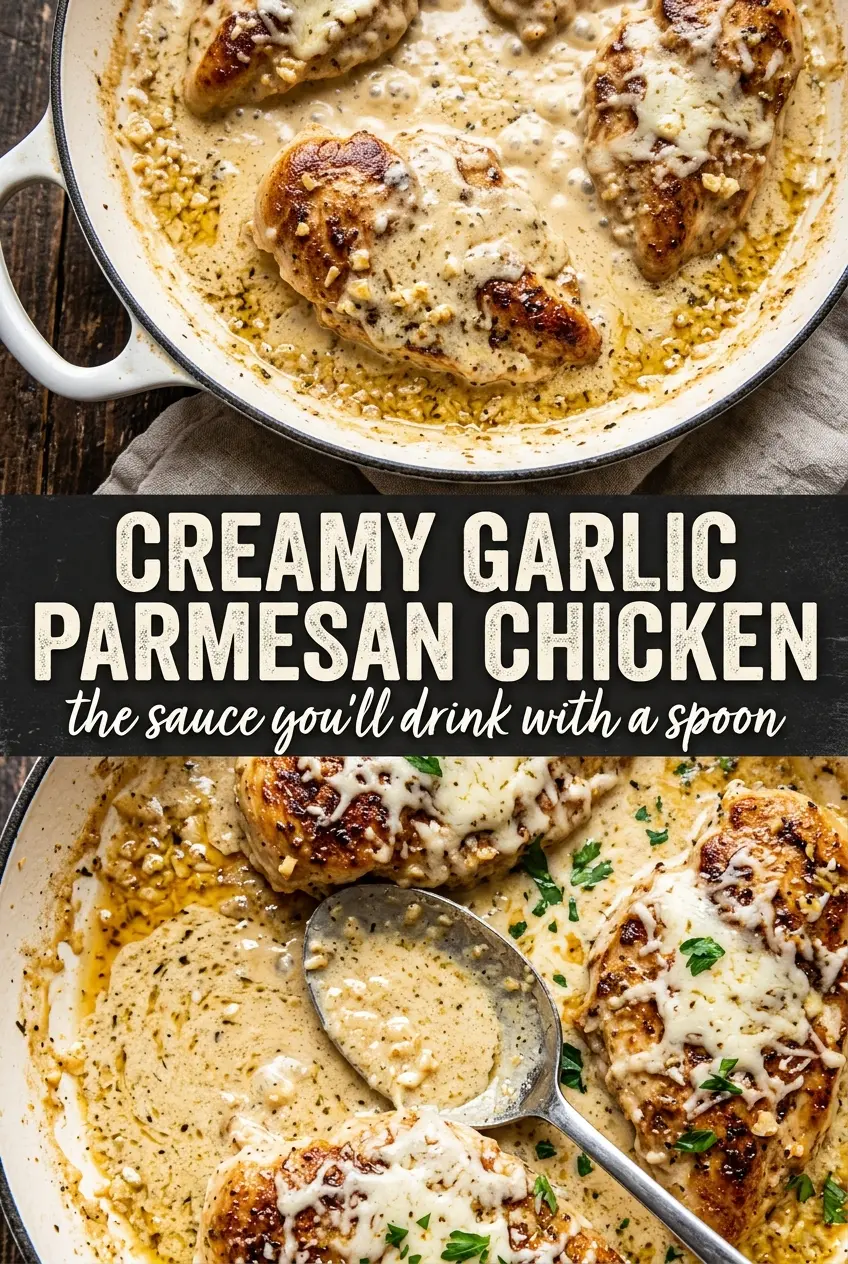
Golden seared chicken breasts in a garlic Parmesan cream sauce hit that sweet spot between weeknight practical and restaurant-style comfort. The chicken stays juicy because it’s browned first and finished gently in the sauce, while the sauce itself turns thick, glossy, and spoon-coating without needing a roux. When the Parmesan melts into the cream with a little broth and wine, you get a pan sauce that tastes layered instead of heavy.
The trick here is keeping the heat under control once the dairy and cheese go in. High heat can make the sauce grainy or greasy, especially if the Parmesan is added too fast. Freshly grated cheese melts into the cream much more smoothly than the bagged kind, and the little bit of wine or broth loosens the browned bits from the pan so they become part of the sauce instead of getting left behind.
Below you’ll find the exact cues I watch for so the chicken stays tender and the sauce stays silky. I’ve also added a few smart swaps and storage notes, because this is the kind of skillet dinner that earns its keep when you can make it once and eat well again the next day.
The sauce thickened up perfectly and the chicken stayed juicy all the way through. I used the white wine and it gave the garlic Parmesan sauce such a nice depth without tasting sharp.
Save this creamy garlic Parmesan chicken for the nights when you want a glossy skillet sauce and juicy chicken with almost no cleanup.
The Pan Sauce Gets Its Body Before the Cream Ever Hits
If the chicken is pale or the sauce tastes flat, the problem usually starts in the pan. You want a good golden sear on the chicken first, because that browned layer gives the sauce its savory backbone. Then the garlic goes in just long enough to smell fragrant, not long enough to brown and turn bitter.
The other mistake is rushing the sauce after the cream goes in. Let it simmer at a gentle bubble so the Parmesan has time to melt and the sauce can tighten up naturally. If it boils hard, the dairy can separate and the cheese can turn grainy instead of smooth.
- Chicken breasts — Pound them to an even thickness if one end is much thicker than the other. That keeps the outside from overcooking before the center reaches temperature.
- Freshly grated Parmesan — This matters. Pre-grated cheese often contains anti-caking agents that keep it from melting cleanly, which can leave the sauce sandy.
- Dry white wine or chicken broth — Wine adds a sharper, deeper edge and helps lift the browned bits from the skillet. Broth works well if you want a milder sauce or prefer to skip alcohol.
- Heavy cream — This is what gives the sauce its body and makes it cling to the chicken. Half-and-half will work in a pinch, but the sauce will be thinner and less glossy.
What Each Ingredient Is Actually Doing in This Skillet
- Olive oil — Helps the chicken brown without burning. If your skillet runs hot, it also gives you a little more protection than butter alone.
- Butter and garlic — Butter carries the garlic flavor and gives the sauce a rounder taste. Keep the garlic moving; once it goes from fragrant to toasted, the whole sauce picks up a harsh edge.
- Chicken broth — This loosens the pan and balances the cream so the sauce doesn’t taste heavy. Use a good-tasting broth here, since it’s part of the final sauce.
- Italian seasoning, thyme, and parsley — The dried seasoning blends into the sauce while the fresh herbs lift it at the end. Parsley is not just garnish here; it keeps the dish from tasting one-note.
Getting the Chicken Seared and the Sauce Smooth
Seasoning the Chicken Well
Season both sides of the chicken generously with salt, pepper, garlic powder, and smoked paprika. That dry seasoning does more than flavor the meat; it helps create the crust that keeps the chicken from tasting bland under the sauce. If the chicken looks damp, blot it first with paper towels so it sears instead of steaming.
Building Color in the Skillet
Heat the olive oil over medium-high and lay the chicken in without crowding the pan. You want to hear an immediate sizzle and see the edges turn opaque as the underside browns. If the chicken sticks hard when you try to move it, it needs another minute; once it releases easily, the crust is set.
Making the Sauce in the Same Pan
After the chicken comes out, add the butter and garlic and cook just until fragrant. Pour in the wine or broth and scrape up every browned bit from the bottom of the skillet. That fond is where a lot of the flavor lives, and if you leave it behind, the sauce tastes thinner than it should.
Finishing Without Breaking the Cream
Stir in the cream, broth, Parmesan, and Italian seasoning, then let the sauce simmer gently until it looks glossy and coats a spoon. If it starts to bubble hard, lower the heat. Return the chicken to the pan only after the sauce has thickened a little, then spoon it over the top so the meat picks up flavor without drying out.
How to Adjust This Without Losing the Creamy Finish
Use chicken thighs instead of breasts
Boneless skinless thighs stay juicier and are harder to overcook, which makes them a smart swap if you want a little more forgiveness. They’ll take a few extra minutes in the pan, and the sauce will taste a little richer because thighs bring more fat and flavor.
Make it gluten-free
This recipe is naturally gluten-free as long as your broth and Parmesan are certified or labeled gluten-free. The technique stays the same, and you still get the same silky sauce because the thickening comes from reduction and cheese, not flour.
Skip the wine
Use chicken broth in place of the wine if that’s what you have on hand. You’ll lose a little sharpness and complexity, so add an extra pinch of salt at the end and let the sauce reduce a bit longer to build flavor.
Make it lighter
You can use half-and-half instead of heavy cream, but the sauce won’t thicken as much and it’s more likely to separate if it boils. Keep the heat low and accept a slightly thinner sauce rather than trying to cook it down too aggressively.
Storage and Reheating
- Refrigerator: Store leftovers in an airtight container for up to 3 days. The sauce will thicken as it chills.
- Freezer: It freezes, but cream sauces can separate a little when thawed. Freeze only if you need to, and thaw slowly in the fridge before reheating.
- Reheating: Warm it gently in a covered skillet over low heat with a splash of broth or cream. Don’t blast it in the microwave on high or the sauce can turn oily before the chicken heats through.
Answers to the Questions Worth Asking
Creamy Garlic Parmesan Chicken
Ingredients
Equipment
Method
- Season the chicken breasts generously on both sides with salt, pepper, garlic powder, and smoked paprika.
- Heat olive oil in a large skillet over medium-high heat and sear the chicken for 5-6 minutes per side until golden and internal temperature reaches 165°F; remove.
- Add butter and minced garlic to the same pan and cook for 1 minute until fragrant.
- Deglaze with dry white wine and cook for 2 minutes to reduce slightly.
- Stir in heavy cream, chicken broth, Parmesan cheese, and Italian seasoning, then simmer for 4-5 minutes until the sauce is thick and glossy.
- Return the chicken to the pan and spoon the sauce over each breast to coat.
- Garnish with fresh thyme and parsley and serve.