Golden chicken thighs tucked into a pale, wine-kissed cream sauce are the kind of dinner that looks far more complicated than it is. The skin stays crisp enough to give the first bite some texture, while the sauce turns silky and fragrant with Riesling, shallots, mushrooms, and tarragon. It’s rich without feeling heavy, and the wine keeps the cream from tasting flat.
What makes this version work is the order. The chicken gets a hard sear first, which builds flavor and keeps the skin from going limp in the sauce. Then the mushrooms and shallots cook down before the wine goes in, so the pan picks up every browned bit without leaving any raw, sharp edge behind. Riesling matters here because it brings fruit and acidity at the same time; a dry white can work, but a sweet one will push the sauce in the wrong direction.
Below, I’ve included the small details that keep the sauce smooth and the chicken juicy, plus the swaps I’d actually use if I were missing an ingredient.
The sauce thickened up beautifully and the tarragon with the Riesling gave it such a clean finish. I was worried the cream would dull the wine flavor, but it stayed bright and my chicken stayed juicy all the way through.
Like this creamy chicken Riesling? Save it for the nights when you want a silky wine sauce with crisp-skinned chicken and almost no cleanup.
The Trick to Keeping the Sauce Pale, Not Muddy
The biggest mistake in chicken Riesling is rushing the wine reduction or cranking the heat once the cream goes in. That gives you a sauce that tastes flat, sometimes a little gritty, and often darker than it should be. This version stays clean and delicate because the mushrooms are cooked until they’ve given up their moisture and started to brown before the wine hits the pan.
That matters more than it sounds. If the pan is crowded or the mushrooms are still wet, the wine steams instead of reducing, and the sauce loses the concentrated flavor that makes this dish taste elegant. Pulling the chicken out after searing also keeps the skin from sitting in liquid long enough to go soft before the simmer does its job.
What Each Ingredient Is Actually Doing in This Dish
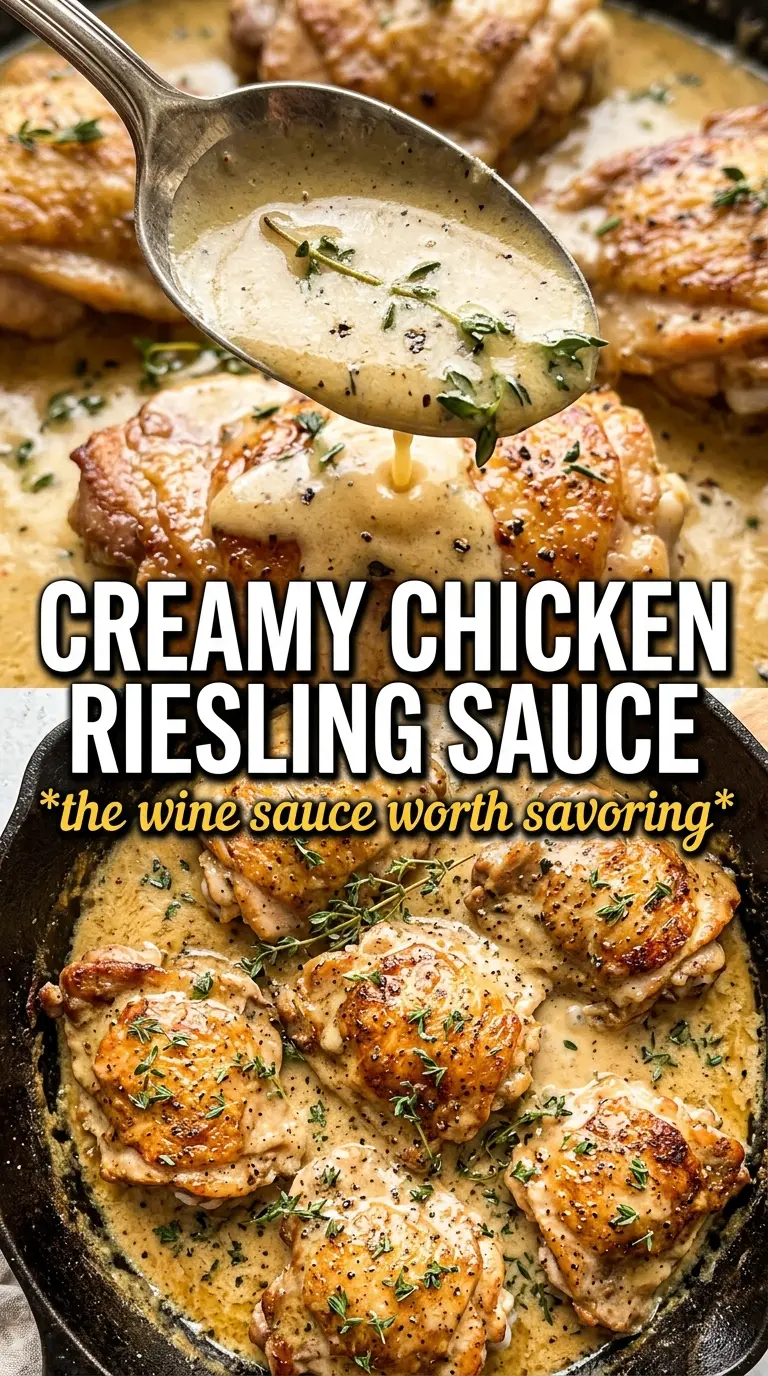
- Bone-in, skin-on chicken thighs — These stay juicier than breasts and give you enough fat in the pan to help the sauce start with real flavor. You can use boneless thighs, but the sauce won’t have quite the same depth and the chicken will cook faster, so watch the simmer closely.
- Riesling — This is the backbone of the sauce, not just a splash of wine. A semi-dry Riesling gives you fruit, acidity, and perfume without turning the pan sharp; avoid a heavily sweet bottle unless you want a sweeter sauce.
- Cremini mushrooms — They soak up the shallot, wine, and cream in a way white button mushrooms don’t quite match. Slice them thick enough to hold their shape, or they’ll disappear into the sauce during simmering.
- Dijon mustard — This doesn’t make the dish taste mustardy; it sharpens the cream and helps the sauce taste rounded instead of heavy. If you leave it out, the sauce still works, but it loses some of the edge that keeps each bite lively.
- Fresh tarragon — Tarragon is what makes this taste distinctly German-American rather than just generic creamy chicken. Dried tarragon works in a pinch, but use less because its flavor can take over fast once it blooms in heat.
- Butter — Swirled in at the end, it gives the sauce shine and a slightly fuller mouthfeel. Don’t boil the sauce after adding it, or that gloss can break.
Building the Sauce in the Right Order
Getting the Chicken Skin Deeply Golden
Season the thighs well, then lay them skin-side down in hot olive oil and leave them alone until the skin releases easily. If you try to move them too early, the skin tears and the pan loses the even browning that gives the sauce its base flavor. You want a deep golden crust, not just a light tan, because that color carries through the whole dish.
Flip the chicken only long enough to sear the second side, then pull it out. It won’t be cooked through yet, and that’s exactly right. The simmer finishes the job later, which keeps the meat tender instead of dry.
Cooking Out the Mushrooms Before the Wine Goes In
Add the shallots and mushrooms to the same pan and let the mushrooms release their liquid first. At first they’ll look crowded and wet, then they’ll shrink and start to pick up color around the edges. That second stage is where the flavor lives; if they stay pale and steamy, the sauce tastes thin.
Garlic goes in at the end of this stage for just a minute. Any longer and it can go bitter once the wine is added, especially in a reduced sauce where every flavor gets concentrated.
Finishing the Sauce Without Breaking It
Pour in the Riesling and let it bubble until the sharp alcohol smell drops off and the liquid looks slightly reduced. Then add the cream, broth, Dijon, and tarragon, and bring the heat down before the chicken goes back in. A hard boil at this point can make the cream separate or turn the sauce greasy.
Once the chicken is back in, cover and simmer gently until the thighs reach 165°F. Remove the chicken before swirling in the butter so the sauce can turn glossy without overcooking the meat.
How to Adapt This for a Different Pantry or a Lighter Table
Make It Dairy-Free
Use full-fat coconut cream or an unsweetened cashew cream in place of the heavy cream, then finish with a little extra Dijon to keep the sauce from tasting flat. The sauce will be a touch less delicate and more opaque, but it still clings nicely to the chicken.
Use Chicken Breasts Instead
Boneless breasts work, but they need a shorter simmer and more attention so they don’t dry out. Sear them just until golden, then check early for doneness and pull them as soon as they hit 165°F.
Make the Sauce a Little More Savory
If your Riesling leans sweeter than you’d like, add an extra splash of broth and a pinch more salt after the cream goes in. That reins in the sweetness without flattening the wine character.
Storage and Reheating
- Refrigerator: Store in an airtight container for up to 3 days. The sauce thickens as it chills, and the chicken skin will soften.
- Freezer: It can be frozen, but the cream sauce may separate a bit when thawed. Freeze the chicken and sauce together for up to 2 months, then whisk the sauce well as it reheats.
- Reheating: Warm gently in a covered skillet over low heat with a splash of broth. Don’t boil it, or the cream can split and the chicken can turn dry before the sauce loosens back up.
Answers to the Questions Worth Asking
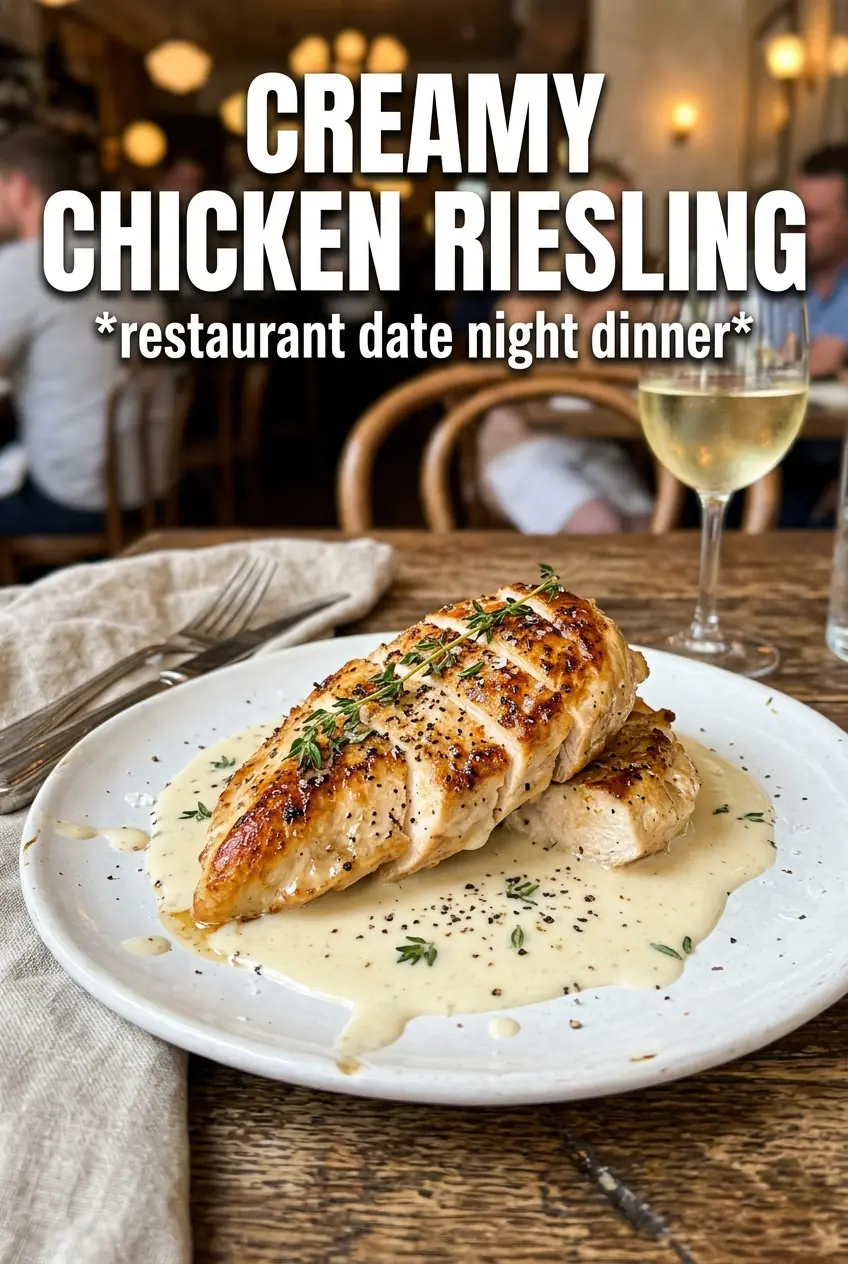
Creamy Chicken Riesling
Ingredients
Equipment
Method
- Season the chicken thighs with salt, pepper, and garlic powder. Heat the olive oil in a large skillet over medium-high heat until shimmering.
- Place chicken skin-side down in the skillet and sear for 7-8 minutes, until the skin is deeply golden. Flip and sear for 4 minutes more, then remove the chicken to a plate.
- Add minced shallots and sliced mushrooms to the skillet and cook for 5-6 minutes until golden. Stir in the minced garlic and cook for 1 minute.
- Pour in the Riesling wine and let it cook off for 3 minutes. Add heavy cream, chicken broth, fresh tarragon, and Dijon mustard, stirring to combine.
- Return chicken to the skillet skin-side up. Cover and simmer for 15-18 minutes, until the internal temperature reaches 165°F.
- Remove chicken from the skillet and swirl in the butter until the sauce looks glossy. Return chicken to the skillet, garnish with fresh tarragon, and serve.