Silky broth, tender chicken, and soft egg noodles make this creamy chicken noodle soup the kind of bowl people remember. It’s rich without turning heavy, and the broth clings to the noodles just enough to feel comforting instead of thin or greasy. The vegetables stay recognizable, the chicken stays juicy, and the whole pot comes together like something that’s been simmering all afternoon, even though it doesn’t need that much time.
The trick is building the base with flour and butter before the broth goes in, which gives you a smooth, steady thickness instead of a cream soup that breaks or turns grainy. The cream gets added after the chicken and vegetables have already done their work, so it warms through gently and keeps the texture velvety. Egg noodles go in last because they soak up broth fast; if they sit too long, they steal the soup’s body and turn mushy.
Below, I’ll walk you through the small details that matter most, including when to add the cream, how to keep the noodles from overcooking, and the substitutions that still leave you with a proper bowl of soup.
The broth turned out silky and the flour never went lumpy. I loved that the noodles stayed tender without falling apart, and my husband went back for a second bowl right away.
Creamy Chicken Noodle Soup is the kind of comforting bowl that stays silky, not gluey, when you add the noodles at the end.
The Reason Cream Soups Turn Grainy Before You Even Notice
The problem with a lot of creamy chicken soups is heat. If the flour never cooks long enough, the broth tastes raw. If the cream goes in too early or the soup boils hard after it’s added, the texture can turn broken or slightly curdled-looking. This version avoids both problems by making a proper roux first, then simmering the broth into it before the cream ever hits the pot.
That order matters. You’re building body in layers, not trying to force thickness at the end. Gentle simmering gives the broth time to thicken without going past the point where the dairy gets touchy. The result is a soup that looks smooth in the pot and stays smooth in the bowl.
What Each Ingredient Is Actually Doing in This Soup

- Chicken breast — Diced chicken breast cooks fast and stays tender in this style of soup because it simmers directly in the broth. Thighs work too if you want a little more richness, but breast gives you clean, classic chicken noodle flavor and holds up well as long as you don’t boil it hard.
- Heavy cream — This is what gives the soup its velvety finish. Half-and-half can work in a pinch, but the soup will be thinner and a little less luxurious, so keep the heat gentle if you swap it.
- Butter and flour — These form the roux that keeps the broth from tasting watery. Let the flour cook for a minute or two so the finished soup doesn’t have that dusty, raw taste.
- Egg noodles — They’re the right choice here because they cook quickly and make the soup feel substantial. Add them near the end or cook them separately if you want leftovers that hold their texture better.
- Nutmeg — Just a small amount rounds out the cream and gives the soup a quiet depth. You shouldn’t taste nutmeg as a separate note; it should just make the broth seem fuller.
Building the Soup in the Right Order
Sweating the Vegetables First
Melt the butter over medium heat, then cook the onion, carrots, and celery until the onion looks soft and translucent and the carrots have started to lose their raw edge. This is where the soup gets its backbone. If the vegetables stay crunchy here, they’ll still taste unfinished at the end, even after simmering.
Cooking Out the Flour
Once the garlic goes in for a minute, whisk in the flour and let it cook until it smells faintly toasty rather than pasty. You’re not browning it deeply; you’re taking the raw edge off and giving the soup a base that will thicken cleanly. If the flour looks clumpy, keep whisking and let the butter work through it before the broth goes in.
Simmering the Broth and Chicken
Add the broth slowly while whisking so the roux dissolves smoothly, then stir in the chicken, thyme, and dried parsley. Bring it to a gentle simmer, not a boil. Hard boiling makes the chicken tight and can make the broth cloudy instead of clean and silky.
Finishing With Cream and Noodles
Stir in the cream and nutmeg once the chicken is cooked and the vegetables are tender, then bring the soup back up only to a gentle simmer. Add the noodles last and cook just until they’re tender with a little bite left in the center. If they go too far, they’ll swell in the hot broth and turn soft and bloated within minutes.
How to Adjust This Soup Without Losing the Creamy Texture
Make it dairy-free with a silky finish
Use full-fat coconut milk or an unsweetened dairy-free cream instead of heavy cream. Coconut milk brings its own flavor, which works best if you like a slightly richer, warmer soup; neutral dairy-free cream keeps the soup closer to the original taste.
Swap in chicken thighs for a deeper broth
Boneless skinless thighs add more body and a slightly richer chicken flavor. They take about the same amount of time to cook in this soup, but they stay a little more forgiving if the pot simmers longer than planned.
Use gluten-free noodles and a GF thickener
Swap the all-purpose flour for a gluten-free flour blend that’s meant for thickening, then cook it the same way in the butter. Use gluten-free egg-style noodles or rice noodles, but watch them closely since they tend to soften faster than regular egg noodles.
Keep the noodles separate for meal prep
If you know you’ll have leftovers, cook the noodles separately and add them to each bowl when serving. This keeps the soup from turning into a thick, absorbed-up pot of pasta by day two.
Storage and Reheating
- Refrigerator: Store for up to 4 days. The noodles will keep soaking up broth, so expect the soup to thicken as it sits.
- Freezer: Freeze without the noodles for best texture. Dairy-based soups can separate a little after freezing, so cool it fully, freeze in portions, and whisk well when reheating.
- Reheating: Warm it slowly over low heat and add a splash of broth if needed. Don’t let it boil, or the cream can lose its smooth texture and the chicken can dry out.
Questions I Get Asked About This Recipe
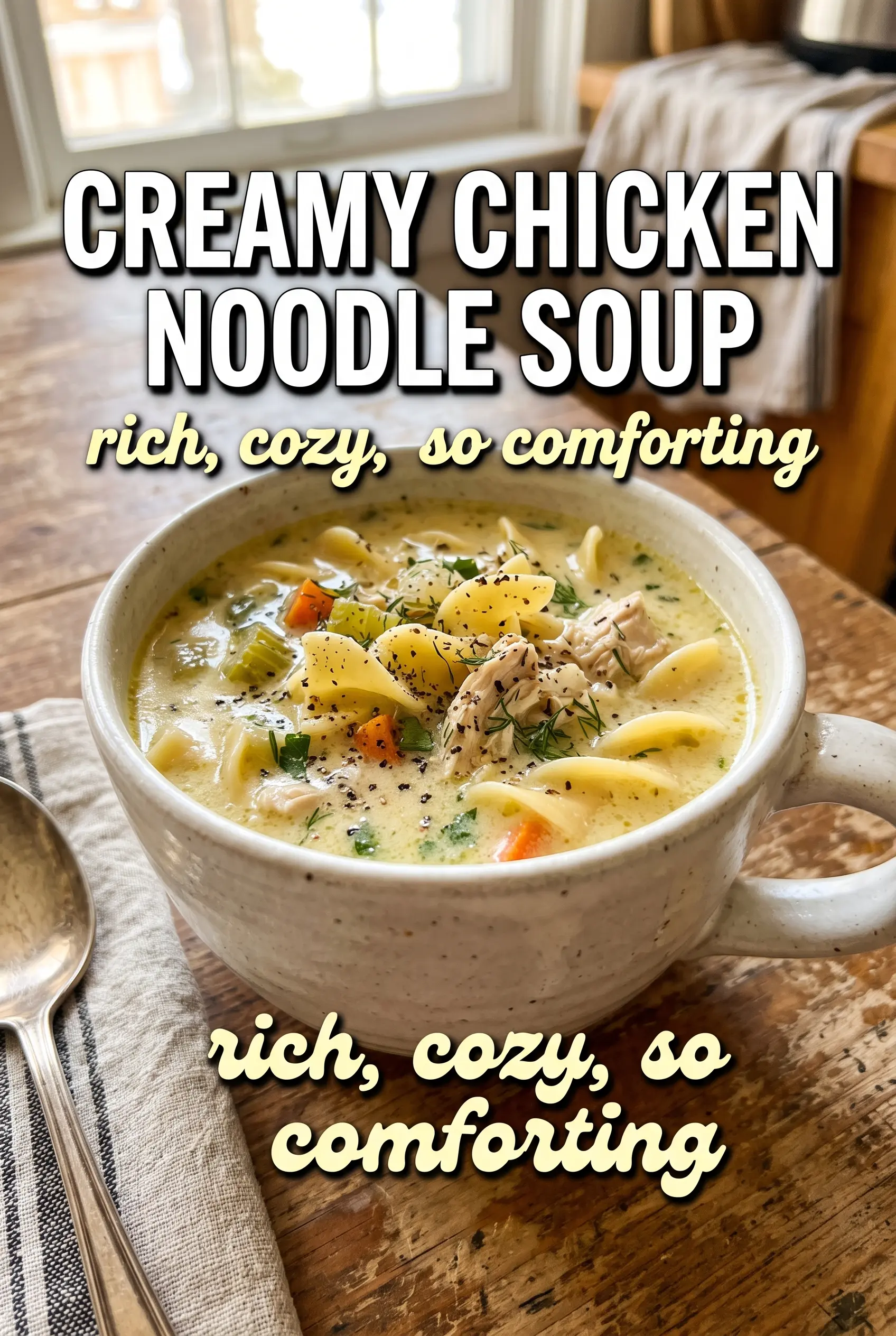
Creamy Chicken Noodle Soup
Ingredients
Equipment
Method
- Melt the unsalted butter in a large pot over medium heat, then add the onion, carrots, and celery. Sauté for 5 minutes, stirring often, until the vegetables soften and smell sweet.
- Add the garlic and cook for 1 minute, stirring so it doesn’t brown. Whisk in the all-purpose flour and cook for 1-2 minutes until the flour taste cooks out.
- Gradually add the chicken broth, whisking constantly to keep the mixture smooth. Add the diced chicken, dried thyme, and dried parsley, then bring to a simmer.
- Simmer for 15 minutes until the chicken is cooked through and the vegetables are tender, with steady bubbling around the edges.
- Stir in the heavy cream and nutmeg, then bring the soup back to a gentle simmer. Keep it at a gentle simmer so the cream stays silky.
- Add the egg noodles and cook for 6-8 minutes until tender, stirring occasionally to prevent sticking.
- Season with salt and pepper to taste, adjusting as needed for balance. Garnish with fresh parsley right before serving.