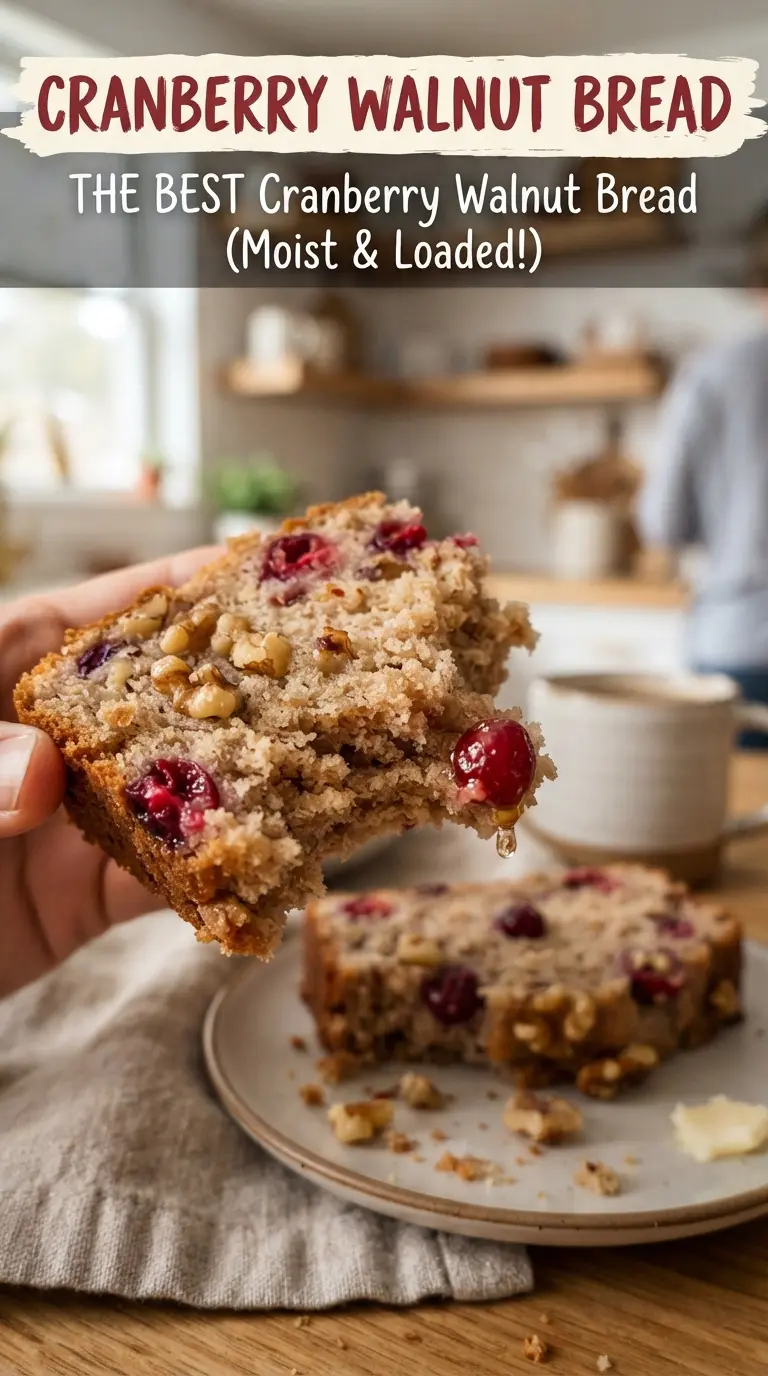
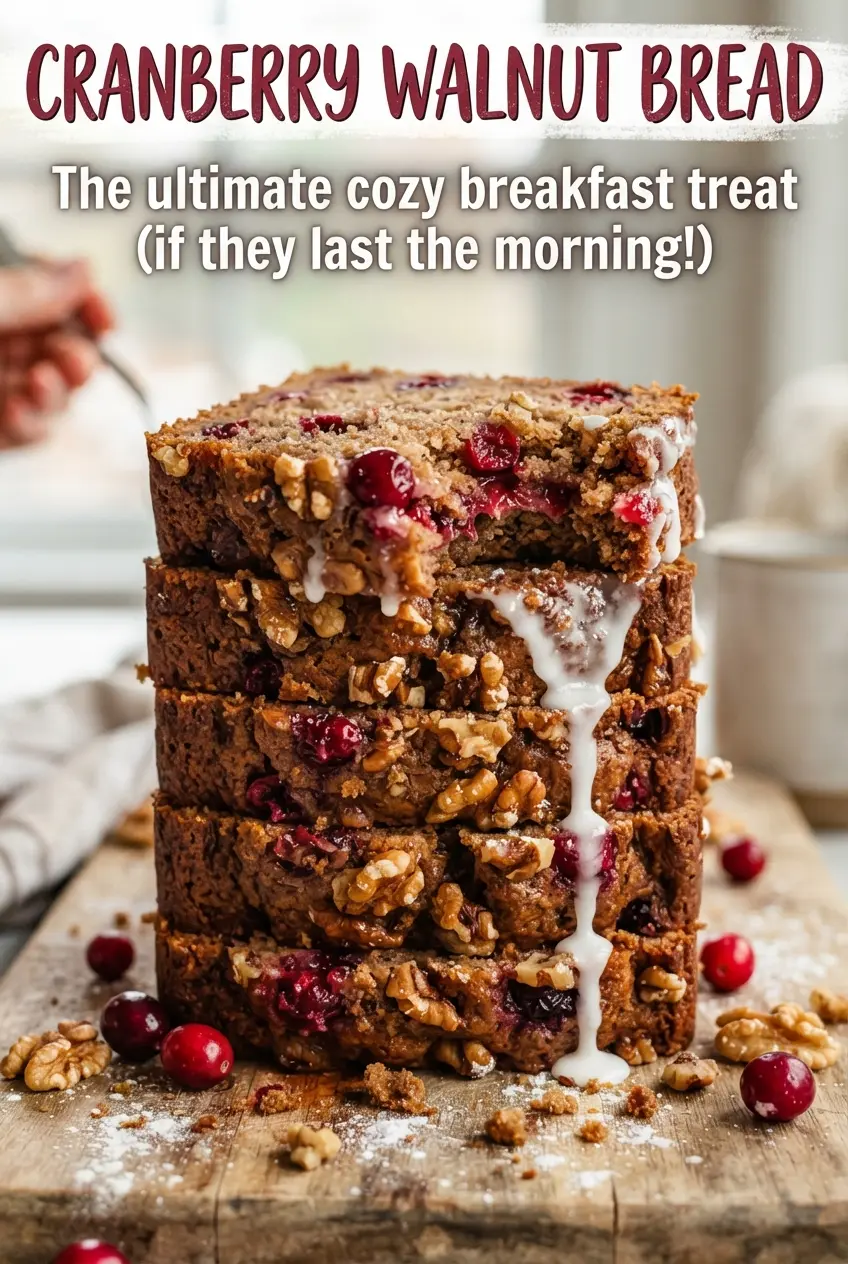
Cranberry walnut bread bakes up with a tender crumb, a crackly golden top, and bright bursts of tart fruit in every slice. The orange zest keeps it from tasting flat or overly sweet, and the toasted walnuts add a little bitterness and crunch that makes the whole loaf feel balanced instead of cake-like.
What makes this version work is the way the wet ingredients come together before they ever meet the flour. Orange juice, melted butter, and egg give the loaf moisture without making it heavy, while the zest carries the orange flavor through the whole bread. The cranberries stay sharp enough to wake up each bite, and the walnuts bring enough texture that you notice them even after baking.
Below, I’ve included the small details that matter here: why you don’t want to overmix the batter, how to keep the cranberries from sinking, and a few smart ways to adapt the loaf if you’re baking with what you already have on hand.
The bread stayed moist for days, and the orange zest came through without overpowering the cranberries. I loved that the walnuts stayed crunchy instead of turning soft after baking.
Save this cranberry walnut bread for the days when you want a slice with tart berries, toasted nuts, and a bright orange finish.
The Part That Keeps Cranberry Bread Tender Instead of Tough
The biggest mistake with quick bread is treating it like a cake batter and beating it until smooth. Once the flour goes in, gluten starts forming fast. If you keep stirring, the loaf turns dense and tight instead of soft and sliceable.
This batter should look a little shaggy when you stop mixing. That’s the right point. The cranberries and walnuts finish the job as you fold them in, and the loaf bakes up with enough structure to hold thick slices without crumbling.
- Orange zest — This is where the citrus flavor comes from. Orange juice adds moisture, but the zest is what keeps the loaf tasting bright instead of just sweet.
- Fresh or frozen cranberries — Both work well. If you use frozen cranberries, chop them straight from the freezer so they don’t turn mushy and bleed too much color into the batter.
- Toasted walnuts — Toasting deepens the flavor and keeps them from tasting flat. If you skip that step, the bread still works, but the nuts won’t stand out as clearly.
- Orange juice — Use a juice you’d actually drink. Bottled juice is fine, but avoid anything overly sweetened, since the batter already has plenty of sugar.
What Each Ingredient Is Actually Doing in This Loaf
- All-purpose flour — Gives the loaf enough structure to rise without becoming bready. Bread flour is too strong here and can make the crumb chewy in the wrong way.
- Sugar — Sweetens the loaf and helps the top brown. You can reduce it a little, but too much reduction makes the cranberries taste harsher and the crumb less tender.
- Baking powder and baking soda — The pair gives the loaf lift and helps it brown. The soda also reacts with the orange juice, which gives the bread a little extra rise and a softer texture.
- Butter — Melted butter keeps the crumb rich without needing a mixer. Oil can work in a pinch, but the flavor won’t be as full.
- Egg — Binds the batter and gives the loaf a cleaner slice. A flax egg will make it denser, which changes the texture more than most people expect.
- Vanilla — Rounds out the citrus and keeps the loaf from tasting sharp. It’s subtle, but it helps the bread taste finished.
Mixing the Batter Without Beating the Bread Out of It
Start with the dry ingredients
Whisk the flour, sugar, leaveners, salt, and orange zest together until the zest is evenly dispersed and the mixture smells bright. Rubbing the zest into the sugar as you whisk helps release more oil, which gives the finished loaf a stronger orange aroma. If the zest clumps in one spot, that flavor stays patchy instead of running through the bread.
Bring the wet ingredients together
Whisk the orange juice, egg, melted butter, and vanilla until the mixture looks smooth and unified. The butter should be warm, not hot; if it’s too hot, it can start cooking the egg. A thin layer of butter fat on top is fine, but the mixture should not look streaky.
Stop mixing as soon as the flour disappears
Pour the wet ingredients into the dry and stir just until the flour is moistened. A few streaks are better than an overworked batter. That’s the point where the loaf still bakes up tender instead of turning rubbery.
Fold in the fruit and nuts gently
Add the cranberries and walnuts last and fold them in with a few broad strokes. If you stir aggressively, the berries can burst and stain the batter, and the nuts tend to sink into the bottom of the pan. Spread the batter into the loaf pan and level the top with the back of a spoon so it bakes evenly.
Make It Lighter with Pecans Instead of Walnuts
Pecans give the loaf a sweeter, softer nut flavor and a slightly more buttery bite. Swap them in one for one and toast them the same way. The bread will taste a little rounder and less earthy, which works nicely with the orange.
How to Make It Dairy-Free
Use melted plant-based butter in place of regular butter. Pick one with a neutral flavor so it doesn’t compete with the orange and cranberries. The crumb stays close to the original, though the finished loaf may be a touch less rich.
Frozen Cranberries Work Fine
Use them straight from the freezer and chop them while they’re still hard. Thawed cranberries bleed more and soften the batter, which can turn the loaf slightly streaky. Frozen berries hold their shape better and keep the slices looking clean.
Storage and Reheating
- Refrigerator: Store the cooled loaf tightly wrapped for up to 5 days. The crumb stays moist, though the nuts soften a little after the first day.
- Freezer: This bread freezes well. Wrap the whole loaf or individual slices in plastic, then foil, and freeze for up to 3 months.
- Reheating: Thaw at room temperature, then warm slices in a toaster oven or low oven. Don’t microwave it for too long or the crumb turns gummy and the cranberries can get chewy.
Questions I Get Asked About This Recipe
Cranberry Walnut Bread
Ingredients
Equipment
Method
- Preheat oven to 350°F and grease and line a 9x5-inch loaf pan.
- Whisk all-purpose flour, sugar, baking powder, baking soda, salt, and orange zest in a bowl until evenly combined, with orange zest flecks visible throughout.
- Whisk orange juice, large egg, melted butter, and vanilla extract in a separate bowl until smooth and glossy.
- Stir wet into dry just until moistened, stopping when no dry flour remains and the batter looks slightly lumpy.
- Fold in fresh or frozen cranberries and walnuts until the red cranberries and toasted walnuts are evenly distributed.
- Spread the batter into the prepared loaf pan and smooth the top so it bakes evenly.
- Bake at 350°F for 55-60 minutes until the loaf is golden on top and a toothpick comes out clean.
- Cool the loaf in the pan for 10 minutes so it sets and releases cleanly.
- Transfer to a rack and cool fully before slicing so the center holds its texture.